Are You Put To Sleep Bone Graft Implant?
A dental bone graft is a surgical procedure that rebuilds lost or deficient jawbone. It is often a necessary precursor to dental implant placement. The question of whether you are “put to sleep” for a bone graft touches on anesthesia options, surgical complexity, and patient anxiety. The answer is that it depends on the extent of the graft, the surgical site, the patient’s medical status and anxiety level, and the setting in which the procedure is performed. This guide provides a comprehensive explanation of the anesthesia and sedation options for dental bone grafting, from local anesthesia alone to general anesthesia in a hospital operating room. You will understand the decision-making process, the patient experience under each modality, and how to discuss your preference with your surgeon.
The Spectrum of Anesthesia and Sedation
Anesthesia in oral surgery is not a binary choice between “awake” and “asleep.” It is a continuum of sedation depths, each with distinct physiological effects and clinical indications. The American Society of Anesthesiologists defines four levels of sedation: minimal sedation (anxiolysis), moderate sedation (conscious sedation), deep sedation, and general anesthesia.
Local Anesthesia Alone
Local anesthesia is the injection of an anesthetic agent, typically lidocaine or articaine with epinephrine, into the surgical site. The drug blocks sodium channels in the local nerve fibers, preventing the transmission of pain signals. The patient is fully awake, alert, and responsive. Sensation of sharp pain is completely absent. The patient feels pressure, vibration, and the manipulation of tissues, but no pain.
Local anesthesia alone is appropriate for minor bone grafting procedures performed in the dental office. A socket preservation graft placed immediately after a simple tooth extraction is a common example. The surgical time is short, the tissue manipulation is limited, and the patient’s anxiety is well-controlled without sedation. The advantages are safety, rapid recovery, no escort requirement, and lower cost.
Nitrous Oxide (Laughing Gas) with Local Anesthesia
Nitrous oxide is an inhaled gas that produces a state of mild sedation and anxiolysis. The patient breathes a mixture of nitrous oxide and oxygen through a nasal mask. The effect is felt within minutes. The patient becomes relaxed, calm, and mildly euphoric. The perception of time may be altered. The patient remains awake and able to respond to verbal commands.
Nitrous oxide is an excellent adjunct for patients with mild to moderate dental anxiety undergoing minor to moderate bone grafting. The sedation depth is easily titrated by adjusting the gas concentration. The effects dissipate within minutes of discontinuing the gas and breathing pure oxygen. The patient can drive themselves home after the appointment, making nitrous oxide the most practical sedation option for everyday life.
Oral Conscious Sedation
Oral sedation involves taking a prescribed sedative medication, typically a benzodiazepine such as diazepam, lorazepam, or triazolam, by mouth before the appointment. The drug produces a state of moderate sedation. The patient is drowsy, relaxed, and may have limited memory of the procedure. They remain responsive to verbal commands and protective airway reflexes are maintained.
Oral sedation is suitable for patients with moderate anxiety undergoing bone grafting procedures of moderate length and complexity. The sedation level cannot be finely titrated in real-time; the dose is based on the patient’s weight and medication history. An escort is required to drive the patient home, as the sedative effects persist for hours. The patient must avoid operating machinery or making important decisions for the remainder of the day.
Intravenous (IV) Sedation
IV sedation delivers sedative medications directly into the bloodstream through a small catheter placed in a vein, typically in the arm or hand. The medications, often a combination of a benzodiazepine (midazolam) and an opioid or a short-acting anesthetic agent (propofol), produce a state of deep sedation. The patient is profoundly relaxed, on the edge of consciousness, and will have little to no memory of the procedure. They remain able to breathe independently and respond to deep stimulation, but they are not easily aroused.
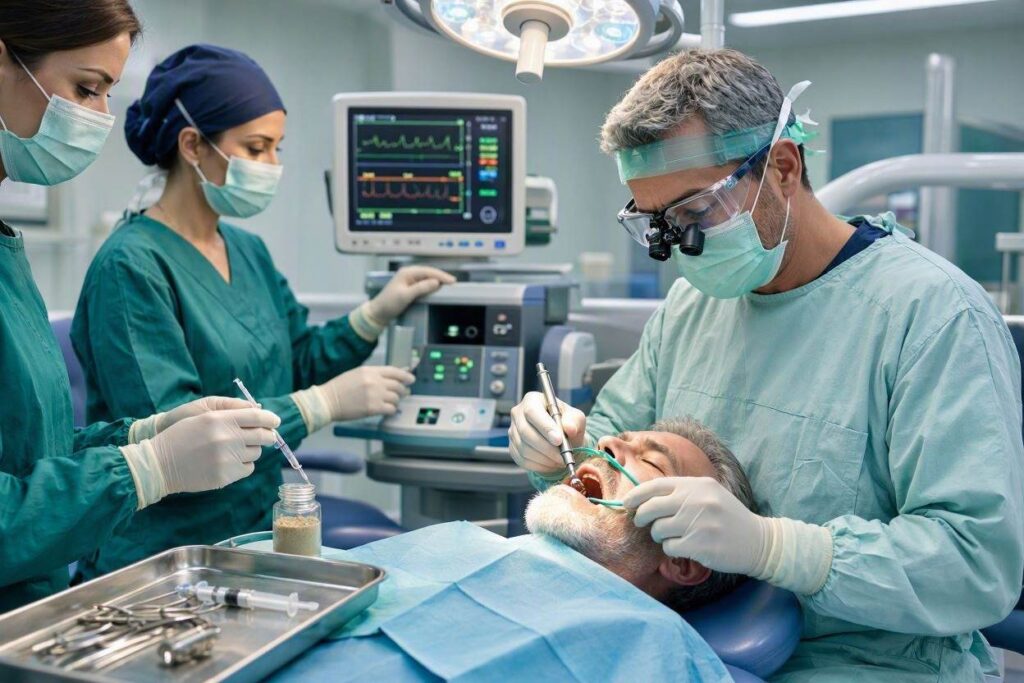
IV sedation is administered and monitored by a qualified practitioner. In the dental office, this is an oral and maxillofacial surgeon or a dentist with a parenteral sedation permit. A dedicated assistant monitors the patient’s vital signs—blood pressure, heart rate, oxygen saturation, and respiratory rate—throughout the procedure.
IV sedation is the standard of care for moderate to extensive bone grafting procedures. A block bone graft harvested from the chin or ramus, a lateral window sinus lift, or a major ridge augmentation with multiple graft sources is a significant surgical undertaking. The procedure may last one to two hours or longer. The patient benefits from being deeply sedated, immobile, and comfortable. The surgeon can work with precision without patient movement or anxiety. An escort is mandatory, and the patient must rest for the remainder of the day.
General Anesthesia
General anesthesia renders the patient completely unconscious. The patient does not respond to any stimulation, including surgical pain. Protective airway reflexes are lost. A breathing tube or laryngeal mask airway is placed to secure the airway and provide mechanical ventilation. General anesthesia is administered by an anesthesiologist or a certified registered nurse anesthetist (CRNA).
In the context of dental bone grafting, general anesthesia is reserved for specific circumstances. These include extensive maxillofacial reconstruction, such as grafting of a large continuity defect of the mandible with a bone block harvested from the iliac crest (hip) or calvarium (skull), grafting performed in conjunction with orthognathic jaw surgery, grafting in patients with severe medical comorbidities that require advanced physiological monitoring, and patients with profound developmental or psychological conditions that preclude cooperation with any form of sedation.
General anesthesia for elective oral surgical procedures is typically administered in a hospital operating room or an accredited ambulatory surgery center. The facility fee for the operating room adds significantly to the total cost. The anesthesiologist’s professional fee is a separate charge. The level of safety is extremely high, but the cost and logistical footprint are substantial.
Decision Factors: What Determines Your Sedation Level
The choice of anesthesia for a bone graft is a collaborative decision between the patient and the surgeon, guided by specific clinical and personal factors.
Surgical Complexity and Duration
A simple socket graft performed in 20 minutes under local anesthesia is a minor, well-tolerated procedure. A lateral window sinus lift with particulate graft and membrane, requiring 90 minutes of flap elevation, bony window creation, membrane elevation, graft packing, and suturing, is a significantly more involved surgery. The duration of the procedure, the extent of tissue retraction, and the degree of bone manipulation directly correlate with the recommended sedation depth. The surgeon will recommend a sedation level that ensures patient comfort and cooperation throughout the entire procedure.
Patient Anxiety and Psychological Factors
Dental phobia is a real and valid condition. A patient with severe anxiety, a history of traumatic dental experiences, or a strong gag reflex may be unable to tolerate even a minor procedure under local anesthesia alone. The physiological stress response—elevated heart rate, blood pressure, and cortisol—is detrimental to healing. IV sedation or oral conscious sedation can transform a terrifying experience into a tolerable one. The patient’s psychological comfort is a legitimate medical indication for sedation.
Medical Status and Airway Considerations
The patient’s American Society of Anesthesiologists (ASA) physical status classification influences the sedation decision. An ASA I (healthy) or ASA II (mild systemic disease) patient is a candidate for in-office IV sedation. An ASA III patient (severe systemic disease) may require general anesthesia in a hospital setting with anesthesiologist management. The patient’s airway anatomy, body mass index, and history of sleep apnea are assessed. Deep sedation and general anesthesia depress respiratory drive and relax airway musculature. The sedation provider must be confident in their ability to manage the airway.
The Surgeon’s Training and Credentialing
The sedation options available in a given office depend on the clinician’s training and state licensure. An oral and maxillofacial surgeon completed a hospital-based surgical residency that included extensive training in IV sedation and general anesthesia. An oral surgeon can offer the full spectrum of sedation in the office. A periodontist or a general dentist with advanced implant training may offer local anesthesia and, in some cases, oral conscious sedation or nitrous oxide, depending on their state’s dental board permit requirements. The patient should ask the surgeon, “What sedation options do you offer for this procedure, and what are your credentials for administering them?”
The Patient Experience
Understanding what to expect under each sedation modality reduces anxiety and facilitates informed consent.
Under Local Anesthesia
You walk into the operatory, sit in the chair, and receive the local anesthetic injections. The initial injection feels like a brief pinch and burn as the anesthetic is deposited. After a few minutes, the area becomes profoundly numb. The surgeon tests the anesthesia by probing the tissue. You feel touch and pressure but no sharpness. During the graft, you feel the vibration of the drill or the piezoelectric instrument, the pressure of the surgeon’s fingers, and the sensation of the tissue being manipulated. You hear the sounds of the instruments. You are fully aware of the progress of the procedure. You can communicate with the surgeon by raising a hand if you need a break or have a question. At the end, you are alert and can leave the office without an escort.
Under IV Sedation
You arrive with an escort. You sit in the chair, and monitors are placed on your arm, finger, and chest. The surgeon or assistant places the small IV catheter in your arm or hand. The sedation medications are administered through the IV. You feel a warm, relaxed sensation, and within moments, you drift into a deep, comfortable sleep-like state. You are not unconscious in the general anesthesia sense, but you will not remember the procedure. The surgeon administers local anesthesia after you are sedated, so you feel no injections. You breathe on your own. The monitors continuously track your vital signs. At the end of the procedure, the medications are discontinued, and you gradually awaken, feeling drowsy and comfortable. You have no memory of the surgery. Your escort drives you home, and you rest for the remainder of the day.
The Cost of Sedation for Bone Grafting
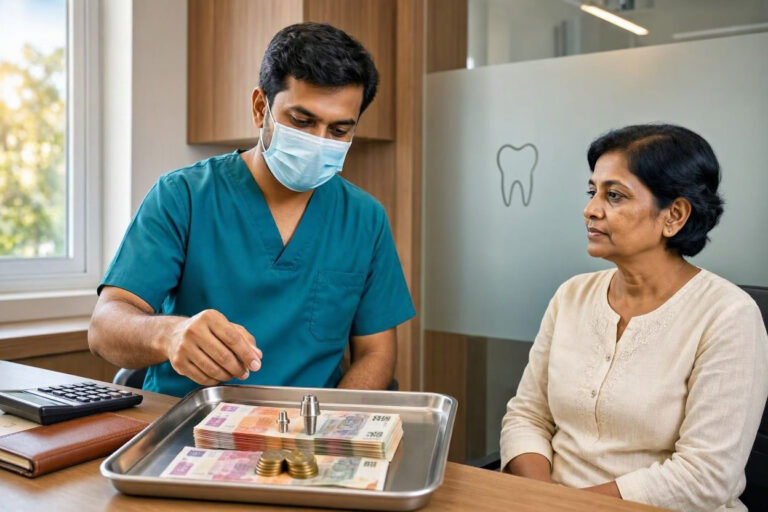
Sedation is a separate line item on the treatment plan, not included in the bone graft surgical fee.
| Sedation Modality | Fee Range (Approximate) |
|---|---|
| Nitrous Oxide | $50 – $150 per appointment |
| Oral Conscious Sedation | $100 – $300 |
| IV Sedation (In-Office, Oral Surgeon) | $300 – $700+ |
| General Anesthesia (Hospital Operating Room) | $1,500 – $5,000+ (Facility + Anesthesiologist) |
Dental insurance may cover a portion of IV sedation for a medically necessary surgical procedure, but coverage is limited and subject to the plan’s annual maximum. Medical insurance may cover general anesthesia in a hospital setting if the patient’s medical condition necessitates it. The patient should verify coverage before the procedure.
Conclusion
Being “put to sleep” for a dental bone graft is a choice along a spectrum: minor socket grafts are typically performed under local anesthesia alone or with nitrous oxide, while moderate to extensive grafts such as block grafts and sinus lifts are most commonly performed under IV sedation administered by an oral surgeon, providing a deep, comfortable state with no memory of the procedure. General anesthesia in a hospital operating room is reserved for the most extensive reconstructive cases or patients with significant medical comorbidities. The decision is individualized based on surgical complexity, patient anxiety, medical status, and the surgeon’s training, and the cost of sedation is a separate fee from the surgical graft procedure.
Frequently Asked Questions
Can I drive myself home after a bone graft with IV sedation?
No. The sedative medications impair your coordination, judgment, and reaction time for the remainder of the day. You must arrange for a responsible adult to drive you to and from the appointment and to stay with you for a few hours after you return home. The surgeon’s office will not perform IV sedation without confirmation that an escort is present.
Will I feel any pain during the bone graft if I am under IV sedation?
No. The IV sedation ensures you are deeply relaxed and comfortable. The surgeon also administers local anesthesia to numb the surgical site, which blocks the pain signals completely. You will not feel sharp pain. The combination of IV sedation and local anesthesia is highly effective. After the procedure, as the sedation and local anesthesia wear off, you will experience the expected postoperative soreness, which is managed with prescribed or over-the-counter analgesics.
Is IV sedation safe?
Yes, when administered by a trained and credentialed practitioner in an appropriately equipped facility. Oral and maxillofacial surgeons receive extensive training in IV sedation and emergency management during their four- to six-year hospital-based residency. The office is equipped with advanced monitoring equipment, emergency medications, and airway management devices. The surgeon and the surgical team are trained to recognize and manage sedation-related complications. Serious adverse events in the oral surgery office setting are extremely rare.
What if I am terrified of needles and the IV?
This is a common fear. The surgeon’s team is experienced in managing needle phobia. Nitrous oxide can be administered first to relax you before the IV is placed. The skin over the vein can be numbed with a topical anesthetic cream or spray before the needle is inserted. The needle is small and the placement takes seconds. Communicate your specific fear to the team during the consultation so they can plan a gentle, anxiety-sensitive approach.
Additional Resource
The American Association of Oral and Maxillofacial Surgeons provides a patient education section at aaoms.org that includes detailed information on anesthesia and sedation in the oral surgery office. The site explains the training oral surgeons receive in anesthesia, the safety protocols, and what patients can expect before, during, and after sedation. This is the authoritative source for understanding office-based anesthesia in dentistry.