Can A Dental Implant Move?
The decision to get a dental implant is a significant investment of time, money, and trust. You are having a titanium post surgically placed into your jawbone with the expectation that it will last a lifetime. So, if months or years later, you feel a slight wiggle or shift when you touch the implant crown, it is a cause for immediate concern.
The short answer to the question is: A healthy, successful dental implant should never move. It is anchored directly to your bone. It should feel as solid and immovable as a natural, healthy tooth. If you feel movement, something is wrong.
This guide will explain why an implant might feel loose, the difference between a loose crown and a loose implant, and the critical steps you must take to protect your oral health.
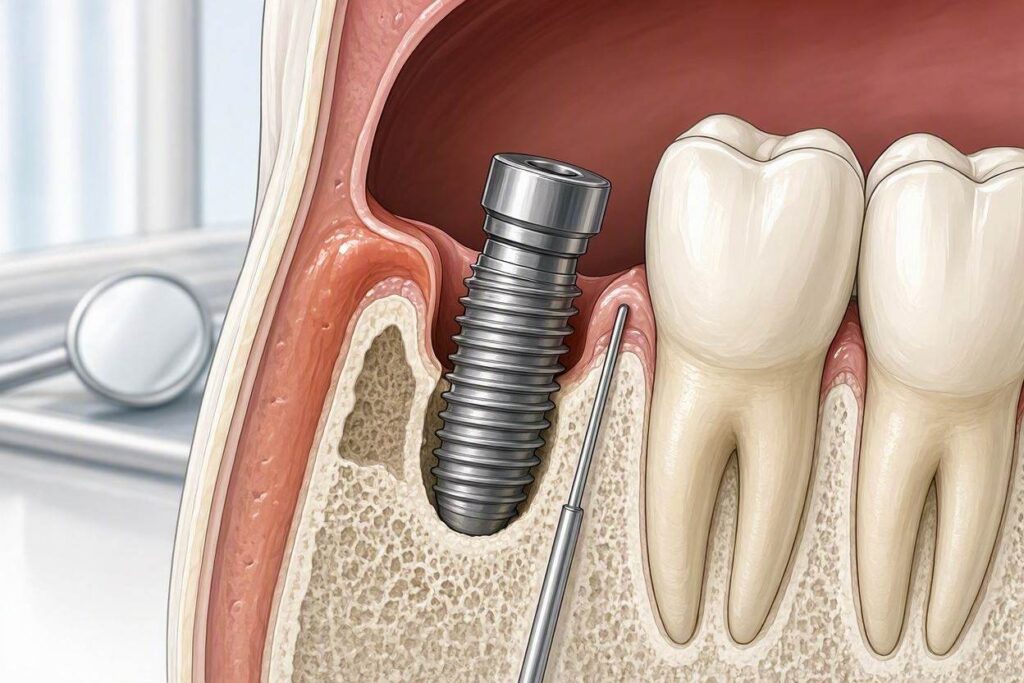
The Difference Between a Loose Crown and a Loose Implant
When you feel movement, it is essential to distinguish between two very different problems.
1. A Loose Crown (or Abutment)
This is the less serious issue. The crown is the visible tooth-shaped part. The abutment is the connector. In some cases, the screw that holds the crown to the abutment, or the abutment to the implant, can loosen.
- What it feels like: The tooth may feel wobbly, or you might feel a slight “pop” or give when you bite down. You might even feel it rotate slightly.
- The Implant is Still Solid: The titanium post in your bone is perfectly fine. The problem is just the hardware on top of it.
- The Fix: This is usually an easy fix. The dentist will remove the crown, check the abutment, and tighten the screw. Sometimes, the screw needs to be replaced. This is often a quick appointment with minimal cost.
2. A Failed Implant (The Implant Itself is Moving)
This is a serious complication. It means the titanium post has failed to integrate with the bone, or it has lost its integration.
- What it feels like: The entire implant, including the post, feels loose. You may experience pain, swelling, or bleeding around the gum. You might even see the metal threads of the implant.
- The Problem: The bone has not fused to the implant, or the bone around the implant has been destroyed by infection. The implant is no longer anchored.
- The Fix: The implant must be surgically removed. The area must be cleaned and allowed to heal. After several months of healing (and possibly a bone graft), a new implant may be attempted.
Important Note: If you feel any movement in a dental implant, stop chewing on that side immediately and call your dentist. Do not wiggle it with your tongue or fingers. Wiggling it will only make the problem worse.
Why Do Implants Fail? The Causes of Movement
A healthy implant is anchored by a process called osseointegration. This is where living bone cells grow directly onto the surface of the titanium post, locking it in place. If this process is interrupted or reversed, the implant can fail.
1. Early Failure (Failure to Integrate)
This occurs in the weeks and months after the implant is placed. The bone fails to fuse to the implant for several reasons:
- Infection: Bacteria contaminate the surgical site during placement.
- Overheating of Bone: If the drill is too hot during surgery, it can kill the bone cells.
- Lack of Stability: If the implant is placed in bone that is too soft, or if it is loaded (chewing pressure is applied) too early, it can move before the bone has fused.
- Medical Factors: Smoking, uncontrolled diabetes, or certain medications can impair healing.
- Rejection: In very rare cases, the body rejects the titanium.
If the implant fails to integrate, it will become loose and painful within the first few months.
2. Late Failure (Loss of Integration)
This occurs after the implant has successfully healed and been restored. It is usually caused by an infection called peri-implantitis.
Peri-implantitis is similar to gum disease (periodontitis), but it affects the tissues around an implant. Plaque and tartar build up on the implant surface below the gum line. The bacteria trigger an inflammatory response. The body starts to destroy the bone supporting the implant.
If left untreated, the bone loss progresses. Eventually, there is not enough bone left to hold the implant, and it becomes loose.
3. Mechanical Failure
While less common, the implant fixture itself can fracture. This is usually due to excessive force from grinding (bruxism) or an improper bite. A fractured implant will often feel loose.
What to Do If Your Implant Feels Loose
Time is of the essence. Do not wait to see if it gets better. It will not.
- Call Your Dentist Immediately: Explain that you have an implant and it feels loose. Ask for an emergency appointment.
- Avoid Chewing on That Side: Stick to soft foods. Do not put any pressure on the implant.
- Keep the Area Clean: Gently rinse with warm salt water to keep the area clean. Do not scrub the area aggressively.
At the appointment, the dentist will take X-rays to see the bone level around the implant. They will also examine the crown and the abutment. Based on the findings, they will recommend the appropriate treatment.
Can You Prevent an Implant from Moving?
Yes. The most important thing you can do is practice meticulous oral hygiene. An implant cannot get a cavity, but it can be lost to gum disease (peri-implantitis).
- Brush and Floss: Clean around the implant just as you would a natural tooth. Use a soft toothbrush and floss daily. Special tools like interdental brushes or a water flosser can be very helpful for cleaning around implants.
- See Your Dentist Regularly: Professional cleanings are essential. The hygienist has special instruments to clean the implant surface without scratching it. Regular checkups allow the dentist to monitor the bone level and catch problems early.
- Do Not Smoke: Smoking is a major risk factor for implant failure.
- Manage Your Health: Keep diabetes under control.
- Wear a Nightguard: If you grind your teeth, a nightguard will protect the implant and the crown from excessive force.
The Psychological Impact of a Moving Implant
It is important to acknowledge the anxiety that comes with a failing implant. After investing so much time and money, the feeling of movement is devastating. Patients often feel a sense of betrayal or failure.
It is crucial to remember that implant failure is not a reflection of your worth or your hygiene habits in many cases. It can be caused by factors outside your control. A good dentist will not judge you. They will work with you to solve the problem and restore your smile.
Conclusion
A dental implant that has properly fused to the bone should feel exactly like a natural, healthy tooth—completely solid and immovable. If you feel movement, it is a sign of either a loose restoration (an easy fix) or a failing implant (a more serious issue). The moment you feel movement, contact your dentist. Early intervention is the key to salvaging the implant or planning a successful replacement.
Frequently Asked Questions (FAQ)
Q: Can a dental implant move slightly when I push on it with my finger?
A: No. A healthy implant is anchored in bone. It should have zero visible movement. If you can see or feel it move when you push on it, the implant has failed to integrate and must be removed.
Q: Why does my dental implant hurt when I bite down?
A: Pain when biting could mean the crown is loose, the bite is too high, or there is an infection around the implant. It is a warning sign. You should see your dentist to diagnose the cause. Do not ignore it.
Q: Can a loose implant be saved?
A: If the movement is due to a loose screw in the crown or abutment, yes, it is easily saved. If the movement is due to bone loss from infection, the implant itself has failed and cannot be “tightened.” It must be removed.
Q: How long does a dental implant last if I take care of it?
A: Dental implants are designed to last a lifetime. However, the crown on top may need to be replaced after 10-15 years due to normal wear and tear. The implant itself has a very high long-term success rate (over 95% over 20 years).
Q: Is it normal for an implant to feel weird at first?
A: Yes, it is normal for an implant to feel “different” or “strange” in your mouth when it is first placed. You are adjusting to the feel of the new tooth. However, it should always feel solid. “Weird” is normal; “loose” is not.
Additional Resource:
To learn more about the long-term care of dental implants and the risks of peri-implantitis, you can visit the American Academy of Periodontology (AAP): https://www.perio.org/