Can Pregnancy Affect Dental Implants?
Pregnancy is a time of profound change in a woman’s body. Hormones fluctuate, the immune system shifts, and the body prioritizes the health of the developing baby above all else. If you are pregnant or planning to become pregnant, and you are also considering dental implants, you likely have a lot of questions.
Can you get an implant while pregnant? What happens if you are already in the middle of the implant process and you find out you are expecting? Will the pregnancy harm the implant, or will the implant harm the baby?
These are valid concerns. This guide will provide a clear, evidence-based look at how pregnancy interacts with dental implants, from the planning stages to the healing process.
The Golden Rule: Elective Surgery is Deferred
The most important thing to understand is that dental implant placement is considered elective surgery. It is not an emergency. Because it is elective, the standard of care in the medical and dental community is to defer the surgery until after the baby is born.
This is not because the titanium implant itself is dangerous to the fetus. It is because of the process required to place it.
Why dentists avoid placing implants during pregnancy:
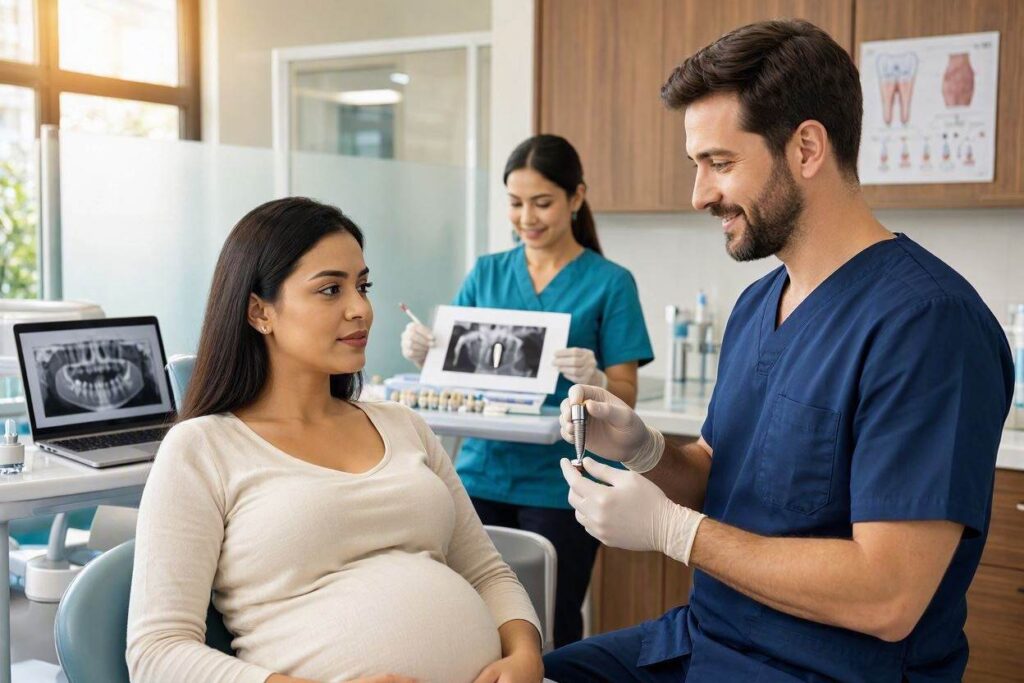
- X-Rays: Planning an implant requires X-rays (usually a 3D CBCT scan). While the radiation dose from a dental X-ray is very low and generally considered safe with proper shielding, the guiding principle in obstetrics is “as low as reasonably achievable” (ALARA). Most dentists and obstetricians prefer to avoid any elective radiation exposure during pregnancy, especially in the first trimester when the baby’s organs are forming.
- Anesthesia: Implant surgery requires local anesthesia (usually Lidocaine or Articaine). While these are generally safe in pregnancy (Category B drugs), there are still theoretical risks. Some dentists use epinephrine (adrenaline) in the anesthetic to control bleeding. While safe in small doses, it is best avoided if possible.
- Medications: After the surgery, you will likely need pain medication (like ibuprofen or Tylenol) and possibly antibiotics.
- NSAIDs (Ibuprofen, Advil, Motrin): These are generally contraindicated in pregnancy, especially in the third trimester, as they can affect the baby’s heart and kidney function.
- Antibiotics: Some antibiotics (like tetracycline) are harmful to the baby. Others (like amoxicillin) are safe, but it is best to avoid them unless necessary.
- Stress and Healing: Surgery is a stressor on the body. Pregnancy already puts a massive demand on the immune system. Healing might be compromised, and the risk of infection could be slightly higher.
- Morning Sickness and Positioning: Lying flat on your back for a long procedure can be uncomfortable and can compress the vena cava (a major vein), reducing blood flow to the baby.
What If I Find Out I’m Pregnant After the Implant is Placed?
This is a common scenario. Many women have the implant surgery, and then a few weeks later, they discover they are pregnant.
The Good News: You do not need to panic. If the implant was placed before you became pregnant (or very early in the pregnancy, before you knew), the risk to the baby is extremely low. The titanium post is inert and biocompatible. It does not release chemicals into the bloodstream that could harm the fetus.
The primary concern in this situation is infection. If you develop an infection around the newly placed implant during your pregnancy, treating it becomes more complicated because of the medication restrictions.
What you should do:
- Tell your dentist and your obstetrician immediately.
- Monitor the surgical site for signs of infection (redness, swelling, pus, pain).
- Maintain meticulous oral hygiene to prevent infection.
What If I Need an Emergency Implant-Related Procedure?
What happens if you are pregnant and you have a failing implant or a severe infection around an existing implant?
In this case, the rules change. Infection is a medical risk. An untreated dental infection can pose a greater threat to the pregnancy than the treatment itself. If you have an abscess around an implant, it must be treated.
In an emergency situation:
- The dentist will work with your obstetrician.
- They may take a minimal X-ray with a lead apron (and thyroid collar) if absolutely necessary.
- They will use anesthetics that are safe for pregnancy.
- They will prescribe antibiotics that are safe for pregnancy (like Penicillin or Clindamycin).
The goal is to manage the infection and keep you healthy. Definitive treatment (like replacing the implant) would still wait until after delivery.
The Hormonal Factor: Pregnancy Gingivitis and Implants
Pregnancy causes a surge in hormones (estrogen and progesterone). These hormones increase blood flow to the gums and make them more sensitive to plaque bacteria. This leads to a condition called “pregnancy gingivitis” —swollen, red, bleeding gums.
Why this matters for implants:
If you already have a dental implant, the gum tissue around it is not immune to pregnancy gingivitis. The gums around the implant might become inflamed and bleed easily. This is called peri-implant mucositis.
While this is not a sign that the implant is failing, it is a warning sign. If the inflammation is not controlled, it could progress to peri-implantitis (bone loss around the implant).
The Solution: Excellent oral hygiene and more frequent professional cleanings during pregnancy. You must be diligent about brushing, flossing, and using a water flosser to keep the plaque off the implant.
The Best Timeline: Planning Your Implant Around Pregnancy
If you are planning to get pregnant and you need an implant, what is the ideal strategy?
Option 1: Complete the Implant Before Pregnancy
This is the ideal scenario. Get the implant placed and fully healed (including the final crown) before you try to conceive. This way, you avoid all the restrictions and risks.
Option 2: Wait Until After Pregnancy and Breastfeeding
If you are already pregnant, wait. The implant can wait. Once you have delivered the baby and finished breastfeeding, you can proceed with the surgery without any concerns.
Option 3: The “Phase 1” Strategy
Sometimes, the timeline is tricky. Let’s say you need a tooth extracted and you want an implant, but you are planning to get pregnant soon. The dentist might do Phase 1 now:
- Extract the tooth.
- Place a bone graft.
- Let the area heal.
Then, you get pregnant. The bone graft heals during your pregnancy (which takes months, so the timing is perfect). After you deliver, you come back for Phase 2 (the implant placement).
This strategy saves time because the bone is ready to go once the baby is born.
Can Pregnancy Cause an Existing Implant to Fail?
If you have an older, well-integrated implant (one that healed years ago), pregnancy will not cause it to fail. The implant is fused to the bone. The hormonal changes might cause gum inflammation, but they will not break the bond between the bone and the titanium.
If you have a new implant (placed recently) and you become pregnant, the healing process might be slightly slower due to the immune system changes. But it will likely still heal successfully.
Conclusion
Pregnancy does not directly harm dental implants, but dental implant surgery is deferred during pregnancy because of the unnecessary risks associated with X-rays, anesthesia, and medications. If you discover you are pregnant after an implant is placed, the risk is low, but you must be vigilant about infection prevention. The best strategy is to plan your implant timeline around your pregnancy, either completing treatment before conception or waiting until after delivery.
Frequently Asked Questions (FAQ)
1. Can I get a dental implant while breastfeeding?
While the restrictions are less strict than during pregnancy, many dentists still recommend waiting until you are finished breastfeeding. This is because if you need a complication treated (like an infection), the medications used might not be safe for the nursing baby. Additionally, the stress of surgery can sometimes affect milk supply. Check with your OB/GYN.
2. Is the titanium in my implant safe for my unborn baby?
Yes. Titanium is biocompatible and inert. It does not leach into the bloodstream or cross the placental barrier. A healed titanium implant poses no risk to a developing fetus.
3. My gums around my implant are bleeding now that I’m pregnant. Is it failing?
Probably not. It is likely “pregnancy gingivitis” affecting the implant. The hormones make your gums more sensitive. Increase your brushing and flossing, and see your hygienist for a cleaning. If the bleeding persists or the implant feels loose, see your dentist.
4. Can I have a dental X-ray if I am pregnant and have an implant emergency?
Yes, if it is a true emergency. The radiation dose from a single digital dental X-ray is extremely low. With proper shielding (lead apron and thyroid collar), the risk to the baby is negligible. However, elective X-rays (like routine check-ups) should be postponed until after delivery.
5. What pain reliever is safe after implant surgery if I am pregnant?
Acetaminophen (Tylenol) is generally considered safe during pregnancy when used as directed. Ibuprofen (Advil/Motrin) should be avoided, especially in the third trimester. Always consult your obstetrician before taking any medication during pregnancy.