Cardiff,Are Dental Implants Worth It?
Walking through the streets of Cardiff, from the Victorian arcades to the modern developments of Cardiff Bay, you encounter a city that blends history with a vibrant present. People here care about how they present themselves. A confident smile matters, whether you are chatting in a café on Wellfield Road, presenting in a meeting at a city centre office, or enjoying a night out on St. Mary Street. When a tooth is missing, that confidence can falter. Dental implants have emerged as the premier solution for tooth replacement, but they come with a significant price tag and a commitment of time and trust. For Cardiff residents weighing this decision, the question is straightforward: are they actually worth it? This guide answers that question with depth, honesty, and a local perspective.
Understanding What a Dental Implant Actually Is
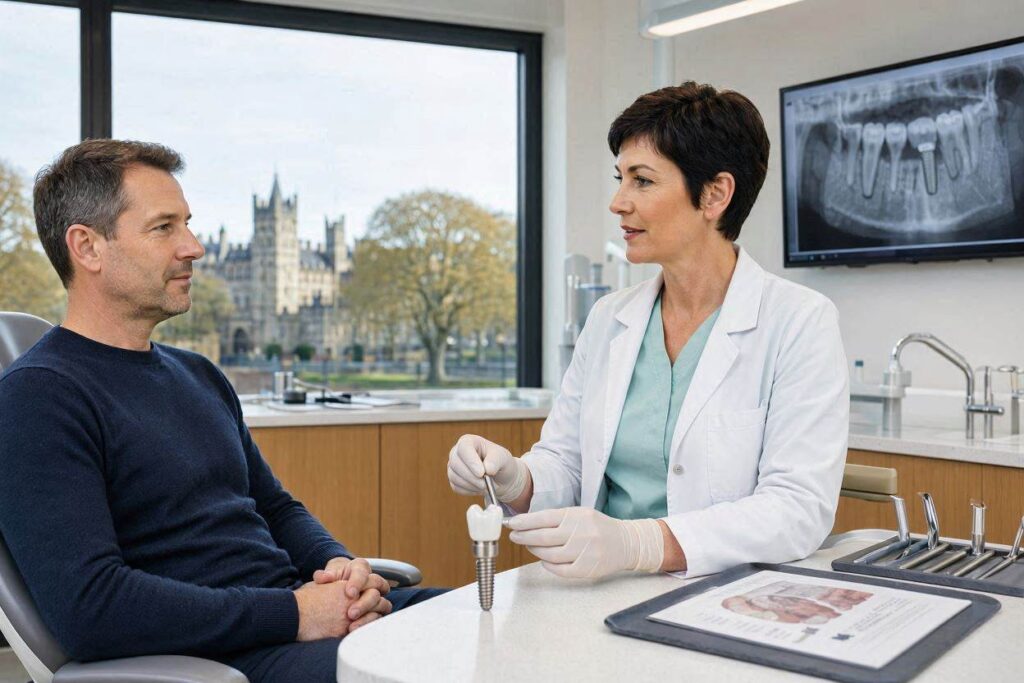
Before assessing worth, it is essential to understand the product. A dental implant is not a single object. It is a system of components designed to replicate the function and appearance of a natural tooth root and crown.
The implant fixture is a small post, typically made of commercially pure titanium or a titanium alloy. It is surgically placed into the jawbone in a precisely planned position. Over several months, the bone heals directly against the titanium surface, a biological process called osseointegration. This fusion is what gives implants their unique stability. Once integrated, a connector called an abutment is attached to the fixture. The final visible crown, custom-made from ceramic, is secured to the abutment.
This multi-component design is fundamental to understanding the value proposition. An implant replaces the root, not just the visible part of the tooth. This is the critical distinction from bridges and dentures.
The True Cost of Dental Implants in Cardiff
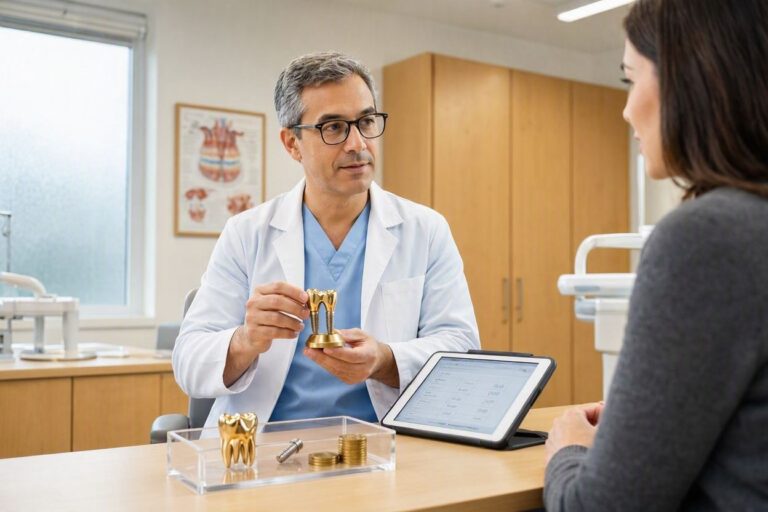
Cost is often the first and loudest question in a Cardiff patient’s mind. Dental implant fees in the Welsh capital reflect the UK private dentistry market, with some local variation.
A Breakdown of the Fees
A single dental implant in Cardiff, including all components and the final crown, typically ranges from £2,200 to £3,500. This is an all-in figure from a reputable independent practice or a small corporate chain. Some practices advertise lower starting prices, but patients must read the fine print. A headline price of £1,500 may only cover the surgical placement of the fixture, with the abutment and crown billed separately for an additional £1,000 to £1,500.
The fee structure usually includes:
- Initial consultation and assessment, including necessary X-rays
- The surgical placement of the implant fixture
- The healing abutment, which shapes the gum tissue during healing
- The final custom abutment
- The implant-retained crown, usually made of porcelain bonded to a metal or zirconia substructure
- Follow-up appointments and adjustments within a defined period
What Drives the Price in Cardiff
Cardiff is a capital city with a strong professional services sector. Commercial rent in desirable practice locations—Pontcanna, Cardiff Bay, Cyncoed, the city centre—is substantial. Dental practices pay business rates, utility costs, and competitive wages to attract and retain skilled dental nurses, hygienists, and treatment coordinators.
Laboratory costs also factor heavily. Most Cardiff dentists use high-quality dental laboratories, often located in the UK, though some use labs in Europe. A skilled technician fabricating a custom implant crown spends hours on model work, abutment design, and ceramic layering. The lab bill to the dentist for a single implant crown can range from £250 to £450. The dentist’s fee must cover this cost, plus all clinical time and overhead.
Cardiff Cost Comparison Table
| Treatment Option | Typical Cost in Cardiff (Single Tooth) | Longevity (Typical) | Notes |
|---|---|---|---|
| Dental Implant and Crown | £2,200 – £3,500 | 20+ years with excellent care | Replaces root; prevents bone loss |
| Conventional Bridge (3-unit) | £1,800 – £2,800 | 10 – 15 years | Requires drilling of adjacent healthy teeth |
| Resin-Bonded Bridge (Maryland) | £900 – £1,500 | 5 – 10 years | Less invasive but less durable |
| Partial Acrylic Denture | £400 – £800 | 5 – 8 years | Removable; can be uncomfortable |
| No Treatment | £0 | N/A | Adjacent teeth may drift; bone loss occurs |
This table reveals a truth about value. The implant is the most expensive option upfront. The bridge is somewhat less expensive but damages healthy adjacent teeth. The denture is the least expensive but also the least comfortable and durable. The cost must be weighed against longevity and biological cost to the rest of the mouth.
The Value Proposition: What You Are Actually Buying
An implant is not merely a product. It is a service and a long-term biological investment. The value lies in several domains.
Preservation of Jawbone
When a tooth is lost, the bone that once supported it begins to resorb. This process is relentless and irreversible. Over years, the jawbone shrinks in height and width. This bone loss can alter facial contours, causing a sunken appearance around the mouth. It can also compromise the stability of adjacent teeth and make future tooth replacement more complicated.
A dental implant transmits chewing forces into the bone, mimicking the natural tooth root. This mechanical stimulation signals the body to maintain the bone. No other tooth replacement option offers this biological benefit. A bridge rests on top of the gum. A denture sits on the ridge. Only an implant preserves bone.
Protection of Adjacent Teeth
A traditional fixed bridge requires the dentist to prepare the teeth on either side of the gap. This involves removing healthy enamel and dentin, sometimes significantly, to accommodate crowns that will support the false tooth in the middle. These prepared teeth become more vulnerable to decay, nerve damage, and fracture over the lifespan of the bridge. When a bridge fails after ten to fifteen years, the abutment teeth are often in worse condition than when the process began.
An implant is self-supporting. It fills the gap without involving the neighboring teeth at all. The adjacent teeth remain untouched. This is a profound long-term biological advantage.
Stability, Comfort, and Function
A well-integrated implant feels like a natural tooth. It does not move. It does not press on the gums. It does not require removal for cleaning. The patient chews, speaks, and laughs without the background anxiety of denture slippage or bridge fragility.
For a patient who has struggled with a partial denture, the transition to an implant can be life-altering. Foods that were off-limits—crusty bread, raw vegetables, a crisp apple—become edible again. Speech clarity improves when a denture no longer interferes with tongue movement. The psychological burden of a removable appliance, the sense of being somehow diminished or elderly, lifts.
Aesthetic Integration
A single implant crown, crafted by a skilled dentist and laboratory, can be virtually indistinguishable from a natural tooth. The ceramic material reflects light like enamel. The emergence profile—the way the crown seems to grow out of the gum—is custom-designed. For a front tooth, this aesthetic result is priceless to the patient who has been hiding their smile.
The Risks and Realities: An Honest Appraisal
No medical procedure is without risk. A balanced assessment of worth requires a clear-eyed look at what can go wrong.
Surgical Risks
Implant placement is a surgical procedure. It involves raising a flap of gum tissue, preparing the bone with precisely sized drills, and inserting the fixture. Risks include:
- Post-operative pain, swelling, and bruising, typically lasting several days
- Infection at the surgical site
- Injury to the inferior alveolar nerve in the lower jaw, which can cause temporary or, rarely, permanent numbness of the lip and chin
- Perforation of the sinus or nasal cavity when placing upper jaw implants
- Bleeding complications, particularly in patients on anticoagulant medications
These risks are low, particularly when a thorough pre-operative assessment with 3D imaging is performed. A Cone Beam CT scan reveals the exact position of nerves, sinuses, and bone volume. A dentist who invests in this imaging and plans digitally can avoid anatomical structures with precision.
Implant Failure
Osseointegration is not guaranteed. The implant may fail to integrate with the bone. Early failure, occurring before or shortly after the crown is placed, is often related to surgical technique, infection, or patient factors. Late failure, occurring after years of function, is often related to peri-implantitis, a destructive inflammatory condition affecting the tissues around the implant.
Risk factors for implant failure include:
- Smoking, which constricts blood vessels and impairs healing
- Uncontrolled diabetes with poor glycemic control
- Poor oral hygiene, leading to bacterial accumulation around the implant
- A history of periodontal disease, which indicates a susceptibility to inflammatory bone loss
- Bruxism, or teeth grinding, which can overload the implant and its components
A patient who smokes heavily and is unwilling or unable to quit must have a frank conversation with their dentist. The implant may still be placed, but the risk of failure and peri-implantitis is significantly elevated.
Peri-Implantitis: The Long-Term Threat
Peri-implantitis is the leading cause of late implant failure. It is a plaque-induced inflammatory condition that causes progressive loss of the bone supporting the implant. It often develops silently, without pain, until the implant becomes mobile.
The risk of peri-implantitis underscores the importance of long-term maintenance. The patient who invests thousands in an implant must also invest in meticulous home care and regular professional maintenance. This means daily cleaning around the implant with specialized floss or interdental brushes, and regular visits to the dentist or hygienist for monitoring and debridement. An implant is not a “fit and forget” solution. It requires a lifetime of care.
The Cardiff Dental Landscape: Where to Seek Care
Cardiff offers a wide range of dental implant providers. Navigating this landscape is part of making the decision.
General Dentists with Implant Training
Many general dental practitioners in Cardiff have completed postgraduate implant training and offer implant placement as part of their restorative practice. They may place straightforward cases and refer complex ones to a specialist. This can be a convenient and often cost-effective option. The patient should ask about the dentist’s specific training, the number of implants they place annually, and their complication rate.
Specialists: Periodontists and Oral Surgeons
For complex cases—patients with significant bone loss requiring grafting, full-arch implant reconstructions, or medical conditions that complicate surgery—referral to a specialist is indicated. Periodontists specialize in the supporting structures of the teeth. Oral surgeons bring hospital-based surgical training. Their fees are higher than a general dentist’s, but their expertise matches the complexity of the case.
Corporate Chains vs. Independent Practices
Cardiff has both large corporate dental chains and long-established independent practices offering implants. Corporate chains may advertise aggressive pricing and financing offers. Independent practices may offer deeper personal relationships and continuity of care. The patient should evaluate the provider, not just the brand. A specific dentist places the implant. Their skill, experience, and ethical approach matter more than the logo on the door.
Consultations: What to Expect
A thorough implant consultation in Cardiff should include:
- A detailed medical and dental history review
- Clinical examination of the gap and surrounding teeth
- Assessment of oral hygiene and periodontal health
- Radiographic imaging, ideally a 3D CBCT scan
- A written treatment plan with itemized fees
- Discussion of risks, benefits, and alternatives
- Explanation of the treatment timeline and aftercare requirements
If a consultation rushes through these steps or pressures the patient to commit on the day, it is a red flag. A quality provider educates and allows the patient time to decide.
The Alternative Options: Why Implants May Not Be the Best Choice
Worth is determined partly by alternatives. For some Cardiff patients, an alternative to an implant may be clinically or financially preferable.
When a Bridge Makes More Sense
A fixed bridge may be the better option when the adjacent teeth are already heavily restored or would benefit from full-coverage crowns for independent reasons. If the teeth on either side of the gap have large failing fillings, crowning them as part of a bridge simultaneously addresses their structural issues and fills the gap. In this scenario, the bridge is not destroying healthy teeth; it is restoring compromised ones.
When a Denture Is Appropriate
For a patient with multiple missing teeth, significant medical conditions that make surgery risky, or a very limited budget, a well-made partial or complete denture remains a perfectly valid restoration. A denture can restore function and aesthetics at a fraction of the cost. The trade-off in comfort and stability must be acknowledged, but a denture is a legitimate choice, not a failure.
The Option of Leaving the Gap
A patient may choose to accept the gap and do nothing. This choice has consequences—drifting of adjacent teeth, over-eruption of the opposing tooth, bone loss—that should be explained. If the missing tooth is a back molar and the patient feels no functional or aesthetic deficit, leaving the gap may be a reasonable, cost-free decision. But the patient must make it with full knowledge of what may happen over time.
The Psychological Dimension: Smile Confidence in Cardiff
Value cannot be measured purely in pounds and clinical outcomes. The psychological impact of tooth loss and replacement is substantial.
Cardiff is a social city. Sporting events at the Principality Stadium draw crowds. Theatres, concert venues, and restaurants fill with people who talk, laugh, and smile. For someone who has become self-conscious about a missing tooth, these simple social pleasures become sources of anxiety. The hand that instinctively covers the mouth when laughing. The tight-lipped smile in photographs. The avoidance of certain foods on a date or a business lunch.
The restoration of a confident smile has value that transcends clinical utility. Patients often report that their dental implant allowed them to forget they had ever lost a tooth. That forgetting is the ultimate marker of success. It is hard to place a pound value on the ability to smile without thinking, but it is precisely what patients are buying.
Financing Implants in Cardiff
The significant upfront cost leads many Cardiff patients to explore payment options.
Practice Payment Plans
Many Cardiff dental practices offer in-house payment plans. The patient pays a deposit, often 20% to 50%, and clears the balance in monthly instalments over six to twelve months. Interest may or may not be charged. This is most common in independent, established practices with long-term patient relationships.
Medical Finance Companies
Third-party finance companies specializing in healthcare offer loans for dental treatment. Terms can extend to two to five years, reducing the monthly payment. Interest rates vary with credit history and loan term. A zero-percent interest period may be available for shorter terms. Patients should read terms carefully and understand the total amount repayable.
Dental Insurance and Cash Plans
Some private dental insurance policies and health cash plans provide a contribution toward implant treatment, but this is subject to waiting periods, annual limits, and specific exclusions. A patient considering an implant should review their policy or cash plan documents. The contribution is unlikely to cover the full cost but may reduce the burden.
NHS Dental Care in Cardiff: The Reality
The National Health Service in Wales provides dental care, but the range of services is limited and governed by clinical need, not patient preference. NHS dental implants are extraordinarily rare. They are only available in exceptional clinical circumstances, typically managed through hospital-based consultant services. A patient with a missing tooth and healthy adjacent teeth will not be offered an implant on the NHS. The NHS pathway for tooth replacement is typically a denture or, less commonly, a bridge if specific clinical criteria are met.
This means the decision about implants in Cardiff is almost entirely a private dentistry decision. The patient is a consumer in a market, weighing cost against perceived value.
The Treatment Journey: What Cardiff Patients Experience
Understanding the timeline and process demystifies the experience.
Stage One: Assessment and Planning
The first appointment involves a comprehensive examination, imaging, and discussion of the treatment plan. Digital planning software may be used to virtually place the implant in the 3D scan, determining the ideal position, angle, and depth.
Stage Two: Surgical Placement
The implant fixture is placed under local anesthesia. The procedure for a single implant typically takes 60 to 90 minutes. The gum is sutured closed over the implant, which is left to heal buried under the tissue for several months. Some protocols use a healing abutment that projects through the gum, eliminating the need for a second minor surgery.
Stage Three: Osseointegration Period
A waiting period of three to six months allows the bone to heal against the implant surface. The patient wears a temporary restoration—a denture, a temporary bridge, or nothing in the gap—during this time. There is no visible metal showing; the implant is completely buried.
Stage Four: Uncovering and Impressions
Once integration is confirmed, the implant is uncovered. The dentist takes an impression, either traditional or digital, which is sent to the laboratory for fabrication of the final abutment and crown.
Stage Five: Crown Delivery
The final crown is seated, adjusted for proper bite, and torqued into place. The dentist provides detailed instructions for home care and schedules follow-up maintenance appointments.
The entire process for a straightforward single implant spans four to eight months from surgery to final crown. Additional procedures like bone grafting extend the timeline.
Maintenance: The Commitment That Determines Longevity
An implant’s worth is directly related to how long it lasts. Longevity depends heavily on maintenance.
Daily Home Care
The patient must clean around the implant meticulously. This involves using specialized floss designed for implants, interdental brushes, or water flossers. The junction where the crown meets the gum is the critical zone. Bacteria that accumulate here cause peri-implant mucositis, the precursor to peri-implantitis. Mucositis is reversible with improved cleaning. Peri-implantitis is destructive and much harder to treat.
Professional Maintenance
Regular visits to the dentist or hygienist for implant monitoring and professional debridement are essential. The clinician uses specialized instruments that do not scratch the titanium or ceramic surfaces. Probing depths are measured and recorded. Radiographs are taken periodically to assess bone levels. Early signs of trouble can be intercepted.
The Cardiff patient who commits to this maintenance significantly increases the probability that their implant will last twenty years or more.
Conclusion
For a Cardiff resident with a missing tooth who values long-term function, bone preservation, and the freedom of a fixed, natural-feeling restoration, a dental implant is worth the investment. The upfront cost is substantial, but it purchases a biological benefit—preservation of the jawbone and protection of adjacent teeth—that no other option provides. The decision requires a careful assessment of personal health factors, a realistic understanding of the maintenance commitment, and a thoughtful choice of provider in Cardiff’s diverse dental market. When done well, an implant becomes something the patient forgets they have, and that forgetting is the truest measure of its value.
Frequently Asked Questions
How long does a dental implant take from start to finish in Cardiff?
A straightforward single implant typically takes four to eight months from surgical placement to final crown delivery. Cases requiring bone grafting or sinus elevation can extend the timeline to nine to twelve months.
Are dental implants available on the NHS in Cardiff?
NHS dental implants are exceptionally rare and only provided through hospital consultant services for specific clinical circumstances, such as reconstructive surgery following trauma or cancer treatment.
What is the success rate of dental implants?
In healthy patients with good oral hygiene, implant survival rates exceed 95% over ten years. Success rates are lower in smokers, patients with uncontrolled diabetes, and those with a history of periodontal disease.
Does the implant procedure hurt?
Implant surgery is performed under local anesthesia and is generally no more uncomfortable than a routine extraction. Post-operative soreness, managed with over-the-counter analgesics, typically resolves within a few days.
Can I have an implant placed immediately after a tooth extraction?
In selected cases, an implant can be placed at the same time as the extraction. This is called immediate implant placement. It is only appropriate when the extraction socket is healthy and there is adequate bone. Your dentist will advise if this is suitable for you.
How do I clean my dental implant?
Use a soft-bristled brush, specialized implant floss or interdental brushes, and consider a water flosser. The critical zone is where the crown meets the gum. Regular professional maintenance with your dentist or hygienist is essential.
Additional Resource:
Cardiff and Vale University Health Board – Dental Services Information
https://cavuhb.nhs.wales/services/dental-services/