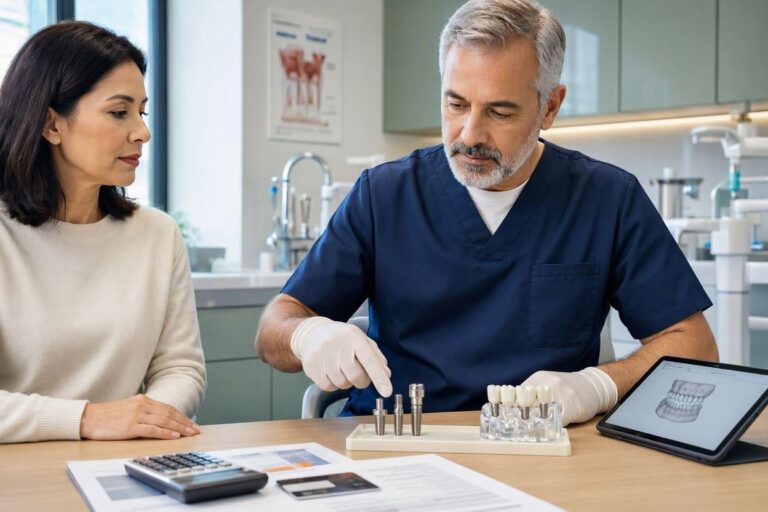
Dental Implant Pain After 3 Weeks
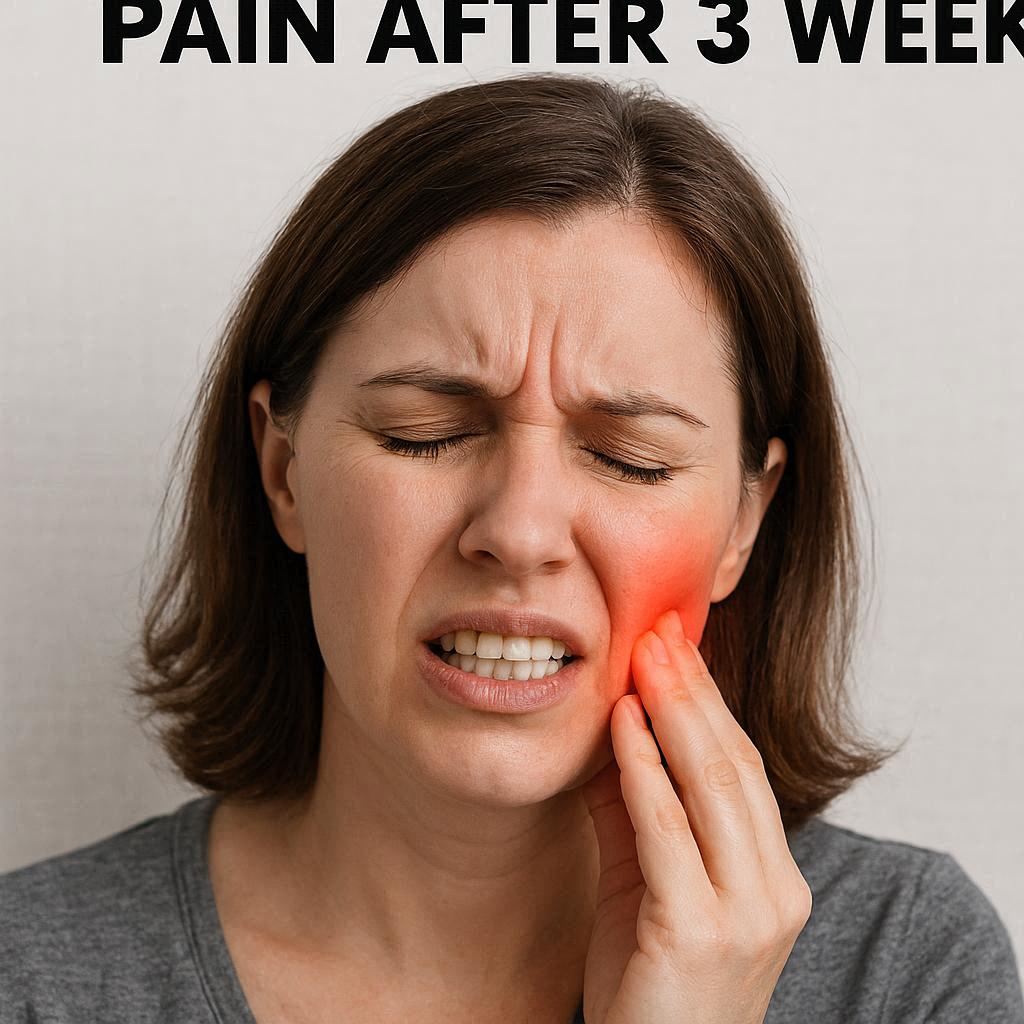
You made it through the surgery. You survived the first few days of swelling, soft foods, and careful rinsing. But now, three weeks later, you still feel discomfort. Maybe it is a dull ache. Maybe a sharp pinch when you chew. Or perhaps a strange pressure that was not there last week.
First, take a breath. You are not alone.
Many people expect dental implant recovery to be a straight line. Day one is hard. Day ten is better. Day twenty is pain-free. But real life does not always follow that script.
Feeling dental implant pain after 3 weeks can be unsettling. Your mind might jump to worst-case scenarios: implant failure, nerve damage, or another surgery. The good news is that most late pain is treatable and not a sign of disaster.
This guide walks you through exactly what happens inside your mouth three weeks after implant surgery. You will learn the difference between normal healing sensations and red flags. You will also discover practical steps to ease discomfort and protect your investment.
Let us get one thing clear from the start: a little tenderness at week three is common. Ignoring severe or worsening pain is not.
What Should Healing Look Like at Week Three?
To understand why you might feel pain, you first need to know what is happening beneath the surface.
At three weeks post-surgery, your body is deep in the bone healing phase. This stage is called osseointegration. During this process, your jawbone grows tightly around the titanium implant post. Think of it like a tree’s roots slowly gripping the soil. That grip takes time.
The Timeline of Normal Healing
| Time After Surgery | Typical Sensations | What Is Happening Inside |
|---|---|---|
| Days 1–3 | Moderate pain, swelling, bleeding | Blood clot forms. Inflammation peaks. |
| Days 4–7 | Pain decreases. Sore to touch. | Soft tissue starts closing. Swelling goes down. |
| Days 7–14 | Mild ache. Occasional throbbing. | Gum healing advances. Bone cells begin attaching to implant. |
| Days 14–21 | Intermittent dull pain. Pressure sensitivity. | Active bone remodeling. Nerves regenerate. |
| Weeks 3–4 | Minor discomfort when chewing. No sharp pain. | Osseointegration continues. Implant feels “solid.” |
At week three, you should not feel severe pain. But a low-level ache or tenderness when pressing on the area is still within the normal range.
Important Note: Everyone heals differently. Age, overall health, smoking status, and whether you had bone grafting all affect your recovery speed. Do not compare your week three to someone else’s week two.
Common Causes of Dental Implant Pain After 3 Weeks
If you are experiencing discomfort at this stage, one of the following reasons is likely the culprit. Most are manageable. Some need a dentist’s attention.
1. Normal Nerve Regeneration
When your dentist placed the implant, minor nerve endings in your gum and bone were disturbed. Those nerves take time to wake back up. As they regenerate, they can send mixed signals to your brain. You might feel tingling, zaps, or a dull ache.
This is not dangerous. It usually fades by week six or eight.
2. Pressure from Your Temporary Crown or Healing Abutment
Many patients receive a temporary crown or a healing abutment (a small metal cap) on top of the implant. This piece sticks up through the gum. If your bite is slightly uneven, that extra pressure transfers directly to the implant below. Over days, that constant pounding can cause a deep, bone-level ache.
Quick test: Bite down gently on a piece of colored paper (articulating paper) or ask your dentist to check your bite. A high spot as thin as a hair can cause pain.
3. Food Impaction
Even with good oral hygiene, food particles can get trapped around the healing abutment or under the gum line. Unlike natural teeth, implants have no ligament cushion. A tiny seed or piece of popcorn can create localized inflammation and tenderness.
4. Peri-Implant Mucositis (Early Gum Inflammation)
This is the earliest stage of gum disease around an implant. It is reversible. Symptoms include red, puffy gums that bleed when you brush. You might feel a mild ache or pressure. Mucositis is often caused by inadequate cleaning. The good news is that improving your hygiene usually clears it up in one to two weeks.
5. Micro-Movement of the Implant
In rare cases, an implant that has not fully integrated can move microscopically. This might happen if you chewed hard food too early or grind your teeth at night (bruxism). Micro-movement interrupts bone growth. The body responds with persistent, dull pain that does not go away.
6. Sinus Issues (Upper Implants Only)
If your implant is in the upper back jaw (molar or premolar area), the tip may sit close to your sinus floor. At three weeks, sinus pressure from a cold, allergy, or flight can push against the implant. You might feel a deep ache in your cheek, temple, or upper teeth.
7. Adjacent Tooth Problems
Sometimes the pain is not from the implant at all. The tooth next to your implant might have hidden decay, a crack, or gum recession. Because your brain is hyper-focused on the surgery site, it blames the implant. A simple cold test on neighboring teeth can rule this out.
Red Flags: When Dental Implant Pain After 3 Weeks Is an Emergency
Not all pain is equal. Some symptoms require immediate attention. Do not wait for your next scheduled check-up if you notice any of the following.
Signs That Need a Same-Day Call to Your Dentist
- Pain that wakes you up at night or is severe enough to stop you from sleeping
- Swelling that suddenly reappears after having gone down completely
- A bad taste in your mouth that does not go away after brushing
- Pus or yellow drainage from the gum around the implant
- Fever over 100.4°F (38°C)
- The implant feels loose or moves when you touch it with your finger or tongue
- Pain that gets worse every day instead of better
These symptoms can indicate an infection (peri-implantitis), a failed osseointegration, or a damaged nerve. Early treatment saves implants. Waiting usually makes things worse.
Note: Do not self-medicate with antibiotics left over from a previous illness. You need the right type and dose. See your dentist.
How to Relieve Dental Implant Pain at Home (Safely)
For mild to moderate pain that is not accompanied by red flags, these home strategies can help.
1. Salt Water Rinses (Not Antiseptic Mouthwash)
Warm salt water reduces inflammation and cleans the area without irritating healing tissues.
Recipe: Mix 1 teaspoon of salt in 8 ounces of warm water. Rinse gently for 30 seconds. Do this twice daily. Avoid vigorous swishing.
Avoid: Alcohol-based mouthwashes. They dry out tissues and can delay healing.
2. Switch to a Soft Toothbrush Around the Implant
Your regular toothbrush might be too firm for the sensitive gum collar around your implant. Use a soft or extra-soft brush. Brush in small circles, angling slightly toward the gum line.
3. Cold Compress (Even at Week Three)
If your pain feels hot, throbbing, or accompanied by mild new swelling, cold can help. Apply an ice pack wrapped in a thin cloth to the outside of your cheek for 10 minutes. Wait 20 minutes. Repeat as needed.
4. Over-the-Counter Pain Relievers
- Ibuprofen (Advil, Motrin): Best for bone ache and inflammation. Take with food.
- Acetaminophen (Tylenol): Best for nerve-like pain. Does not reduce swelling.
Do not take both at the same time unless your dentist approves. Never exceed package directions.
5. Adjust Your Chewing Habits
For the next week, chew only on the opposite side of your mouth. Cut food into small pieces. Avoid:
- Nuts and seeds
- Hard bread or crusty rolls
- Sticky candy or caramel
- Ice cubes
- Corn on the cob
6. Use a Water Flosser on Low Setting
A water flosser (like Waterpik) can gently clean around the healing abutment. Use the lowest pressure setting. Aim the tip at a 90-degree angle to the gum. Do not blast directly under the gum line.
7. Night Guard for Teeth Grinding
If you suspect you grind your teeth at night (worn teeth, jaw soreness in the morning, or a partner who complains about noise), ask your dentist about a custom night guard. Over-the-counter boil-and-bite guards are not recommended for implants because they can shift your bite.
When to See Your Dentist (Non-Emergency But Important)
You do not need to panic, but you should schedule an appointment within the next few days if:
- Pain has not improved after one week of home care
- You cannot chew even soft food like scrambled eggs
- The gum around the implant is bright red or purple
- You have a persistent bad odor from that area
- Your temporary crown or abutment feels loose when touched
These are signs of a developing problem that is easier to fix early.
What Your Dentist Might Do to Diagnose the Problem
When you go in for a check-up for late implant pain, here is what to expect. Understanding the process reduces anxiety.
Step 1: Visual and Tactile Exam
Your dentist will look for redness, swelling, or bleeding. They will gently press on the gum around the implant (probing). They will also try to wiggle the implant with two instruments. Any visible movement is a red flag.
Step 2: Bite Adjustment
If a high spot on your temporary crown is the cause, the dentist will shave down a tiny amount of the crown’s surface. You will feel immediate relief. This takes two minutes and requires no anesthesia.
Step 3: X-Rays (Periapical or CBCT)
A standard dental X-ray shows the bone level around the implant. At three weeks, some bone loss is normal (about 0.5 to 1 mm). More than that suggests infection or overload. A 3D CBCT scan gives a complete picture of the implant, nerves, and sinuses.
Step 4: Periotest
This is a small handheld device that taps the implant gently. It measures how stable the implant is. A low reading means good integration. A high reading means the implant is moving too much.
Step 5: Microbial Testing
If infection is suspected, your dentist may take a small sample of fluid from around the implant. This is sent to a lab to identify the exact bacteria. The results guide antibiotic choice.
Common Misconceptions About Late Implant Pain
Let us clear up a few myths that cause unnecessary worry.
| Myth | Reality |
|---|---|
| “No pain at week three means success. Pain means failure.” | Many successful implants cause intermittent mild pain for up to eight weeks. Pain alone does not equal failure. |
| “If it hurts, I should stop brushing that area.” | Stopping brushing leads to more bacteria and worse pain. Brush gently but thoroughly. |
| “Implants cannot get infections.” | They can. The infection is in the gum and bone around the implant. It is called peri-implantitis. |
| “Pain means I need the implant removed.” | Most causes of pain are treatable without removal. Removal is a last resort. |
| “I should take antibiotics just in case.” | Unnecessary antibiotics create resistant bacteria. Only take them if prescribed for a confirmed infection. |
Prevention: How to Avoid Pain After the Three-Week Mark
You already had surgery. Now you want to protect your results. These habits keep your implant comfortable for decades.
Daily Implant Care Routine
- Brush twice a day with a soft brush. Pay extra attention to the gum line around the implant.
- Floss with implant-specific floss or superfloss. It has a stiff end to thread under the abutment.
- Use a water flosser once daily on low pressure. Aim the tip between the gum and the abutment.
- Avoid tobacco completely. Smoking dramatically increases infection rates and bone loss around implants.
- Visit your dentist every six months for professional cleaning. Regular hygienists know how to clean implants without scratching the surface.
Foods to Avoid for the First Two Months
- Steak or tough meats (cut into tiny pieces if you must eat them)
- Hard candies and mints
- Crusty baguettes
- Popcorn (the hulls are a nightmare)
- Chips and hard pretzels
Foods That Are Gentle on Healing Implants
- Greek yogurt
- Mashed potatoes
- Smoothies (no seeds, no straw)
- Scrambled eggs
- Oatmeal
- Cottage cheese
- Well-cooked pasta
- Banana
Real Patient Scenarios: What Others Experienced at Week Three
These are anonymized examples from clinical practice. They show the range of normal and not-so-normal.
Case 1: Sarah, 42 – Lower Molar Implant
At week three, Sarah felt a dull ache when chewing on the left side. Her dentist found a high spot on the temporary crown. After a 30-second adjustment, the pain vanished. Total cost: $0 during her follow-up visit.
Case 2: Mark, 58 – Upper Premolar with Bone Graft
Mark had sharp, intermittent zaps of pain at week three. No swelling or redness. His dentist explained that the nerve in the adjacent tooth was settling after the graft. The pain faded completely by week seven.
Case 3: Linda, 34 – Front Tooth Implant
Linda noticed bleeding when brushing and a persistent bad taste. Her dentist diagnosed peri-implant mucositis from inadequate flossing. After two weeks of proper cleaning with a water flosser and chlorhexidine rinse (prescribed), the pain and bleeding stopped.
Case 4: Tom, 67 – Two Implants for Lower Denture Support
Tom felt deep, throbbing pain that kept him up at night. One implant was slightly loose. X-rays showed infection around the tip of the implant. He received antibiotics and a minor surgical cleaning. The implant was saved. He admits he skipped several follow-up appointments.
Frequently Asked Questions (FAQ)
1. Is it normal to have dental implant pain after 3 weeks?
Yes, mild to moderate dull pain or pressure sensitivity is common at three weeks. Severe or worsening pain is not normal.
2. Can stress make my implant hurt more?
Absolutely. Stress increases jaw clenching and teeth grinding (bruxism). Both put extra pressure on the implant and can cause delayed pain.
3. Why does my implant hurt when I smile or talk?
If the healing abutment is tall or your gum is still swollen, movement of your upper lip can tug on the area. This usually resolves as swelling goes down. If it persists, your dentist may trim the abutment.
4. How long does post-implant nerve pain last?
Nerve regeneration pain (tingling, zaps, mild electric sensations) typically lasts 4 to 8 weeks. It is harmless but annoying.
5. Can an implant fail at three weeks?
Yes, but it is rare. Early failure (within the first three months) is usually due to infection, poor bone quality, or overloading. The success rate for dental implants is over 95% in healthy patients.
6. What does peri-implantitis pain feel like?
It often starts as a dull ache with bleeding gums. As it worsens, the pain becomes deeper, more constant, and may include a bad taste or pus.
7. Should I use an electric toothbrush on my implant?
Yes, but use a soft brush head. Do not press hard. Let the brush do the work. Sonic brushes are generally safe.
8. Can I drink alcohol at week three after implant surgery?
Alcohol does not directly harm the implant, but it can increase bleeding and delay soft tissue healing. It is best to wait until week four or five. If you do drink, limit to one serving and rinse with water afterward.
9. My implant hurts when it is cold outside. Why?
Temperature sensitivity is rare but possible if your gum tissue is thin over the implant. Cold air stimulates nerve endings near the surface. This usually improves as gum thickness matures.
10. When should I give up and see a specialist?
If your general dentist has tried bite adjustments, hygiene coaching, and antibiotics, and you still have pain after two weeks, ask for a referral to a periodontist or prosthodontist who specializes in implant complications.
Additional Resources
For more detailed, science-backed information on dental implant healing and long-term care, visit the American Academy of Periodontology’s patient education page on dental implants.
👉 Resource link: perio.org/consumer/dental-implants
This site offers free downloadable guides, illustrations of proper implant cleaning techniques, and a search tool to find a specialist near you.
Conclusion
Dental implant pain after 3 weeks is usually not a disaster. Most cases come from normal nerve healing, a slightly high bite, food trapping, or mild gum inflammation. All of these are treatable. Severe pain, swelling, pus, or looseness are red flags that need immediate dental attention. Listen to your body, keep the area clean, avoid hard foods, and see your dentist if pain lasts more than a few days or worsens over time.