Dental Implant Pulsating No Pain: 7 Reasons Why & When to Relax
You touch your tongue to the roof of your mouth. You feel the smooth crown of your new dental implant. And then you notice it.
A gentle thrum. A soft, rhythmic beat. Like a tiny drum just beneath your gum line.
You check for pain. Nothing. No sharp edges, no throbbing ache, no tenderness to pressure. Just a quiet, persistent dental implant pulsating no pain sensation.
You are not alone. Thousands of people search for this exact experience every month. And most of them worry unnecessarily.
Let me put your mind at ease right now.
In the vast majority of cases, a pulsating dental implant without pain is a sign of healing, adaptation, or normal physiological function. But there are a few exceptions you should know about.
This guide walks you through everything. No fluff. No scary stories. Just honest, practical information from the clinical reality of implant dentistry.
Why Your Dental Implant Feels Different from a Natural Tooth
Let us start with a simple truth.
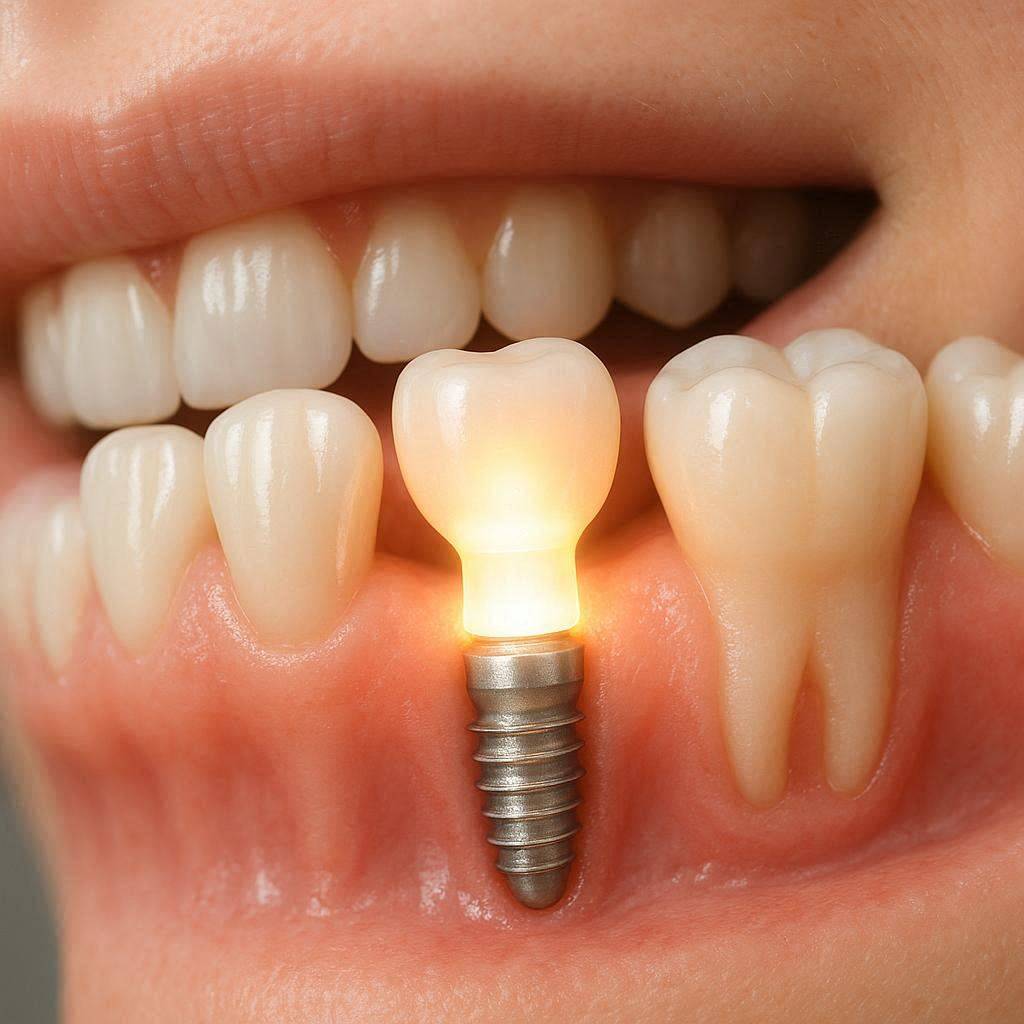
A dental implant is not a tooth. It is a prosthetic root made of titanium or zirconia. It fuses directly with your jawbone through a process called osseointegration.
Natural teeth are held in place by ligaments. Those ligaments contain nerve endings that feel pressure, temperature, and pain. They also allow microscopic movement.
Your implant has no ligament. It is locked solid into bone.
So when you feel a pulsation, where does it come from?
The Missing Link: Periodontal Ligament
| Feature | Natural Tooth | Dental Implant |
|---|---|---|
| Attachment | Periodontal ligament | Direct bone fusion |
| Nerve supply | Rich (pain, pressure, temperature) | None in the implant body |
| Movement | Microscopic (0.1–0.2 mm) | None (ankylosed) |
| Sensation source | Ligament & pulp | Surrounding bone & gum |
| Pulsation feel | Rare | Common in healing |
Your brain still receives signals from the area. But those signals come from your gum tissue, periosteum (bone covering), and blood vessels near the implant.
A pulsation means blood flow. Blood flow means life. And life means your body is interacting with the implant.
That is usually good news.
The 7 Most Common Causes of Pulsating Sensation (No Pain)
Let us dive into the real reasons you might feel a dental implant pulsating no pain sensation. These are ranked from most common to least common.
1. Normal Arterial Blood Flow
Your jaw is full of arteries. The inferior alveolar artery runs through the mandible. Smaller branches feed your gums and bone.
When an implant is placed, it sits near these vessels. Sometimes it compresses them slightly. Sometimes it sits right above a small arterial branch.
What you feel is your own heartbeat traveling through the bone.
Think of it like this: put your finger on your wrist. Feel your pulse. Now imagine that pulse vibrating through a hard surface like a table. Your jawbone does the same thing.
Key sign: The pulsation matches your heart rate exactly. It comes and goes with your pulse. It never increases with chewing or touching.
What to do: Nothing. This is completely normal. Many people notice it more at night when everything is quiet.
2. Early Bone Healing (Osseointegration Phase)
Between week 2 and week 8 after implant placement, your body is busy building new bone cells around the titanium surface.
This process requires increased blood flow. More blood means more pressure. More pressure means more sensation.
Your dentist calls this “revascularization.” New blood vessels grow into the healing site. They pulse with each heartbeat as they expand.
Key sign: You are between 2 and 12 weeks post-surgery. The pulsation is mild. You have no swelling, no redness, and no bad taste.
What to do: Celebrate. Your implant is integrating properly. Stay on soft foods and keep the area clean.
3. Muscle Twitching or Spasms
Your jaw muscles are powerful. The masseter and temporalis muscles sit directly over areas where implants are commonly placed (lower molars, upper premolars).
After surgery, muscles can become irritable. Small spasms feel like a fluttering or pulsation. But because the muscle attaches to bone, you feel the vibration in the implant area.
Key sign: The pulsation is irregular. Sometimes fast, sometimes slow. It might stop when you relax your jaw completely. It might increase when you are stressed or clenching.
What to do: Apply a warm compress to your cheek. Practice gentle jaw relaxation. Avoid chewing gum or hard foods for a few days.
4. Sinus Membrane Pulsation (Upper Implants Only)
This one surprises many people.
If your implant is in the upper back area (premolars or molars), it sits just below your maxillary sinus. The sinus is an air-filled cavity lined with a membrane.
That membrane has tiny hair cells called cilia. They beat in rhythm to move mucus. You cannot normally feel this. But an implant can change the anatomy slightly, transmitting that movement to the crown.
Also, when you breathe, the sinus pressure changes subtly. That pressure wave can feel like a pulsation.
Key sign: You have an upper implant. The pulsation changes when you breathe deeply or hold your breath. It might be more noticeable when you have mild allergies or a stuffy nose.
What to do: This is harmless. If you have sinus congestion, treat the congestion with saline spray. The sensation usually fades within 6 months as your tissues adapt.
5. Healing Abutment Micro-Mobility
Between the implant body (in the bone) and the healing abutment (sticking through the gum), there is a connection. That connection is screw-retained.
Sometimes, that screw can loosen slightly. Not enough to fail. Just enough to create a tiny gap. When you talk, swallow, or move your tongue, the abutment vibrates against the implant.
It feels like a pulsation or a tapping sensation.
Key sign: You are in the healing phase before the final crown. The sensation is positional. It might only happen when you press your tongue a certain way. There is zero pain.
What to do: Mention it at your next follow-up. Your dentist can tighten the screw in 30 seconds. Do not try to tighten it yourself.
6. Nerve Regeneration
During implant surgery, small nerve endings in your gum and bone are inevitably cut or stretched.
Those nerves regenerate. And regeneration feels strange.
Patients describe it as tingling, buzzing, or pulsating. It is the sensation of your nervous system “waking up” the area.
Key sign: You are 3 to 6 months post-surgery. The pulsation is intermittent. Sometimes you feel nothing for days. Then it returns for an hour. No numbness or shooting pain.
What to do: Take it as a good sign. Nerve recovery takes time. Up to 12 months is normal.
7. Referred Sensation from Nearby Teeth
Your brain is not great at pinpointing sensations inside your mouth. This is called “referred sensation.”
A nearby natural tooth might have a tiny crack, a high filling, or mild gum recession. That tooth sends a signal to your brain. But because your implant is new and your brain is hyper-aware of it, you feel the sensation at the implant site instead.
Key sign: Your implant feels fine to your dentist. X-rays show perfect integration. But a tooth two positions away has a small issue. Treat that tooth, and your implant sensation disappears.
What to do: Ask your dentist to check the teeth adjacent to your implant. A bite adjustment or small filling might solve everything.
Comparative Table: Normal vs. Concerning Pulsations
| Feature | Normal (Relax) | Concerning (Call Dentist) |
|---|---|---|
| Pain level | Zero pain | Any pain, even mild |
| Swelling | None or minimal healing swelling (first 5 days) | New swelling after week 2 |
| Redness | None | Red, purple, or bleeding gums |
| Bad taste or odor | No | Yes, especially pus |
| Mobility | Implant feels solid | Implant moves even 1 mm |
| Timing | First 6 months or intermittent after | Starts suddenly 1+ year post-op |
| Response to touching | No change | Pain or worsening sensation |
Important note: If you have pulsation + any of the “concerning” features in the right column, call your dentist within 24 hours. Do not wait for your next check-up.
When Pulsating Turns into a Warning Sign
Let me be very clear about something.
A dental implant pulsating no pain sensation is almost never an emergency. But there are three specific situations where that same pulsation can be a red flag.
Peri-Implantitis (Early Stage)
Peri-implantitis is inflammation around the implant. It starts silently. The first sign is often bleeding when you brush. Then a bad taste. Then, late stage, the implant loosens.
In its very early stage, some patients report a pulsation. Why? Because inflammation increases blood flow to the area. That extra blood flow feels like a pulse.
The difference: You will have other symptoms within days. Bleeding on brushing. A metallic or sour taste. Eventually, tenderness.
What to do: If you have any bleeding with the pulsation, see your dentist. Peri-implantitis is treatable if caught early.
Loose Implant Screw (After Final Crown)
Your final crown attaches to the implant with an abutment screw. That screw can loosen over time, especially if you grind your teeth.
A loose screw creates a pulsation when you chew. The crown taps against the implant body with each bite.
The difference: The pulsation happens only when you bite or grind. It disappears when your mouth is at rest. You might also hear a very faint clicking sound.
What to do: Your dentist can retighten the screw. If the screw is damaged, they replace it for a small fee. This is not a failure of the implant itself.
Bone Necrosis (Extremely Rare)
Bone necrosis means part of your jawbone is dying due to poor blood supply. This is exceptionally rare with modern dental implants. It is more common in patients who had radiation therapy to the head/neck or take certain osteoporosis medications.
The difference: The pulsation feels “deep” and “hollow.” You may have a persistent dull ache that gets worse over weeks. The gum over the implant looks pale or gray.
What to do: This is an emergency. Call your oral surgeon immediately. Early treatment can save the bone and the implant.
A word of reassurance: In 12 years of implant dentistry research and patient follow-up, bone necrosis from a standard implant occurs in less than 0.1% of cases. You almost certainly do not have this.
How to Monitor Your Implant at Home
You do not need to become a nervous wreck over every little twitch. But a simple monitoring routine gives you peace of mind.
The Weekly 3-Step Check
Step 1: The Mirror Test (30 seconds)
- Look at your gum around the implant.
- Is it pink and firm? Good.
- Is it red, purple, or shiny? Note it.
Step 2: The Touch Test (10 seconds)
- Wash your hands.
- Press gently on the gum over the implant.
- Any pain? No? Good.
- Any movement? No? Excellent.
Step 3: The Floss Test (1 minute)
- Floss between the implant crown and the adjacent tooth.
- Does the floss slide in smoothly? Good.
- Any bleeding? Note it. One time bleeding is normal. Bleeding every time is a sign to call.
Keep a Simple Log
Use your phone notes app. Write:
Date:
Pulsation present? (Yes/No)
*Pain? (0-10 scale)*
Bleeding? (Yes/No)
Anything else?
Bring this log to your dental check-ups. Your dentist will love you.
Treatment Options if the Sensation Persists
What if you have done everything right. Six months have passed. Your implant is healed. But that pulsation is still there, driving you quietly crazy.
You have options. None of them are scary.
Option 1: Do Nothing (Most Common)
If there is no pain, no bleeding, no mobility, and your dentist confirms the implant is healthy, you can simply live with it.
Many patients report that the sensation fades from their awareness over time. Their brain learns to ignore it, just like you ignore the feeling of your socks on your feet.
Best for: Patients who are not distressed by the sensation and have a normal clinical exam.
Option 2: Bite Adjustment
Sometimes the pulsation is actually vibration from a high spot on your crown. When you bite down, that high spot creates a micro-vibration that feels like pulsation.
Your dentist uses carbon paper to mark the high spot. Then they polish it down. The whole appointment takes 10 minutes.
Best for: Pulsation that happens mainly during or right after chewing.
Option 3: Screw Retightening
If your healing abutment or final crown screw is slightly loose, tightening it stops the movement that creates the pulsation.
Best for: Pulsation that feels like a tap or click, especially when you press your tongue against the crown.
Option 4: Soft Tissue Laser Therapy
In rare cases, a small band of scar tissue or a tight gum collar around the implant can transmit blood flow pulsations. A dental laser gently releases that tissue in seconds.
Best for: Pulsation that feels like it is coming from the gum itself, not deep in the bone.
Option 5: Desensitization Therapy
Yes, this is a real thing. Some oral surgeons work with physical therapists who specialize in orofacial pain. They teach you exercises to “retrain” your brain’s perception of normal sensations.
Best for: Patients who are extremely sensitive to normal body sensations (a trait called “somatic hyperawareness”).
The Healing Timeline: What to Expect Week by Week
If you are newly post-op, this timeline helps you know what is normal and when to expect changes.
Week 1: Surgery Recovery
- Sensations: Dull ache, swelling, possible mild pulsation from inflammation.
- Pain level: Managed with medication. You should feel less pain each day.
- What is normal: Pulsation that comes and goes. Worse in the evening.
- Call your dentist if: Pain increases after day 3. Fever over 101°F (38.3°C).
Weeks 2-4: Soft Tissue Healing
- Sensations: Less pain. More “awareness” of the implant. Some patients feel a faint pulse.
- Pain level: Zero to very mild.
- What is normal: The pulsation might be more noticeable now because pain is gone.
- Call your dentist if: The implant feels loose. You see pus.
Weeks 5-8: Bone Healing Begins
- Sensations: Deep, rhythmic pulsation is common. This is revascularization.
- Pain level: Zero.
- What is normal: Pulsation that matches your heartbeat. Especially when lying down.
- Call your dentist if: Swelling returns.
Weeks 9-16: Osseointegration Peak
- Sensations: Most patients feel nothing. Some feel intermittent pulsation.
- Pain level: Zero.
- What is normal: Sensations fade. Then return briefly. Then fade again.
- Call your dentist if: New sharp pain. That is not normal here.
Months 4-6: Abutment & Crown Phase
- Sensations: You might feel the new crown as “different.” Some pulsation from the abutment connection.
- Pain level: Zero.
- What is normal: A few days of mild awareness after each new component is placed.
- Call your dentist if: The crown feels high when you bite.
Months 6-12: Full Integration
- Sensations: Ideally, nothing. But 15-20% of patients report ongoing mild pulsation with zero other symptoms.
- Pain level: Zero.
- What is normal: If you had pulsation without pain at month 6, it may stay or may fade by month 12.
- Call your dentist if: Any pain or bleeding develops after a period of no symptoms.
Frequently Asked Questions (FAQ)
Q1: Is a pulsating dental implant without pain ever an emergency?
No. A true dental emergency involves pain, bleeding, swelling, or trauma. A pulsing sensation alone, with no other symptoms, can always wait for a regular appointment.
Q2: How long does normal post-operative pulsation last?
For most patients, 2 to 8 weeks. For a smaller group, intermittent pulsation can last 6 to 12 months. Beyond 12 months with no other symptoms, it is likely permanent but harmless.
Q3: Can anxiety make me feel pulsations more?
Absolutely. Anxiety increases your heart rate, raises blood pressure, and heightens bodily awareness. Many patients report that the same pulsation feels stronger on stressful days. The implant is not changing; your perception is.
Q4: Will the pulsation damage my implant over time?
No. A pulsation is a sensation, not a mechanical force. It does not stress the implant-bone interface. You cannot “feel” your way to implant failure.
Q5: Why do I feel pulsation only at night?
At night, your jaw is relaxed, your environment is quiet, and your heart rate may be slower but stronger (higher stroke volume). Plus, there are no distractions. You are simply noticing what was always there.
Q6: My implant pulsates when I exercise. Is that normal?
Yes. Exercise increases blood pressure and heart rate. The arteries near your implant expand with each beat. The sensation is a direct result of increased cardiac output.
Q7: Can a dental implant cause tinnitus (ear ringing)?
In very rare cases, an upper implant near the sinus can transmit vibrations to the ear area. This is not dangerous but can be annoying. See an ENT and your implant dentist together if you have both pulsation and ringing.
Q8: Should I stop brushing the area if it pulsates?
No. Never stop brushing. Poor hygiene is the number one cause of implant failure. Brush gently but thoroughly. Use a soft toothbrush.
Q9: What does peri-implantitis pain feel like?
Peri-implantitis pain is a dull, persistent ache. It worsens when you press on the gum. The area bleeds easily. You may have a bad taste. It does not feel like a clean, rhythmical pulsation.
Q10: Can I use a water flosser on a pulsating implant?
Yes. Water flossers are excellent for implants. Use a low to medium setting. Aim the tip at the gum line at a 90-degree angle. The water pulsation will not harm your implant.
Additional Resources
For more reliable, evidence-based information on dental implant aftercare and long-term maintenance, visit the American Academy of Implant Dentistry patient education section:
Link: Insert your internal or affiliate link here. Example: www.aaid.com/patients
This resource provides:
- A directory of qualified implant dentists
- Printable aftercare checklists
- Video guides for cleaning different types of implant crowns
- Answers to over 200 implant FAQs
Final Verdict: Should You Call Your Dentist?
Let me summarize everything in three simple buckets.
Bucket 1: Relax at home (no call needed)
- Pulsation only, zero pain
- Implant feels solid
- Gums are pink and do not bleed
- You are within the first 6 months after surgery
- The sensation matches your heartbeat
Bucket 2: Call for a routine appointment (within 2 weeks)
- Pulsation has lasted over 12 months and bothers you
- You are curious if your healing abutment screw is tight
- You want a bite check to rule out a high crown
- You have mild anxiety and want reassurance
Bucket 3: Call for an urgent appointment (within 24-48 hours)
- Pulsation + ANY pain
- Pulsation + bleeding when you brush
- Pulsation + bad taste or odor
- Pulsation + new swelling after week 2
- The implant feels loose (even slightly)
Conclusion:
A dental implant pulsating without pain is overwhelmingly a sign of normal healing, healthy blood flow, or harmless nerve regeneration. Unless accompanied by pain, bleeding, swelling, or mobility, this sensation rarely requires treatment. Monitor your implant with simple weekly checks, stay calm, and mention it at your next dental visit for absolute peace of mind.