Dental Implant Tooth: A Complete, Honest Guide to Replacing a Missing Tooth
Losing a tooth can feel strange. You might hide your smile. Chewing becomes tricky. Even speaking can feel different.
For a long time, dentures or bridges were the only answers. But today, a dental implant tooth offers something better. It looks natural. It feels strong. And with proper care, it can last a lifetime.
This guide is for real people, not dental experts. We will walk through every step. You will learn about costs, pain, healing, and what to expect. No confusing terms. No false promises. Just honest, useful information to help you make the best choice for your smile.
What Is a Dental Implant Tooth? (The Simple Explanation)
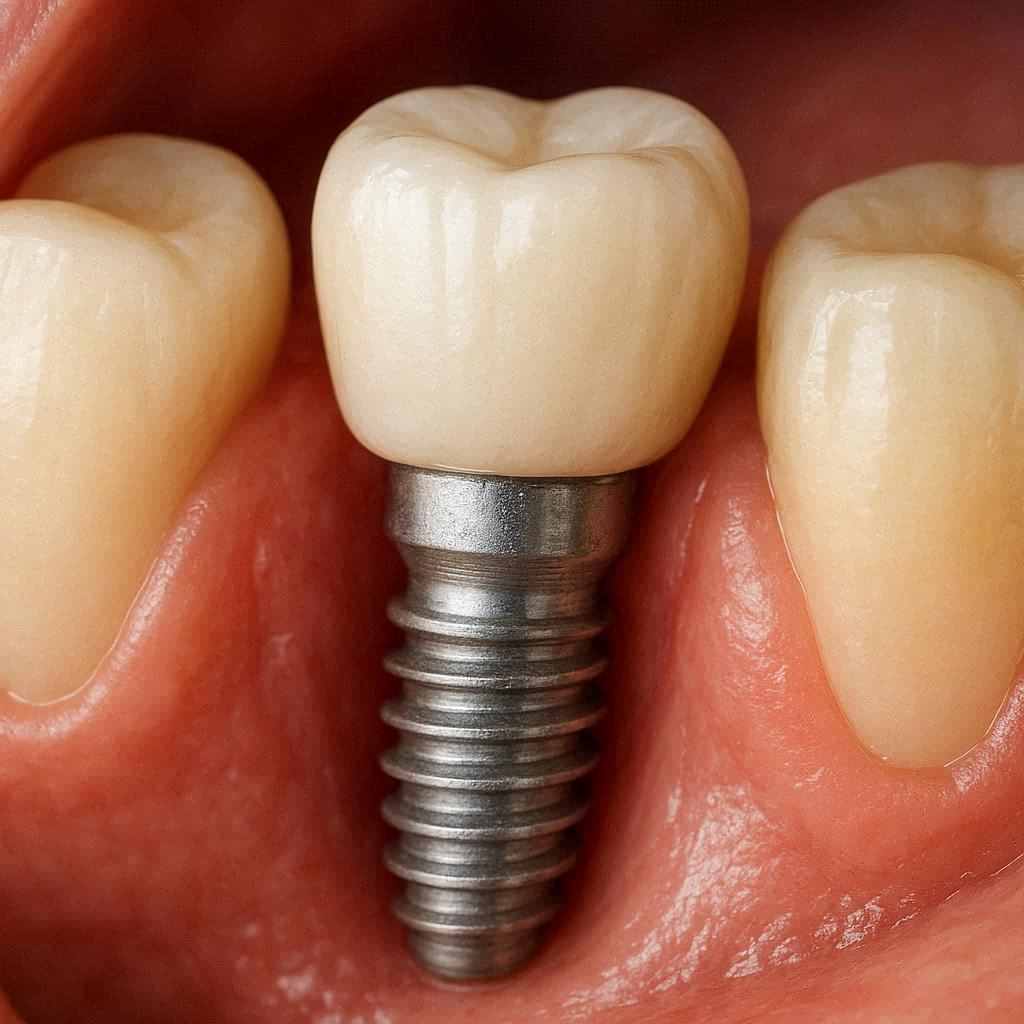
Let us break this down. A natural tooth has two main parts: the root (hidden in the gum) and the crown (the part you see).
A dental implant replaces both parts.
- The Implant (Root): A small screw, usually made of titanium. The surgeon places this into your jawbone. It acts like the natural root.
- The Abutment: A small connector piece. It attaches to the top of the implant.
- The Crown (Tooth): The visible, white part. A dental lab custom-makes it to match your other teeth.
When people say “I got a dental implant,” they usually mean all three parts. The result is a dental implant tooth that is stable and beautiful.
Important Note: An implant is not alive like a natural tooth. It will not get cavities. However, the gum and bone around it still need daily cleaning. Neglect can lead to infection and implant failure.
Why Choose a Dental Implant Over Other Options?
You have choices. Let us compare them honestly.
| Feature | Dental Implant | Fixed Bridge | Removable Denture |
|---|---|---|---|
| Looks & Feel | Like a natural tooth | Good, but may feel bulky | Artificial, can slip |
| Bone Health | Preserves jawbone | Does not stop bone loss | Accelerates bone loss |
| Adjacent Teeth | Left untouched | Neighboring teeth are shaved down | Uses metal clasps |
| Chewing Power | Nearly 100% of natural | About 60-80% | About 20-30% |
| Longevity | 20+ years to lifetime | 5-15 years | 3-8 years |
| Cost (Initial) | Higher | Medium | Lower |
The Hidden Cost of Doing Nothing
If you leave a gap, other teeth may shift. They can lean into the empty space. This makes cleaning harder. You might develop gum disease or cavities in strange places. The bone where the tooth was will slowly melt away (atrophy). Later, if you want an implant, you may need a bone graft first.
Who Is a Good Candidate for a Dental Implant Tooth?
Most healthy adults can get implants. However, your dentist will check a few things.
Good Signs You Are a Candidate
- You have one or more missing teeth.
- Your jawbone is finished growing (usually over age 18).
- You have enough bone to hold the implant.
- Your gums are healthy (no active gum disease).
- You do not smoke heavily (smoking slows healing).
- You are committed to good oral hygiene.
Managing Existing Conditions
- Diabetes: If well-controlled, implants often succeed. Your healing may be slower, but many people with diabetes get implants.
- Osteoporosis: Some medications (like bisphosphonates) increase risks. Tell your dentist all your medications.
- Gum Disease: You must treat this first. An implant placed into infected gums is likely to fail.
Quote from a prosthodontist: “I always tell patients: The implant is not the risky part. The real risk is placing it in a mouth that is not healthy first.”
The Step-by-Step Procedure: From Start to Final Tooth
The whole process takes several months. This is normal. Rushing can lead to failure. Here is a realistic timeline.
Step 1: Consultation and Planning (1 visit)
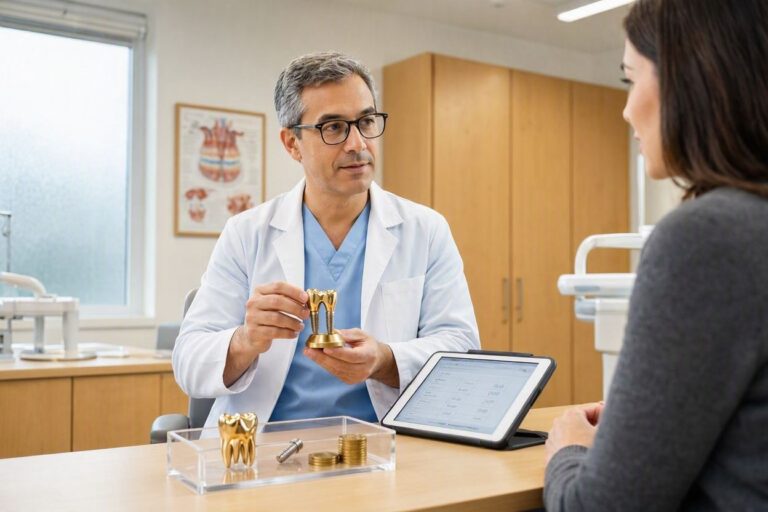
Your dentist will take X-rays or a 3D CT scan. They measure your bone. They check nerve positions. You will discuss medical history and costs. This is your time to ask every question you have.
Step 2: Preparatory Work (Sometimes needed)
If your bone is too thin or soft, you may need a bone graft. This adds artificial bone material to the area. Healing from a graft takes 4 to 9 months. Not everyone needs this, but be prepared for the possibility.
Step 3: Implant Placement Surgery (1 to 2 hours)
This happens in a dental office. You will get local anesthesia (numbing shots). Some people also take a mild sedative. The dentist makes a small cut in the gum. They drill a precise hole in the bone. Then, they screw the titanium implant into place. Finally, they close the gum over the top (or attach a healing cap). You go home the same day.
Is it painful? During the surgery, you feel pressure and vibrations, but not sharp pain. The day after, you will have some soreness. Most people say it is less painful than a tooth extraction.
Step 4: Osseointegration – The Waiting Game (3 to 6 months)
This is the most important phase. Your jawbone grows tightly around the implant surface. This biological process is called osseointegration. You cannot speed it up. During this time, you wear a temporary tooth or a flipper (a partial denture) if needed for appearance.
Step 5: Abutment Placement (1 visit, 30 minutes)
Once the implant is fused to the bone, the dentist uncovers the top. They attach a small metal post (abutment). This sticks out through the gum. Then, the gums heal around the abutment for 2 weeks.
Step 6: Crown Fabrication and Placement (2 visits)
The dentist takes impressions of your mouth. A dental lab builds your custom crown, matching the color and shape of your natural teeth. After 2-3 weeks, you return. The dentist screws or cements the crown onto the abutment. Done. You have your new dental implant tooth.
Total Timeline Summary
| Phase | Duration |
|---|---|
| Bone graft (if needed) | 4-9 months healing |
| Implant surgery to osseointegration | 3-6 months |
| Abutment healing | 2 weeks |
| Crown fabrication | 2-3 weeks |
| Total (without graft) | 4 to 7 months |
| Total (with graft) | 9 to 14 months |
Real Costs of a Dental Implant Tooth (No Surprises)
Pricing varies widely. Location, dentist experience, materials, and your insurance affect the final bill.
Average US Prices (Without Insurance)
| Component | Cost Range |
|---|---|
| Consultation and CT scan | 150–500 |
| Bone graft (if needed) | 300–1,500 per site |
| Implant placement surgery | 1,500–2,500 |
| Abutment | 300–600 |
| Custom crown | 1,000–2,000 |
| Total single implant | 3,000–3,000–6,500 |
What Insurance Covers
Most dental insurance does not cover the implant itself. However, they may cover:
- The crown (50% after deductible)
- Extractions
- Bone grafts (rarely)
Medical insurance rarely covers dental implants. An exception: implants needed after accidental trauma (like a car accident).
Ways to Manage Costs
- Dental schools: Experienced students perform work under supervision. Prices are 30-50% lower.
- Payment plans: Many offices offer CareCredit or in-house financing.
- Dental tourism: Mexico, Costa Rica, and Colombia offer quality implants for 1,000−2,000 total. However, follow-up care is hard if you travel home.
Honest warning: If a deal seems too good to be true, be careful. Very cheap implants often use low-quality parts or poor sterilization. Failed implants cost more to fix than the original price.
Pain, Recovery, and What to Expect After Surgery
Let us talk about the recovery week-by-week.
The First 24 Hours
- Bite on gauze to stop bleeding.
- Do not spit, rinse, or use a straw (this can dislodge the blood clot).
- Apply ice packs to your face (20 minutes on, 20 off).
- Eat only cold, soft foods: yogurt, smoothies, applesauce.
- Take prescribed or over-the-counter pain relievers before the numbness fades.
Days 2 to 7
- Swelling peaks around day 2 or 3, then goes down.
- You can gently rinse with warm salt water (no swishing – let it drip out).
- No hard, crunchy, or sticky foods.
- No smoking or vaping (huge risk for implant failure).
- Most people return to desk jobs after 2-3 days.
Weeks 2 to 12
- The gum heals completely.
- You can eat normally on the other side of your mouth.
- Avoid chewing directly on the implant area until the crown is placed.
After the Final Crown
- You will feel slight pressure when biting. This is normal.
- If you feel pain when chewing, tell your dentist. The crown may need an adjustment.
When to call your dentist:
- Bleeding that soaks through a gauze pad every hour.
- Swelling that worsens after 3 days.
- Fever or chills.
- The implant feels loose (this is rare but urgent).
Success Rates and How to Make Your Implant Last
Dental implants have a very high success rate: 95-98% over 10 years. However, success depends on you.
Reasons Implants Fail (Be Honest With Yourself)
| Cause | How Common |
|---|---|
| Smoking (daily) | Very high risk |
| Poor oral hygiene | High risk |
| Uncontrolled diabetes | Moderate risk |
| Bruxism (teeth grinding) | Moderate risk (damages crown) |
| Peri-implantitis (infection around implant) | Common after 5+ years |
| Overloading (chewing ice, pens) | Low but possible |
Your Daily Maintenance Checklist
- Brush twice a day – Use a soft toothbrush around the crown.
- Floss every day – Use special implant floss or superfloss with a stiff end.
- Use a water flosser – Excellent for cleaning under the crown.
- Avoid biting hard objects – No ice, no hard candy, no fingernails.
- Visit your dentist every 6 months – They check the crown and the bone level with X-rays once a year.
- Wear a night guard – If you grind your teeth, protect your implant.
Pro tip: Implants do not get cavities, but they do get peri-implantitis. This is like gum disease around the implant. It is painless at first. Without professional cleaning, you can lose the implant. Regular hygiene visits are not optional.
Pros and Cons at a Glance
Pros (Why Patients Love Implants)
✅ Looks completely natural.
✅ Feels stable, no clicking or slipping.
✅ Allows normal chewing of steak, apples, nuts.
✅ Preserves jawbone and facial structure.
✅ Does not damage neighboring teeth.
✅ High long-term success rate.
Cons (The Real Downsides)
❌ Expensive upfront.
❌ Takes many months to finish.
❌ Requires minor surgery.
❌ Not for heavy smokers.
❌ No insurance coverage for most.
❌ Can fail if you neglect cleaning.
Dental Implant Tooth vs. Other Options: A Detailed Comparison
Single Implant vs. Fixed Bridge
Imagine you are missing one lower molar.
- Implant: $4,500, 6 months. Preserves bone. Neighboring teeth stay untouched.
- Bridge: $2,500, 2 weeks. The dentist shaves down the two adjacent teeth. Those teeth become weaker. The bridge will need replacement in 7-12 years.
Our take: If you can afford the extra time and money, the implant is healthier for your other teeth.
Implant vs. Partial Denture
A partial denture clips onto your remaining teeth. It is removable.
- Implant: More expensive, fixed in place, more comfortable.
- Partial denture: Cheaper (700−1,500). But it can trap food, cause cavities under the clasps, and accelerate bone loss.
Our take: Partials are good for temporary use or tight budgets. But for a long-term solution, an implant is far better.
Frequently Asked Questions (FAQ)
1. How long does a dental implant tooth last?
With good care, 20 years to a lifetime. The crown may wear out after 10-15 years and need replacement, but the implant screw itself often lasts forever.
2. Can I get an implant years after losing a tooth?
Yes. But you may need a bone graft first. The longer you wait, the more bone loss occurs.
3. Is the surgery dangerous?
For healthy people, it is very safe. Serious complications (nerve damage, infection, sinus problems) occur in less than 1-2% of cases.
4. Can my body reject a titanium implant?
True allergy to titanium is extremely rare (less than 0.6% of people). “Rejection” is not the right word. The implant fails if bone does not grow around it. This is usually due to infection or poor healing.
5. Can I smoke with a dental implant?
Smoking dramatically increases failure rates. One study found a 15-20% failure rate in smokers vs. 1-2% in non-smokers. If you cannot quit, discuss other options with your dentist.
6. Will my dental implant tooth look fake?
No. Modern crowns use layered porcelain that reflects light like a natural tooth. Your dentist will match the shade to your existing teeth.
7. Can I eat normally after the final crown?
Yes. Most patients eat steak, corn on the cob, and nuts without worry. Just avoid extreme hard things like ice or bones.
8. What if my implant fails?
Your dentist removes the implant. After healing, you can try again (often with a larger implant or bone graft). Or you switch to a bridge or denture.
Additional Resource
For independent, science-based information on dental implants, visit the American Academy of Implant Dentistry (AAID) patient page:
🔗 www.aaid.com/patients
This site offers a “Find an Implant Dentist” tool and free downloadable guides.
Conclusion
A dental implant tooth is the closest thing to growing a natural tooth back. It costs more and takes longer than a bridge or denture. But it also offers unmatched comfort, durability, and bone preservation. If you have healthy gums, enough bone, and the patience for the process, an implant is an excellent long-term investment in your smile and overall health. Protect it with daily cleaning and regular checkups, and it can serve you for decades.
Disclaimer: This article is for informational purposes only and does not constitute medical or dental advice. Always consult with a licensed dentist or oral surgeon to evaluate your specific condition. Individual results vary.