Dental Implants In Blue Bell
If you are missing one or more teeth, you already know it can affect more than just your appearance. It can change the way you chew, speak, and even how you feel about yourself in social situations. Fortunately, modern dentistry offers a long-term solution that looks, feels, and functions like a natural tooth. That solution is the dental implant.
If you live in or around Blue Bell, Pennsylvania, you have access to some of the finest implant dentists in the region. But what exactly are dental implants? Are they right for you? How much do they cost? And how do you choose the right provider in Blue Bell?
This guide answers all of those questions and more. We will walk you through every step of the process, from the initial consultation to the final restoration. No confusing jargon. No unrealistic promises. Just honest, practical information to help you make the best decision for your oral health.
Dental Implants In Blue Bell
What Are Dental Implants? A Simple Explanation
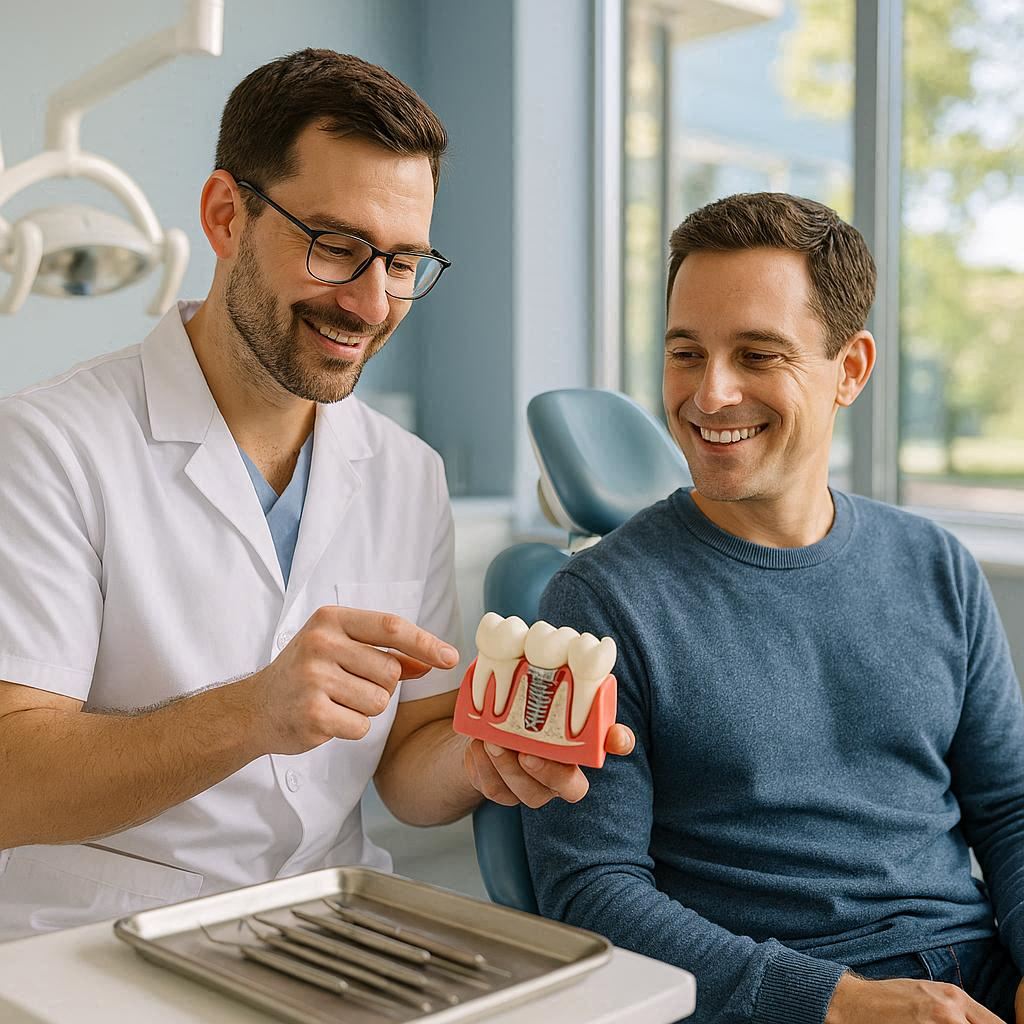
Let us start with the basics. A dental implant is not actually a tooth. It is a small, screw-like post made of medical-grade titanium. A dentist surgically places this post into your jawbone. Over time, the bone grows around the implant in a process called osseointegration. This creates a rock-solid foundation.
Think of the implant as an artificial tooth root. Once that root is secure, the dentist attaches a custom-made crown on top. The crown is the visible part that looks like a real tooth.
The Three Main Parts of a Dental Implant
It helps to understand the anatomy of an implant. Here are the three components:
- The Implant Fixture (The Root): This is the titanium screw placed into the jawbone.
- The Abutment (The Connector): This small piece screws onto the implant. It sticks up just above the gum line.
- The Prosthesis (The Crown, Bridge, or Denture): This is the artificial tooth that attaches to the abutment. It is custom-made to match your natural teeth.
Important Note for Readers: Not everyone is a candidate for dental implants on the first try. You need adequate bone density in your jaw to support the implant. If your bone has deteriorated, do not worry. Bone grafting procedures can often solve this problem.
Why Choose Dental Implants Over Other Options?
You might be thinking, “Why not just get a bridge or dentures?” That is a fair question. Traditional options have their place, but implants offer unique advantages.
Dental Implants vs. Traditional Bridge vs. Dentures
Let us compare them side by side.
| Feature | Dental Implants | Traditional Bridge | Removable Dentures |
|---|---|---|---|
| Bone Preservation | Preserves jawbone; prevents bone loss. | Does not prevent bone loss. | Accelerates bone loss over time. |
| Impact on Adjacent Teeth | None. Stands alone. | Requires shaving down healthy adjacent teeth. | Relies on suction or adhesives. |
| Stability | Permanent. Does not slip or click. | Fixed, but the abutment teeth can decay. | Can slip, click, or fall out. |
| Comfort | Feels like natural teeth. | Can trap food; feels bulky. | Often bulky and uncomfortable. |
| Longevity | 20+ years to a lifetime with care. | 5-15 years typically. | 5-10 years. |
| Chewing Power | Near 100% of natural teeth. | About 60-70%. | About 20-30%. |
The Lifestyle Benefits
Beyond the clinical facts, implants improve daily life in meaningful ways.
- Eat without fear. You can bite into an apple or enjoy a steak. You never have to worry about your teeth shifting.
- Speak clearly. Dentures can slip and cause slurring. Implants stay put.
- Smile with confidence. No one will ever know you have an implant. It blends perfectly.
- Stop hiding your mouth. You will no longer need to cover your smile with your hand.
A patient from Blue Bell once told me, “I forgot I had an implant after six months. That is the goal.”
The Dental Implant Procedure: A Step-by-Step Roadmap
The idea of surgery makes many people nervous. Knowledge reduces fear. So let us walk through exactly what happens during the implant process in a typical Blue Bell dental office.
Step 1: The Initial Consultation (Planning Phase)
Your journey begins with a comprehensive exam. The dentist will:
- Take 3D cone beam CT scans of your jaw.
- Review your medical history.
- Discuss your goals and budget.
- Determine if you need bone grafting or sinus lifts.
Realistic Expectation: Not every visit ends with “yes, let’s schedule surgery tomorrow.” Some patients need preparatory work first. That is normal.
Step 2: Bone Grafting (If Necessary)
If your jawbone is too thin or soft, you need a graft. The dentist adds bone material to the area. Then you wait several months for it to fuse. This step adds time, but it is essential for long-term success.
Step 3: Implant Placement Surgery
On surgery day, the dentist numbs the area with local anesthesia. You remain awake but feel no pain. For anxious patients, sedation options like nitrous oxide (laughing gas) or oral sedatives are available.
The dentist makes a small cut in your gum. They drill a precise hole into the bone. Then they insert the titanium implant. Finally, they stitch the gum closed over or around the implant.
How long does it take? A single implant takes about 60 to 90 minutes.
Step 4: Osseointegration (The Healing Period)
This is the most important phase. You wait for your jawbone to grow around the implant. This takes 3 to 6 months. During this time, you wear a temporary tooth replacement.
Do not rush this step. A failed implant almost always fails because someone ate solid food too early or skipped follow-up visits.
Step 5: Abutment Placement
Once the implant is fully fused, the dentist reopens the gum to attach the abutment. This is a minor procedure. It takes about 30 minutes. Then your gums heal for another 2 weeks.
Step 6: Placing the Final Crown
Your dentist takes impressions of your mouth. A dental lab creates your permanent crown. When it arrives, you return for the final appointment. The dentist screws or cements the crown onto the abutment.
That is it. You walk out with a functioning, beautiful new tooth.
Types of Dental Implants Available in Blue Bell
Not all implants are the same. Your specific situation determines which type you need.
Single Tooth Implant
This replaces one missing tooth. It is the most common type. One implant supports one crown.
Implant-Supported Bridge
If you have two or three missing teeth in a row, you do not need an implant for each gap. Two implants can support a three-unit bridge. This saves money and reduces surgery time.
All-on-4 (Full Arch Restoration)
For patients missing all teeth on the upper or lower jaw, the All-on-4 technique is revolutionary. The dentist places four implants strategically in the jaw. These four posts support a full set of fixed dentures.
Why four? The back implants are angled to maximize contact with available bone. This often avoids the need for bone grafting.
Implant-Supported Dentures
This option is for people who want removable dentures that do not slip. Two to four implants snap into place to hold the denture securely. You can still take it out for cleaning.
| Procedure | Best For | Number of Implants | Recovery Time |
|---|---|---|---|
| Single Implant | One missing tooth | 1 | 3-6 months |
| Implant Bridge | 2-3 adjacent missing teeth | 2 | 3-6 months |
| All-on-4 | Full arch missing | 4 per arch | 6-9 months |
| Implant Denture | Lower jaw (usually) | 2-4 | 3-4 months |
Candidacy: Are You a Good Candidate?
Many people assume they are too old or too unhealthy for implants. That is rarely true. Let us look at the real factors.
Good Candidates Usually Have:
- Healthy gums (no active periodontal disease).
- Sufficient bone density (or willingness to get a graft).
- Good general health (controlled diabetes is often fine; uncontrolled is not).
- Non-smoker or willing to quit during healing. Smoking dramatically increases failure rates.
- Realistic expectations about time and cost.
Age is Not a Barrier
You are never too old for dental implants. Healthy seniors in their 80s and 90s receive implants successfully. In fact, implants improve nutrition in older adults because they can chew vegetables and meats again.
When Are Implants Not Recommended?
In rare cases, dentists advise against implants. These include:
- Active cancer radiation therapy to the jaw.
- Severe uncontrolled diabetes.
- Heavy alcohol or drug abuse.
- Certain autoimmune diseases affecting healing.
- Patients who grind or clench severely (bruxism) without a night guard.
Important Note: Most people who initially think they are “not candidates” actually are. They just need a specialist. Do not self-disqualify. Get a professional opinion.
The Cost of Dental Implants in Blue Bell
Let us talk about money honestly. Dental implants are an investment. They cost more upfront than dentures or bridges. But they last far longer. Over a lifetime, they are often cheaper because you do not keep replacing them.
Average Price Ranges in Blue Bell, PA
Prices vary by dentist and complexity. These are realistic estimates for the area:
- Single Tooth Implant (all-in): 3,500–6,000
(Includes implant, abutment, crown, and surgery.) - Implant-Supported Bridge (3 units): 6,000–12,000
- All-on-4 (per arch): 20,000–30,000
- Implant Denture (snap-on): 7,000–12,000 per arch
What Affects the Price?
Several factors influence your final bill:
- Bone grafting: Adds 500–2,000 per site.
- Sinus lift: Adds 1,500–3,000 for upper molars.
- Tooth extraction: If the damaged tooth is still there, removal costs 200–500.
- Material of crown: Zirconia (metal-free) costs more than porcelain-fused-to-metal.
- Sedation: IV sedation adds 400–800.
Does Insurance Cover Implants?
Traditional dental insurance often excludes implants. However, this is changing. Many PPO plans now cover a portion, typically 30% to 50% of the crown or abutment. Medical insurance may cover the surgical part if the tooth loss resulted from an accident or injury.
Your best move: Ask for a pre-treatment estimate. The dentist’s office will submit codes to both your dental and medical insurance to maximize your benefits.
Financing Options in Blue Bell
Most Blue Bell dental offices offer payment plans. Look for:
- CareCredit: A healthcare credit card with promotional financing.
- LendingClub or Proceed Finance: Medical loans for dentistry.
- In-house payment plans: Some local dentists offer no-interest plans for 6-12 months.
Never let cost stop you from at least consulting. Many people qualify for financing they did not know existed.
Finding the Best Implant Dentist in Blue Bell
You are not just choosing a dentist. You are choosing a surgeon, a prosthodontist (crown expert), and a long-term partner in oral health. Here is how to find the right one.
Credentials to Look For
- DDS or DMD: Both are equivalent. They mean Doctor of Dental Surgery or Doctor of Dental Medicine.
- AAID Credential: The American Academy of Implant Dentistry offers credentialing. Look for “Fellow” or “Associate Fellow.”
- Surgical experience: Ask bluntly: “How many implants have you placed?” A good answer is hundreds or thousands.
- CBCT machine on-site: Cone beam CT scans are essential for safety. If they send you elsewhere for scans, that is fine, but on-site is convenient.
Questions to Ask During a Consultation
Write these down and bring them with you.
- “What is your success rate with implants?”
- “Do I need bone grafting? Why or why not?”
- “What type of sedation do you offer?”
- “Who makes your crowns? In-house lab or external lab?”
- “What happens if my implant fails?”
- “Can you show me before-and-after photos of similar cases?”
- “What does your all-in price include? What extra fees might appear?”
Red Flags to Avoid
- “Same-day teeth” guarantees: True same-day implants exist (immediate loading), but they are not for everyone. Beware of any dentist who guarantees it without examining your bone first.
- Prices that seem too low: $1,500 for a complete implant is unrealistic. You will get poor materials or hidden fees.
- No follow-up care plan: You need regular check-ups. A good dentist schedules follow-up x-rays for years.
Quotation from a Blue Bell specialist: “The best implant dentist is not the one who promises the fastest result. It is the one who is honest about healing times and risks. Slow and steady wins this race.” — Dr. Anonymous, Blue Bell Periodontist
Recovery: What to Expect After Surgery
Let us be realistic. The first 48 hours are uncomfortable. You are not in agony, but you will feel swelling and some throbbing. Plan to take it easy.
The First 24 Hours
- Bite on gauze for 30-60 minutes to stop bleeding.
- Apply ice packs to your face (20 minutes on, 20 off).
- Eat only cold, soft foods like yogurt, smoothies, and pudding.
- Do not spit, rinse, or use a straw. This disturbs the blood clot.
- Take prescribed pain medication or 600mg ibuprofen.
Days 2 to 7
- Swelling peaks around day 2 or 3, then decreases.
- Switch to warm compresses after day 3.
- Rinse gently with warm salt water (no swishing).
- Eat warm soft foods like mashed potatoes, scrambled eggs, and soup.
- Brush your other teeth normally. Avoid the surgical site.
Weeks 2 to 6
- Most swelling and bruising are gone.
- You can return to normal light activity.
- Avoid chewing directly on the implant side.
- No crunchy, sticky, or hard foods (chips, nuts, caramel).
Do Not Ignore These Warning Signs
Contact your dentist immediately if you experience:
- Fever over 101°F (38.3°C).
- Bleeding that will not stop with pressure.
- Severe pain not relieved by medication.
- Loosening of the implant (you should not feel movement).
Success Rates: The Good News
Dental implants have a success rate of approximately 95% to 98% in healthy individuals. In smokers, the rate drops to 85% to 90%. In uncontrolled diabetics, it drops further.
The single most important factor for success: You following post-operative instructions. Take your antibiotics. Do not smoke. Eat soft foods. Keep follow-up appointments.
Long-Term Care: Making Your Implant Last a Lifetime
An implant cannot get a cavity. It is made of metal and ceramic. However, the gum and bone around it are vulnerable to a disease called peri-implantitis. This is like gum disease but around an implant.
Your Daily Home Care Routine
Treat your implant like a natural tooth, but with extra attention.
- Brush twice daily with a soft-bristled brush. Use a non-abrasive toothpaste (no baking soda or charcoal).
- Floss daily with special implant floss or superfloss. It has a stiff end to thread under the bridge.
- Use a water flosser on a low setting. Aim the tip at the gumline around the implant.
- Avoid using metal scrapers or hard picks near the implant.
Professional Maintenance Schedule
See your dentist or hygienist every 6 months. They will:
- Use plastic or carbon-fiber instruments (metal scratches the implant surface).
- Take periapical x-rays every 12-24 months to check bone levels.
- Measure pocket depths around the implant.
Lifestyle Choices for Implant Longevity
- Stop smoking. This is the number one cause of late implant failure.
- Wear a night guard if you grind your teeth. Implants are strong, but excessive force can break the crown or loosen the screw.
- Control your blood sugar if diabetic. Stable glucose = stable bone.
Important Note: An implant that fails after 10 years almost never fails because of the implant itself. It fails because of neglected gum disease or smoking. You have the power to prevent that.
Frequently Asked Questions (FAQ)
Are dental implants painful?
The surgery itself is not painful because of anesthesia. Afterward, most patients rate the discomfort a 2 or 3 out of 10. It feels like a tooth extraction. Over-the-counter ibuprofen usually suffices.
How long do dental implants last?
With proper care, a dental implant can last 30 years to a lifetime. The crown on top may need replacement after 10 to 15 years due to normal wear and tear. But the implant post itself is permanent.
Can I get dental implants if I have gum disease?
Not immediately. You must first treat the gum disease. Once your gums are healthy and stable, you can proceed with implants. Placing an implant into infected gums is a recipe for failure.
What is the success rate of dental implants in Blue Bell?
Local success rates mirror the national average: 95% to 98% for healthy patients. Blue Bell dentists use the same high-quality materials and techniques as major urban centers like Philadelphia.
How long does the entire process take?
From start to finish, expect 4 to 9 months. That includes healing time. Complex cases with bone grafting can take 12 months. Do not trust any dentist who promises a permanent implant in under two months for an average case.
Can my body reject a dental implant?
“Rejection” is not quite the right word. Implants are made of biocompatible titanium. Allergies are extremely rare (less than 0.1%). Failure happens when the bone does not fuse (osseointegration fails), not because the body “rejects” the metal.
Are dental implants covered by Medicare or Medicaid?
Original Medicare does not cover dental implants. Some Medicare Advantage plans (Part C) offer limited dental benefits. Medicaid in Pennsylvania covers implants only for qualifying individuals under specific circumstances (e.g., trauma or congenital defects). Private insurance is your best bet.
What happens if an implant fails?
If an implant fails to fuse during the healing phase, the dentist removes it easily. You let the bone heal for a few months. Then you try again, often with a larger implant or bone graft. Most failed implants are successfully replaced on the second attempt.
Additional Resources for Blue Bell Residents
You do not have to navigate this journey alone. Here are trusted local resources to help you make an informed decision.
Recommended Local Organizations
- Montgomery County Dental Society: A professional association of local dentists. They maintain a referral list of implant specialists in Blue Bell and surrounding areas.
- Pennsylvania Dental Association (PDA): Offers a “Find a Dentist” tool on their website. You can search specifically for implant dentists.
Educational Links
- American Academy of Implant Dentistry (AAID): www.aaid.com
Provides patient education videos, a glossary of terms, and a national directory of credentialed implant dentists.
What to Read Next
Before your consultation, look up these topics:
- “Bone grafting for dental implants” – understand why it helps.
- “Zirconia vs. porcelain crowns” – decide which material you prefer.
- “Peri-implantitis prevention” – learn how to protect your investment.
Link Resource: For a detailed, step-by-step video animation of the entire implant procedure, visit the American Academy of Implant Dentistry’s patient education page at www.aaid.com/patients. This visual guide will show you exactly what happens during surgery and healing.
Conclusion: Your Next Step Toward a Complete Smile
Dental implants in Blue Bell offer a permanent, natural-looking solution for missing teeth that restores both function and confidence. The process requires patience and investment, but the result—a smile that works like real teeth for decades—is worth it. Start with a consultation at a trusted local practice, ask the right questions, and take the first step toward eating, laughing, and living without worry.
Disclaimer: This article is for informational purposes only and does not constitute medical advice. Dental implant outcomes vary based on individual health conditions. Always consult with a licensed dentist in Blue Bell, Pennsylvania, for a personal examination and treatment plan. The author and publisher are not liable for any decisions made based on this content.