Dental Implants In Citrus Park: A Local’s Guide to a Permanent Smile
Losing a tooth can feel frustrating. Maybe it happened suddenly. Maybe it has been a slow process over the years. Either way, you are not alone.
Many people in Citrus Park face the same situation. The good news is that modern dentistry offers a solution that looks, feels, and functions like a natural tooth.
That solution is the dental implant.
If you have been searching online for “Dental Implants In Citrus Park,” you probably want clear answers. No confusing medical terms. No sales pressure. Just honest facts.
This guide is here to help. We will walk through everything step by step. By the end, you will know exactly what to expect, how to prepare, and where to focus your research locally.
What Exactly Is a Dental Implant?
A dental implant is not the same as a bridge or denture. It is a complete replacement for the root of a tooth.
Think of it like this. A natural tooth has two main parts:
- The crown (the white part you see above the gum)
- The root (the part anchored in your jawbone)
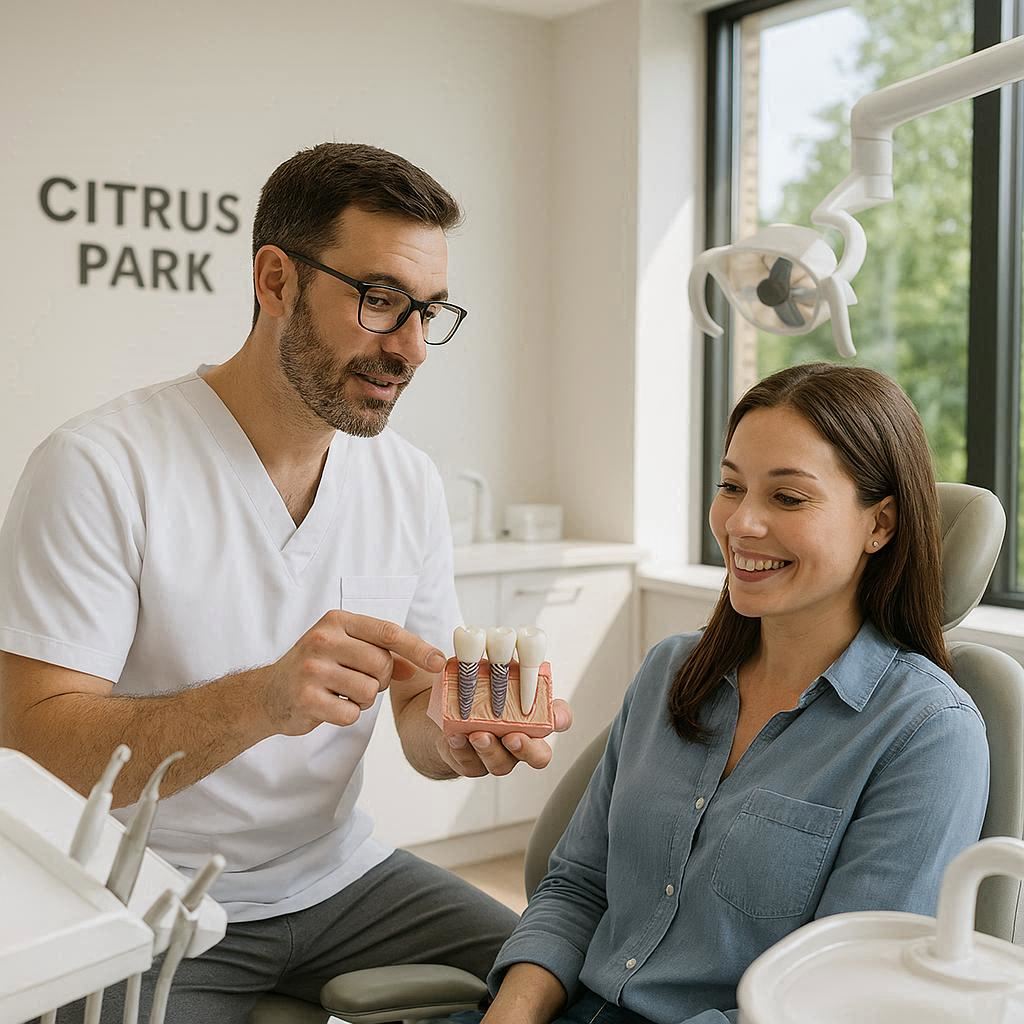
A dental implant replaces the root. A small post made of biocompatible titanium is placed gently into your jawbone. Over time, that post fuses with the bone. This creates a rock-solid foundation.
Once the implant is secure, a custom-made artificial tooth (the crown) is attached on top.
Important note: Because the implant replaces the root, your jawbone stays healthy. This is something traditional bridges and dentures cannot do.
Why Are So Many Citrus Park Residents Choosing Implants?
You might wonder: “Why not just get a bridge or partial denture?”
That is a fair question. Every option has its place. But implants offer unique advantages that many people find worth the investment.
Here is a quick comparison to show the difference.
| Feature | Dental Implant | Traditional Bridge | Removable Denture |
|---|---|---|---|
| Replaces the root | Yes | No | No |
| Prevents bone loss | Yes | No | No |
| Feels like natural teeth | Very close | Moderate | Unnatural |
| Affects nearby teeth | No | Requires filing down healthy teeth | Can cause sore spots |
| Removable | No (fixed) | No (fixed) | Yes |
| Long-term lifespan | 30+ years | 5–15 years | 5–10 years |
As you can see, implants shine in the long run. They do not harm neighboring teeth. They stop the jawbone from shrinking. And once healed, you barely notice them.
A local patient once told me: “After my implant, I forgot which tooth was fake. That is the best compliment I can give.”
Who Is a Good Candidate for Dental Implants In Citrus Park?
This is one of the most common questions. The short answer is: most healthy adults.
But let us be specific.
Good candidates usually have:
- One or more missing teeth
- A fully grown jawbone (no longer a teenager)
- Healthy gums without active disease
- Enough jawbone density to support the implant
- No uncontrolled chronic conditions (like diabetes or heart disease)
In some cases, extra steps are needed:
- If you have low bone density, a bone graft may be required first.
- If you have gum disease, that needs treatment before implant surgery.
- If you smoke heavily, your dentist will likely ask you to cut back or quit during healing.
A realistic note: Age alone is not a problem. Many people in their 70s and 80s receive implants successfully. The key is overall health, not your birthday.
The Step-by-Step Process of Getting an Implant in Citrus Park
Let us remove the fear of the unknown. The implant process sounds more intimidating than it actually is.
Most patients complete the journey in four main stages.
Step 1: Initial Consultation and Planning
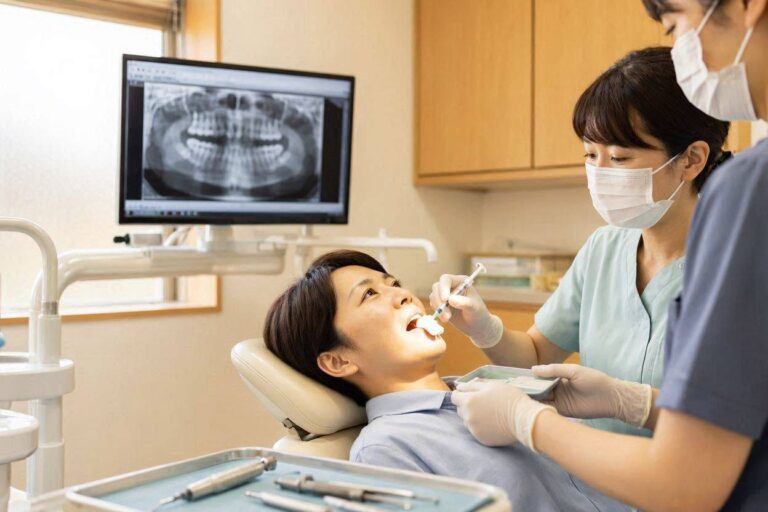
Your local Citrus Park dentist will start with a thorough exam. This almost always includes:
- Digital X-rays
- A 3D CT scan (to see your bone shape and density)
- A discussion of your medical history and goals
You will also receive a clear treatment plan. This plan includes timelines, costs, and any preparatory work needed.
What to ask during this visit:
- “How many implants have you placed?”
- “Do I need a bone graft?”
- “What type of sedation do you offer?”
Step 2: Preparing the Site (If Needed)
Not everyone needs preparation. But if you have bone loss or an infected tooth, your dentist will handle that first.
Common preparation procedures include:
- Tooth extraction – removing a damaged tooth that cannot be saved
- Bone grafting – adding bone material to strengthen the jaw
- Sinus lift – creating space in the upper jaw for implants
Healing from these steps usually takes 3 to 6 months.
Step 3: Implant Placement Surgery
This is the main event. Do not worry—it is done under local anesthesia. You will be awake but completely numb. Many dentists also offer sedation if you feel anxious.
Here is what happens in simple terms:
- Your dentist makes a small incision in the gum.
- A precise hole is drilled into the jawbone.
- The titanium implant post is screwed gently into place.
- The gum is stitched closed over or around the implant.
The whole procedure typically takes 60 to 90 minutes for a single implant.
Realistic expectation: You will feel pressure but not pain. Most patients compare it to getting a filling.
Step 4: Osseointegration (The Healing Phase)
Now the magic happens. Over the next 3 to 6 months, your jawbone grows tightly around the implant. This process is called osseointegration.
During this time, you wear a temporary restoration if the implant is in a visible spot. Otherwise, you simply wait.
Step 5: Abutment and Crown Placement
Once the implant is fully fused to the bone, a small connector piece (abutment) is attached to the implant. Then your dentist takes impressions to create your permanent crown.
A few weeks later, you return. The custom crown is cemented or screwed onto the abutment.
And that is it. You walk out with a new tooth that should last decades.
How Much Do Dental Implants Cost in Citrus Park?
Let us talk numbers honestly. Implants are an investment. But understanding the costs helps you plan.
Prices vary from office to office. However, a typical breakdown in the Citrus Park area looks like this:
| Procedure | Estimated Cost Range (per tooth) |
|---|---|
| Initial exam and CT scan | 150–500 |
| Tooth extraction (if needed) | 200–600 |
| Bone graft (if needed) | 300–1,200 |
| Implant post placement | 1,500–2,500 |
| Abutment | 300–600 |
| Custom crown | 1,000–2,000 |
| Total (without graft) | 2,950–2,950–5,700 |
| Total (with simple graft) | 3,250–3,250–6,900 |
These numbers are estimates. Your actual cost depends on:
- The number of implants
- The need for extra procedures
- Your dental insurance coverage
- The specific dentist you choose
Does Insurance Cover Implants?
This is changing fast. More dental insurance plans now offer partial coverage for implants. But rarely 100%.
Typically, insurance may cover:
- The crown portion (as a basic restoration)
- The extraction (if needed)
- Bone grafting (sometimes)
The implant post itself is often considered “major” or “cosmetic,” so coverage is lower.
Pro tip: Call your insurance provider and ask two specific questions:
- “What is my annual maximum?”
- “What percentage do you cover for implant placement and crown?”
Financing Options in Citrus Park
Many local dental offices offer payment plans through companies like:
- CareCredit
- LendingClub
- Proceed Finance
You can also ask about in-house monthly payment plans. Some dentists offer zero-interest plans for 6–12 months.
Single vs. Multiple Implants: What Is Right for You?
Not everyone needs just one implant. Some people need several. Others need a full arch replacement.
Let us clarify the options.
Single Tooth Implant
Best for one missing tooth. One implant post + one crown.
Implant-Supported Bridge
Best for two or three missing teeth in a row. Two implants hold a bridge with three crowns. This is often more stable than a traditional bridge.
Implant-Supported Denture (Overdenture)
Best for people missing all teeth in an arch (upper or lower). Two to four implants snap into a special denture. The denture stays put but can be removed for cleaning.
All-on-4 or All-on-6
Best for full mouth reconstruction. Four or six implants hold a fixed bridge of 12–14 teeth. You cannot remove this at home. It feels very close to natural teeth.
| Option | Number of Implants | Teeth Replaced | Removable? | Approx. Cost Range |
|---|---|---|---|---|
| Single implant | 1 | 1 | No | 3k–6k |
| Implant bridge | 2 | 2–3 | No | 6k–12k |
| Overdenture | 2–4 | Full arch | Yes (by dentist) | 8k–15k per arch |
| All-on-4 | 4 | Full arch | No | 15k–30k per arch |
A local prosthodontist shared this insight: “Patients often assume they need a full set of individual implants. But for a full arch, four or six well-placed implants are usually enough. This keeps costs reasonable without sacrificing quality.”
What to Expect During Recovery: Pain, Diet, and Timeline
Let us be real. Surgery is surgery. But implant recovery is generally milder than most people expect.
The First 24 Hours
- You will have some bleeding. That is normal. Gauze placed by your dentist controls it.
- Swelling starts. Ice packs help a lot.
- Eat only soft, cold foods like yogurt, smoothies, applesauce, or ice cream.
- Do not spit, rinse, or use a straw. This can dislodge the blood clot.
Days 2 to 7
- Swelling peaks around day 2 or 3, then goes down.
- You can switch to warm soft foods: mashed potatoes, scrambled eggs, soup, oatmeal.
- Start gentle saltwater rinses after 24 hours (don’t swish hard).
- Take prescribed or over-the-counter pain relievers as needed.
Weeks 2 to 6
- Most discomfort fades after the first week.
- You can return to normal eating, but avoid very hard or sticky foods on the implant side.
- Stitches may dissolve or be removed by your dentist.
Months 3 to 6 (Healing Phase)
- You feel almost nothing. The implant is quietly fusing with your bone.
- Maintain excellent oral hygiene.
- Attend all follow-up appointments.
A Word on Pain Levels
On a scale of 1 to 10, most patients rate implant surgery discomfort as a 3 to 5 during the first two days. After that, it drops to a 1 or 2.
A patient from Citrus Park said: “I was terrified of the pain. Honestly, getting a deep cleaning felt worse than my implant surgery.”
How to Choose the Best Dentist for Dental Implants In Citrus Park
Not all dentists are the same. Some place implants every week. Others place a few per year. You want the former.
Here is a checklist to help you choose wisely.
Look for these credentials:
- DDS or DMD degree (both are equivalent)
- Additional implant training beyond dental school (look for terms like “Fellow of the International Congress of Oral Implantologists” or “Diplomate, American Board of Oral Implantology”)
- Oral surgeon or periodontist – these specialists focus on surgery and bone health
- General dentist with implant experience – many are excellent if they place 50+ implants per year
Questions to ask during your consultation:
- “How many implants have you placed in the last year?”
- “What is your success rate for implants?”
- “Do you use 3D CT scanning for planning?”
- “What type of implant brand do you use?” (Nobel Biocare, Straumann, Zimmer are reputable)
- “Who will handle the crown part? You or a separate lab?”
- “What happens if the implant fails? Do you offer a warranty?”
Red flags to avoid:
- A dentist who guarantees 100% success every time (no one can)
- Very low prices that seem too good to be true
- Pressure to decide the same day
- No CT scan or digital planning
Important note: Do not choose based on price alone. The lowest cost implant may fail quickly, costing you more in the long run. Focus on value and experience.
Top Benefits of Replacing Missing Teeth with Implants
Let us reinforce why this is worth your time and money.
1. Protects Your Jawbone
When a tooth is missing, the bone underneath slowly melts away. It is called resorption. Implants stop this process completely.
2. Keeps Your Face Shape Natural
Bone loss leads to a sunken, aged appearance. Implants preserve your facial structure.
3. No Damage to Adjacent Teeth
Traditional bridges require shaving down healthy teeth. Implants stand alone.
4. Eat Normally Again
Steak, apples, corn on the cob—none of them are off limits with implants.
5. Easy Cleaning
You brush and floss an implant just like a natural tooth. No special soaks or adhesives.
6. High Success Rate
Modern dental implants have a success rate of 95% to 98% over 10+ years.
7. Confidence
No clicking dentures. No embarrassing slips. Just a natural smile.
Potential Risks and Complications (Being Honest)
No medical procedure is perfect. Implants are very safe, but complications can happen.
Common but minor:
- Swelling, bruising, or minor bleeding
- Temporary numbness in the lip or chin (resolves in weeks or months)
- Soreness at the surgical site
Rare but serious:
- Infection – can sometimes require removing the implant
- Implant failure – the bone does not fuse properly (more common in smokers)
- Nerve damage – very rare with modern 3D imaging, but possible
- Sinus problems – for upper implants, if the implant protrudes into the sinus
The good news: your local Citrus Park dentist minimizes these risks by using CT scans and careful planning.
Dental Implants vs. Other Options: An Honest Comparison
You might still be deciding. That is fine. Let us compare implants to the alternatives fairly.
Implant vs. Traditional Bridge
| Aspect | Implant | Bridge |
|---|---|---|
| Cost upfront | Higher | Lower |
| Long-term cost | Lower | Higher (bridges need replacement) |
| Affects healthy teeth | No | Yes (shaving down) |
| Bone preservation | Yes | No |
| Lifespan | 30+ years | 5–15 years |
Our take: If you can afford the upfront investment, the implant wins for long-term health.
Implant vs. Removable Partial Denture
| Aspect | Implant | Partial Denture |
|---|---|---|
| Stability | Excellent | Moves while eating |
| Comfort | Feels natural | Can cause sore spots |
| Maintenance | Normal brushing | Requires removal and soaking |
| Bone loss | Stops it | Accelerates it |
Our take: Partials are a low-cost temporary fix. Implants are a permanent solution.
Implant vs. Doing Nothing
Leaving a gap is not neutral. It causes problems over time:
- Teeth shift into the empty space
- Bite problems develop
- Bone loss continues
- Higher risk of decay on adjacent teeth
Our take: Doing nothing costs you nothing today, but much more later.
Real Patient Journey: A Citrus Park Story
Let me tell you about Mike, a 52-year-old from Citrus Park.
Mike lost his lower right first molar years ago. He ignored it. Then the tooth behind it started tilting. The tooth above started dropping down into the gap.
He had trouble chewing on that side. His dentist warned him that without an implant, he would eventually need crowns on multiple shifting teeth.
Mike decided to move forward.
His timeline:
- Month 1: Consultation and CT scan. Minor bone graft needed.
- Month 4: Implant placement (after graft healed).
- Month 7: Abutment and final crown.
His cost: $4,800 total. He used CareCredit with 12-month interest-free financing.
His result: “I forget it is there. I can eat almonds again. Best decision I made for myself in years.”
How to Prepare for Your Implant Consultation
Walking into a dental office prepared saves you time and stress.
Bring this information:
- Your insurance card
- List of current medications (including supplements)
- Any recent X-rays (if from another dentist)
- A written list of your questions
Ask yourself beforehand:
- What is my budget?
- Am I willing to stop smoking during healing?
- Do I have someone to drive me home if I choose sedation?
During the consult, observe:
- Is the office clean and modern?
- Does the staff answer questions patiently?
- Do they offer a written treatment plan with costs?
Do not be afraid to visit two or three offices. This is a big decision. You have the right to compare.
Caring for Your Dental Implant Long-Term
Once your implant is finished, maintenance is straightforward. But it is not zero.
Daily home care:
- Brush twice a day (electric toothbrush is great)
- Floss daily. Use a floss threader or special implant floss.
- Consider a water flosser to clean around the abutment.
Professional maintenance:
- See your hygienist every 6 months
- Your dentist will check the implant crown for loosening
- Annual X-rays monitor the bone level around the implant
What to avoid:
- Chewing ice or very hard candy
- Using your teeth as tools (opening packages)
- Tobacco of any kind (smoking dramatically increases failure risk)
A realistic note: Implants do not get cavities. But they can get a condition called peri-implantitis. That is inflammation around the implant. Good hygiene prevents it.
Frequently Asked Questions (FAQ)
Q: How long does a dental implant last?
A: With proper care, 30 years to a lifetime. The crown may need replacement after 10–20 years, but the implant post can last indefinitely.
Q: Is the implant procedure painful?
A: During surgery, no—you are numb. Afterward, mild soreness for a few days. Most patients say it is less painful than a tooth extraction.
Q: Can I get an implant the same day my tooth is pulled?
A: Sometimes. This is called immediate implant placement. It depends on infection and bone quality. Your Citrus Park dentist will tell you if you qualify.
Q: What happens if the implant fails?
A: Failure is rare (2–5% of cases). The dentist removes the implant, lets the bone heal for a few months, and tries again. Many offices offer a warranty for this situation.
Q: Am I too old for dental implants?
A: No. Age is not a limiting factor. As long as you are healthy enough for minor oral surgery, you can get implants.
Q: Can implants be done on both upper and lower jaws?
A: Yes. Many patients receive full mouth restorations using 8–10 implants total.
Q: Does Medicare cover dental implants?
A: Original Medicare does not cover routine dental care or implants. Some Medicare Advantage plans offer limited implant benefits. Check your specific plan.
Q: How do I clean under an implant bridge?
A: Use super floss, a water flosser, or interdental brushes. Your hygienist will show you the best technique.
Additional Local Resources for Citrus Park Residents
You do not have to navigate this alone. Here are trusted resources to support your research.
🔗 Recommended resource:
Visit the American Academy of Implant Dentistry (AAID) patient education pageaaid.com/patient-resources
This site includes:
- A “Find a Dentist” tool to locate implant specialists near Citrus Park
- Patient videos showing real procedures
- Detailed FAQs on implant types and costs
Other helpful local contacts:
- Hillsborough County Dental Association – Can provide referral lists
- Florida Dental Association – Offers consumer guides to implant care
- Local public libraries – Free access to dental journals and consumer reports
Disclaimer: The information in this article is for educational purposes only. It does not replace professional medical advice. Always consult a licensed dentist in Citrus Park for a personal examination and treatment plan. Individual results vary. References to costs and insurance coverage are estimates based on regional averages and may change.
Conclusion
Dental implants in Citrus Park offer a reliable, long-term solution for missing teeth. They preserve your jawbone, protect healthy adjacent teeth, and restore natural chewing ability.
The process requires time and financial investment. But for most people, the result is a confident smile that feels and functions like nothing ever happened. If you have been living with gaps or uncomfortable dentures, an implant consultation is the first step toward lasting change.