Dental Implants in Dallas GA
If you are missing one or more teeth, you have probably already noticed how it affects your daily life. Eating becomes tricky. Smiling feels less natural. Over time, your other teeth might even start shifting.
You are not alone in this. Many people in Dallas, Georgia, are looking for a long-term solution that feels natural and works for decades.
That is where dental implants in Dallas GA come into the picture.
Unlike dentures or bridges, implants replace the entire tooth—from the root to the crown. They are the closest thing to having your natural teeth back.
But let’s be real. Dental implants are a big decision. They involve surgery, healing time, and a financial investment.
So, before you book an appointment, you need clear, realistic answers.
This guide gives you exactly that. No fluff. No fake promises. Just practical information from a professional perspective.
Let’s walk through everything step by step.
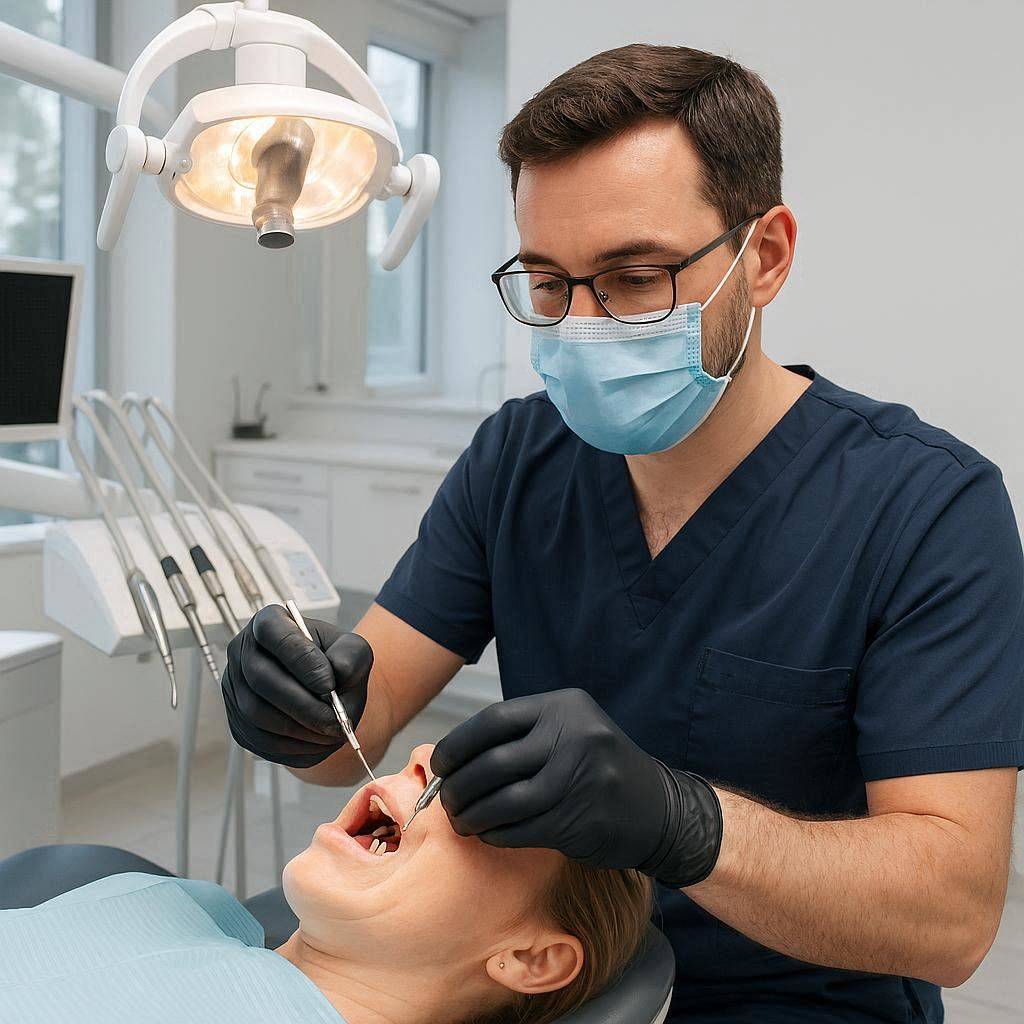
What Are Dental Implants? A Simple Explanation
A dental implant is a small, screw-like post made of titanium. A dentist surgically places it into your jawbone. Over time, the bone fuses with the implant. That creates a strong foundation.
On top of that implant, your dentist attaches a custom-made artificial tooth, called a crown.
So, the implant acts as the new root. The crown acts as the visible tooth.
Why does that matter?
Because traditional bridges only replace the top part. Dentures rest on your gums. Neither option stops bone loss in your jaw.
Implants do. They stimulate your bone just like a natural root. That keeps your jaw strong and your face structure intact.
Important note: Not everyone is an immediate candidate for implants. Your dentist in Dallas GA will check your bone density, gum health, and overall medical history first.
Who Is a Good Candidate for Dental Implants in Dallas GA?
Good candidates share a few basic traits:
- Healthy gums – no active gum disease.
- Enough jawbone – to support the implant.
- Non-smoker or willing to quit – smoking slows healing.
- Commitment to oral hygiene – implants need care, just like real teeth.
- No uncontrolled chronic conditions – like diabetes or heart disease.
If you lack bone density, do not worry. Many Dallas dentists offer bone grafting. That procedure rebuilds bone to make implants possible.
When are implants not recommended?
- Active tooth decay or gum infection
- Severe teeth grinding (bruxism) without a night guard
- Pregnancy
- Certain autoimmune diseases
- Heavy alcohol or tobacco use without change
Realistic advice: Schedule a consultation. Only a clinical exam and X-rays can give you a definite answer.
The Complete Procedure for Dental Implants in Dallas GA
Understanding the process removes fear. Here is exactly what happens from start to finish.
Step 1: Initial Consultation
Your dentist examines your mouth. They take 3D scans and X-rays. Then they build a personalized treatment plan.
Costs, timeline, and risks are discussed openly.
Step 2: Preparatory Procedures (If Needed)
Some patients need:
- Tooth extraction
- Bone grafting
- Sinus lift (for upper back teeth)
These add healing time. That is normal and safe.
Step 3: Implant Placement Surgery
This is done under local anesthesia. You are awake but feel no pain.
The dentist makes a small cut in your gum. They drill a precise hole into the bone. Then they insert the titanium implant.
After that, they stitch the gum closed. The implant is completely hidden.
How long does surgery take?
One implant takes about 60–90 minutes.
Step 4: Osseointegration (Healing Phase)
This is the most important part.
Your bone grows around the implant. It locks it in place. That takes 3 to 6 months.
During this time, you eat soft foods. You avoid chewing on that side.
Step 5: Abutment Placement
Once healed, a small connector—called an abutment—is attached to the implant. This will hold your new crown.
Step 6: Crown Placement
Your dentist takes impressions. A lab creates your custom crown. Two weeks later, you return to have it screwed or cemented onto the abutment.
That is it. You walk out with a full, natural-looking tooth.
Dental Implants vs. Other Options: An Honest Comparison
Many people ask: Why not just get a bridge or dentures?
Let us compare them directly.
| Feature | Dental Implant | Fixed Bridge | Removable Denture |
|---|---|---|---|
| Replaces root | Yes | No | No |
| Prevents bone loss | Yes | No | No |
| Affects nearby teeth | No | Yes (shaves down healthy teeth) | No |
| Removable | No | No | Yes |
| Feels natural | Yes | Sometimes | Rarely |
| Lifespan | 25+ years | 7–15 years | 5–8 years |
| Requires surgery | Yes | No | No |
| Initial cost | Higher | Medium | Lower |
The bottom line: Implants cost more upfront but last much longer. Many people in Dallas GA choose them to avoid future repairs and bone loss.
Types of Dental Implants Available in Dallas GA
Not all implants are the same. Here are the main types you may hear about.
1. Single Tooth Implant
Replaces one missing tooth. One implant. One crown.
2. Implant-Supported Bridge
Replaces two or more missing teeth in a row. Uses two implants to support a three- or four-tooth bridge.
3. All-on-4 Implants
Replaces all teeth in one arch (upper or lower). Uses only four implants to support a full set of fixed teeth.
Great for people who need full mouth reconstruction.
4. Implant-Supported Dentures
A removable denture that snaps onto two to four implants. More stable than regular dentures.
Note: Your dentist in Dallas GA will recommend a specific type based on your bone structure, budget, and number of missing teeth.
How Much Do Dental Implants Cost in Dallas GA?
Let’s be transparent. Cost is the number one concern for most people.
Here are realistic estimates for the Dallas, Georgia area (Paulding County):
| Procedure | Estimated cost range (per tooth) |
|---|---|
| Single implant + crown | 3,000–5,500 |
| Implant-supported bridge (3-unit) | 6,000–12,000 |
| All-on-4 (per arch) | 15,000–25,000 |
| Implant-supported denture (per arch) | 7,000–14,000 |
| Bone graft (if needed) | 500–2,000 |
These prices include surgery, materials, and the final crown.
Why such a range?
- Experience of the dentist
- Type of crown material (zirconia vs. porcelain fused to metal)
- Need for extractions or grafts
- Lab fees
Does insurance cover dental implants in Dallas GA?
Rarely fully. But many plans cover:
- Consultation
- Extractions
- Bone grafting
- Crown portion (up to 50%)
Call your insurance provider. Ask specifically about “implant-supported prostheses.”
Financing options
Most Dallas dental offices offer:
- CareCredit (medical credit card)
- In-house payment plans
- LendingClub or Alphaeon Credit
Some offices also offer a 5–10% discount for paying in full upfront. Always ask.
Pain, Recovery, and Risks: What to Expect Honestly
You deserve the truth. Let’s talk about discomfort and healing.
Does implant surgery hurt?
During surgery: No. Local anesthesia blocks pain.
After anesthesia wears off: Mild to moderate discomfort. Most patients compare it to a tooth extraction.
Pain peaks around 48 hours. Then it improves daily.
Over-the-counter ibuprofen or prescribed medication controls it well.
Recovery timeline
| Time after surgery | What you feel |
|---|---|
| Day 1–3 | Swelling, mild bleeding, soreness. Eat soft foods. |
| Day 4–7 | Swelling drops. Normal light activity. |
| Week 2–4 | Gums heal. Stitches dissolve or get removed. |
| Month 3–6 | Osseointegration. No pain. Just waiting. |
Possible risks (rare but real)
- Infection at implant site
- Nerve damage (numbness in lip or chin)
- Implant failure (does not fuse with bone)
- Sinus problems (upper implants only)
Good news: Success rates are 95–98% in healthy patients. Choosing an experienced implant dentist in Dallas GA lowers risks even more.
How to Choose the Right Implant Dentist in Dallas GA
Not all dentists place implants. Some refer you to a specialist.
Here is how to pick wisely.
Three types of implant providers
- General dentist – May place simple cases. Ask how many implants they place per year.
- Oral surgeon – Best for complex bone or nerve cases.
- Periodontist – Gum specialist. Excellent for implant placement.
Questions to ask before booking
- How many implant surgeries have you performed?
- What is your success rate?
- Do you use 3D CT scanning?
- What brand of implants do you use? (Nobel Biocare, Straumann, Zimmer are top brands)
- Who makes the crown? (In-house lab? Outsourced?)
- What happens if my implant fails?
Red flags to avoid
- Promises same-day results without explaining risks
- No pre-surgery CT scan
- Unusually low prices ($1,500 for a full implant + crown is unrealistic)
- No clear aftercare plan
Quote from a real Dallas patient:
“I called three offices. One never called back. One rushed me. The third sat down, showed me the X-rays, and explained everything. That’s the one I chose.” – Mark, Dallas GA
Caring for Your Dental Implants Long-Term
Implants cannot get cavities. But they can fail if you ignore gum health.
Think of it like a car. If you never change the oil, it breaks down.
Daily care routine
- Brush twice a day with a soft toothbrush
- Floss daily (use superfloss or implant-specific floss)
- Use a water flosser around the abutment
- Avoid chewing ice, pens, or hard candy
Professional maintenance
Visit your dentist every 6 to 12 months for:
- Implant check-up
- X-rays to check bone levels
- Professional cleaning around the implant
What shortens implant life?
- Smoking
- Untreated gum disease
- Teeth grinding without a night guard
- Poor oral hygiene
Do these things, and your implant can last 30+ years or even a lifetime.
Common Myths About Dental Implants in Dallas GA
Let’s clear up misinformation.
Myth 1: “Implants are obvious and look fake.”
Truth: Modern crowns match your surrounding teeth perfectly. No one can tell.
Myth 2: “The surgery is extremely dangerous.”
Truth: It is routine. Safer than many other medical procedures.
Myth 3: “Old people don’t qualify.”
Truth: Age is not a barrier. Health is. Many patients in their 70s and 80s get implants.
Myth 4: “Dentures are just as good.”
Truth: Dentures do not stop bone loss. After 10 years, your jaw may shrink. Implants preserve bone.
Myth 5: “It takes a whole year.”
Truth: Most single implants take 5–7 months. All-on-4 can be done in one day with a temporary tooth.
Local Considerations for Dallas GA Residents
Dallas, Georgia, is growing fast. New dental offices open every year. But not all offer the same implant quality.
Things to check locally
- Does the office have an on-site CT scanner? If not, they may send you elsewhere.
- Are reviews real? Look for detailed Google reviews mentioning “implant” and “healing.”
- Is sedation available? Some patients prefer oral sedation or IV sedation.
Travel tip
Some Dallas residents drive to nearby cities like Hiram, Marietta, or Kennesaw for implants. That is fine. But remember:
- You need multiple visits (4 to 6 on average).
- Choose a location you can reach easily during healing.
Frequently Asked Questions (FAQ)
1. How long do dental implants last?
With proper care, 25 years to a lifetime. The crown may need replacement after 15–20 years.
2. Can I get implants if I have gum disease?
No. You must treat gum disease first. After treatment and healing, you may qualify.
3. Are dental implants covered by Medicaid in Georgia?
Georgia Medicaid does not cover adult dental implants. Some Medicare Advantage plans may offer limited coverage.
4. Can I get all my teeth done in one day?
Yes. All-on-4 or Teeth-in-a-Day procedures exist. You leave with temporary teeth. Permanent ones come months later.
5. What happens if an implant fails?
Your dentist removes it. Your bone heals. You can try again after 3–6 months. Many offices offer a warranty (5–10 years) on the implant itself.
6. Do implants feel different from natural teeth?
Slightly at first. After a few weeks, most patients say they feel exactly like natural teeth.
7. Can I eat normally after implants?
During healing, no. After full healing (crown placed), yes. You can eat steak, apples, corn on the cob.
8. Is smoking really that bad for implants?
Yes. Smokers have a 15–20% higher failure rate. If you smoke, be ready to quit or reduce drastically.
Additional Resource
For more official information on dental implant safety and standards, visit the American Academy of Implant Dentistry:
This website offers a patient education section and a “find an implant dentist” tool.
Conclusion
Dental implants in Dallas GA offer one of the most reliable and natural ways to replace missing teeth. They preserve your jawbone, restore your smile, and last for decades. The process requires surgery and patience, but the success rate is high when you choose an experienced dentist. Costs are significant, but financing and long-term value make implants a wise investment for many people in Paulding County.
Disclaimer:
This article is for informational purposes only and does not constitute medical or dental advice. Always consult a licensed dentist in Dallas, GA, for a proper diagnosis and treatment plan tailored to your specific health needs. Individual results vary.