Dental Implants in Wilmington NC: The Complete, No-Stress Guide for 2026
If you’ve been hiding your smile because of a missing tooth—or several missing teeth—you’re not alone. And you’re probably tired of chewing on one side of your mouth or feeling self-conscious in photos.
You’ve heard about dental implants. Maybe a friend recommended them. Maybe you saw an ad for “same-day teeth.” But you still have questions.
- Does it hurt?
- How much do dental implants cost in Wilmington NC?
- Will my insurance cover anything?
- How do I choose the right dentist?
Let’s walk through everything together. No complicated medical jargon. No sales pressure. Just clear, realistic answers.
Why Dental Implants? A Quick Reality Check
Before we dive into local details, let’s talk about why implants have become the gold standard.
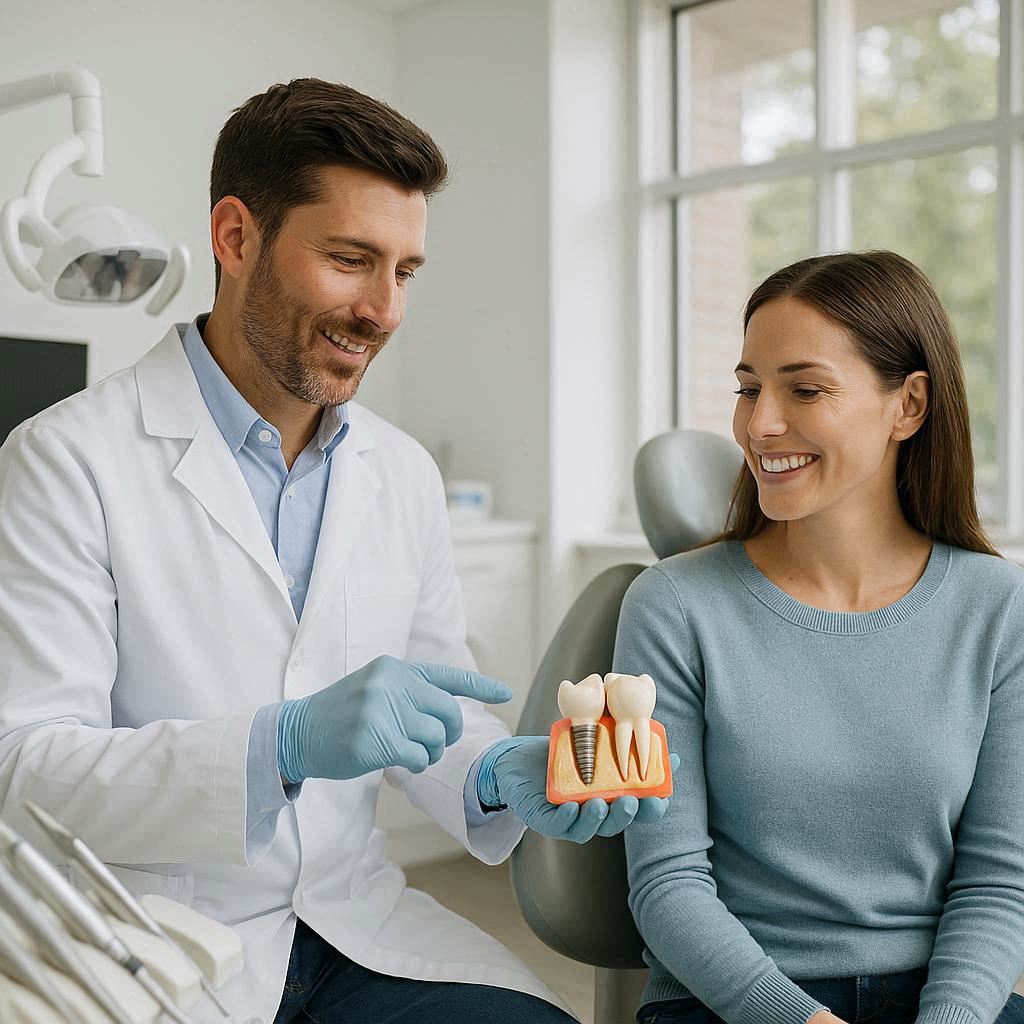
Unlike bridges (which rely on neighboring teeth) or dentures (which can slip), an implant replaces both the root and the crown. A small titanium post is placed into your jawbone. Over time, your bone fuses to that post. That’s called osseointegration—and it’s the secret to why implants feel so natural.
What that means for you:
- You can bite into an apple again.
- No clicking or slipping.
- Your jawbone stays strong (no “sunken face” look later in life).
But here’s the honest truth: implants aren’t for everyone. And they’re not cheap. We’ll cover both sides fairly.
💡 Important note: Dental implants require healthy gums and enough bone density. If you’ve been missing teeth for years, you may need a bone graft first. That’s normal. Many Wilmington patients do.
Dental Implants in Wilmington NC: What Makes This Area Unique?
Wilmington isn’t a huge metropolis, but it has a surprisingly strong dental implant scene. Why? Two reasons.
First, the population here skews older—retirees, snowbirds, and professionals settling down. That means more demand for tooth replacement.
Second, Wilmington has several multi-specialty dental groups. These aren’t small corner offices. They’re clinics with oral surgeons, periodontists, and restorative dentists under one roof. That matters because implants are a team effort.
You’ll also find standalone prosthodontists (specialists in replacement teeth) and a few high-end “implant centers” that do everything from CT scans to final crowns.
The bottom line? You have good options. But not every dentist is equally skilled.
Types of Dental Implants: Which One Fits Your Situation?
Not all implants are the same. Let’s break down what’s actually available in Wilmington.
Single Tooth Implant
One missing tooth. One implant post. One crown on top.
Best for: Healthy patients with one gap.
Timeframe: 4–7 months total (including healing).
Implant-Supported Bridge
Two implants hold a bridge of 3–4 teeth. No need to file down healthy adjacent teeth.
Best for: Two or three missing teeth in a row.
All-on-4 or All-on-6
Four or six implants support a full arch of fixed teeth (upper or lower). You don’t take them out at night.
Best for: Patients missing most or all teeth in one jaw.
Timeframe: Can sometimes get temporary teeth in one day.
Overdentures (Snap-on Dentures)
Two to four implants snap into a specialized denture. The denture is removable but stable.
Best for: Patients who want more security than regular dentures but at a lower cost than All-on-4.
Zygomatic Implants (Rare)
For severe bone loss in the upper jaw. Implants anchor into the cheekbone. Only a few specialists in Wilmington offer this.
| Type | Number of Implants | Removable? | Approx. Healing Time |
|---|---|---|---|
| Single tooth | 1 | No | 4-6 months |
| Implant bridge | 2 | No | 4-6 months |
| All-on-4 | 4-6 | No | 4-8 months |
| Overdenture | 2-4 | Yes (snap-on) | 4-6 months |
The Step-by-Step Process: What Actually Happens?
Let’s remove the fear of the unknown. Here’s a realistic timeline.
Step 1: Initial Consultation (1 hour)
The dentist examines your mouth, takes X-rays or a 3D cone beam CT scan, and checks your bone level. You’ll discuss medical history (diabetes, smoking, blood thinners—all matter).
Step 2: Treatment Plan & Quote
You receive a written plan. It should include: implant surgery, abutment, crown, and any extras (extractions, bone graft). If it’s vague, ask for details.
Step 3: Preparatory Work (if needed)
- Tooth extraction: 1–3 months healing before implant.
- Bone graft: 4–9 months healing.
Step 4: Implant Placement (30–90 minutes)
Local anesthesia or sedation. The surgeon makes a small cut in the gum, drills a precise hole, and screws in the titanium post. Then stitches the gum over or around it.
Does it hurt during? No. You’ll be numb.
After? Mild to moderate soreness for 3–5 days.
Step 5: Osseointegration (3–6 months)
You wait. The bone grows around the implant. You can eat normally (soft foods on that side). A temporary partial or denture may be worn.
Step 6: Abutment Placement (minor procedure)
A small connector piece is attached to the implant. Sometimes done at the same time as step 4.
Step 7: Final Crown (2–3 weeks after abutment)
Impressions are taken. A custom crown is made to match your other teeth. Then cemented or screwed onto the abutment.
Total treatment time: 5–9 months for most single implants. All-on-4 can be faster if you qualify for immediate loading.
🗓️ Important: “Same-day implants” exist, but they’re not for everyone. Immediate loading works best in the lower front jaw with good bone. Be skeptical of guarantees.
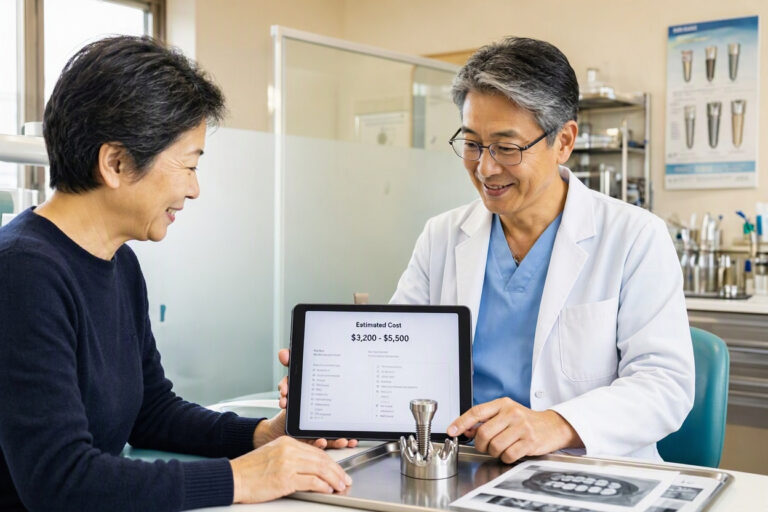
Average Cost of Dental Implants in Wilmington NC (2026 Realistic Figures)
Let’s talk money. No fake lowball numbers.
| Procedure | Low end | High end | What’s included? |
|---|---|---|---|
| Single implant (all-in) | $3,800 | $6,000 | Surgery + abutment + crown |
| Implant-supported bridge (3 units) | $7,000 | $12,000 | 2 implants + 3-unit bridge |
| All-on-4 (per arch) | $15,000 | $30,000 | 4 implants + fixed prosthesis |
| Overdenture (per arch) | $8,000 | $15,000 | 2-4 implants + removable denture |
| Bone graft (small) | $500 | $1,500 | Per site |
| Sinus lift (upper back) | $1,500 | $3,000 | Per side |
Why the wide range?
- Material: Zirconia crowns cost more than porcelain-fused-to-metal.
- Surgeon: Periodontists and oral surgeons charge more than general dentists.
- Technology: In-house CT scan vs. referral to imaging center.
Hidden costs to ask about:
- Temporary tooth during healing ($200–$600)
- Sedation (IV sedation can add $400–$800)
- Follow-up visits after the crown is placed
Does Insurance Cover Dental Implants in Wilmington NC?
The short answer: rarely 100%, but often partially.
Most dental insurance plans were written before implants became common. They still treat implants as “cosmetic” in fine print. But that’s changing.
What you can realistically expect:
- ✅ Some PPO plans cover the crown portion (50% after deductible).
- ✅ Some plans cover extractions and bone grafts as “medically necessary.”
- ❌ Few plans cover the implant post itself.
- ❌ Medicaid (NC) does not cover implants for adults (exceptions for accidents/surgery related to cancer).
Maximize your benefits:
Ask the dentist’s insurance coordinator for a “predetermination.” That’s a formal estimate sent to your insurer. Also, use your remaining 2026 benefits before they reset in December.
💡 Pro tip: If you have an HSA or FSA, implant costs are eligible. Pay pre-tax.
Financing Options in Wilmington: No Insurance? No Problem
Many patients pay out of pocket. Here’s how they manage it.
CareCredit – Healthcare credit card. Promotional financing (6, 12, 18 months no interest if paid in full). Widely accepted.
LendingClub – Patient financing with fixed rates. Longer terms (up to 84 months).
In-house membership plans – Some Wilmington offices offer annual plans ($300–$500/year) that give you 10-20% off implants. Ask at the consultation.
Dental schools – The nearest option is UNC Adams School of Dentistry in Chapel Hill (about 2 hours). Costs are roughly 40-60% lower, but you’ll have longer appointments and multiple visits.
How to Choose the Right Implant Dentist in Wilmington NC
Not every dentist who places implants should. Here’s your checklist.
Credentials to look for:
- DDS or DMD (standard)
- AAID credential (American Academy of Implant Dentistry) – optional but strong
- Oral surgeon, periodontist, or prosthodontist – specialists with 3+ extra years of training
Questions to ask before booking:
- “How many single implants do you place per month?”
- “What happens if my implant fails? Do you replace it for free?”
- “Do you use a surgical guide (3D planning)?”
- “Who makes the final crown? In-house lab or external?”
- “Can I speak to a past patient?”
Red flags:
- Guarantees that sound too good (“100% success” – no one can promise that).
- Pressuring you to decide today.
- Vague written estimates.
- No CT scan on-site (they’re guessing at your bone).
🦷 Good news: Wilmington has several board-certified specialists. Take your time.
Recovery and Healing: What’s Normal vs. Emergency?
Let’s be realistic. Healing isn’t fun, but it’s manageable.
Days 1–3:
- Some bleeding (normal for 24 hours)
- Swelling (peak at 48 hours)
- Soft foods only (yogurt, smoothies, mashed potatoes)
- No spitting, no straws, no smoking
Days 4–7:
- Swelling goes down
- You can return to desk work
- Salt water rinses (gently)
Weeks 2–4:
- Stitches dissolve or are removed
- You can chew soft solids (pasta, eggs, soft bread)
- Avoid the implant side
Months 2–6:
- Normal eating (but avoid hard nuts or ice on that side)
- The bone is fusing quietly
Emergency signs (call your surgeon):
- Fever over 101°F (38.3°C)
- Uncontrollable bleeding
- Implant feels loose (rare)
- Pain that gets worse after day 5
Success Rates & Risks: Honest Numbers
Dental implants are highly successful, but failure happens.
- 95–98% success for lower jaw single implants (denser bone).
- 90–95% success for upper jaw (softer bone, sinuses nearby).
- 85–90% success for smokers (nicotine impairs blood flow).
- ~80% success for patients with uncontrolled diabetes or osteoporosis meds (bisphosphonates).
Main causes of failure:
- Infection (peri-implantitis) – like gum disease but around the implant.
- Overloading (grinding teeth at night without a night guard).
- Poor bone quality.
- Smoking (heavy smokers have double the failure rate).
Good news: Most failures happen early (first 3-4 months) or after many years (neglected hygiene). If an implant fails, you may get a refund for the implant part, but not the crown.
📋 Note: Ask about warranty. Some offices offer 1-3 years on the implant, 1 year on the crown.
Top Local Considerations for Wilmington NC Patients
Living in the Cape Fear region affects your implant journey in small but real ways.
Hurricane season & appointments
If you schedule surgery in September or October, have a backup plan. Flooding can close offices. Always get the surgeon’s cell phone for after-hours emergencies.
Travel patients
If you’re coming from nearby towns (Jacksonville, Leland, Burgaw), ask about same-day crown milling. Some Wilmington offices have CEREC machines. That means you walk out with a permanent crown instead of a temporary.
Seasonal allergies
Spring allergies in Wilmington are brutal. Constant sneezing and nose-blowing increase sinus pressure. If you’re getting upper implants, wait until after pollen season.
Alternatives to Implants: When to Say No
Implants aren’t always the right answer. And a good dentist will tell you that.
Traditional bridge
- Pros: Faster (3 weeks), cheaper upfront ($2,500–$4,000 for 3 units).
- Cons: Requires filing down healthy teeth. Lasts 10-15 years vs. 25+ for implants.
Removable partial denture
- Pros: Lowest cost ($800–$1,500). No surgery.
- Cons: Clasps on other teeth. Can feel bulky. May accelerate bone loss.
Do nothing
- Pros: Free today.
- Cons: Adjacent teeth will shift. Bone shrinks over time. Later implants become harder (more grafting).
When do implants NOT make sense?
- You smoke heavily and won’t quit.
- You have untreated gum disease.
- You take IV bisphosphonates for cancer (serious risk of jaw necrosis).
- Budget is extremely tight (a bridge is better than no tooth).
What Patients Wish They Knew Before Getting Implants
I spoke with several Wilmington patients who completed their implant treatment. Here’s their honest feedback.
“The numbing wore off on the drive home. Have ice packs ready and fill your pain prescription before surgery.”
— Laura, 58 (single implant)
“Nobody told me about the temporary partial. It looked like a retainer with a fake tooth. I hated it, but it was only for 4 months.”
— Mike, 62 (two implants)
“I saved $2,000 by going to a periodontist for the surgery and my general dentist for the crown. They coordinated everything.”
— Diane, 49 (All-on-4 upper)
“The noise is weird. You hear the drill in your skull, not just your tooth. Bring earbuds with music.”
— James, 44 (bone graft + implant)
“My biggest regret? Waiting five years. I needed a sinus lift and bone graft because I waited. Do it sooner if you can.”
— Patricia, 67
Maintenance: Make Your Implant Last 30+ Years
An implant won’t decay, but the gum around it can get infected. That’s peri-implantitis, and it’s the #1 cause of late failure.
Daily home care:
- Soft or extra-soft toothbrush (hard bristles scratch titanium).
- Water flosser (set to low pressure) – game changer for cleaning around the abutment.
- Interdental brushes for tight spaces.
- Avoid: metal picks, toothpicks, or abrasive toothpaste.
Professional maintenance:
- See your hygienist every 6 months.
- Ask for “plastic scalers” (metal ones scratch).
- Annual X-ray to check bone levels.
Lifestyle:
- Wear a night guard if you grind.
- Don’t use your teeth as tools (opening packages, cracking nuts).
- If you play contact sports, ask about a custom mouthguard that covers the implant area.
Common Myths About Dental Implants (Debunked)
Myth 1: “Implants are obvious. People will know.”
False. Modern crowns are layered porcelain. Even a specialist can’t tell without an X-ray.
Myth 2: “The surgery is extremely painful.”
False. Most patients say it’s easier than a wisdom tooth extraction. Post-op pain is typically 3/10.
Myth 3: “I’m too old for implants.”
False. Patients in their 80s and 90s get implants. Age isn’t a factor. Overall health is.
Myth 4: “They set off metal detectors.”
False. Titanium is non-magnetic and too small to trigger airport security.
Myth 5: “My body will reject the implant.”
Rare. “Rejection” (true allergy) affects less than 0.6% of patients. Failure is almost always infection or overload.
Frequently Asked Questions (FAQ)
Q: How long do dental implants last?
A: With good hygiene, 25+ years. Many last a lifetime. The crown may need replacement after 15-20 years.
Q: Can I get implants if I have gum disease?
A: Only after gum disease is treated and stabilized. Active infection is a strict no.
Q: Do implants require special cleaning?
A: Not special, but thorough. A water flosser is highly recommended. Regular floss works but is trickier.
Q: Can I have an MRI with dental implants?
A: Yes. Titanium is MRI-safe. But inform the technician beforehand.
Q: What’s cheaper—going to Mexico or Costa Rica for implants?
A: Usually 50-70% less. But factor in travel, lodging, language barriers, and no legal recourse if something fails. Many Wilmington patients prefer local for follow-up care.
Q: How soon after extraction can I get an implant?
A: Immediate (rare), early (4-8 weeks), or delayed (3-6 months). Your surgeon decides based on infection and bone.
Q: Will my insurance cover bone grafting?
A: Often yes, if the bone loss is from a medically necessary extraction (not long-term missing tooth). Ask for a predetermination.
Final Verdict: Are Dental Implants Worth It in Wilmington NC?
Let’s be honest with each other.
Dental implants are an investment. A significant one. They cost more than a car down payment. They require patience (months of healing). And they’re not risk-free.
But for the right patient—non-smoker, healthy gums, adequate bone—implants are the closest thing to growing a new tooth. They don’t slip. They don’t damage neighbors. They preserve your jawbone. And they let you eat corn on the cob again.
In Wilmington NC, you have skilled providers, reasonable costs compared to Raleigh or Charlotte, and a supportive dental community.
You deserve to smile without thinking about gaps. You deserve to chew without planning each bite. And you deserve a solution that doesn’t rely on glue or adhesives.
If that sounds like you, book two or three consultations. Ask the hard questions. Compare written estimates. And choose the dentist who listens, not the one who rushes.
Conclusion (Three Lines)
Dental implants in Wilmington NC offer a permanent, natural-feeling solution for missing teeth, but they require healthy bone, patience, and a budget of $4,000–$30,000 depending on complexity. Success rates exceed 95% for non-smokers, and with proper maintenance, implants can last 30 years or more. Start with two consultations, ask about all-in pricing, and don’t let fear of the procedure stop you—modern sedation makes it comfortable.
Additional Resource
🔗 Link: American Academy of Implant Dentistry (AAID) Consumer Guide
Find board-certified implant dentists, read patient FAQs, and download a free “Questions to Ask Your Surgeon” checklist.