Santa Clara Oral Surgery & Dental Implants: A Complete Guide to Restoring Your Smile
If you have been told you need oral surgery, your first reaction might be a mix of confusion and worry. It is completely normal to have questions. What does the procedure feel like? How long is recovery? Is it worth the investment?
You are not alone. Every day, people in Santa Clara sit in dental chairs looking for answers just like yours.
This guide walks you through everything you need to know about oral surgery and dental implants in Santa Clara. We focus on realistic outcomes, honest timelines, and practical advice. No confusing medical terms. No pressure. Just clear, friendly information to help you make a smart choice for your health.
Understanding Oral Surgery: What It Really Means
Oral surgery sounds intimidating. But in reality, it covers a wide range of common procedures. Think of it as specialized dental care for problems that go beyond a standard filling or cleaning.
Oral surgeons in Santa Clara handle complex cases involving your teeth, jaw, gums, and even facial structures. These professionals complete four to six years of additional training after dental school. That extra education focuses on anesthesia, bone health, nerve function, and surgical techniques.
Common Reasons People Need Oral Surgery
You might need oral surgery for several reasons. Here are the most frequent situations we see in Santa Clara practices:
- Impacted wisdom teeth – These are molars that cannot break through the gum line properly.
- Severe tooth decay – When a tooth is too damaged for a standard filling or crown.
- Jaw alignment issues – Problems that cause pain, clicking, or difficulty chewing.
- Facial trauma – Accidents or injuries that break teeth or jawbones.
- Bone loss – When the jaw lacks enough density to support teeth or implants.
- Oral pathology – Cysts, tumors, or suspicious growths that need biopsy.
Signs You Should See an Oral Surgeon
Not every toothache requires surgery. However, certain symptoms should push you to schedule a consultation soon.
“Persistent pain, swelling that lasts more than three days, or numbness in your jaw are clear signals. Do not ignore them.” – Dr. Elena Marquez, DDS
Here is a quick checklist for yourself:
- You have difficulty opening your mouth fully.
- You feel a hard lump on your gum or jaw.
- Your wisdom teeth are causing repeated infections.
- You have loose teeth without an injury.
- You experience chronic bad breath that brushing does not fix.
If any of these sound familiar, a consultation with a Santa Clara oral surgeon can bring you peace of mind.
Dental Implants Explained: The Modern Solution for Missing Teeth
Dental implants have changed tooth replacement forever. Twenty years ago, people with missing teeth had limited options: bridges or dentures. Today, implants offer a permanent, natural-feeling solution.
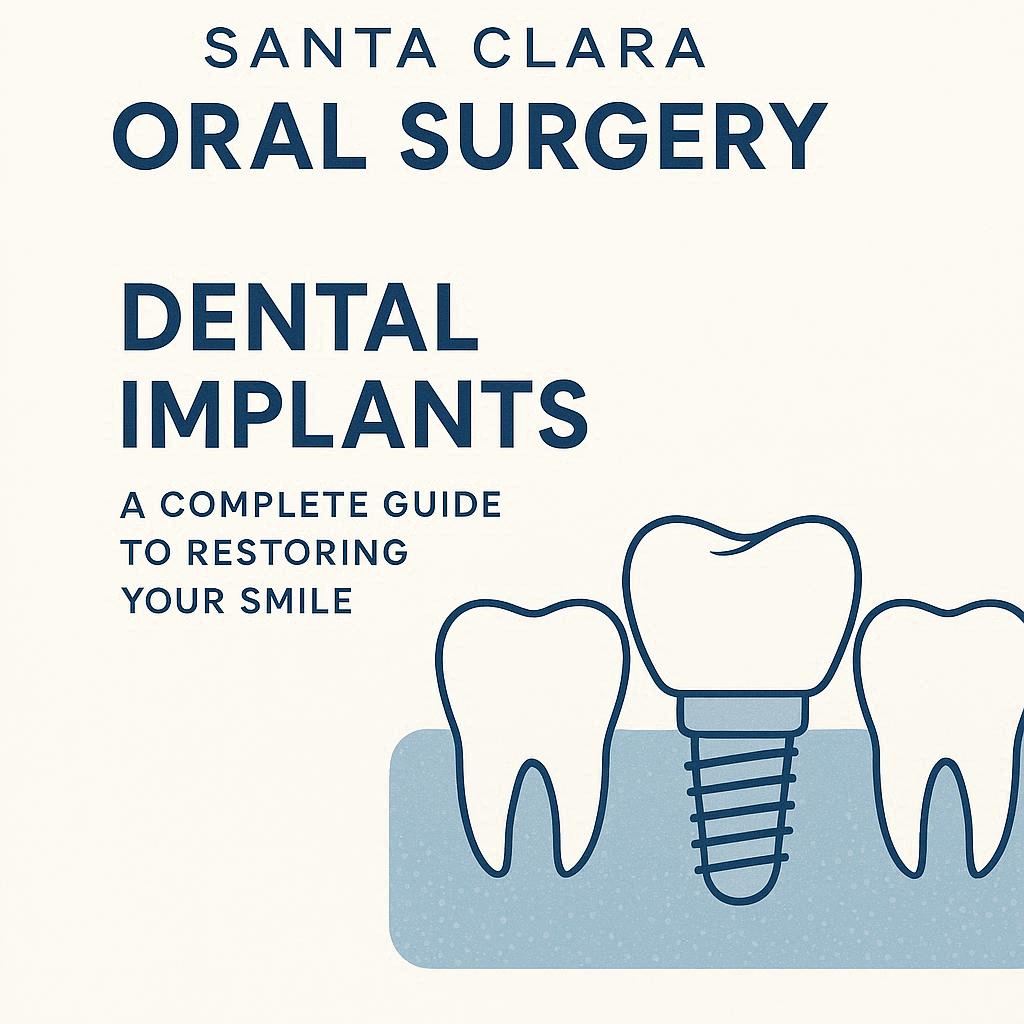
A dental implant is essentially an artificial tooth root. The surgeon places a small titanium post into your jawbone. Over time, your bone grows around this post, locking it firmly in place. Once healed, your dentist attaches a custom-made crown on top.
Why Implants Are Worth Considering
Let us compare implants to older methods. This table gives you a clear picture:
| Feature | Dental Implants | Traditional Bridge | Removable Denture |
|---|---|---|---|
| Longevity | 20+ years with care | 5–10 years | 3–8 years |
| Bone health | Preserves jawbone | Does not prevent bone loss | Accelerates bone loss |
| Comfort | Feels like natural teeth | Can feel bulky | May slip or click |
| Cleaning | Brush and floss normally | Requires special floss | Must remove and soak |
| Cost over time | Lower long-term | Moderate | High due to replacements |
The upfront cost of implants is higher. But many patients find the long-term value better because they rarely need replacement or repair.
Who Is a Good Candidate for Implants?
You might think implants are only for young, healthy people. That is not true. Santa Clara oral surgeons place implants in patients from their late teens into their nineties. The key factors are:
- Sufficient bone density – If you lack bone, grafting can often fix this.
- Healthy gums – No active gum disease.
- Non-smoker or willing to quit – Smoking dramatically lowers success rates.
- Commitment to oral hygiene – Implants need daily care just like real teeth.
A note for readers: Many people worry they are “too old” for implants. Age alone is rarely a problem. Your overall health matters more.
The Step-by-Step Process of Getting Dental Implants in Santa Clara
Understanding what happens during implant surgery reduces fear. Below is the typical journey from start to finish. Every case is unique, but this outline gives you a reliable roadmap.
Step 1: Initial Consultation and Imaging
Your first visit is all about information. The surgeon examines your mouth, reviews your medical history, and takes 3D scans of your jaw. These scans show nerve locations, sinus positions, and bone volume.
This is also your chance to ask questions. Bring a written list. Good surgeons welcome curiosity.
Step 2: Treatment Planning
Using the scan data, your surgical team creates a personalized plan. They decide exactly where to place each implant. Modern technology allows virtual previews of your final smile.
Step 3: Bone Grafting (If Needed)
Some patients lack enough bone to support implants. A bone graft solves this. The surgeon adds bone material to thin areas, usually from a donor source or synthetic material.
Healing from a graft takes four to nine months. This sounds long, but it is worth the wait. A strong foundation leads to successful implants.
Step 4: Implant Placement Surgery
On surgery day, you receive local anesthesia. Many patients also choose sedation for relaxation. The surgeon makes a small incision in your gum, drills a precise hole in the bone, and inserts the titanium post.
Most people feel pressure but no pain. A single implant takes about 60 to 90 minutes.
Step 5: Osseointegration (Healing Period)
This is the most important phase. Osseointegration means your bone fuses to the implant surface. You cannot rush biology. Healing typically takes three to six months.
During this time, you wear a temporary tooth or denture. You eat soft foods and avoid chewing on the implant site.
Step 6: Abutment Placement
Once the implant is stable, the surgeon attaches a small connector called an abutment. This piece pokes through the gum and holds your future crown. A second minor surgery is sometimes needed, but it is quick and less intense than the first.
Step 7: Crown Attachment
Your dentist takes impressions of your healed implant. A lab fabricates your permanent crown to match your other teeth in color, shape, and size. After two to three weeks, you return for the final attachment.
Congratulations. You now have a new tooth that looks, feels, and functions like a natural one.
Types of Oral Surgery Procedures Available in Santa Clara
Beyond single implants, oral surgeons offer several specialized procedures. Here is a breakdown of what you might encounter.
Wisdom Teeth Removal
Wisdom teeth usually appear between ages 17 and 25. Many Santa Clara residents have them removed for three main reasons:
- Impaction – The tooth grows sideways or at an angle.
- Crowding – There is simply no space in the jaw.
- Infection – Partially erupted teeth trap bacteria.
The procedure is straightforward. For simple cases, local anesthesia works. For deeply impacted teeth, sedation or general anesthesia is common. Recovery takes three to seven days.
Bone Grafting
As mentioned earlier, bone grafting rebuilds lost jawbone. Surgeons use different types of graft material:
- Autograft – Bone taken from your own body (often the chin or hip).
- Allograft – Donated human bone from a tissue bank.
- Xenograft – Animal bone (usually cow or pig) processed for safety.
- Alloplast – Synthetic bone material.
All options are safe and effective. Your surgeon recommends based on your specific situation.
Sinus Lift
The maxillary sinuses sit right above your upper jaw’s back teeth. When those teeth are missing for a long time, the sinus can expand downward, leaving no bone for implants. A sinus lift adds bone to that area.
This procedure is more complex than standard grafting. Recovery takes a bit longer. But it makes implant placement possible for many patients who were previously told “no.”
Corrective Jaw Surgery (Orthognathic Surgery)
Some people have jaws that do not align properly. This can cause:
- Difficulty chewing or biting
- Chronic jaw pain
- Sleep apnea
- Speech problems
Corrective jaw surgery repositions one or both jaws. It is major surgery requiring hospital stay. However, the quality of life improvements are often dramatic.
Biopsies and Pathology Removal
If your dentist finds an unusual sore or lump, an oral surgeon can remove it for testing. Most growths are benign (non-cancerous). But early detection of oral cancer saves lives.
What to Expect During Recovery: A Realistic Timeline
Recovery expectations vary by procedure. Let us focus on the most common surgeries.
Recovery After Wisdom Teeth Removal
Day 1-2: Rest. Use ice packs on your face. Eat only cold or room-temperature soft foods like yogurt, pudding, or smoothies. Avoid straws completely (sucking dislodges blood clots).
Day 3-5: Swelling peaks then begins decreasing. Switch to warm compresses. Introduce mashed potatoes, scrambled eggs, and oatmeal.
Day 7: Most people return to normal activities. Some soreness remains but is manageable with over-the-counter pain relievers.
Day 14: Surgical sites are mostly healed. You can eat normally, but avoid very crunchy or sticky foods for another week.
Recovery After Dental Implant Surgery
First 24 hours: Bleeding and swelling are normal. Bite on gauze pads as directed. Do not spit, rinse vigorously, or drink through straws.
Days 2-3: Stick to soft foods. Avoid the surgical side when chewing. Keep your head elevated while sleeping to reduce swelling.
Days 4-7: Swelling subsides. You can return to desk work or light activities. No heavy lifting or intense exercise yet.
Weeks 2-4: Sutures dissolve or are removed. You resume gentle brushing near the site. The area may feel “different” but not painful.
Months 3-6: Osseointegration happens silently. You barely notice the implant. Regular checkups confirm healing.
*Important note: Do not smoke during healing. Nicotine constricts blood vessels and starves the bone of oxygen. Smokers have implant failure rates up to 20% higher than non-smokers.*
Red Flags: When to Call Your Surgeon
Most recoveries go smoothly. However, contact your Santa Clara oral surgeon immediately if you experience:
- Fever over 101°F (38.3°C)
- Bleeding that does not stop with pressure
- Severe pain not relieved by prescribed medication
- Swelling that worsens after three days
- Numbness that lasts beyond 24 hours
- Difficulty breathing or swallowing
Costs and Insurance for Oral Surgery & Implants in Santa Clara
Money conversations make many people uncomfortable. Let us address costs honestly so you can plan.
Average Price Ranges in Santa Clara (2025 Estimates)
| Procedure | Typical Cost Range |
|---|---|
| Wisdom tooth extraction (simple) | $200 – $600 per tooth |
| Wisdom tooth extraction (impacted) | $400 – $1,100 per tooth |
| Single dental implant (post only) | $1,500 – $3,000 |
| Abutment and crown | $1,500 – $3,000 |
| Full implant (post + abutment + crown) | $3,000 – $6,000 |
| Bone grafting (small) | $500 – $1,500 |
| Sinus lift | $1,500 – $3,000 |
| Full arch implants (All-on-4) | $15,000 – $30,000 per arch |
These are estimates. Actual costs depend on your specific anatomy, surgeon experience, and laboratory fees.
Does Insurance Cover Oral Surgery?
Medical and dental insurance handle oral surgery differently. Here is a helpful rule:
- Dental insurance typically covers routine extractions, wisdom teeth removal (up to a limit), and implant crowns.
- Medical insurance often covers jaw surgery, pathology removal, trauma repair, and sometimes bone grafting if medically necessary.
Always ask your surgeon’s office to submit pre-authorization requests. This tells you exactly what your plan pays before you commit.
Financing Options in Santa Clara
If you do not have insurance or need extensive work, several financing paths exist:
- CareCredit – A healthcare credit card with promotional financing.
- LendingClub – Personal medical loans with fixed rates.
- In-house payment plans – Some Santa Clara practices offer monthly installments.
- FSA/HSA accounts – Use pre-tax dollars for qualified procedures.
Do not let cost stop you from consulting. Most offices provide free or low-cost initial exams where they break down all financial options.
How to Choose the Right Oral Surgeon in Santa Clara
Choosing a surgeon is a personal decision. You want someone skilled, communicative, and easy to reach. Use these criteria to guide you.
Credentials to Look For
- Board certification – The American Board of Oral and Maxillofacial Surgery (ABOMS) certification indicates advanced training.
- Hospital privileges – Surgeons with local hospital privileges undergo rigorous peer review.
- Years in practice – Experience matters, especially for complex cases.
Questions to Ask During Your Consultation
Prepare a list of questions before you go. Here are good ones to include:
- How many implant procedures do you perform each month?
- What is your success rate for patients like me?
- What type of anesthesia do you recommend, and who administers it?
- Can you show me before-and-after photos of similar cases?
- What happens if an implant fails? Do you offer a warranty or replacement policy?
- Who handles after-hours emergencies?
Red Flags to Avoid
Trust your gut during consultations. Walk away if you notice:
- The surgeon rushes your exam without answering questions.
- The office cannot provide clear cost estimates.
- You feel pressured to schedule surgery immediately.
- The surgeon claims a 100% success rate (medicine never offers guarantees).
Local Reputation Matters
Santa Clara has a strong community of dental professionals. Ask your general dentist for a referral. Read Google reviews but take extreme praise or harsh criticism with a grain of salt. Look for patterns in comments about wait times, staff friendliness, and post-op care.
Combining Oral Surgery with Other Dental Treatments
Oral surgery rarely happens in isolation. Many Santa Clara patients combine procedures for better results.
Implants and Crowns
This is the most common combination. The surgeon places the implant. Your restorative dentist designs and cements the crown. Close communication between both providers ensures the crown fits perfectly and matches adjacent teeth.
Extractions and Same-Day Implants
In ideal situations, a surgeon extracts a failing tooth and places an implant immediately. This saves time and bone. Not everyone qualifies. You need no active infection and enough bone volume. Your surgeon decides during the procedure.
Orthodontics and Jaw Surgery
Some adults need braces or clear aligners before jaw surgery. The orthodontist straightens teeth into new positions. Then the surgeon moves the jaw into alignment. After healing, fine-tuning braces complete the process.
Periodontal Therapy and Implants
Gum disease destroys bone. You cannot place implants into infected gums. First, a periodontist treats the gum disease with deep cleanings or laser therapy. Once gums are healthy for three to six months, implant surgery can proceed.
Living with Dental Implants: Long-Term Care and Maintenance
Implants do not decay like natural teeth. That sounds amazing, and it is. However, they still need daily attention.
Daily Cleaning Routine
- Brush twice daily – Use a soft toothbrush. Pay attention to the gumline around the implant.
- Floss daily – Use implant-specific floss or super floss with a stiff end.
- Water flosser – Highly recommended for cleaning under bridgework or around multiple implants.
- Avoid abrasive toothpaste – No baking soda or heavy whitening formulas that scratch the crown surface.
Professional Maintenance
Visit your dentist every six months. During these visits, they will:
- Check implant stability by tapping and testing.
- Take X-rays every 12-24 months to check bone levels.
- Clean around the implant with specialized plastic instruments (metal scalers scratch titanium).
Expected Lifespan
With proper care, dental implants last 20 years to a lifetime. The crown on top may need replacement after 10-15 years due to normal wear. But the titanium post rarely fails.
Common Problems and Solutions
Peri-implantitis – This is infection and bone loss around an implant. It is similar to gum disease. Early stages are treatable with deep cleaning. Advanced cases may need surgery or implant removal.
Crown loosening – The screw holding your crown can sometimes loosen. Your dentist tightens it in five minutes. Do not ignore a wobbly crown, as chewing can break components.
Gum recession – If your gums pull back, the metal implant edge becomes visible. A gum graft can fix this for cosmetic reasons.
Frequently Asked Questions (FAQ)
Q: Is oral surgery painful during the procedure?
A: No. Modern anesthesia blocks pain completely. Most patients feel only pressure and movement. Afterward, you manage discomfort with prescribed or over-the-counter medication.
Q: How long do I need to take off work for dental implants?
A: Plan for two to three days off for a single implant. For multiple implants or bone grafting, take four to five days. Desk workers return sooner than those with physical jobs.
Q: Can I get dental implants if I have diabetes?
A: Yes, but controlled diabetes is essential. High blood sugar slows healing and increases infection risk. Work with your primary care doctor to stabilize your levels before surgery.
Q: Are dental implants covered by Medicare?
A: Original Medicare does not cover dental implants. Some Medicare Advantage plans include dental benefits, but coverage varies widely. Review your policy or call your plan directly.
Q: What is the success rate for dental implants?
A: Overall success rates are 95-98% for lower jaw and 90-95% for upper jaw. Success depends on bone quality, surgeon skill, and your health habits.
Q: How soon can I eat normally after implant surgery?
A: Soft foods for the first week. Gradually introduce solid foods over two to four weeks. Avoid hard, sticky, or crunchy items (nuts, caramel, ice) until your final crown attaches.
Q: Do wisdom teeth always need removal?
A: No. Wisdom teeth that are fully erupted, properly positioned, painless, and cleanable can stay. However, many oral surgeons recommend removal before age 25 to prevent future problems.
Q: Can I have a CT scan at the surgeon’s office?
A: Most Santa Clara oral surgery offices have in-house cone beam CT scanners. This 3D imaging takes less than a minute and exposes you to less radiation than medical CT.
Additional Resources
For more trusted information about oral surgery and dental implants, explore these links:
- American Association of Oral and Maxillofacial Surgeons (AAOMS) – MyOMS.org
Find patient education videos, procedure guides, and surgeon locator tools.
Conclusion
Oral surgery and dental implants in Santa Clara offer safe, predictable solutions for missing or damaged teeth. From wisdom tooth removal to full-mouth reconstruction, modern techniques minimize pain and shorten recovery. The key is choosing a qualified surgeon, following pre- and post-operative instructions, and committing to long-term maintenance. Your smile is worth the investment.