Dental Office Decor Ideas: Accent Walls That Transform Your Space
An accent wall is one of the most powerful design tools in a dental office. It adds depth, personality, and visual interest without overwhelming the space. A single well-designed accent wall can turn a plain waiting room into a welcoming retreat. It can make a treatment room feel calming and modern. It can reinforce your brand and create a memorable patient experience.
But accent walls require careful planning. The wrong color, material, or placement can make a room feel smaller, cluttered, or chaotic. The right accent wall ties the entire design together. It becomes a focal point that guides the eye and sets the mood.
This guide covers everything you need to know about dental office accent walls. You will learn about design styles, materials, placement strategies, and practical tips. By the end, you will have a clear plan to create accent walls that elevate your practice.
Why Accent Walls Work in Dental Offices
Accent walls are more than a design trend. They serve practical and psychological purposes. Here is why they work so well in dental settings.
- They Create a Focal Point: An accent wall draws the eye and anchors the room. It gives patients something interesting to look at, which distracts from anxiety.
- They Add Depth and Dimension: A plain room feels flat. An accent wall adds visual depth and makes the space feel more dynamic.
- They Reinforce Your Brand: An accent wall in your brand color or with your logo creates a memorable, recognizable space.
- They Are Cost-Effective: You do not need to renovate the entire room. One wall can transform the entire feel of a space at a fraction of the cost.
- They Improve Wayfinding: Color-coded accent walls help patients navigate your office. A blue wall might indicate the hygiene area, while a green wall marks the treatment rooms.
- They Hide Imperfections: An accent wall can draw attention away from worn areas or architectural flaws.
“An accent wall is the exclamation point of a room. It says, ‘Look here.’ When done right, it adds personality and warmth to a clinical space. When done wrong, it looks like an afterthought.” — Sarah Mitchell, Healthcare Interior Designer
Choosing the Right Wall for Your Accent
Not every wall should be an accent wall. The location matters as much as the design. Here are the key considerations.
1. The Focal Point Wall
This is the wall that naturally draws the eye when you enter a room. It is often the wall behind the reception desk, behind the patient chair, or at the end of a hallway. This is the best choice for a bold accent.
2. The Longest Wall
The longest wall in a room is often the most visible. An accent wall here can make the room feel larger and more balanced. Avoid using the shortest wall, which can feel cramped.
3. The Wall with Architectural Features
Walls with windows, fireplaces, or built-in shelves are natural focal points. Enhance them with an accent color or material that highlights their features.
4. The Wall Opposite the Entrance
When you walk into a room, the wall you face is the most impactful. An accent wall here creates a strong first impression. This is ideal for waiting rooms and reception areas.
5. The Hallway End Wall
The wall at the end of a hallway is a perfect spot for an accent. It draws patients forward and makes the corridor feel less endless.
| Wall Location | Best For | Why |
|---|---|---|
| Focal Point Wall | Bold colors, patterns | Natural draw for the eye |
| Longest Wall | Subtle accents | Makes room feel larger |
| Wall with Features | Highlighting architecture | Enhances existing elements |
| Opposite Entrance | First impressions | Strong visual impact |
| Hallway End Wall | Wayfinding, interest | Draws patients forward |
Note for Readers: Avoid accenting multiple walls in the same room. This creates visual chaos. One accent wall per room is the general rule. In large, open spaces, you may use two accent walls if they are far apart and serve different zones.
Accent Wall Design Styles for Dental Offices
There are many ways to create an accent wall. Choose the style that best fits your practice’s personality and brand.
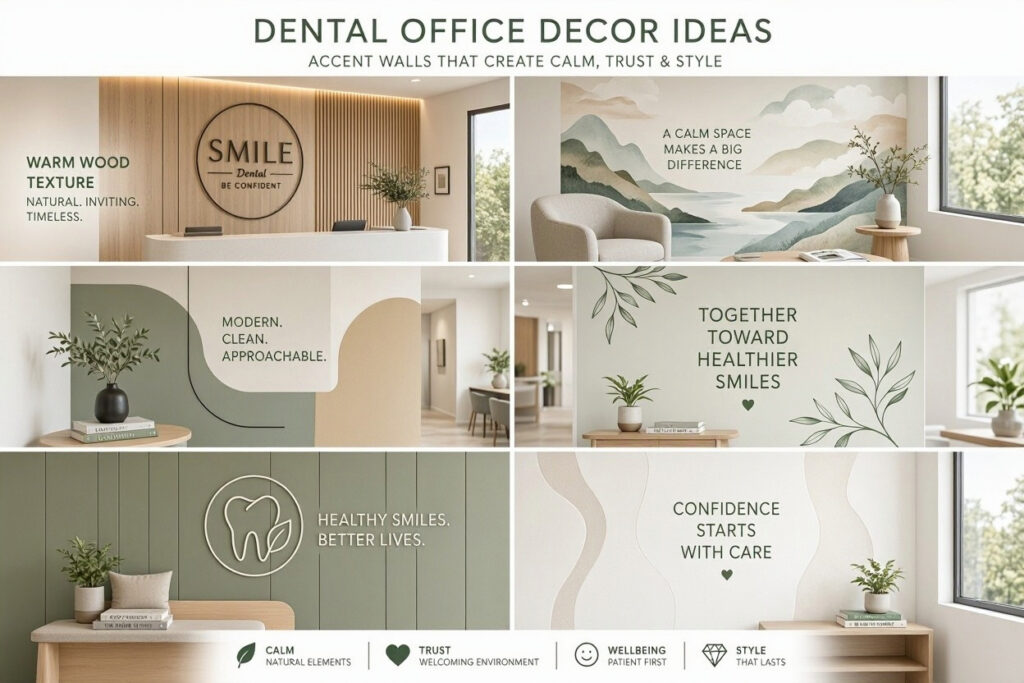
1. Painted Accent Walls
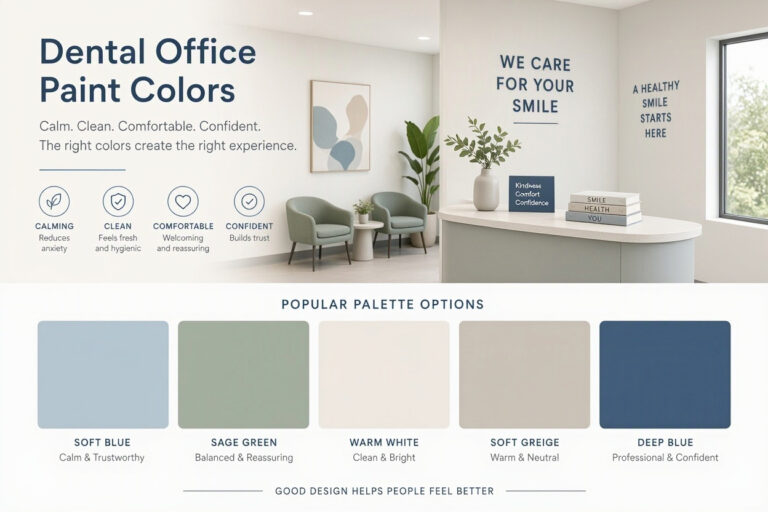
This is the simplest and most affordable option. Choose a color that contrasts with the other walls. A deep blue behind a white reception desk, a sage green behind a patient chair, or a warm terracotta in a waiting room.
- Best For: Any room, any budget
- Impact: High impact for low cost
- Tip: Use the 60-30-10 rule. The accent wall is the 10%.
2. Wallpapered Accent Walls
Wallpaper adds pattern and texture. A floral wallpaper in a waiting room feels warm and inviting. A geometric wallpaper in a hallway feels modern and professional. A subtle texture in an operatory feels calming.
- Best For: Waiting rooms, reception areas, hallways
- Impact: High visual interest
- Tip: Choose commercial-grade, scrubbable wallpaper for easy cleaning.
3. Wood Paneling Accent Walls
Wood paneling adds warmth and natural texture. Light woods like birch or oak feel modern and Scandinavian. Reclaimed wood feels rustic and eco-friendly. Wood slat panels are a popular modern choice.
- Best For: Reception areas, waiting rooms, operatories
- Impact: Warm, sophisticated, natural
- Tip: Use sealed wood for easy cleaning and durability.
4. Stone or Brick Accent Walls
Stone and brick add texture and character. A stacked stone wall behind a reception desk feels luxurious. A whitewashed brick wall in a waiting room feels industrial-chic. Faux stone and brick panels offer the look at a lower cost.
- Best For: Reception areas, feature walls
- Impact: Dramatic, textural, memorable
- Tip: Ensure the surface is sealed and easy to clean.
5. Tile Accent Walls
Tile is durable, easy to clean, and available in many styles. Subway tile feels classic and clean. Hexagonal tile feels modern and playful. Large-format tile feels sleek and contemporary.
- Best For: Operatories, restrooms, sterilization areas
- Impact: Clean, durable, professional
- Tip: Choose non-porous, easy-to-disinfect tile for clinical areas.
6. Branded Accent Walls
Paint your accent wall in your brand color. Add your logo, tagline, or a custom mural. This is a powerful branding tool that makes your practice instantly recognizable.
- Best For: Reception areas, waiting rooms
- Impact: Strong brand recognition
- Tip: Keep the design clean and uncluttered. Let your logo breathe.
7. Living Walls
A living wall of plants is a stunning, eco-friendly accent. It improves air quality, reduces stress, and adds natural beauty. Living walls require maintenance but deliver a major wow factor.
- Best For: Waiting rooms, reception areas
- Impact: Unique, memorable, calming
- Tip: Choose low-maintenance plants or high-quality artificial options if maintenance is a concern.
| Style | Best Room | Impact | Maintenance |
|---|---|---|---|
| Painted | Any room | High | Low |
| Wallpaper | Waiting, reception | High | Medium |
| Wood Paneling | Reception, operatory | Warm | Low |
| Stone/Brick | Reception, feature | Dramatic | Low |
| Tile | Operatories, restrooms | Clean | Low |
| Branded | Reception, waiting | Branding | Low |
| Living Wall | Waiting, reception | Unique | High |
Important Note: Always consider infection control when choosing accent wall materials. In clinical areas, choose non-porous, scrubbable surfaces. Avoid textured materials that trap dust and bacteria.
Accent Wall Ideas by Room
Different rooms need different accent wall approaches. Here are specific ideas for each area.
Reception and Waiting Room
The waiting room is where patients form their first impression. An accent wall here sets the tone for the entire visit.
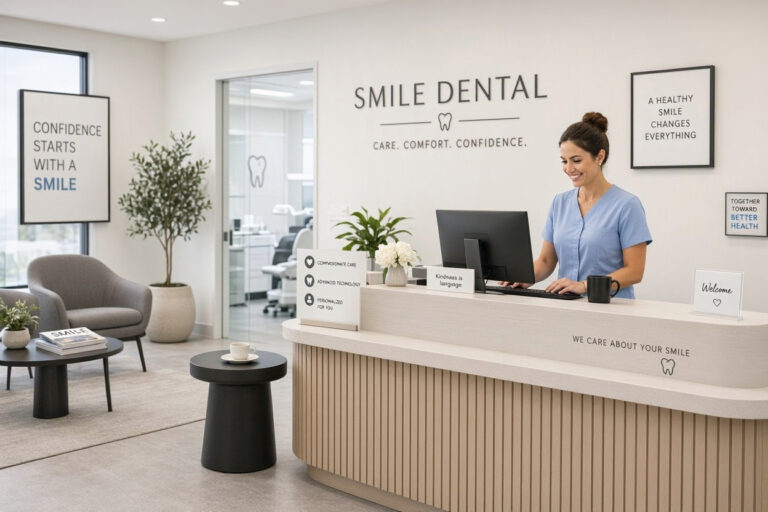
- Idea 1: A deep blue accent wall behind the reception desk with a white logo.
- Idea 2: A wood slat wall behind the seating area for warmth and texture.
- Idea 3: A living wall with lush greenery for a calming, eco-friendly feel.
- Idea 4: A geometric wallpaper in your brand colors for a modern, playful look.
Operatories and Treatment Rooms
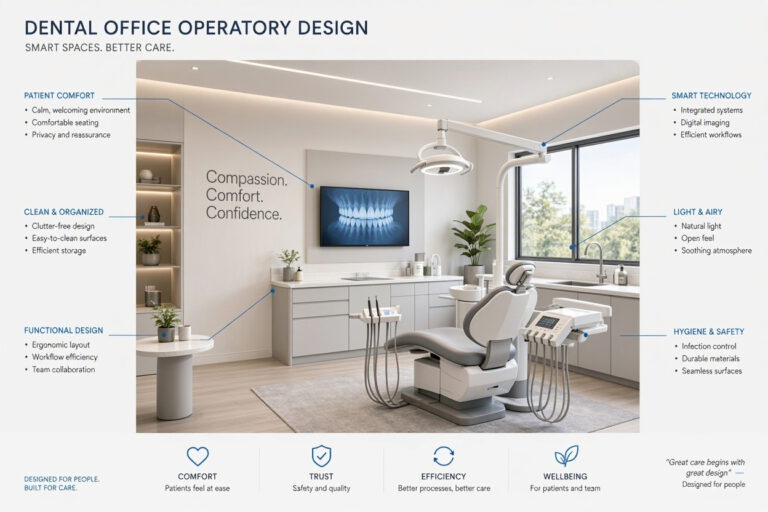
Operatories need to be calm and clinical. Accent walls should be subtle and soothing.
- Idea 1: A soft sage green accent wall behind the patient chair.
- Idea 2: A subtle textured wallpaper on the wall facing the patient.
- Idea 3: A large-format tile accent wall behind the sink area.
- Idea 4: A calming nature mural on the ceiling or wall facing the chair.
Hallways and Corridors
Hallways are transitional spaces. Accent walls can guide patients and add interest.
- Idea 1: A bold color on the end wall of the hallway to draw patients forward.
- Idea 2: A gallery wall of framed art or team photos.
- Idea 3: A chalkboard wall for patient messages or motivational quotes.
- Idea 4: A color-coded accent wall to indicate different zones of the practice.
Front Office and Business Area
The front office is where your team works. Accent walls should support focus and comfort.
- Idea 1: A branded accent wall with your logo and tagline.
- Idea 2: A corkboard or whiteboard wall for organization and brainstorming.
- Idea 3: A calming blue or green accent wall to reduce stress.
| Room | Accent Wall Idea | Why It Works |
|---|---|---|
| Reception | Branded color with logo | Strong first impression |
| Waiting Room | Living wall or wood slats | Warm, calming, memorable |
| Operatories | Soft green or nature mural | Soothes patients |
| Hallways | Bold end wall | Guides and interests |
| Front Office | Branded or whiteboard wall | Team focus and branding |
Pro Tip: Use accent walls to create visual consistency across your practice. For example, use the same accent color in all hallways, or the same wallpaper in all treatment rooms. This creates a cohesive, professional look.
Incorporating Your Brand into Accent Walls
Your accent wall is a branding opportunity. Here is how to make the most of it.
1. Use Your Brand Colors
Choose an accent color that matches your logo and marketing materials. This creates a consistent, recognizable look. If your brand color is teal, use teal on your accent wall.
2. Add Your Logo
Place your logo on the accent wall behind the reception desk or in the waiting room. Use a clean, professional sign or decal. Ensure it is well-lit and visible.
3. Include Your Tagline
Add your practice tagline to the accent wall. This reinforces your brand message and creates a memorable impression. Keep it short and easy to read.
4. Use Brand Imagery
If your brand uses specific imagery (e.g., leaves for a natural practice, waves for a coastal practice), incorporate it into the accent wall design. This could be wallpaper, a mural, or a series of framed prints.
5. Be Consistent
Use the same accent wall style and colors throughout your practice. This creates a cohesive brand experience that patients remember.
“Your accent wall is a billboard inside your office. It should say something about who you are and what you value. Make it count.” — David Park, Brand Strategist
Practical Considerations for Accent Walls
Accent walls are beautiful, but they must also be practical. Here are the key considerations.
1. Lighting
Lighting affects how an accent wall looks. Test your chosen color or material under your office lighting. A color that looks perfect in natural light may look different under fluorescent lights. Use warm white LED lights to enhance the accent wall.
2. Room Size
In small rooms, an accent wall can make the space feel larger or smaller depending on the color. Light colors make small rooms feel bigger. Dark colors make large rooms feel cozier. Choose wisely.
3. Ceiling Height
In rooms with low ceilings, use a light accent color to avoid feeling cramped. In rooms with high ceilings, you can use darker colors for a dramatic effect.
4. Furniture Placement
Place furniture in front of the accent wall to highlight it. A sofa, a reception desk, or a piece of art can anchor the wall and make it a focal point.
5. Maintenance
Choose materials that are easy to clean and maintain. In a dental office, accent walls will need regular cleaning. Avoid materials that trap dust or are difficult to disinfect.
| Consideration | Recommendation | Why It Matters |
|---|---|---|
| Lighting | Test under office lights | Ensures color accuracy |
| Room Size | Light for small, dark for large | Balances proportions |
| Ceiling Height | Light for low, dark for high | Avoids cramped or empty feel |
| Furniture | Place in front of accent wall | Highlights the focal point |
| Maintenance | Easy-clean materials | Practical for dental settings |
Important Note: Never sacrifice infection control for aesthetics. In clinical areas, choose accent wall materials that can be easily cleaned and disinfected. Consult your infection control protocols before making a final decision.
DIY vs. Professional Installation
Should you install your accent wall yourself or hire a professional? Here are the pros and cons.
DIY Installation
- Pros: Saves money, allows for personalization
- Cons: Risk of mistakes, time-consuming, may not look professional
- Best For: Painted accent walls, simple wallpaper
Professional Installation
- Pros: High-quality results, saves time, expertise
- Cons: Higher cost
- Best For: Wallpaper, wood paneling, stone/brick, living walls
| Installation Type | DIY | Professional |
|---|---|---|
| Painted | Recommended | Optional |
| Wallpaper | Possible | Recommended |
| Wood Paneling | Possible | Recommended |
| Stone/Brick | Not recommended | Recommended |
| Living Wall | Not recommended | Recommended |
Pro Tip: For simple painted accent walls, DIY is a great option. For more complex materials, hire a professional. A poorly installed accent wall looks worse than no accent wall at all.
Budgeting for Accent Walls
Accent walls are a cost-effective way to transform a space. Here is a simple budgeting framework.
| Material | Cost Range | Notes |
|---|---|---|
| Paint | $30 – $70 per gallon | Most affordable option |
| Wallpaper | $50 – $200 per roll | Varies by design and quality |
| Wood Paneling | $5 – $20 per square foot | Varies by wood type |
| Stone/Brick | $10 – $30 per square foot | Faux options are cheaper |
| Tile | $5 – $25 per square foot | Varies by tile type |
| Living Wall | $100 – $300 per square foot | High upfront, high impact |
Pro Tip: Start with one accent wall in your most visible area. This is usually the reception or waiting room. Measure the impact and patient response. Then expand to other areas as budget allows.
Common Accent Wall Mistakes to Avoid
Even well-intentioned accent walls can go wrong. Here are the most common mistakes.
- Accenting the Wrong Wall: Choose a wall that naturally draws the eye. Avoid accenting a wall behind a door or in a corner.
- Using Too Many Colors: Stick to one accent color per room. Multiple accent colors create chaos.
- Ignoring the Room’s Function: A bold, bright accent wall in an operatory may increase anxiety. Choose calming colors in clinical areas.
- Skipping Samples: Always test colors and materials in your actual space. What looks good in a showroom may not work in your office.
- Forgetting Lighting: Lighting affects how an accent wall looks. Test under your office lights.
- Neglecting Maintenance: Choose materials that are easy to clean. A beautiful accent wall that is hard to maintain will look dirty and worn.
- Overcrowding the Wall: Keep the accent wall relatively clear. Too much furniture or decor in front of it defeats the purpose.
“The most common mistake I see is accenting a wall that no one looks at. Put the accent where the eyes go. That is usually the wall you face when you enter a room or the wall behind the main focal point.” — Sarah Mitchell, Healthcare Interior Designer
Frequently Asked Questions
What is the best color for a dental office accent wall?
It depends on the room. Soft blue and sage green are calming and work well in operatories. Deeper blue or brand colors work well in reception areas. Choose a color that aligns with your brand and the room’s function.
Should I use wallpaper or paint for my accent wall?
Paint is more affordable and easier to maintain. Wallpaper adds pattern and texture but requires more care. Use paint in clinical areas and wallpaper in waiting rooms and reception areas.
How many accent walls should I have in one room?
One accent wall per room is the general rule. In large, open spaces, you may use two if they serve different zones. Avoid accenting multiple walls in small rooms.
Can I change my accent wall seasonally?
Yes. Painted accent walls can be repainted. Wallpaper can be changed. Removable wallpaper and decals are great for seasonal updates. Choose a style that is easy to update.
How do I choose the right accent wall for my waiting room?
Choose the wall you face when you enter the room. This is usually the wall behind the reception desk or the seating area. This wall has the most visual impact.
What materials are best for accent walls in dental operatories?
Tile and painted surfaces are best. They are easy to clean and disinfect. Avoid porous materials like fabric or untreated wood in clinical areas.
Conclusion
Accent walls are a powerful, cost-effective way to transform your dental office. By choosing the right wall, material, and color, you can create a focal point that calms patients, reinforces your brand, and elevates your entire practice design.
Additional Resource
For more inspiration on healthcare interior design and accent wall ideas, explore the resources from the American Society of Interior Designers. https://www.asid.org/