Kids Dental Office: Creating a Space Where Children Feel Safe and Cared For
A kids dental office is not just a dental office. It is an experience. It is a place where fear is replaced with trust. Where tears are replaced with smiles. Where a child’s first memory of dental care is positive, not traumatic.
Children are not small adults. They have different needs. Different fears. Different ways of communicating. A kids dental office must be designed around these differences. It must be warm, playful, and safe. It must have a team that understands child psychology. It must have systems that reduce anxiety and build cooperation.
This guide explores everything you need to know about creating and running a kids dental office. From design to team training to daily operations, we will cover the essential elements of a successful pediatric practice.
What Makes a Kids Dental Office Different
A general dental office treats adults. A kids dental office treats children. The differences go far beyond the size of the chair.
The Patients Are Children
Children have unique dental needs. Their teeth are still developing. Their jaws are growing. Their habits are forming. A kids dental office must be equipped to handle these developmental stages.
But the differences go beyond clinical care. Children have shorter attention spans. They have less ability to sit still. They have fears that adults do not have. A kids dental office must be designed to manage these challenges.
The Parents Are Present
In most pediatric visits, a parent is in the room. This means you are treating two patients at once. The child needs care. The parent needs reassurance. Communication skills are essential.
“We treat the child and the parent. If the parent trusts us, the child relaxes. If the child relaxes, the treatment is easier. It all starts with the team and the environment.” — Dr. Sarah Patel, Pediatric Dentist
The Environment Must Be Child-Friendly
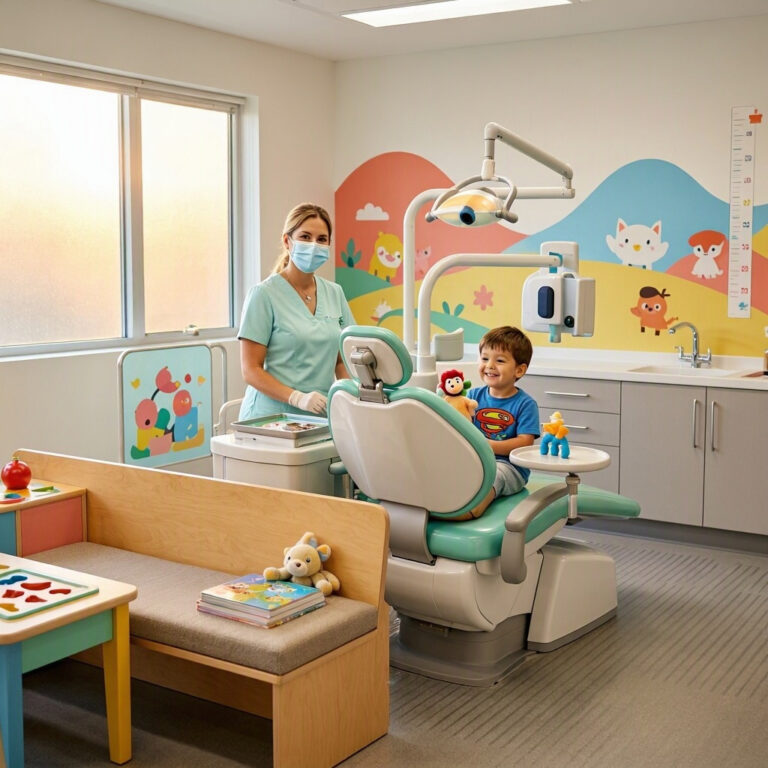
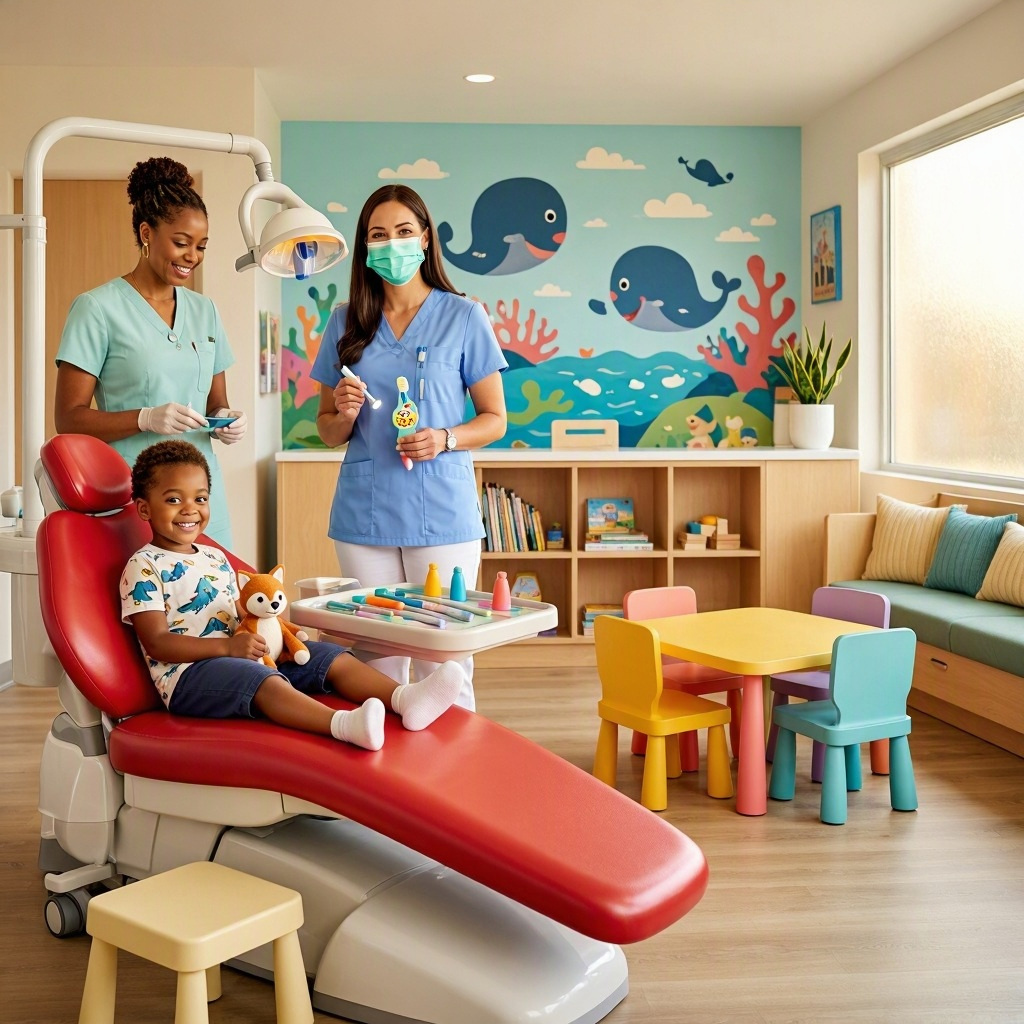
A sterile, white room terrifies children. A colorful, engaging space calms them. Kids dental offices invest heavily in design because it directly affects patient behavior.
Designing a Kids Dental Office
The physical space shapes behavior. A well-designed kids dental office reduces anxiety and improves cooperation.
The Waiting Room
This is the first impression. It must be welcoming, safe, and fun.
- Separate play zones: One for toddlers, one for older children.
- Comfortable parent seating: With clear views of the play area.
- Interactive elements: Wall games, books, and puzzles.
- A quiet corner: For children who need calm before their appointment.
- Hand sanitizer stations: At the entrance and near toys.
The Reception Desk
Lower the desk. Children should see the receptionist’s face. Add a small step stool so kids can reach the counter. Use friendly signage with pictures, not just text.
The Treatment Rooms
These rooms must balance fun with function.
- Ceiling art: Stars, clouds, or cartoon characters above the chair.
- Colorful walls: One accent wall with a mural is enough.
- Child-sized furniture: Smaller chairs and step stools for handwashing.
- Distraction screens: Mounted on the ceiling or wall.
- A “bravery wall”: A board where kids can add a sticker after their visit.
The Sterilization Area
Keep this separate from patient areas. Use closed cabinets. Ensure the area is not visible to children. Seeing sharp instruments can cause fear.
The Team: Hiring and Training
Your team is your greatest asset. In a kids dental office, every team member must love working with children.
Hiring the Right People
Not everyone is cut out for pediatric dentistry. Look for people who:
- Enjoy interacting with children
- Stay calm under pressure
- Communicate clearly with parents
- Work well in a fast-paced environment
Ask behavioral questions during interviews. For example: “Tell me about a time you calmed a crying child.” Listen for empathy and creativity.
Training the Team
Hiring is just the start. Ongoing training is essential.
- Child psychology basics: Teach staff how to recognize fear and anxiety.
- Communication scripts: Provide sample phrases for explaining procedures to kids.
- Emergency protocols: Practice drills for medical emergencies.
- Customer service: Train front desk staff to handle nervous parents with warmth.
Team Roles in a Kids Dental Office
| Role | Primary Responsibilities | Key Skills |
|---|---|---|
| Pediatric Dentist | Diagnosis, treatment, supervision | Clinical expertise, patience |
| Dental Hygienist | Cleanings, preventative care, education | Gentleness, child communication |
| Dental Assistant | Chairside support, instrument handling | Speed, calmness, teamwork |
| Front Desk Coordinator | Scheduling, billing, patient greeting | Organization, warmth, multitasking |
| Office Manager | Operations, HR, inventory, marketing | Leadership, problem-solving |
Communication: Talking to Kids and Parents
Communication is the bridge between fear and trust. In a kids dental office, you communicate with two audiences: children and parents.
Communicating with Children
Use simple words. Avoid jargon. Explain what you will do before you do it.
- Instead of “caries,” say “a little hole in your tooth.”
- Instead of “injection,” say “sleepy juice.”
- Use the “tell-show-do” technique: tell the child what you will do, show them the instrument, then do the procedure.
Communicating with Parents
Parents need information and reassurance. Explain the treatment plan clearly. Discuss costs upfront. Listen to their concerns without judgment.
“We have a rule: never surprise a parent. We explain everything before it happens. That builds trust.” — Maria Lopez, Office Manager
Comparative Table: General vs. Kids Dental Office
| Feature | General Dental Office | Kids Dental Office |
|---|---|---|
| Patients | Adults and teens | Infants, children, teens |
| Environment | Professional, clinical | Playful, colorful, engaging |
| Furniture | Adult-sized | Child-sized and adult-sized |
| Communication | Direct, clinical | Simple, playful, reassuring |
| Team Training | Clinical skills focus | Child psychology and communication |
| Scheduling | Standard appointments | Longer appointments for younger children |
| Parent Involvement | Limited | High (parents present in treatment room) |
| Decor | Neutral, professional | Themed, interactive, colorful |
Daily Operations in a Kids Dental Office
Smooth operations keep patients happy and staff sane. In a kids dental office, efficiency matters even more because children have short attention spans.
Scheduling
Children do better in the morning. Schedule younger patients early. Leave buffer time between complex procedures. Use scheduling software that sends reminders to parents.
Patient Flow
A child should not wait long. Aim for a wait time of under 10 minutes. If delays occur, offer distractions in the waiting room. Keep parents informed.
Billing and Insurance
Pediatric dental billing is complex. Different insurance plans cover different procedures. Train your front desk to verify benefits before the appointment. Offer clear cost estimates. Provide payment plans if needed.
Inventory Management
Pediatric offices use different supplies than general practices. Smaller instruments. Child-sized bibs. Flavored fluoride. Track usage carefully. Set par levels and reorder when stock is low.
Important Notes for Readers
Note on Behavioral Management: Some children need extra support. Train your team in basic behavioral management techniques. For children with special needs, offer a pre-visit tour to reduce anxiety.
Note on Parent Communication: Always get informed consent before treatment. Document all conversations. Keep parents informed at every step.
Note on Safety: Follow OSHA and CDC guidelines strictly. Sterilize instruments after every patient. Use disposable barriers where possible.
Note on Cultural Sensitivity: Families come from diverse backgrounds. Respect different parenting styles and beliefs. Provide translation services if needed.
Note on Emergency Preparedness: Have a plan for medical emergencies. Train staff in CPR and first aid. Keep emergency equipment accessible.
Marketing Your Kids Dental Office
You cannot rely on word-of-mouth alone. Modern pediatric practices need a clear marketing strategy.
Local SEO
Most parents search for “kids dentist near me.” Optimize your Google Business Profile. Add photos of your office. Respond to reviews. List your hours accurately.
Social Media
Parents use social media. Share photos of your team (with consent), dental tips for kids, and office updates. Keep the tone friendly and informative.
Community Engagement
Pediatric offices thrive on community connections. Sponsor local sports teams. Visit schools for dental health presentations. Host a “candy buy-back” event after Halloween.
Referral Programs
Happy parents are your best marketers. Offer a small thank-you gift for referrals. A $10 coffee card or a free toothbrush kit can bring in new patients.
Conclusion
A kids dental office is a special place. It serves children and their families. It requires a team that loves kids, an environment that reduces fear, operations that run smoothly, and communication that builds trust. When you invest in these areas, you create a practice that children remember fondly and parents recommend to friends.
Frequently Asked Questions (FAQ)
Q: What age should a child first visit a kids dental office?
A: The American Academy of Pediatric Dentistry recommends a first visit by age one or within six months of the first tooth erupting.
Q: How do I calm a crying child during a procedure?
A: Use distraction techniques. Offer a toy, play music, or use the “tell-show-do” method. Stay calm. If the child remains distressed, pause and try again later.
Q: How many patients should a kids dental office see per day?
A: A typical pediatric office sees 15–25 patients per day, depending on the number of dentists and hygienists. Allow extra time for younger children.
Q: Should I offer sedation dentistry for children?
A: Yes, for certain cases. Sedation can help children who are extremely anxious or need complex procedures. Always follow safety protocols and obtain parental consent.
Q: How can I market my kids dental office to new parents?
A: Focus on local SEO, social media, and community events. Partner with local schools and pediatricians. Encourage happy parents to leave reviews.
Additional Resource:
For more guidance on pediatric dental practice management, visit the American Academy of Pediatric Dentistry website.