Does Drinking Alcohol Harm Dental Implants?
You have invested in a dental implant. You have gone through the surgery, the healing, and you are finally enjoying your new tooth. You might be wondering if you can now sit back, relax, and enjoy a glass of wine or a cold beer. Or perhaps you are in the planning stages, and you want to know if your social drinking habits will be a problem for the procedure.
The relationship between alcohol and dental implants is a tale of two timelines. There is a huge difference between drinking alcohol during the healing phase and drinking alcohol after the implant has fully fused to the bone.
The short answer is that heavy or frequent alcohol consumption can severely harm the healing process and the long-term survival of the implant. However, occasional, moderate drinking after you are fully healed is generally acceptable.
This guide will explain how alcohol affects the biology of healing, why it increases the risk of implant failure, and what the safe limits are for enjoying a drink with your new smile.
The Immediate Healing Phase: The First 72 Hours
The first three days after your implant surgery are critical. This is when the initial blood clot forms, the swelling peaks, and the body begins the early stages of tissue repair.
Why Alcohol is a Bad Idea Right Now:
- Blood Thinning and Bleeding: Alcohol is a vasodilator (it opens up blood vessels) and has mild blood-thinning properties. Drinking immediately after surgery can increase bleeding at the surgical site. It can also disrupt the formation of the delicate blood clot that is essential for healing.
- Interference with Medication: After surgery, you will likely be taking pain medication (like ibuprofen or acetaminophen) and possibly antibiotics. Mixing alcohol with these drugs is dangerous.
- Alcohol + Ibuprofen: Increases the risk of stomach bleeding.
- Alcohol + Acetaminophen (Tylenol): Can cause severe liver damage.
- Alcohol + Antibiotics: Can reduce the effectiveness of the antibiotics and increase side effects like nausea and dizziness.
- Dehydration: Alcohol is a diuretic, meaning it makes you urinate more. Dehydration slows down the healing process. Your tissues need water to repair themselves.
The Rule: No alcohol for at least 72 hours after surgery (and preferably for the entire time you are taking pain medication or antibiotics).
The Osseointegration Phase: The First 3-6 Months
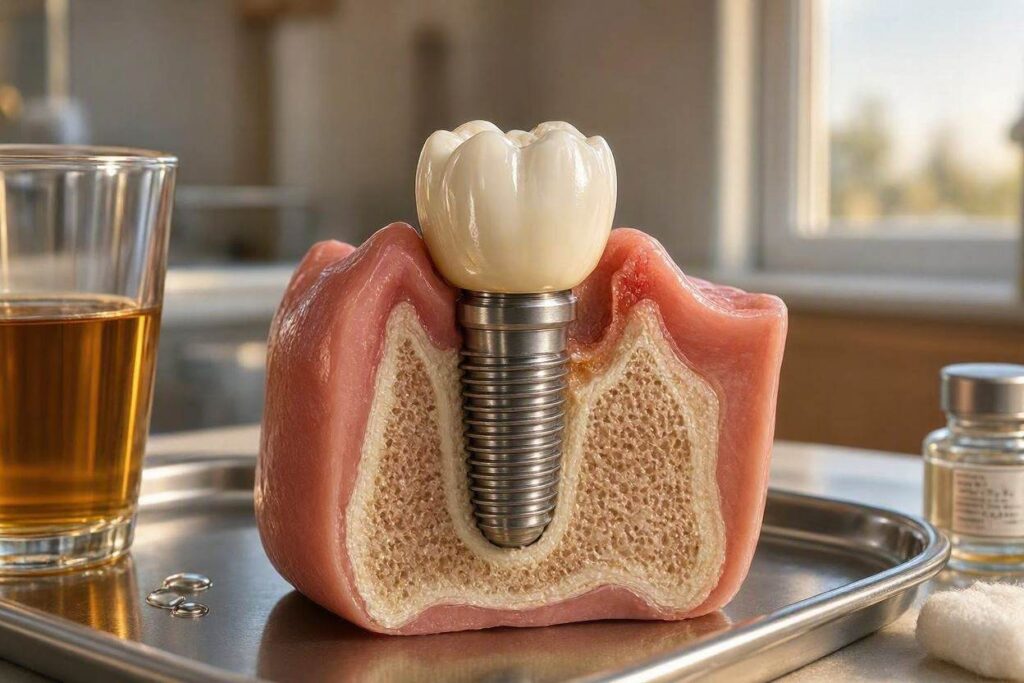
This is the most critical period for the long-term success of your implant. During this time, the jawbone is growing and fusing to the titanium post (osseointegration). This is a delicate biological process.
How Alcohol Disrupts Osseointegration:
- Reduced Blood Flow: Chronic or heavy alcohol consumption constricts blood vessels and reduces the oxygen-carrying capacity of the blood. For bone to grow, it needs a rich supply of oxygen and nutrients. If the blood supply is compromised, the bone will not fuse to the implant.
- Suppressed Immune System: Alcohol suppresses the immune system. This makes you more susceptible to infection at the surgical site. An infection (peri-implantitis) during the healing phase can destroy the bone before it even has a chance to attach to the implant.
- Nutritional Deficiencies: Heavy drinkers often have poor nutrition. Bone healing requires calcium, Vitamin D, and protein. If your body is depleted of these nutrients, healing is impaired.
The “Weekend Binge” Risk:
You might think, “I only drink on the weekends; I don’t have a problem.” But even binge drinking (having multiple drinks in one sitting) can cause a spike in blood alcohol that temporarily disrupts the healing environment in your mouth.
The Rule: For the 3-6 month healing period, the safest approach is to abstain from alcohol completely or, at the very least, limit consumption to rare, light occasions (one drink or less) and never in the first month.
The Long-Term Picture: Alcohol and the Healed Implant
Once the implant has fully fused to the bone (usually around 4-6 months), it is incredibly strong. The biological process is complete. Does this mean you can drink freely?
The Good News: Having a glass of wine or a beer with dinner is not going to damage the titanium post or the porcelain crown. The materials are impervious to alcohol.
The Bad News: Heavy, chronic alcohol use still poses a threat to the supporting structures of the implant.
1. The Link to Peri-Implantitis
Peri-implantitis is the leading cause of late implant failure. It is an infection of the gum and bone around the implant.
Heavy alcohol use is a known risk factor for gum disease (periodontitis). It dries out the mouth (reducing the protective flow of saliva) and impairs the immune response. A dry mouth allows bacteria to thrive. If you are a heavy drinker, you are much more likely to develop an infection around your implant years down the road.
2. The “Bruxism” Connection
Alcohol is a muscle relaxant. It can cause you to sleep more deeply and relax the muscles in your jaw. This can lead to increased teeth grinding (bruxism) at night. Grinding puts excessive force on the implant, which can loosen the abutment screw or cause bone loss.
3. Oral Hygiene Neglect
People who drink heavily often neglect their oral hygiene. If you are not brushing and flossing (especially around the implant), plaque builds up, leading to inflammation and infection.
The Research: What the Studies Say
Scientific studies on dental implants and alcohol are very clear. A systematic review of implant failures found that patients who consumed alcohol regularly had a significantly higher failure rate than non-drinkers.
Specifically, the research suggests that consuming more than 10 grams of alcohol per day (roughly one standard drink) can increase the risk of implant failure. Heavy drinkers are at the highest risk.
The “Safe” Approach: Guidelines for Drinking with Implants
If you want to enjoy a drink without jeopardizing your investment, follow these common-sense guidelines:
- Wait for Full Healing: Do not drink any alcohol for at least 72 hours post-surgery, and avoid it as much as possible during the 3-6 month integration phase.
- Drink in Moderation: Once healed, the occasional drink (1-2 drinks per week) is unlikely to cause harm. Binge drinking is never a good idea for your oral health.
- Hydrate: If you do drink, alternate with water to prevent dry mouth.
- Maintain Hygiene: If you drink alcohol, be extra diligent about brushing, flossing, and using a water flosser before bed.
- Use Alcohol-Free Mouthwash: If you use a mouthwash, choose an alcohol-free formula. Alcohol-based mouthwashes can dry out the gums and irritate the tissue around the implant.
The “Smoking and Drinking” Double Whammy
If you smoke and drink, you are dramatically increasing your risk of implant failure. Smoking starves the bone of oxygen, and alcohol suppresses the immune system. Together, they create a hostile environment for the implant. Most responsible dentists will strongly caution against getting an implant if you are a heavy smoker and drinker.
Conclusion
Drinking alcohol can harm dental implants, particularly during the critical healing phase. It thins the blood, interferes with medication, suppresses the immune system, and deprives the bone of oxygen, hindering osseointegration. Once the implant is fully healed, occasional moderate drinking is generally acceptable, but heavy, chronic use increases the risk of peri-implantitis and late failure. For the best outcome, abstain during healing and prioritize oral hygiene if you choose to drink later.
Frequently Asked Questions (FAQ)
1. Can I drink red wine after getting a dental implant?
You should avoid red wine for at least the first week due to the alcohol content and the acidity, which can irritate the surgical site. Once healed, red wine can stain the surface of the porcelain crown (though less than natural teeth). Rinsing with water after drinking wine helps prevent staining.
2. What about “non-alcoholic” beer? Is that safe?
Non-alcoholic beer is safer, but it contains trace amounts of alcohol (usually less than 0.5%). The main concern would be carbonation. Carbonated beverages (like soda or sparkling water) should be avoided for the first 48 hours because the bubbles can disturb the blood clot. After that, non-alcoholic beer is fine.
3. Does alcohol dissolve the bone graft material?
No, alcohol does not dissolve the bone graft. However, the physiological effects of alcohol (reduced blood flow, immune suppression) can prevent your body from successfully incorporating the bone graft, causing the graft to fail.
4. I had my implant 5 years ago. Can I binge drink on the weekends?
You can, but it is not recommended. Occasional binge drinking increases the risk of dry mouth, inflammation, and neglect of oral hygiene. It also increases the risk of trauma if you fall or stumble while intoxicated. While your implant is strong, chronic abuse of alcohol is a ticking time bomb for gum disease.
5. Is beer or liquor worse for an implant?
All forms of alcohol have the same systemic effects (dehydration, immune suppression). However, mixed drinks often contain high amounts of sugar, which feeds the bacteria that cause peri-implantitis. A dry wine or a light beer is arguably “less bad” than a sugary cocktail.