Does Replacing A Dental Bridge Cost A Lot Of Money?
Dental bridges are a common and effective way to replace missing teeth. They fill gaps, restore your bite, and help you smile with confidence. But like all dental restorations, bridges do not last forever. Eventually, they may wear out, break, or need to be replaced.
When that time comes, one of the first questions patients ask is: does replacing a dental bridge cost a lot of money?
The short answer is: it depends. Replacing a bridge can cost anywhere from a few hundred dollars to several thousand, depending on the type of bridge, the materials used, and the reason for replacement. Some people pay less than they expect. Others face a bigger bill than they hoped.
This guide will explain what a dental bridge is, why it might need replacing, how much replacement costs, and what you can do to manage the expense. By the end, you should have a clear picture of what to expect and how to plan for your dental health.
What Is A Dental Bridge?
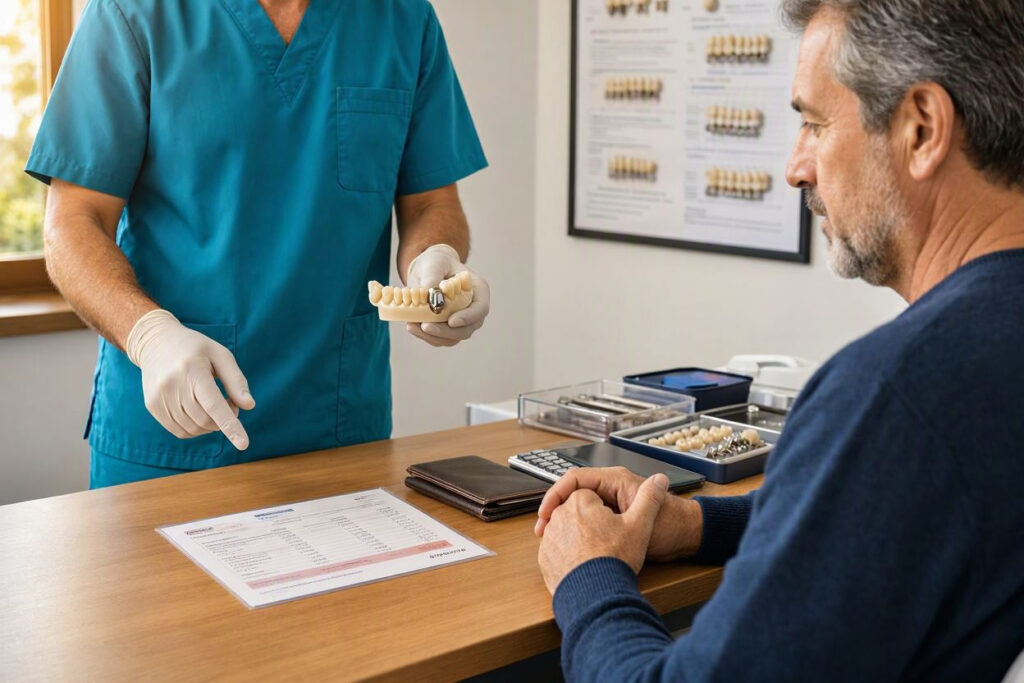
A dental bridge is a fixed restoration that replaces one or more missing teeth. It is called a “bridge” because it literally bridges the gap between two healthy teeth.
A traditional bridge consists of:
- Abutments: The teeth on either side of the gap. These are crowned to support the bridge.
- Pontics: The artificial teeth that fill the gap.
- Connectors: The parts that join the pontics to the abutments.
There are also implant-supported bridges. These use dental implants instead of natural teeth for support. They are more expensive but do not damage neighboring teeth.
Bridges are made from different materials:
- Porcelain fused to metal: The most common. Strong and affordable, but may show a gray line at the gum.
- All-ceramic or zirconia: More natural-looking and metal-free. More expensive.
- Gold or metal alloys: Very durable, but noticeable. Less popular today.
- Composite: Cheaper, but less durable. Often used for temporary bridges.
With proper care, a traditional bridge can last 7 to 15 years. An implant bridge can last 15 to 25 years or more.
Why Do Dental Bridges Need To Be Replaced?
Bridges do not last forever. Here are the most common reasons they need replacement.
1. Wear And Tear
Over time, the materials in a bridge can wear down. The porcelain may chip, the metal may show through, or the bridge may lose its fit. Chewing and biting put stress on the bridge every day.
2. Damage
A bridge can break if you bite down on something hard, grind your teeth, or experience a trauma to the mouth. A cracked or broken bridge may need to be replaced entirely.
3. Gum Disease
The health of your gums is critical for a bridge. If gum disease develops, the abutment teeth may become loose. The bridge may no longer fit properly. In severe cases, the bridge must be removed and replaced.
4. Tooth Decay
Even though the abutment teeth are covered by crowns, the edges can still develop decay. If decay reaches the root, the tooth may need a root canal or extraction. This can compromise the bridge and require replacement.
5. Changes In The Mouth
Your mouth changes over time. Teeth can shift. Gums can recede. These changes can affect how a bridge fits. If the fit is poor, the bridge may need to be replaced.
6. Aesthetic Reasons
Sometimes a bridge is still functional but looks outdated. The color may no longer match your other teeth. You may want a more natural-looking restoration. This is a cosmetic reason for replacement, not a medical one.
7. Implant Failure
If you have an implant-supported bridge, the implants themselves can fail. This is rare but possible. If an implant fails, the entire bridge may need to be redone.
The Average Cost Of Replacing A Dental Bridge
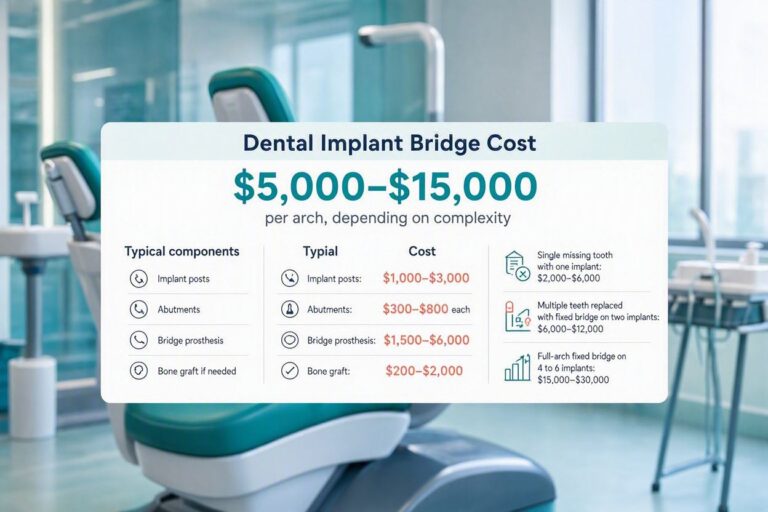
Let us start with the numbers. In the United States, replacing a dental bridge costs between $1,000 and $5,000 for a traditional bridge. An implant-supported bridge can cost $5,000 to $30,000 or more.
Here is a rough breakdown:
| Type Of Replacement | Average Cost Range (USD) |
|---|---|
| Traditional 3-unit bridge (replacing existing) | $1,000 – $3,000 |
| Traditional 4-unit bridge | $1,500 – $4,000 |
| Implant-supported 3-unit bridge | $5,000 – $12,000 |
| Implant-supported full arch (All-on-4) | $15,000 – $30,000+ |
| Recementing an old bridge (if possible) | $100 – $500 |
These prices usually include:
- Removal of the old bridge
- Preparation of abutment teeth
- Impressions
- Temporary bridge
- New permanent bridge
- Follow-up visits
However, some clinics quote the bridge only and charge separately for extractions, root canals, or bone grafting. Always ask for a complete package price.
Additional procedures like gum treatment, root canals, or extractions add to the cost.
What Affects The Cost Of Replacing A Dental Bridge?
Many factors influence the final price. Let us look at the most important ones.
1. Type Of Bridge
A traditional bridge is cheaper than an implant-supported bridge. If you are replacing a traditional bridge with another traditional bridge, the cost is lower. If you are switching to an implant bridge, the cost is much higher.
2. Number Of Teeth Involved
The more teeth the bridge replaces, the higher the cost. A 3-unit bridge is cheaper than a 5-unit bridge. The number of abutment teeth also matters.
3. Material Used
The material of the bridge affects the price:
- Porcelain fused to metal: $500 – $1,500 per unit
- All-ceramic or zirconia: $800 – $2,000 per unit
- Gold: $800 – $2,500 per unit
- Composite: $300 – $800 per unit
Zirconia and gold are more expensive but may last longer.
4. Dentist’s Experience And Reputation
An experienced prosthodontist or cosmetic dentist will charge more than a general dentist. Replacing a bridge is complex. It requires careful planning, precise impressions, and high-quality lab work. Choose a dentist with extensive experience.
5. Geographic Location
Where you live makes a big difference. A clinic in New York City, San Francisco, or Boston will charge more than a clinic in a smaller town. The cost of living, rent, and local demand all affect fees.
6. Additional Procedures
Sometimes replacing a bridge requires extra work:
- Extractions: If an abutment tooth is too damaged, it may need to be removed. Cost: $150 – $500 per tooth.
- Root canal: If the tooth is infected, a root canal may be needed. Cost: $500 – $1,500 per tooth.
- Gum treatment: If gum disease is present, it must be treated first. Cost: $200 – $1,000+.
- Bone grafting: If an implant bridge is planned and bone is lacking. Cost: $500 – $3,000.
- CT scan: For implant planning. Cost: $200 – $600.
These add significantly to the overall bill.
7. Lab Fees
The dental lab charges the dentist for each unit of the bridge. High-end labs use better materials and more skilled technicians. These fees are passed on to you.
8. Time Of Year
Some clinics offer promotions in January or during Dental Health Month. Others raise prices at the start of the year. It never hurts to ask about current specials.
Comparative Table: Cost Of Replacing A Dental Bridge By Type
| Type Of Bridge | Number Of Units | Average Cost (USD) | Best For |
|---|---|---|---|
| Traditional 3-unit | 3 | $1,000 – $3,000 | Replacing 1 missing tooth |
| Traditional 4-unit | 4 | $1,500 – $4,000 | Replacing 2 missing teeth |
| Traditional 5-unit | 5 | $2,000 – $5,000 | Replacing 3 missing teeth |
| Implant-supported 3-unit | 3 | $5,000 – $12,000 | Replacing 1-2 missing teeth |
| Implant-supported full arch | 10-14 | $15,000 – $30,000+ | Full arch restoration |
| Recementing old bridge | – | $100 – $500 | If bridge is intact but loose |
Cost Of Replacing A Dental Bridge Around The World
Prices vary dramatically from country to country. Let us compare costs for a traditional 3-unit bridge replacement in different countries.
| Country | Average Cost (Local Currency) | Approx. USD |
|---|---|---|
| United States | $1,000 – $3,000 | $1,000 – $3,000 |
| Canada | $1,200 – $3,500 CAD | $900 – $2,600 |
| United Kingdom | £800 – £2,000 | $1,000 – $2,500 |
| Australia | $1,500 – $3,500 AUD | $1,000 – $2,400 |
| Ireland | €900 – €2,200 | $1,000 – $2,400 |
| Germany | €800 – €2,000 | $900 – $2,200 |
| France | €700 – €1,800 | $800 – $2,000 |
| Spain | €600 – €1,500 | $700 – $1,700 |
| Mexico | $10,000 – $25,000 MXN | $500 – $1,300 |
| Costa Rica | $800 – $1,800 | $800 – $1,800 |
| Thailand | ฿25,000 – ฿60,000 | $700 – $1,700 |
| India | ₹15,000 – ₹40,000 | $200 – $500 |
| Turkey | $400 – $1,000 | $400 – $1,000 |
Prices vary by clinic and city. These ranges are for general comparison only.
Traditional Bridge Vs. Implant Bridge: Replacement Cost Comparison
Many people wonder if they should replace their traditional bridge with an implant bridge. Here is a comparison.
| Feature | Traditional Bridge Replacement | Implant Bridge Replacement |
|---|---|---|
| Cost (3-unit) | $1,000 – $3,000 | $5,000 – $12,000 |
| Durability | 7 – 15 years | 15 – 25 years |
| Effect on neighboring teeth | Requires grinding down healthy teeth | No damage to neighboring teeth |
| Bone loss prevention | No | Yes |
| Surgery required | No | Yes |
| Treatment time | 2 – 3 weeks | 3 – 6 months |
| Best for | Budget-conscious patients | Long-term solution |
A traditional bridge is cheaper upfront, but it damages neighboring teeth and does not prevent bone loss. An implant bridge is more expensive but lasts longer and protects your oral health.
Does Insurance Cover Replacing A Dental Bridge?
In most cases, dental insurance does not cover the full cost of replacing a bridge. However, there are exceptions.
Here is what you need to know:
- Wear and tear: If the bridge is simply worn out, insurance may not cover replacement. Many plans have a lifetime limit on bridges or require a certain number of years before replacement.
- Damage or accident: If the bridge is damaged due to an accident, insurance may cover part of the cost.
- Medical necessity: If the bridge is failing due to decay or gum disease, insurance may cover some of the treatment.
- Annual maximum: Most dental plans have an annual maximum, such as $1,500 or $2,000. This may cover a small portion of the cost.
- Pre-authorization: You may need pre-authorization before treatment. Ask your dentist to submit a pre-treatment estimate to your insurance company.
Even if insurance does not cover the bridge itself, it may cover related procedures like extractions, root canals, or gum treatment. Always call your insurance company and ask specific questions.
How To Make Replacing A Dental Bridge More Affordable
Replacing a bridge is a significant investment. Here are some ways to reduce the cost without compromising quality.
1. Use Insurance
If you have dental insurance, use it. Even a small contribution helps.
2. Flexible Spending Accounts (FSAs) And Health Savings Accounts (HSAs)
If you have an FSA or HSA, you can use pre-tax dollars to pay for dental work. This can save you 20% to 30% depending on your tax bracket.
3. Payment Plans
Many dental offices offer in-house payment plans. You pay a down payment and then monthly installments. Some plans are interest-free.
4. Third-Party Financing
Companies like CareCredit, LendingClub, and OrthoFi offer loans for dental procedures. Check the interest rates and terms carefully.
5. Dental Schools
Dental schools often offer prosthodontic treatment at reduced costs. Students perform the work under the supervision of experienced faculty. Treatment takes longer, but you can save a lot.
6. Dental Tourism
Traveling to another country for dental work can save you thousands of dollars. Popular destinations include Mexico, Costa Rica, Thailand, and Turkey. However, do your research. Quality varies, and follow-up care can be difficult.
7. Compare Providers
Get quotes from at least three dentists. Prices can vary by thousands of dollars for the same treatment.
8. Consider Recementing
If your bridge is intact but loose, it may be possible to recement it instead of replacing it. This costs much less. Ask your dentist if this is an option.
9. Ask About Discounts
Some offices offer discounts for paying in full upfront, for multiple family members, or for referrals. It never hurts to ask.
The Process Of Replacing A Dental Bridge
Understanding the process helps you see where your money goes.
Step 1: Consultation And Examination
Your dentist examines your mouth, takes X-rays, and assesses the condition of the bridge and abutment teeth. They discuss your options and provide a treatment plan and cost estimate.
Step 2: Removal Of The Old Bridge
The old bridge is carefully removed. This may require cutting through the metal or porcelain. The abutment teeth are examined for decay or damage.
Step 3: Treatment Of Underlying Issues
If there is decay, gum disease, or damage, it is treated first. This may include fillings, root canals, or gum therapy.
Step 4: Preparation Of Abutment Teeth
The abutment teeth are reshaped to accommodate the new crowns. If they were already prepared for the old bridge, minimal work may be needed.
Step 5: Impressions
Your dentist takes impressions of your teeth. These are sent to a dental lab, where the new bridge is made. You receive a temporary bridge to wear in the meantime.
Step 6: Fitting Of The New Bridge
Once the new bridge is ready, your dentist checks the fit, color, and bite. Adjustments are made as needed.
Step 7: Bonding
The new bridge is permanently cemented or bonded to the abutment teeth.
Step 8: Follow-Up
You have a follow-up appointment to ensure the bridge fits well and your bite is comfortable.
Quotations From Dental Professionals
“Replacing a bridge is not just about the cost. It is about restoring function and protecting your oral health. A poorly fitting bridge can cause more problems down the road.”
— Dr. Michael Ross, Prosthodontist
“I always tell my patients to think of a bridge as an investment. If you take care of it, it can last for many years. But when it needs replacing, it is important to do it right.”
— Dr. Sarah Mitchell, Cosmetic Dentist
“The most important thing is to choose a dentist you trust. A beautiful bridge is worth nothing if it is not healthy.”
— Dr. Emily Nguyen, Orthodontist
Important Notes For Readers
- Prices in this article are estimates. Always confirm fees with your dental clinic.
- Replacing a bridge is a complex procedure. Choose a qualified, experienced dentist.
- Ask for a complete package price, including removal, preparation, and the new bridge.
- If your bridge is loose but not damaged, ask about recementing before opting for full replacement.
- Consider the long-term cost. A cheap bridge that fails can cost more to fix than a quality bridge that lasts.
- Do not skip follow-up visits. They are essential for the success of your new bridge.
- If you are considering dental tourism, research the clinic thoroughly.
FAQ
1. How much does it cost to replace a dental bridge?
A traditional 3-unit bridge replacement costs $1,000 to $3,000. An implant-supported bridge costs $5,000 to $30,000 or more.
2. Does insurance cover replacing a dental bridge?
Sometimes. If the replacement is medically necessary, insurance may cover part of the cost. Check your policy.
3. How long does a replaced bridge last?
With proper care, a traditional bridge lasts 7 to 15 years. An implant bridge lasts 15 to 25 years or more.
4. Can I just recement my old bridge?
If the bridge is intact and the abutment teeth are healthy, recementing may be an option. It costs much less than replacement.
5. How long does it take to replace a bridge?
The process usually takes 2 to 3 weeks from start to finish. Implant bridges take longer.
6. Is replacing a bridge painful?
The procedure is usually done under local anesthesia, so you should not feel pain during the procedure. You may have some soreness afterward.
7. Can I replace a traditional bridge with an implant bridge?
Yes. Many patients choose to upgrade to an implant bridge when their traditional bridge fails. It costs more but offers long-term benefits.
8. What is the cheapest way to replace a dental bridge?
Choose a traditional bridge, go to a dental school, and compare quotes from multiple clinics.
9. Can I finance a bridge replacement?
Yes. Many dental offices offer payment plans, and third-party financing is available. You can also use an FSA or HSA.
10. How do I know if my bridge needs replacing?
Signs include looseness, pain, difficulty chewing, visible damage, or a change in fit. See your dentist for an evaluation.
Additional Resource
For more information on dental bridges and prosthodontics, visit the American College of Prosthodontists:
https://www.prosthodontics.org
Conclusion
Replacing a dental bridge costs between $1,000 and $30,000 or more, depending on the type of bridge, the materials used, and where you live. Traditional bridges are cheaper, while implant bridges offer longer-lasting results. With careful planning, insurance, and the right dentist, you can manage the cost and restore your smile.