In Ireland How Much Does A Dental Bridge Cost?
A Complete Guide to Dental Bridge Prices in Ireland
You’ve lost a tooth. Maybe it was an accident. Perhaps decay finally won the battle. Or maybe you’ve been living with a gap for years and you’re finally ready to do something about it.
Your dentist has mentioned a dental bridge as an option. It sounds good—a fixed solution that fills the gap and looks natural. But what will it cost?
If you’re in Ireland, you’ve probably discovered that dental prices aren’t always easy to find. Some dentists publish their fees online. Others don’t. You might have received a quote that seemed high, or you might be comparing options between the HSE and private treatment.
In this comprehensive guide, we’ll break down everything you need to know about dental bridge costs in Ireland. We’ll look at real prices, explain what affects costs, compare public and private options, and help you make an informed decision.
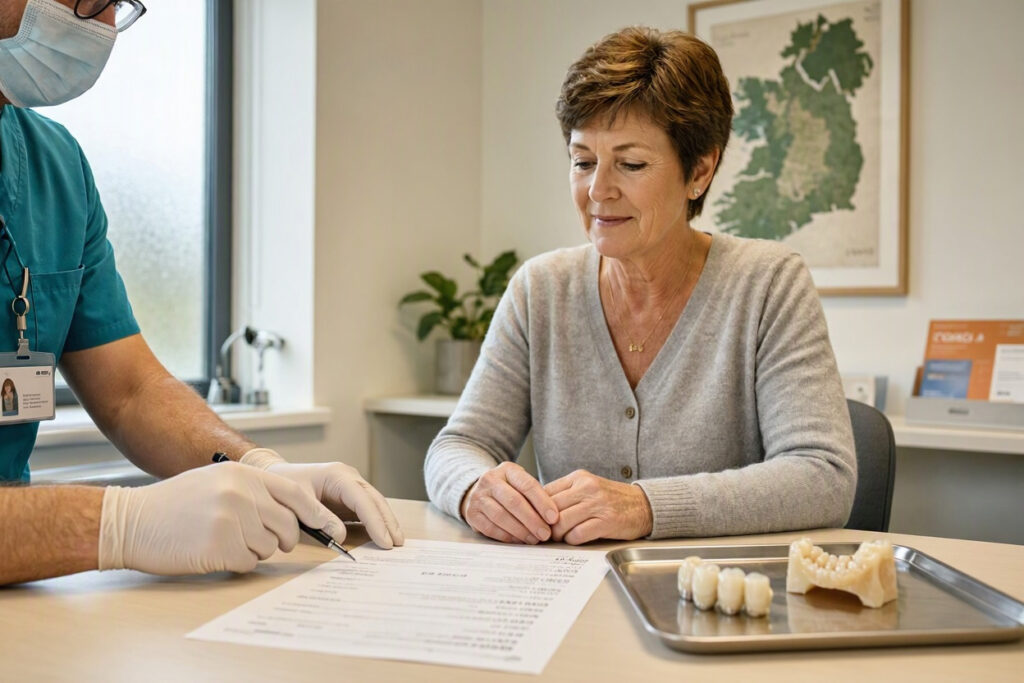
What Is a Dental Bridge?
A dental bridge is a fixed restoration that replaces one or more missing teeth. It’s called a “bridge” because it literally bridges the gap between your remaining teeth.
A traditional bridge consists of:
- Abutments: The teeth on either side of the gap. These are prepared (shaped down) to support the bridge.
- Pontics: The artificial teeth that fill the gap.
- Connectors: The parts that join the pontics to the abutments.
Once cemented in place, a bridge looks and functions like natural teeth. You can’t remove it yourself—only your dentist can.
Types of Dental Bridges
There are several types of bridges available in Ireland:
Traditional bridges: The most common type. Crowns are placed on the teeth on either side of the gap, and the pontic is attached between them.
Cantilever bridges: Used when there’s only a tooth on one side of the gap. The bridge is supported by that single tooth.
Maryland bridges (resin-bonded): A conservative option where wings are bonded to the back of adjacent teeth. Less invasive but less durable.
Implant-supported bridges: Instead of using natural teeth for support, implants are placed in the jaw. This is the most stable option but also the most expensive.
For this article, we’ll focus on traditional and Maryland bridges, since those are the most common in Ireland.
The Big Question: How Much Does a Dental Bridge Cost in Ireland?
Now let’s get to the numbers. Dental bridge costs in Ireland vary depending on the type, the number of teeth involved, and whether you go public or private.
Here are typical price ranges for private treatment:
| Type of Bridge | Low End | Average | High End |
|---|---|---|---|
| Maryland Bridge (1 pontic) | €400 | €600-€900 | €1,200 |
| Traditional Bridge (3 units) | €900 | €1,500-€2,000 | €3,000 |
| Traditional Bridge (4+ units) | €1,200 | €2,000-€2,800 | €4,000+ |
| Implant-Supported Bridge | €2,500 | €4,000-€6,000 | €10,000+ |
These prices usually include:
- Consultation and examination
- X-rays
- Tooth preparation
- Impressions
- Temporary bridge
- Final bridge
- Fitting and adjustments
Some dentists charge separately for each step. Always ask for a written treatment plan with itemized costs.
What About the HSE?
The HSE provides dental services through the Public Dental Service. However, bridges are rarely available through the HSE for adults.
If you have a Medical Card, you may qualify for certain dental treatments. But bridges are generally not covered unless there’s a medical need (e.g., after an accident or as part of reconstructive surgery).
The HSE’s Dental Treatment Services Scheme (DTSS) provides some treatments for Medical Card holders. But the scheme has been limited in recent years, and bridges are not routinely covered.
What About the Treatment Benefit Scheme?
The Treatment Benefit Scheme is run by the Department of Social Protection. It provides some dental benefits for PRSI contributors.
Under this scheme, you may qualify for:
- A free dental examination once a year
- Subsidised cleaning (scale and polish)
- Partial funding for some treatments
However, bridges are not covered under the Treatment Benefit Scheme. You’ll need to pay privately.
Dental Bridge Costs by County in Ireland
Prices vary across Ireland. Dublin tends to be the most expensive. Rural areas are often cheaper.
| County | Traditional Bridge (3 units) | Maryland Bridge |
|---|---|---|
| Dublin | €1,600 – €2,500 | €600 – €1,200 |
| Cork | €1,400 – €2,200 | €550 – €1,000 |
| Galway | €1,400 – €2,200 | €550 – €1,000 |
| Limerick | €1,300 – €2,000 | €500 – €950 |
| Waterford | €1,300 – €2,000 | €500 – €950 |
| Kerry | €1,200 – €1,900 | €450 – €900 |
| Mayo | €1,200 – €1,800 | €450 – €850 |
| Donegal | €1,100 – €1,800 | €400 – €850 |
| Rural areas | €1,000 – €1,700 | €400 – €800 |
Why the Difference?
Dublin has higher overhead costs. Rent, staff salaries, and insurance are all more expensive. Demand is also higher.
Cork and Galway are major cities but slightly more affordable than Dublin.
Limerick, Waterford, and other regional cities offer moderate prices.
Rural areas are the cheapest. But you may have fewer dentists to choose from.
What Affects the Cost of a Dental Bridge in Ireland?
Many factors influence what you’ll pay. Let’s look at the most important ones.
1. Number of Teeth Involved
A bridge replacing one tooth is cheaper than one replacing three teeth. Each additional unit adds to the cost.
- 3-unit bridge (1 pontic): €900 – €3,000
- 4-unit bridge (2 pontics): €1,200 – €4,000
- 5-unit bridge (3 pontics): €1,500 – €5,000
2. Type of Bridge
Maryland bridges are cheaper than traditional bridges because they require less tooth preparation and less lab work. Implant-supported bridges are the most expensive.
3. Material
The material used for the bridge affects the price.
- Porcelain-fused-to-metal: €900 – €2,000
- All-porcelain: €1,200 – €2,500
- Zirconia: €1,500 – €3,000
- Gold: €1,200 – €2,500
4. Dentist’s Experience
A specialist prosthodontist charges more than a general dentist. But experience matters, especially for complex cases.
5. Location
As shown above, prices vary by county. Dublin is the most expensive. Rural areas are the cheapest.
6. Complexity of Your Case
If you need:
- Root canal treatment: €300 – €800
- Post and core: €200 – €500
- Gum treatment: €200 – €600
The total cost increases.
7. Dental Lab
High-quality labs charge more. But they also produce better-fitting, more natural-looking bridges.
8. Temporary Bridge
Most dentists provide a temporary bridge while your permanent one is being made. This is usually included in the price, but some charge extra.
9. Additional Procedures
You may need extractions before the bridge is placed. Extractions cost €100 to €300 per tooth.
Dental Bridge vs Other Tooth Replacement Options in Ireland
Let’s compare bridges to other options available in Ireland.
| Option | Cost | Lifespan | Removable? | Bone Health |
|---|---|---|---|---|
| Maryland Bridge | €400 – €1,200 | 5-10 years | No | No |
| Traditional Bridge | €900 – €3,000 | 10-15 years | No | No |
| Partial Denture | €300 – €1,500 | 5-10 years | Yes | No |
| Full Denture | €500 – €2,500 | 5-10 years | Yes | No |
| Single Implant | €2,000 – €4,000 | 25+ years | No | Yes |
| Implant-Supported Bridge | €2,500 – €10,000 | 20+ years | No | Yes |
The Long-Term Math
Let’s say you’re 50 years old and missing a tooth. You expect to live another 30 years.
Option 1: Traditional Bridge
- Initial cost: €1,500
- Replacements needed: 2-3
- Total 30-year cost: €4,500 – €6,000
Option 2: Single Implant
- Initial cost: €3,000
- Replacements needed: 0-1
- Total 30-year cost: €3,000 – €4,500
Implants often cost less over a lifetime. But bridges are cheaper upfront, which matters for many people.
Does Insurance Cover Dental Bridges in Ireland?
Dental insurance in Ireland is less common than in some other countries. But some people have private dental insurance through work or individual policies.
Typical Coverage
Most dental insurance plans cover a percentage of bridge costs. Typically:
- You pay the first €50-€100 (excess)
- Insurance covers 50-80% of the remaining cost
- There may be an annual maximum (e.g., €1,000)
Some plans exclude bridges or have waiting periods. Check your policy carefully.
What About the HSE?
As mentioned, the HSE rarely covers bridges for adults. If you have a Medical Card, you may qualify for certain treatments, but bridges are not routinely covered.
What About the Treatment Benefit Scheme?
The Treatment Benefit Scheme does not cover bridges. It only covers examinations and some preventive treatments.
What About Payment Plans?
Many private dentists offer payment plans. You can spread the cost over several months. Some plans are interest-free.
What About Dental Payment Plans?
These are monthly subscription plans. You pay a set amount each month, which covers routine care and gives you discounts on treatments like bridges. Examples include Denplan and Bupa Dental.
How to Save on a Dental Bridge in Ireland
You don’t have to pay full price. Here are practical ways to reduce your costs.
1. Get Multiple Quotes
Prices vary. Get at least three quotes before deciding.
2. Consider a Dental School
Dental schools in Ireland offer discounted treatment. Students perform the work under supervision. Savings can be 30-50%.
3. Ask About Payment Plans
Many offices offer in-house financing. Ask about interest-free options.
4. Join a Dental Payment Plan
These plans offer discounts on treatments. If you need multiple treatments, the savings can be significant.
5. Choose a Less Expensive Material
Porcelain-fused-to-metal bridges cost less than zirconia or gold. They may not last as long, but they’re a good budget option.
6. Negotiate
It never hurts to ask. Some dentists offer discounts for upfront payment.
7. Consider a Maryland Bridge
If you’re a good candidate, a Maryland bridge costs less than a traditional bridge. But it may not last as long.
8. Travel to Northern Ireland
Some people travel to Northern Ireland for dental work. Prices may be lower, but you’ll need to factor in travel costs.
9. Use Your PRSI Benefits
If you’re a PRSI contributor, use your free annual examination. This can help you catch problems early.
10. Prevent Problems
The best way to save is to avoid needing expensive treatments. Brush, floss, and get regular checkups.
The Process: What to Expect When Getting a Dental Bridge in Ireland
Understanding the process helps you plan and budget.
Step 1: Consultation and Examination
Your dentist examines your mouth. They take X-rays and discuss your options. You’ll get a treatment plan and a quote.
Time: 30-45 minutes
Step 2: Tooth Preparation
Your dentist reshapes the abutment teeth to make room for the crowns. This is done under local anaesthesia.
Time: 30-60 minutes
Step 3: Impressions
Your dentist takes a mould of your teeth. This goes to the dental lab.
Time: 15-30 minutes
Step 4: Temporary Bridge
A temporary bridge is fitted to protect your teeth while the permanent one is made.
Time: 15-30 minutes
Step 5: Lab Fabrication
The lab creates your custom bridge. This takes 1-2 weeks.
Time: 1-2 weeks
Step 6: Fitting
Your dentist tries on the bridge. They check the fit, colour, and bite. Then they cement it in place.
Time: 30-60 minutes
Total Timeline
From start to finish, expect 2-4 weeks. Some dentists offer same-day bridges using CAD/CAM technology, but these may cost more.
Important Notes for Readers
Get Everything in Writing: Always request a written treatment plan with itemized costs. Verbal quotes mean nothing if there’s a dispute.
Ask About Guarantees: Some dentists offer warranties on their bridge work. Ask what’s covered and for how long.
See a Specialist if Needed: If your case is complex, consider seeing a prosthodontist. They have advanced training in bridges.
Maintain Good Oral Hygiene: Bridges require special care. You need to clean under the pontic with floss threaders or interdental brushes.
Avoid Hard Foods: Don’t chew ice, hard sweets, or other tough objects. They can damage your bridge.
Wear a Mouthguard: If you grind your teeth, protect your bridge with a night guard.
Be Patient: A good bridge takes time. Don’t rush the process.
Ask About Maintenance: Bridges need periodic checkups and may need replacement after 10-15 years. Ask about these costs upfront.
Frequently Asked Questions
How much does a dental bridge cost in Ireland?
A dental bridge in Ireland costs between €400 and €4,000, depending on the type, the number of teeth, and your location. The average is around €1,500 to €2,000 for a traditional 3-unit bridge.
Is a dental bridge covered by the HSE?
Bridges are rarely covered by the HSE for adults. You may qualify for certain treatments if you have a Medical Card, but bridges are not routinely covered.
Does the Treatment Benefit Scheme cover bridges?
No. The Treatment Benefit Scheme covers examinations and some preventive treatments, but not bridges.
How long does a dental bridge last?
With proper care, a dental bridge can last 10-15 years or more. Maryland bridges may last 5-10 years.
Does a dental bridge hurt?
The procedure is done under local anaesthesia, so you won’t feel pain. You may have some sensitivity afterward, which usually settles.
Can I eat normally with a dental bridge?
Yes, but you should avoid very hard or sticky foods. Bridges are strong, but they’re not as strong as natural teeth.
How do I clean a dental bridge?
Use a soft toothbrush and floss threaders or interdental brushes to clean under the pontic. Your dentist will show you how.
What happens if my bridge falls off?
Call your dentist. They can usually re-cement it. Don’t try to glue it back yourself.
Can I get a bridge on the NHS in Northern Ireland?
If you live in Northern Ireland, you may qualify for a bridge on the NHS. Coverage varies.
How do I find a good dentist in Ireland?
Look for:
- Recommendations from friends or family
- Positive online reviews
- Before-and-after photos
- Transparent pricing
- A willingness to answer your questions
What if I can’t afford a bridge?
Consider:
- Dental schools
- Payment plans
- Dental payment plans
- Saving up
- Alternative options like dentures
Is a Maryland bridge as good as a traditional bridge?
Maryland bridges are less invasive but also less durable. They’re best for front teeth and short-term solutions.
Conclusion
Dental bridge costs in Ireland range from €400 to €4,000, with traditional 3-unit bridges averaging €1,500 to €2,000. The final price depends on the type of bridge, the material, your location, and your dentist’s experience. The HSE and Treatment Benefit Scheme rarely cover bridges, so most people pay privately. With payment plans and careful planning, a dental bridge can be an affordable way to restore your smile.
Additional Resources
For more information on dental bridges and dental care in Ireland, visit the Irish Dental Association at irishdental.ie.