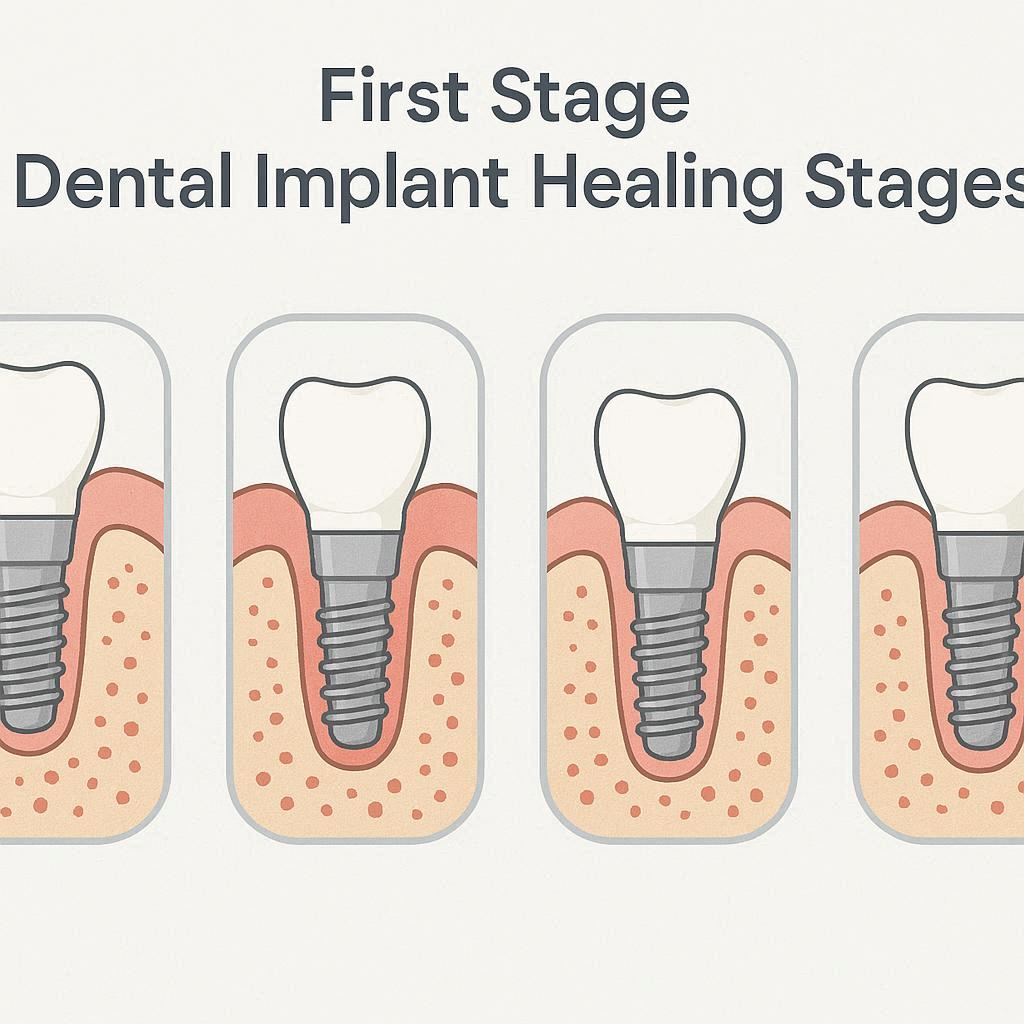
First Stage Dental Implant Healing Stages
So, you just got the news: you need a dental implant. Or maybe you already had the first surgery, and now you’re sitting at home, ice pack on your cheek, wondering, “Is this swelling normal?”
Take a deep breath. You’re in the right place.
The first stage of dental implant healing is the most critical. It’s also the most misunderstood. Hollywood and social media make it look like you walk out of the dentist’s office, eat a steak that night, and smile perfectly by morning. Real life is gentler, slower, and frankly, much safer.
This guide walks you through exactly what happens inside your mouth during those first weeks and months. You will learn what’s normal, what’s not, and how to help your body build a rock-solid foundation for your new tooth.
What Exactly Is the “First Stage” of Dental Implant Healing?
Before we talk about healing stages, let’s clarify what the first stage actually means.
The first stage of dental implant treatment is the surgical placement of the implant fixture itself. That’s a small, screw-shaped post—usually made of medical-grade titanium or zirconia—that your oral surgeon places directly into your jawbone.
Think of it like building a house. The implant post is your foundation. Without a strong, healthy foundation, nothing else works.
Once that post is in place, the first stage of healing begins. This is a process called osseointegration. That’s a fancy word for “your bone grows tightly around the implant, locking it in place.”
Important note: The first stage of healing does not include placing the abutment or the final crown. Those come later. Right now, your only job is to protect that post and let your bone do its magic.
The Complete Timeline: First Stage Dental Implant Healing Stages (Week-by-Week)
Every mouth is different. Your age, overall health, bone density, and even your smoking habits will influence your timeline. However, most healthy adults follow a similar pattern.
Below is a realistic, week-by-week breakdown.
Days 1–3: The “Right Now” Phase (Protect & Rest)
The first 72 hours are about damage control. Your body just experienced a controlled surgical trauma. It will react with inflammation, and that is a good thing.
What you will likely experience:
- Mild to moderate swelling (peaks around day 2)
- Bruising on your cheek or chin (normal, especially for lower jaw implants)
- Minor bleeding or pink-tinted saliva
- Soreness that medication can easily manage
- A strange sensation of pressure, not sharp pain
What is happening inside:
A blood clot forms around the implant. This clot is your best friend. It delivers healing cells and creates a temporary scaffold. Your bone cells begin migrating toward the implant surface.
Your job right now:
- Apply ice packs (15 minutes on, 15 minutes off) for the first 24–36 hours
- Eat only soft, cold, or lukewarm foods: yogurt, smoothies, mashed potatoes, scrambled eggs
- Sleep with your head elevated (extra pillow) to reduce swelling
- Take prescribed or recommended pain relievers before the anesthetic wears off
| Do’s (Days 1–3) | Don’ts (Days 1–3) |
|---|---|
| Rinse gently with warm salt water (after 24h) | Spit, swish, or use a straw |
| Use your ice pack religiously | Touch the area with your tongue or finger |
| Rest and sleep extra hours | Smoke or vape (seriously, not even one) |
| Drink cold water and room-temp liquids | Eat hot, crunchy, or spicy foods |
Days 4–7: The Turning Point (Swelling Goes Down)
By day four, most patients feel noticeably better. The acute pain fades, and you start forgetting you had surgery. But don’t get careless yet.
What you will likely experience:
- Swelling decreases significantly
- Bruising may turn yellow or greenish (normal sign of healing)
- Mild aching when you chew on the opposite side
- Possible small “floating” stitches (if you have non-dissolving sutures)
What is happening inside:
The initial inflammation subsides. New blood vessels begin forming around the implant. Early bone-forming cells (osteoblasts) attach themselves to the implant’s textured surface.
Your job now:
- Transition to warm compresses (helps dissolve residual swelling)
- Begin very gentle brushing of adjacent teeth (avoid the surgical site)
- Continue soft foods, but you can try well-cooked pasta, oatmeal, or soft fish
“The biggest mistake I see patients make after day four is thinking they are fully healed. You are not. The bone hasn’t even started its real work yet.” — Anonymous oral surgery nurse.
Week 2: The “Silent Healer” Stage
This week is deceptively calm. You will feel almost normal. That is precisely when people get into trouble.
What you will likely experience:
- No visible swelling
- Sutures may dissolve or be removed (depending on your surgeon’s preference)
- Slight tenderness if you press directly over the implant site
- A metallic taste in your mouth (normal for titanium implants)
What is happening inside:
Osseointegration begins in earnest. The implant and bone start forming a biological lock. This is a quiet, invisible process. You cannot feel it happening, but it is the most important part of the entire first stage.
Your job now:
- Absolutely avoid chewing on the implant side
- Use a chlorhexidine mouthwash if your dentist prescribed it
- No smoking. No vaping. No exceptions. (Nicotine constricts blood vessels and starves the healing bone)
Weeks 3–4: Bone Remodeling Begins
You have passed the acute healing phase. Now your body shifts into remodeling mode.
What you will likely experience:
- Almost zero discomfort
- You forget the implant is there
- Normal chewing on the opposite side
- No visible signs of surgery
What is happening inside:
Your body breaks down old or damaged bone cells and replaces them with new, dense bone around the implant. This process actually makes the bone stronger over time.
Your job now:
- Continue avoiding hard, sticky, or chewy foods on the implant side
- Resume normal oral hygiene, but be gentle around the implant site
- Attend any follow-up appointment (usually around week 4 for an X-ray check)
Months 2–3 (or longer): The Maturation Phase
Here is where many online guides skip the truth. For most people, the first stage of dental implant healing is not complete at 6 weeks.
Full osseointegration takes time.
- Lower jaw: Usually 3–4 months
- Upper jaw: Often 4–6 months (the bone is softer)
During this time, you live a normal life. You eat normally (just avoid direct pressure on the implant). You brush and floss. You go to work.
Inside your jaw, the bone is quietly getting denser and stronger around that little titanium post.
When is the first stage officially complete?
Your oral surgeon will take a periapical X-ray or a CBCT scan. They look for no dark lines around the implant (which would indicate a false union) and solid bone contact. Only then do you move to stage two: uncovering the implant and placing the abutment.
Factors That Speed Up or Slow Down Healing
Not everyone heals at the same speed. Let’s be real about what helps and what hurts.
What helps healing (within your control):
- Excellent oral hygiene for the teeth you still have
- High-protein diet (bone is made of protein)
- Vitamin D and calcium (supplements or food)
- Managing blood sugar (if diabetic, keep your levels stable)
- Hydration (water supports every healing process)
What slows or stops healing:
- Smoking or vaping – The #1 cause of implant failure in the first stage
- Uncontrolled diabetes – High blood sugar impairs new bone formation
- Grinding or clenching – Puts micro-motion on the implant
- Chewing on the implant site – Breaks the bone-implant bond before it’s mature
- Certain medications (bisphosphonates, some immunosuppressants – always tell your surgeon your full med list)
Important note: If you take blood thinners (like aspirin, warfarin, or Eliquis), do not stop them without your prescribing doctor’s explicit approval. Your surgeon will work around them.
Signs of Trouble: When to Call Your Surgeon Right Away
Most implant healing is smooth. But complications happen. The key is catching them early.
Normal symptoms (don’t panic):
- Mild swelling for up to 5–7 days
- Bruising that changes colors
- Intermittent, dull ache
- Slight bleeding for the first 24 hours
Call your surgeon immediately if you experience:
- Severe pain that pain medication does not touch (especially after day 3)
- Swelling that worsens after day 3, not improves
- Fever over 100.4°F (38°C)
- Pus or foul-tasting drainage from the site
- The implant feels loose or moves when you gently touch it with a clean finger
- Numbness that does not go away after the anesthetic should have worn off
Do not “wait and see” with any of these. Your oral surgeon would rather see you for a false alarm than treat a failed implant weeks later.
First Stage Healing vs. Second Stage: A Clear Comparison
Many patients confuse the two stages. This comparison table makes it simple.
| Feature | First Stage Healing | Second Stage Healing (Abutment Placement) |
|---|---|---|
| What happens | Implant post placed into bone | Abutment (connector) attached to implant |
| Is the implant visible? | No, it is under the gum | Yes, a small metal or white cap is visible |
| Healing time | 3–6 months (osseointegration) | 2–6 weeks (gum healing only) |
| Activity restrictions | Strict: no chewing on that side | Mild: avoid hard foods for a few days |
| Pain level | Moderate first 3 days, then mild | Very mild; like a tooth filling |
| Failure risk | Higher (bone integration can fail) | Very low (bone is already solid) |
Your Practical Healing Checklist (First 90 Days)
Print this out. Tape it to your fridge. It will keep you on track.
Week 1
- Ice packs for first 36 hours
- No spitting, no straws, no smoking
- Soft food only
- Take all prescribed medications on time
- Sleep elevated
Week 2
- Switch to warm compresses
- Gentle saltwater rinses after meals
- Continue soft foods
- No chewing on implant side
Week 3–4
- Resume gentle brushing near the site (soft bristles only)
- Attend your post-op X-ray appointment
- Ask your surgeon: “Is osseointegration on track?”
Months 2–3
- You may eat most foods, but avoid biting directly into apples, nuts, or hard candy on that side
- Wear a night guard if you grind your teeth
- Do not skip your final imaging appointment
Frequently Asked Questions (FAQ)
1. Can I feel the implant healing?
No. Osseointegration itself has no sensation. You will feel the gum healing (some soreness), but you cannot feel bone growing around titanium.
2. How will I know if the first stage failed?
Signs include persistent pain after 2 weeks, mobility of the implant, or an X-ray showing no bone contact. Failure is rare (about 2–5% in healthy non-smokers).
3. Can I drink coffee after dental implant surgery?
Yes, but wait 48 hours and drink it lukewarm, not hot. Hot liquids increase bleeding risk. Also, coffee doesn’t harm the implant itself, but caffeine can raise anxiety about healing.
4. When can I return to the gym?
Light activity (walking, stretching) after day 3. Heavy lifting, running, or high-impact exercise: wait at least one week to avoid increased blood pressure and bleeding.
5. Does the implant hurt during the first stage healing?
The gum and bone hurt, not the implant. The post has no nerves. Most patients say the pain is less than a tooth extraction.
6. What happens if I accidentally chew on the implant side during the first stage?
One time is probably fine. Repeated chewing creates micro-motion, which tells your body “do not attach bone here.” This can lead to fibrous scar tissue instead of bone. Protect it like a healing fracture.
7. Is the first stage longer for older adults?
Not necessarily. Age alone is not a problem. Your biological health (bone density, immune function, healing factors) matters far more than your chronological age.
8. Can I wear a denture over the healing implant?
Sometimes yes, but only if the denture is soft-lined and non-loading. A hard denture resting on the healing implant will ruin osseointegration. Always confirm with your surgeon first.
Additional Resource
For a deeper, science-backed look at dental implant osseointegration, including clinical studies and long-term success rates, visit the American Academy of Implant Dentistry’s patient education library:
👉 AAID Patient Resources – Dental Implant Healing (opens external)
A Gentle Final Word
Healing from the first stage of a dental implant is not a race. It is a biological process that your body knows how to do perfectly—if you let it. The patients who heal the fastest are not the ones who push themselves. They are the ones who rest, follow instructions, and respect the quiet work happening inside their jaw.
You have already taken the bravest step: investing in your long-term oral health. Give yourself permission to heal slowly, ask your surgeon questions, and trust the process.
Your foundation is being built. One day at a time.
Conclusion (3-line summary)
The first stage of dental implant healing focuses on osseointegration, where your jawbone grows around the titanium post over 3 to 6 months. The first week requires strict soft foods, ice packs, and no smoking, while weeks 2 through 12 involve quiet, invisible bone strengthening. Avoid chewing on the implant side, watch for warning signs like worsening pain or fever, and attend all follow-up X-rays to confirm success before moving to the abutment stage.
Disclaimer: This article is for general informational purposes only and does not constitute medical or dental advice. Every patient’s situation is unique. Always consult your own oral surgeon, periodontist, or general dentist for diagnoses, treatment plans, and specific post-operative instructions. Do not disregard professional advice based on what you read here.