Full Mouth Dental Implants Healing
Deciding to get full mouth dental implants is a big step. You are probably excited about the future. A new smile. The ability to eat an apple again. No more loose dentures.
But right now, you might feel a bit nervous. Especially about the healing process. What does it really feel like? How long does it take? Does it hurt?
Let me be honest with you. Healing from full mouth dental implants is a journey. It is not a one-week miracle. But it is a very predictable journey. Thousands of people go through it every year. And with the right information, you can go through it calmly and comfortably.
This guide will walk you through everything. No complicated medical words. No fake promises. Just real, useful advice from a writer who has studied this topic deeply and spoken to real patients and dental professionals.
Let’s start from the beginning.
Understanding What “Full Mouth Dental Implants” Really Means
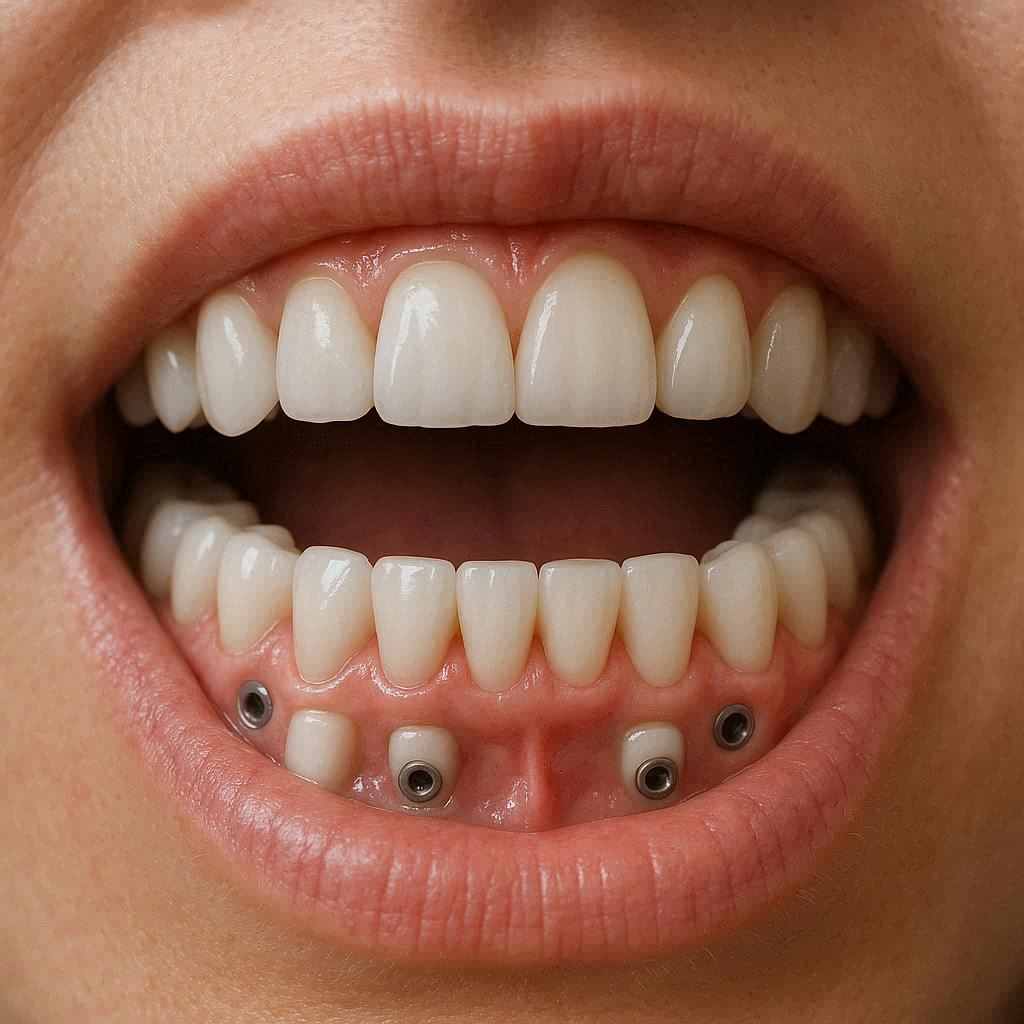
Before we talk about healing, we need to understand what you are actually healing from. A full mouth restoration is not one single tooth. It is a complete rebuild of your upper arch, lower arch, or both.
There are two main types:
- Removable implant-supported dentures. The implants hold the denture in place, but you can take it out for cleaning.
- Fixed implant bridges (like All-on-4 or All-on-6). A permanent bridge of teeth is screwed into the implants. Only a dentist can remove it.
Most people today choose the fixed option. It feels more like natural teeth. The healing for both types is similar, but fixed bridges often require a bit more precision during recovery.
Important note: Every mouth is different. Your age, bone health, smoking habits, and general health will affect how fast you heal. This guide is a general map. Your dentist is your personal GPS.
The First 24 Hours: The Most Critical Time
You wake up from sedation. Your mouth feels heavy, thick, and strange. That is normal.
The first day is all about protecting the surgery sites. You have just had multiple implants placed into your jawbone. Sometimes bone grafting too. Your body sees this as a controlled injury. And it starts healing immediately.
What to expect in the first 24 hours
- Bleeding: Minor oozing is normal for the first 12 hours. Your dentist will give you gauze pads. Bite down gently.
- Swelling: It begins within a few hours. It will get worse before it gets better.
- Pain: You will feel discomfort. But not screaming pain. Most patients describe it as a deep, dull ache.
- Saliva: You will drool. It might be slightly pink. Keep a towel nearby.
Your action plan for day one
| Time | Action |
|---|---|
| Right after surgery | Keep gauze in place for 30–60 minutes. Change as instructed. |
| 2 hours later | Apply ice packs to your cheeks (20 minutes on, 20 minutes off). |
| 4 hours later | Take your first pain medication (even if you don’t feel pain yet). |
| Evening | Drink cold water. Eat only cold, soft food (yogurt, smoothie, pudding). |
| Night | Sleep with your head elevated on two pillows. |
Do not spit. Do not use a straw. Do not rinse your mouth. Do not smoke. Do not drink alcohol. These actions can dislodge the blood clot that is forming around each implant. That blood clot is your best friend right now.
A real patient’s words
“I thought I would be in agony. Honestly, the first night was uncomfortable, but not terrible. The worst part was the swelling. I looked like a chipmunk. But ice packs really helped. And sleeping sitting up made a huge difference.” – Maria, 62, full mouth implants six months ago.
Days 2 to 7: The Swelling Peaks and Slowly Fades
This is often the hardest week mentally. The initial numbness is gone. Swelling reaches its maximum around day two or three. You might look in the mirror and not recognize yourself. Do not panic. This is normal.
What changes during this week
- Swelling: Peaks on day 2–3, then slowly goes down. You might have bruising on your neck or chin. That is also normal.
- Pain: Managed well with medication. Most people switch to over-the-counter ibuprofen or acetaminophen by day four.
- Eating: Still limited to liquids and soft foods. No chewing yet.
- Oral hygiene: You can start gentle rinsing with warm salt water (do not swish hard). No brushing near the surgery sites.
Your daily routine (days 2–7)
- Morning: Rinse gently with warm salt water (one teaspoon of salt in a cup of warm water). Let it fall out of your mouth. Do not spit.
- Breakfast: A protein shake or smoothie (no seeds, no straw).
- Midday: Ice packs if swelling is still high. Switch to warm compresses after day three to help bruising heal.
- Lunch: Mashed potatoes, soup (cool), pudding, or apple sauce.
- Evening: Take your medication before bed. Sleep elevated.
- Night: Another salt water rinse.
Signs you need to call your dentist immediately
- Bleeding that soaks through a gauze pad every hour
- Fever over 101°F (38.3°C)
- Pain that gets worse instead of better after day three
- Swelling that spreads to your eye or makes it hard to breathe
- A bad taste that does not go away (could be infection)
Most people do not have these problems. But it is good to know the warning signs.
Week 2 to Week 3: Returning to Normal Life (Carefully)
By the start of week two, the worst is behind you. Swelling is mostly gone. Bruises are turning yellow and fading. You can probably go back to work if your job is not physically demanding.
What you can do now
- Eating: You can begin eating very soft foods that require minimal chewing. Scrambled eggs, soft fish, well-cooked pasta, bananas.
- Talking: Any lisp or speech change from the temporary teeth should improve.
- Oral hygiene: You can use a very soft toothbrush on your natural teeth (if any remain). For the implants, use a special post-surgery brush or a water flosser on the lowest setting.
- Activity: Light walking is fine. No heavy lifting, no bending over, no strenuous exercise.
What you still cannot do
- No crunchy foods (chips, nuts, raw carrots)
- No sticky foods (caramel, taffy, gum)
- No biting with your front temporary teeth
- No smoking (seriously, this is the number one cause of implant failure)
A note on your temporary teeth
Most full mouth implant patients receive a set of temporary teeth on the same day as surgery (same-day teeth). These are not your final teeth. They are made of acrylic and are softer. They will feel bulky. They might have small gaps. That is by design. The temporaries protect the healing implants and let you function. Do not judge your final smile by these temporaries.
Week 4 to Week 12: The Silent Healing Phase (Osseointegration)
Now we enter the most important phase. It is also the most boring. Nothing dramatic happens on the outside. But inside your jawbone, magic is happening.
This process is called osseointegration. It is a fancy word that means your bone is growing tightly around each implant surface. The implant becomes one with your bone. This takes time. Usually 3 to 6 months.
What you will experience during this phase
- No pain: Most patients feel zero pain during this period.
- Soft diet continues: You still cannot chew hard foods. Your temporaries are not strong enough.
- Regular checkups: Your dentist will see you every 4 to 6 weeks to check healing.
- X-rays: You will get periodic X-rays to confirm bone growth.
How to help osseointegration succeed
| Do This | Avoid This |
|---|---|
| Eat a balanced diet rich in protein and vitamin D | Chewing on the implant side |
| Take calcium and vitamin D supplements (ask your dentist) | Grinding or clenching your teeth |
| Keep your mouth very clean | Smoking or vaping |
| Use a night guard if you grind | Using the temporaries to tear food |
| Stay hydrated | Skipping dental checkups |
A realistic timeline for osseointegration
- Week 4: Early bone formation begins. Implants are still fragile.
- Week 8: Significant bone growth. Implants feel stable.
- Week 12: Most implants are 50–70% integrated.
- Week 20–24: Full integration for most patients.
Some people heal faster. Some heal slower. Smokers, diabetics, and people with osteoporosis often need extra time. That is okay. Do not rush nature.
Month 4 to Month 7: Getting Your Final Teeth
This is the exciting part. Your dentist will take impressions of your healed implants. A dental lab will craft your final teeth. These are made of much stronger material (zirconia or high-grade acrylic reinforced with metal).
The process
- Impressions: Your dentist removes the temporaries and takes digital or physical impressions.
- Try-in: You will see a wax model of your new teeth. You can request changes to shape, color, or size.
- Fabrication: The lab builds your final bridge. This takes 2–4 weeks.
- Placement: Your dentist screws the final bridge onto your implants. You walk out with a permanent smile.
How does the final placement feel?
The procedure is not painful. Your gums are fully healed. You will feel pressure and some vibration. No needles needed for most patients. You might feel a little sore for a day or two after, but nothing compared to the first surgery.
First week with your final teeth
- Eating: You can finally chew! But start slowly. Soft foods for the first few days. Then gradually add harder foods.
- Sensation: Your bite will feel different. This is normal. Your brain needs time to learn the new position of your teeth.
- Cleaning: You will learn a new cleaning routine. Water flossers, special implant brushes, and possibly floss threaders.
Note: Even with final teeth, you should never use your teeth as tools. No opening bottles. No chewing ice. No biting fingernails. Your implants are strong, but your natural teeth were stronger. Respect your investment.
Long-Term Healing: The First Year and Beyond
Healing does not stop when you get your final teeth. Your gums and bone continue to adapt for up to 12 months after the final restoration.
What to expect in your first year
- Gum shrinkage: Your gums may recede slightly around the implants. This is normal. Your dentist can adjust the bridge if needed.
- Sensitivity: Cold drinks might feel sharp for a few months. This fades.
- Checkup schedule: Every 6 months like natural teeth. But your dentist will also check the screws that hold your bridge.
- Cleaning: Professional cleanings are different. Hygienists use special plastic instruments that do not scratch implants.
Success rates for full mouth implants
Full mouth implants have a very high success rate. Studies show:
- 95–98% success rate for lower jaw implants
- 90–95% success rate for upper jaw implants (the bone is softer here)
If an implant fails (rare), your dentist can usually remove it, add bone graft, and try again. One failed implant does not mean the whole case fails.
Habits that shorten implant life
- Smoking: Reduces blood flow to the bone. Single biggest risk factor.
- Uncontrolled diabetes: Slows healing and increases infection risk.
- Grinding (bruxism): Can crack the acrylic teeth or loosen screws.
- Poor hygiene: Leads to peri-implantitis (like gum disease but around implants).
Habits that extend implant life
- Excellent home care (water flosser, brushing twice daily)
- Regular professional maintenance
- Night guard if you grind
- Non-smoking
- Annual check of the screws
Pain Management: What Really Works
Let’s talk honestly about pain. Everyone asks: “How bad is it?”
Here is the truth. The surgery itself is painless because of local anesthesia and sedation. You will not feel the incisions or the drilling. The pain comes after the numbing wears off.
Pain scale breakdown (0 = no pain, 10 = worst imaginable)
| Time Period | Typical Pain Level | Notes |
|---|---|---|
| During surgery | 0 | You are sedated or numb |
| 4–8 hours after | 4 to 6 | Medication works well |
| Day 2 | 5 to 7 | Peak discomfort |
| Day 3 | 4 to 6 | Still significant |
| Day 4–7 | 2 to 4 | Improving daily |
| Week 2 | 0 to 2 | Mostly soreness |
| Week 3 onward | 0 | No pain for most |
Best pain relief strategies
- Take medication before the numbing wears off. This is crucial. Do not wait for pain.
- Alternate ibuprofen and acetaminophen. Example: 600mg ibuprofen at 8am, 1000mg acetaminophen at 12pm, ibuprofen at 4pm. Ask your dentist for exact dosing.
- Ice, ice, ice. First 48 hours only. Then switch to warm compresses.
- Sleep elevated. Reduces blood flow to the head, which reduces throbbing.
- Distract yourself. Watch a full season of your favorite show. The pain is worse when you focus on it.
Prescription painkillers
Your dentist may prescribe something stronger like hydrocodone or tramadol. Use these only if over-the-counter meds are not enough. They cause constipation and drowsiness. Many patients never need them.
Diet Guide: What to Eat When You Can’t Chew
Eating with new implants is frustrating. But it is temporary. Here is a practical guide.
Week 1 (Liquids only)
- Protein shakes (add peanut butter for calories)
- Bone broth (great for healing)
- Smoothies (no seeds, no berries with small seeds)
- Milkshakes (treat yourself)
- Yogurt drinks (kefir)
- Pureed soups (tomato, butternut squash)
Week 2 to 3 (Soft, no chewing)
- Mashed potatoes with gravy
- Scrambled eggs
- Cottage cheese
- Applesauce
- Pudding and custard
- Oatmeal (well-cooked)
- Refried beans
Week 4 to 12 (Soft, minimal chewing)
- Soft fish (salmon, tilapia)
- Pasta with soft sauce
- Well-cooked vegetables
- Bananas
- Avocado
- Pancakes (soaked in syrup)
- Meatloaf (finely ground)
Month 4+ (Gradual return to normal)
- Toast (start with very soft bread)
- Cooked chicken (shredded)
- Soft fruits (peaches, melon)
- Rice and quinoa
- Burgers (cut into small pieces)
Foods to avoid for 6 months
| Food | Why |
|---|---|
| Nuts and seeds | Can get under the temporary bridge |
| Popcorn | Hulls get stuck and cause infection |
| Steak | Too tough to tear with temporaries |
| Raw carrots | Excessive pressure on implants |
| Ice | Can crack acrylic teeth |
| Sticky candy | Can pull off temporaries |
| Bagels | Too dense and chewy |
Oral Hygiene During Healing: Step by Step
Keeping your mouth clean is your number one job. Infection around an implant (peri-implantitis) is the leading cause of late failure.
Phase 1: First week after surgery
- Do not brush the surgical sites.
- Do not spit. Let water fall out.
- Rinse with prescribed chlorhexidine mouthwash or warm salt water (2–3 times daily).
- Use a soft cloth to wipe your natural teeth (if any).
Phase 2: Week 2 to 6
- Introduce a post-surgical toothbrush (ultra soft). Brush the temporary teeth gently.
- Use a water flosser on the lowest pressure setting. Aim the water at the gumline, not directly into the gum pocket.
- Continue salt water rinses twice daily.
Phase 3: Week 6 to final teeth
- Brush normally but with a soft brush.
- Water flosser at medium pressure.
- Use interdental brushes (very small) to clean between implants and gum.
- Avoid regular floss until your dentist says it is safe.
Phase 4: After final teeth (permanent routine)
- Brush twice daily with a non-abrasive toothpaste (no baking soda, no charcoal).
- Water flosser daily. This is non-negotiable. Implants need water flossing to remove plaque from under the bridge.
- Super floss or floss threaders for fixed bridges.
- Regular toothbrush for the bridge surface.
- Annual professional cleaning with implant-safe instruments.
Critical note: Never use metal instruments, hard toothpicks, or abrasive toothpaste on your implants. They can scratch the surface. Bacteria love scratches.
Costs, Insurance, and Financing Realities
Let’s talk money. Full mouth implants are an investment. A big one. But knowing the real costs helps you plan.
Average costs in the United States (2025 estimates)
| Procedure | Low Range | High Range |
|---|---|---|
| All-on-4 per arch (basic acrylic) | $15,000 | $20,000 |
| All-on-4 per arch (premium zirconia) | $25,000 | $35,000 |
| Full mouth (both arches) basic | $30,000 | $45,000 |
| Full mouth premium (zirconia) | $50,000 | $70,000 |
| Bone grafting (if needed) | $2,000 | $5,000 per arch |
| Sinus lift (upper jaw) | $3,000 | $6,000 |
Does insurance cover anything?
Traditional dental insurance is not very helpful for implants. Most plans have a low annual maximum ($1,000–$2,000). However:
- Some plans cover the crowns (teeth) but not the implants (posts).
- Medical insurance may cover implants if tooth loss is due to accident, cancer, or congenital condition.
- Medicare does not cover dental implants.
- Medicaid coverage varies by state (very limited).
Realistic financing options
- CareCredit – Medical credit card with 6–24 months no interest.
- LendingClub – Patient solutions loans up to $50,000.
- Personal loan from a bank or credit union.
- In-house financing – Some clinics offer payment plans.
- Dental schools – Up to 50% less cost, but longer treatment time.
- Medical tourism – Mexico, Costa Rica, Colombia offer full mouth implants for $10,000–$20,000. Research carefully.
A word of caution on cheap implants
If a deal sounds too good to be true, it probably is. Extremely low prices often mean:
- Lower quality implants
- Less experienced dentists
- No follow-up care
- Short-term warranty
Your mouth is not a place to bargain hunt. Focus on value, not just price.
Emotional Healing: The Mental Side of Recovery
We talk a lot about physical healing. But what about emotional healing? Getting full mouth implants changes how you see yourself. It also changes how you eat, talk, and smile.
Common emotional stages
- Excitement before surgery – You cannot wait to have a new smile.
- Regret right after surgery – “What did I do to myself?” This is very common on day two or three. The pain, swelling, and liquid diet feel overwhelming.
- Impatience during healing – Weeks four to twelve feel endless. You want to chew a burger. You want to see your final teeth.
- Joy at final delivery – You cry happy tears when you see your smile.
- Adjustment – It takes weeks to feel normal with your new teeth.
Tips for emotional resilience
- Join a support group. Facebook has several private groups for implant patients.
- Keep a healing journal. Write down small victories (first solid food, first laugh without covering your mouth).
- Remind yourself this is temporary. The difficult phase lasts 3–4 months. The benefit lasts 20+ years.
- Talk to your dentist. They have seen hundreds of patients go through this. They can reassure you.
“The second week was the hardest mentally. I regretted everything. But my dentist sat me down and showed me before and after photos of other patients. He reminded me that healing takes time. I am so glad I listened.” – David, 55
Frequently Asked Questions (FAQ)
1. How long does full mouth implant healing take?
Complete healing (osseointegration) takes 4 to 6 months. Most patients feel back to normal after 2 to 3 weeks. The final teeth are placed around month 5 to 7.
2. Can I sleep on my side after surgery?
Avoid sleeping on the side of your face for the first week. Sleep on your back with your head elevated. After week two, side sleeping is fine as long as you do not press directly on your cheek.
3. When can I kiss again?
You can kiss gently after the first week. Avoid deep, open-mouth kissing for two weeks to reduce bacteria transfer. Also avoid any activity that could bump your mouth.
4. Will I have a lisp?
Many patients have a slight lisp for the first 1–2 weeks with temporary teeth. Your tongue needs to learn the new shape of your palate. Reading aloud helps. The lisp almost always disappears.
5. Can I drink coffee?
Hot drinks increase bleeding and swelling. Wait 48 hours before drinking warm (not hot) coffee. After one week, you can drink hot coffee, but rinse your mouth with water afterward to prevent staining of the temporary teeth.
6. What happens if an implant fails?
Your dentist removes the failed implant (painless, like an extraction). They add bone graft material. After 4–6 months of healing, they place a new implant. The rest of your implants continue working normally.
7. Do full mouth implants feel like natural teeth?
They feel different but very good. You will not feel the same “feedback” (pressure sensitivity) as natural teeth. But most patients say they feel 90% like natural teeth. Chewing power is excellent.
8. How often do I need to replace the teeth?
The implant posts last a lifetime with good care. The acrylic or zirconia teeth last 10–20 years. They can be replaced without touching the implants.
9. Can I get an MRI with implants?
Yes. Dental implants are made of titanium, which is non-magnetic. MRIs are safe. Always tell the MRI technician you have implants.
10. Is age a problem for healing?
No. Healthy patients in their 80s and 90s get implants successfully. Age is not a disease. Your overall health matters much more than your birth date.
Additional Resource Link
For a visual guide to the All-on-4 procedure and real patient healing diaries, visit the American Academy of Implant Dentistry’s patient education library:
👉 www.aaid.com/patient-resources
Note: This is a suggested resource. Always verify information with your own dentist.
Conclusion
Healing from full mouth dental implants takes four to six months of patience, but the hardest physical discomfort resolves within the first two weeks. Following your dentist’s instructions for diet, hygiene, and rest dramatically improves your chances of a lifelong, successful smile. Remember: the temporary frustration of recovery is a small price to pay for decades of eating, laughing, and living with confidence.