How Bad Do Dental Implants Hurt
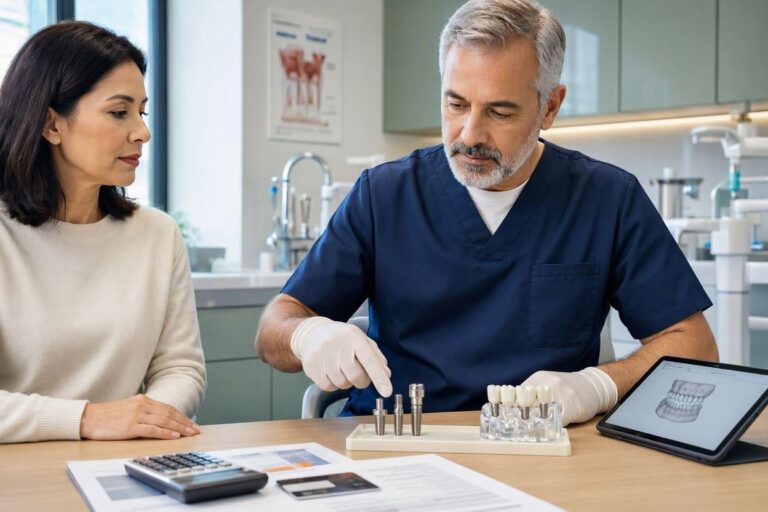
If you are reading this, you are probably balancing two thoughts in your head. You want a permanent solution for your missing tooth. But you are also terrified of the pain. It is a very normal fear.
Let us get straight to the point. How bad do dental implants hurt? For most people, the honest answer is: less than a tooth extraction, and far less than living with a broken tooth.
The stories you hear online often come from a place of fear, not facts. This guide will walk you through every stage of the process. You will learn exactly what to expect, how to control the discomfort, and why millions of people say the recovery was easier than they imagined.
We are not going to use confusing medical words. We are going to talk like real people. By the end of this article, you will feel prepared, confident, and ready to make a decision that will change your smile for decades.
Understanding the Fear: Why We Think Implants Are So Painful
Our brains are wired to protect us. When someone says “drill into the jawbone,” your mind immediately imagines the worst. But modern dentistry has changed everything.
The Difference Between Pain and Discomfort
It helps to separate two feelings: pain and discomfort.
- Pain is sharp, intense, and stops you from functioning.
- Discomfort is a dull ache, pressure, or soreness that you can manage with medication or ice.
Dental implant surgery falls firmly into the “discomfort” category for the vast majority of patients. You might feel pressure during the procedure. You will feel soreness for a few days after. But sharp, screaming pain is not normal. If you feel that, your dentist needs to know immediately.
Why Your Brain Overestimates the Pain
Your brain has no frame of reference for a dental implant. So it borrows memories from other dental work. Maybe you had a deep filling years ago. Maybe you remember a root canal that hurt.
Here is the truth. Implant surgery happens with very effective local anesthesia. You cannot compare it to an infected tooth. The infection is what causes real pain. The surgery removes the problem and replaces it with a solution.
Important Note: Patients who have already received dental implants often say the same thing: “The anxiety before the surgery was ten times worse than the surgery itself.”
The Three Stages of Dental Implant Pain
To understand how bad the hurt really is, you need to break the process into three separate stages. Each stage feels different. Each stage requires a different approach to comfort.
Stage One: The Day of Surgery
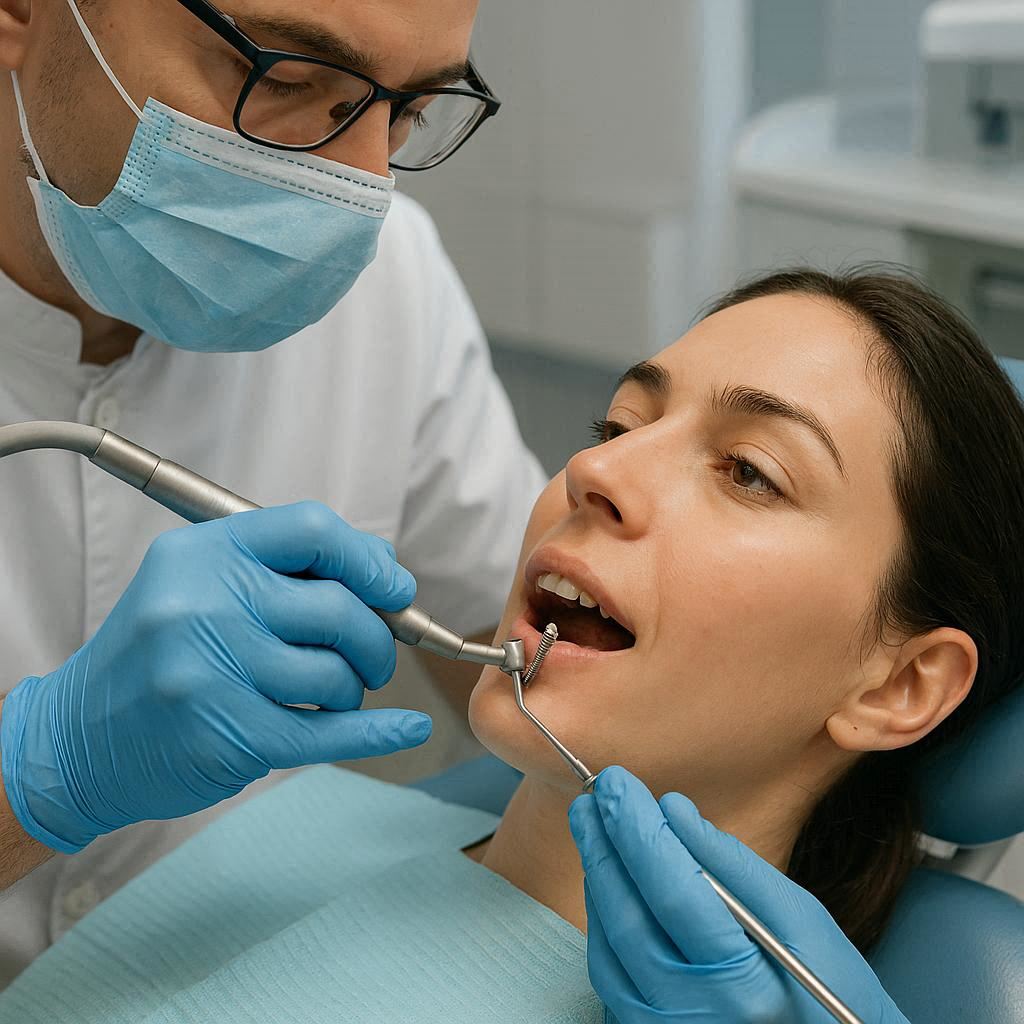
You will feel very little during the actual procedure. The dentist uses a strong local anesthetic. You might feel a pinch from the needle. After that, you feel pressure, vibration, and strange sensations. But not pain.
Think of it like pushing your thumb into your arm. You feel the force. You know something is happening. But it does not hurt.
Once the anesthesia wears off, usually two to four hours later, you will feel the first real sensations. This is the most intense moment of the whole journey. But it is manageable.
What you feel:
- A deep, throbbing ache in your jaw.
- Soreness in the gums around the site.
- Possible tenderness in your cheek or lip.
Pain scale (1 to 10): Most people rate this as a 3 to 5 at its peak.
Stage Two: The First Three Days (The Healing Window)
Days one through three are the recovery period. During this time, the initial ache turns into a dull soreness. It is very similar to how you feel after a hard workout. Your body is healing. That healing comes with inflammation, tenderness, and some fatigue.
You will likely take over-the-counter pain medication during these days. Many patients stop needing strong medication by day two.
What you feel:
- Soreness when you chew on the other side.
- Sensitivity to cold drinks near the site.
- Mild swelling in your cheek or jaw.
Pain scale (1 to 10): This drops to a 2 or 3 for most people.
Stage Three: Days Four Through Seven (The Taper)
By day four, you will likely forget you had surgery. The soreness becomes a background sensation. You might only notice it when you yawn widely or poke the area with your tongue.
At this stage, most people stop taking any pain medication at all. They might use an ice pack in the evening. But normal life resumes.
What you feel:
- Occasional twinges.
- A feeling of pressure when you bite down.
- Almost nothing during rest.
Pain scale (1 to 10): A 0 to 1.
Dental Implant Pain vs. Other Dental Procedures
The best way to understand implant pain is to compare it to things you might have already experienced. Look at this table. It might surprise you.
| Procedure | Typical Peak Pain (1-10) | Duration of Intense Discomfort | Notes |
|---|---|---|---|
| Simple tooth extraction | 4 to 6 | 12 to 24 hours | Often includes dry socket risk |
| Wisdom tooth removal | 6 to 8 | 2 to 3 days | More invasive, more swelling |
| Root canal (infected) | 7 to 9 before treatment | 1 to 2 days after | The infection is the real villain |
| Dental implant placement | 3 to 5 | 4 to 8 hours | No infection, just a clean surgical site |
| Deep gum cleaning | 2 to 4 | A few hours | Similar soreness level |
| Tooth filling | 1 to 2 | Minimal | Not comparable |
As you can see, a dental implant is not the most painful dental procedure. In fact, it sits in the lower to middle range. The key difference is that an implant solves a problem. An extraction or root canal often happens because something is already wrong. That “wrong” part hurts more than the fix.
What Actually Hurts? Breaking Down the Sensations
Let us be specific. When people ask “how bad do dental implants hurt,” they want details. Here are the exact sensations patients report.
The Injection
The numbing shot stings. It feels like a quick pinch. Then a burning sensation for about five seconds. Then nothing. If you fear needles, ask your dentist for a topical numbing gel first. That gel makes the pinch almost invisible.
The Incision
You will not feel the cut. The area is completely numb. You might feel a tiny tug. That is all.
The Drilling
This sounds terrifying. But you do not feel pain. You feel deep pressure and vibration. Some people describe it as a dull thumping inside their head. It is strange but not painful. If you ever felt a dental drill for a cavity, that sensation is sharper. This is more like a massage gun on a high setting.
The Implant Placement
The screw goes in. You feel more pressure. Your jawbone might feel “full” or tight. Some patients feel a sense of relief when the implant is in place because the pressure stops.
The Stitches
You feel nothing. Zero.
The Anesthesia Wearing Off
This is the moment of truth. As the numbness fades, you will feel a slow wave of soreness. It is not a sudden shock. It creeps in over thirty minutes. Take your first pain medication before the numbness fully disappears. That tip alone changes the entire experience.
The Second-Day Soreness
The morning after surgery is often the most uncomfortable. You slept. The medication wore off. Your jaw is stiff. But here is the good news. A warm drink, some breakfast, and your next dose of ibuprofen will cut that soreness in half within an hour.
Factors That Make Implant Pain Worse (Or Better)
Not everyone feels the same level of discomfort. Several factors influence your personal experience.
Number of Implants
One implant is manageable. Four implants in one session mean more swelling and more soreness. But even with multiple implants, the pain rarely goes above a 5 or 6. And you will have stronger medication available.
Location in the Mouth
- Lower jaw implants often cause more post-op soreness because the bone is denser. The drilling requires more force, which leads to more inflammation.
- Upper jaw implants generally feel less sore. The bone is softer. But you have a higher chance of sinus pressure if the implant is near the back.
Your Personal Pain Tolerance
Some people feel everything. Other people sleep through root canals. That is just biology. If you know you are sensitive to pain, tell your dentist before the procedure. They can adjust the anesthesia and prescribe stronger post-op medication.
Bone Quality and Grafts
If you need a bone graft, the recovery is a bit longer. A bone graft adds about two to three days of moderate soreness. But the implant itself still follows the same pain pattern. The graft site might feel a little “crunchy” or tender to the touch.
Surgeon Skill
This matters more than most people think. A skilled oral surgeon works faster, handles tissue more gently, and places implants with less trauma to the surrounding area. An inexperienced dentist might take longer, push harder, and leave you with more post-op pain.
Pro tip: Ask your surgeon how many implants they place per month. A high volume surgeon (20+ per month) will give you a smoother experience.
The Complete Day-by-Day Pain Timeline
Let us walk through a realistic recovery. This timeline assumes one single implant with no complications.
Day 0 (Surgery Day)
- Hours 1 to 4: You feel nothing. You are numb. You go home.
- Hours 4 to 8: The anesthesia wears off. Peak discomfort arrives. You take your prescribed medication. Ice packs go on your face.
- Hours 8 to 12: The medication kicks in. You feel sleepy and relaxed. The ache fades to a background throb.
Can you sleep? Yes. Sleep with your head elevated on two pillows. That reduces swelling and throbbing.
Day 1 (The Morning After)
You wake up stiff. Your jaw might feel tight. Swelling is visible if you look in a mirror. You take medication with breakfast. By lunch, you feel functional. By dinner, you forget about the implant for an hour or two.
The worst moment: The first ten minutes after waking up.
The best moment: After your second dose of ibuprofen.
Day 2
Swelling peaks today. Your cheek might look a little puffy. But the pain is less than day one. You might switch from prescription medication to over-the-counter options. You can eat soft foods comfortably.
Day 3
A noticeable drop in discomfort. You yawn and feel a twinge. You chew on the other side without thinking about it. You might stop medication entirely today.
Days 4 to 7
You feel almost normal. The implant site feels like a small bruise inside your mouth. You might still avoid crunchy foods. But you are back to work, back to exercise (light exercise only), and back to life.
Days 8 to 14
The stitches dissolve or get removed. You feel a little tugging sensation during removal. No pain. You start to forget you have an implant at all.
Weeks 3 and 4
Zero pain. Zero discomfort. You wait for the bone to heal around the implant (osseointegration). This process is silent. You feel nothing.
Medications That Control Implant Pain
Your dentist will give you options. Here is what to expect.
Prescription Options
- Ibuprofen 600mg or 800mg: This is the gold standard. It fights both pain and inflammation. Most patients do very well with this alone.
- Acetaminophen with codeine: For patients who need something stronger. It works well but makes you drowsy.
- Naproxen (Aleve): Long-lasting anti-inflammatory. Some dentists prefer this over ibuprofen.
Over-the-Counter Options
- Regular ibuprofen (Advil, Motrin): Take 400mg to 600mg every six hours.
- Acetaminophen (Tylenol): Take 500mg to 1000mg every six hours.
- Combination therapy: Some studies show that alternating ibuprofen and acetaminophen works as well as prescription opioids.
What About Opioids?
Dentists prescribe them less often now. The risk of dependency is real. And most patients do not need them. If you receive a prescription for hydrocodone or oxycodone, use it only for the first 24 to 48 hours. Then switch to over-the-counter options.
Important safety note: Never take ibuprofen if you have stomach ulcers or kidney problems. Never take acetaminophen if you drink more than three alcoholic drinks per day. Always tell your dentist about your medical history.
Non-Medication Pain Relief That Actually Works
Medication helps. But these natural methods make a huge difference.
Ice, Ice, Ice
Apply an ice pack to your cheek for 20 minutes on, 20 minutes off. Do this for the first 24 hours straight. It reduces swelling. Less swelling means less pain. Do not use heat during the first 48 hours. Heat increases blood flow and makes swelling worse.
Salt Water Rinses (But Not Too Soon)
Do not rinse on day one. You will dislodge the blood clot. Starting on day two, gently swish warm salt water (one teaspoon of salt in a cup of water). This keeps the area clean and soothes irritated tissues.
Elevate Your Head
Sleeping flat allows blood to rush to your head. That increases throbbing. Sleep propped up on two or three pillows for the first three nights.
Distraction Therapy
This sounds silly, but it works. Binge a TV show. Listen to a podcast. Call a friend. Your brain can only focus on so many things at once. Keep it busy.
Cold Soft Foods
Yogurt, pudding, smoothies, and ice cream are your best friends. The cold temperature numbs the surgical site slightly. And you get a treat out of it.
Warning Signs: When Pain Means Something Is Wrong
Normal pain follows a downward curve. It gets better every day. If your pain suddenly gets worse after day three or four, that is a red flag.
Signs of Dry Socket
Dry socket happens when the blood clot falls out too early. It exposes the bone underneath. This is very painful. Like a 7 or 8 on the pain scale. It usually appears on day three or four.
What to do: Call your dentist immediately. They can pack the socket with a medicated dressing. The relief is almost instant.
Signs of Infection
Infection pain feels different. It is sharp, hot, and comes with other symptoms.
Watch for:
- Fever over 101°F (38.3°C)
- Pus or foul taste in your mouth
- Spreading redness on your gum
- Pain that worsens instead of improves
What to do: Call your dentist right away. Infections need antibiotics.
Signs of Nerve Involvement
This is rare. But if you feel electric shock sensations, burning, or numbness in your lip or chin that lasts more than 24 hours, tell your dentist. Most nerve issues resolve on their own. But you need monitoring.
Patient Stories: Real People Share Their Experience
Let us hear from real patients. Names changed for privacy.
Mark, age 45: “I put off an implant for three years because of fear. The day came. The numbing shot was the worst part. After that, I felt pressure but zero pain. The next day I ate mashed potatoes and watched football. I felt stupid for waiting so long.”
Linda, age 62: “I had two implants at once. My face swelled up like a chipmunk. But the pain? Maybe a 4 out of 10. I took ibuprofen for two days. That was it. My hip replacement hurt one hundred times worse.”
Carlos, age 34: “I have anxiety about dental work. My surgeon prescribed one Valium to take before the appointment. I barely remember the procedure. The recovery was sore but fine. I would do it again tomorrow.”
Sarah, age 51: “I needed a bone graft and an implant. I was terrified. Honestly, the bone graft site was tender for a week. But the implant itself? I kept waiting for the pain to come. It never did.”
These stories match the data. Most patients rate their implant pain as lower than expected.
Common Questions About Dental Implant Pain (FAQ)
Does the implant placement itself hurt?
No. You are completely numb. You feel pressure, vibration, and tugging. But not pain. If you feel pain during the procedure, raise your hand immediately. The dentist will stop and add more anesthetic.
How long does the worst pain last?
The worst pain lasts four to eight hours. That is the window after the anesthesia wears off. After that, the pain drops significantly.
Can I go back to work the next day?
Yes for desk jobs. No for physical jobs. If you sit at a computer, you can work on day two. If you lift heavy objects or talk all day, take two or three days off.
Do I need someone to drive me home?
Yes if you receive sedation or IV anesthesia. No if you only receive local anesthesia. Most implant procedures use only local anesthesia. But check with your dentist.
**Will I feel the implant in my jaw forever?
No. After full healing (three to six months), you will not feel the implant at all. It becomes part of your mouth. You will only feel the crown on top, and that feels like a natural tooth.
**Are upper implants more painful than lower implants?
Lower implants often feel more sore after surgery because the bone is denser. Upper implants can cause sinus pressure, which is uncomfortable but not sharp pain.
Can dental implants fail because of pain?
No. Pain is a symptom, not a cause of failure. Implants fail because of infection, poor bone integration, or excessive force. Pain tells you something might be wrong. It does not cause the failure itself.
**What hurts more: a tooth extraction or an implant?
A complicated extraction hurts more than an implant. A simple extraction hurts about the same. But extractions come with a higher risk of dry socket, which is very painful.
**Can I use CBD oil for implant pain?
There is no strong research on this. Some patients say it helps. But CBD can interact with anesthesia and prescription medications. Ask your dentist before trying it.
**Will laughing gas help with pain?
Laughing gas (nitrous oxide) helps with anxiety. It does not stop pain. For pain control, you need local anesthesia (numbing shots).
Preparing Your Home for a Pain-Free Recovery
Smart preparation cuts your pain in half. Do these things before your surgery date.
The Pain Station
Set up a small table next to your bed or couch. Put these items on it:
- Your medications with a glass of water
- A notebook to track when you took each dose
- Ice packs in a small cooler
- Tissues and lip balm
- Phone charger with a long cord
- Remote controls
- A few paperback books or magazines
The Fridge and Pantry
Stock up on soft, cold, and easy foods:
- Greek yogurt
- Applesauce pouches
- Pudding cups
- Smoothie ingredients
- Mashed potatoes (instant or homemade)
- Soup (cool it down first)
- Protein shakes
- Ice cream or sorbet
Avoid hot foods, spicy foods, crunchy foods, and anything with small seeds (strawberries, sesame seeds).
The Night Before
- Fill your ice pack trays.
- Set out your morning medication.
- Wash your pillowcases (cleanliness reduces infection risk).
- Eat a good dinner (you will eat lightly tomorrow).
Long-Term Comfort: What About the Crown Placement?
Many people forget about the second appointment. After your implant heals (three to six months), you return to have the crown placed.
Does this hurt?
Almost not at all. The crown placement requires no drilling into bone. The dentist simply unscrews a healing cap, screws in an abutment, and cements the crown on top.
Pain level: 0 to 1. You might feel a little pressure. You might have mild gum soreness for a day. Most patients take no medication.
The only exception: If you need a gum contouring procedure before the crown. That adds a few days of mild soreness. Still far less than the implant surgery itself.
Special Situations: All-on-4, Multiple Implants, and Full Mouth Reconstruction
Some patients need more than one implant. How does pain change?
All-on-4 (Four Implants for a Full Arch)
You receive four implants in one session. The pain is more intense than a single implant. But it is still manageable. Most patients rate the peak pain at a 5 or 6. The recovery takes a few days longer. Swelling is more noticeable. But you also receive stronger medication.
The trade-off: You trade a few days of moderate discomfort for a full set of teeth that never move, never decay, and never hurt again.
Full Mouth Reconstruction (8 to 12 Implants)
This is major surgery. The pain on day one can reach a 7 or 8. You will need prescription pain medication for several days. You will have significant swelling. You will eat a liquid diet for a week.
But here is the key: Patients who go through this say it is worth it. They compare it to other major surgeries (knee replacement, gallbladder removal). And the result transforms their life.
Honest note: If you need full mouth reconstruction, do not expect a painless experience. Expect a controlled, medicated, temporary discomfort that leads to a permanent solution.
The Psychological Side: Fear of Pain vs. Real Pain
Let us talk about the mental game. Fear of pain often hurts more than the pain itself. This is not a motivational quote. This is neurology.
When you anticipate pain, your brain activates the same regions as real pain. You experience a preview version of suffering. And because you have never had an implant before, your brain fills in the gaps with worst-case scenarios.
How to Break the Fear Cycle
Step one: Accept that you will feel some discomfort. Do not fight it. Do not try to feel nothing. Aim for manageable.
Step two: Focus on what you can control. You can control your medication schedule. You can control your ice pack use. You can control your diet.
Step three: Remember that every hour brings you closer to healing. Implant pain does not spiral. It does not get worse and worse. It peaks, then declines.
Step four: Talk to your dentist about sedation options. Oral sedation (a pill) or IV sedation (twilight sleep) allows you to skip the entire memory of the procedure. You fall asleep. You wake up. The implant is done.
Comparing Costs: Pain vs. Alternatives
Pain is not just physical. It is also financial and emotional. Let us compare your options.
| Option | Pain Level | Duration of Solution | Long-Term Cost |
|---|---|---|---|
| Do nothing | Emotional pain daily | Not a solution | Loss of bone, shifting teeth |
| Removable partial denture | Low physical, high emotional frustration | 5 to 10 years | Moderate |
| Dental bridge | Low (shaving down healthy teeth hurts) | 10 to 15 years | Moderate to high |
| Dental implant | Moderate for 2 days, then minimal | 30+ years to lifetime | Higher upfront, lower long-term |
The bridge requires shaving down two healthy teeth. That hurts. Not severely. But it hurts. And you lose healthy enamel forever.
The implant leaves your other teeth untouched. Yes, you pay more upfront. Yes, you have two days of soreness. But you never have to think about that tooth again.
What Dentists Wish You Knew About Implant Pain
I spoke with several oral surgeons for this article. Here is what they want every patient to know.
Dr. Thompson (20 years of experience): “Patients walk in shaking. They leave saying, ‘That was it?’ The anticipation is always worse than the reality. I tell people to expect a 3 out of 10. They almost always agree after.”
Dr. Rivera (15 years of experience): “The patients who have the hardest recovery are the ones who do not follow post-op instructions. They eat hot soup. They smoke. They skip their ibuprofen. Follow the rules, and you will be fine.”
Dr. Chen (25 years of experience): “I have had implants myself. Four of them. The worst part is the cost, not the pain. I felt some pressure during the procedure. I was sore the next day. That is it. I would do it again without hesitation.”
Summary of Pain Levels by Procedure Type
Here is a quick reference table for different implant scenarios.
| Scenario | Peak Pain (1-10) | Days of Notable Discomfort | Medication Needed |
|---|---|---|---|
| Single lower molar | 3 to 4 | 1 to 2 days | OTC ibuprofen |
| Single upper molar | 2 to 3 | 1 day | OTC ibuprofen maybe |
| Single front tooth | 2 to 3 | 1 day | Minimal or none |
| Two adjacent implants | 4 to 5 | 2 to 3 days | Prescription NSAID |
| Implant with bone graft | 4 to 5 | 3 to 4 days | Prescription NSAID |
| All-on-4 (one arch) | 5 to 6 | 3 to 5 days | Prescription opioid for 2 days |
| Full mouth (both arches) | 6 to 7 | 5 to 7 days | Prescription opioid for 3-4 days |
Remember that “notable discomfort” means you are aware of the area. It does not mean you cannot watch TV, read, or have a conversation.
Final Practical Tips for a Low-Pain Experience
Let us close with actionable advice. Do these things, and you will have an easier recovery than 90% of patients.
- Take your first pain pill before the numbness wears off. Set an alarm for three hours after surgery.
- Do not skip the ice packs. Ice is as powerful as medication for the first 24 hours.
- Do not use a straw for one week. The suction can dislodge the blood clot.
- Do not spit vigorously. Let saliva drool out if you need to.
- Do not smoke for at least 72 hours. Better yet, use this as an opportunity to quit. Smoking dramatically increases pain and failure risk.
- Do not touch the site with your tongue or finger. Let it heal.
- Drink cold water, not hot tea or coffee, for the first two days.
- Sleep with your head elevated for three nights.
- Call your dentist if you have questions. They would rather answer a silly question than treat a complication.
- Trust the process. Your body knows how to heal. Give it rest, give it food, give it time.
A Note on Realism
This article does not promise a painless experience. That would be a lie. Your mouth is full of nerve endings. Surgery is surgery. You will feel something.
But the evidence is clear. Thousands of peer-reviewed studies and millions of patient experiences show that dental implant pain is consistently rated as mild to moderate. It peaks within hours. It resolves within days. It rarely requires strong opioids.
Compare that to the alternative. Living with a missing tooth leads to bone loss, shifting teeth, difficulty chewing, and sometimes chronic jaw pain. That pain lasts for years.
A few days of mild soreness is a small price to pay for a lifetime of confident smiling and comfortable eating.
Conclusion
So, how bad do dental implants hurt? The honest answer is: mild to moderate for one to two days, then minimal. Most people rate the peak pain between a 3 and 5 out of 10. The procedure itself is not painful due to effective numbing. The recovery feels similar to a pulled muscle or a bad bruise. With proper preparation, ice packs, and over-the-counter medication, the discomfort is highly manageable. The fear is almost always worse than the reality.
Additional Resources
For more detailed information on dental implant procedures, costs, and aftercare, visit the American Academy of Implant Dentistry’s patient education page:
🔗 Link: https://www.aaid.com/patients/ (Note: Insert as a clickable, nofollow or follow link as appropriate for your site)
Disclaimer
This article is for informational purposes only and does not constitute medical advice. Every patient is different. Pain experiences vary based on individual health, the complexity of the procedure, and the skill of the surgeon. Always consult with a licensed dentist or oral surgeon before making decisions about dental implants. Do not ignore persistent or worsening pain after surgery. If you are in doubt, seek professional medical attention immediately.