How Can You Get Help With Dental Implants
You have probably heard that dental implants are the closest thing to natural teeth. They look real, feel sturdy, and can last a lifetime. But there is one big problem for many people: the price.
A single dental implant can cost between three thousand and six thousand dollars. A full set of implants for an entire arch of teeth can reach thirty thousand dollars or more. That is a scary number for most of us.
So the question is natural: how can you get help with dental implants without going bankrupt or staying in pain?
The good news is that help exists. It is not always easy to find, but it is there. You just need to know where to look, what questions to ask, and which programs actually work.
This guide walks you through every realistic option. No fake promises. No secret tricks. Just honest, useful information.
Understanding Why Dental Implants Are So Expensive
Before we talk about solutions, it helps to understand why implants cost so much. This is not random. The price comes from real work and real materials.
Key components of the cost:
- The implant post itself (usually made of titanium or zirconia)
- The abutment (connector piece)
- The crown (visible false tooth)
- The surgeon’s fee
- Imaging and CT scans
- Anesthesia
- Temporary teeth during healing
- Follow-up visits
Every part requires training, precision, and quality materials. A cheap implant done poorly can lead to infection, bone loss, and more expensive repairs later.
Average cost breakdown (USA, 2025 estimate):
| Component | Average Cost |
|---|---|
| Implant post | 1,500–2,500 |
| Abutment | 300–600 |
| Crown | 1,000–2,000 |
| Surgical placement | 1,000–2,500 |
| CT scan & X-rays | 200–500 |
| Total single implant | 3,000–3,000–6,500 |
That is just for one tooth. Multiple implants multiply the cost quickly.
But here is the truth you need to remember: expensive does not mean impossible. Many people afford implants every year without being rich. They just use smart help strategies.
Dental Insurance: What Actually Covers Implants
Let us start with the most common question people ask. Does insurance help with dental implants?
The answer is complicated.
Traditional dental insurance often calls implants a “major procedure.” Many plans cover only part of major work, and some cover nothing at all. But things are slowly changing.
What a typical PPO dental plan might offer
If you have a good employer-sponsored plan, you might see coverage like this:
- 50% coverage for major procedures after a waiting period
- A yearly maximum of 1,000to2,000
- Separate deductible of 50to150
So if you need a five thousand dollar implant, your insurance might pay half up to the yearly limit. That means maybe one thousand dollars. You still pay four thousand.
But that is still help. One thousand dollars is real money.
Medical insurance and implants
Here is something many people do not know. Sometimes your medical insurance helps with implants, not your dental plan.
Examples when medical insurance may help:
- Implants needed after an accident or facial trauma
- Congenital conditions like ectodermal dysplasia (missing teeth from birth)
- Oral cancer surgery requiring jaw reconstruction
- Severe sleep apnea treated with implant-supported devices
In these cases, the implant is not just cosmetic. It is medically necessary. Your medical plan might cover part of the surgery, even if it does not cover the crown.
Tip from experience: Ask your surgeon to write a medical necessity letter. Then submit that to your medical insurance. It does not always work, but it works often enough to try.
Discount dental plans
These are not insurance. They are membership programs. You pay a yearly fee, and you get reduced prices from participating dentists.
For implants, a discount plan might lower the price by 15% to 30%. That is significant on a ten thousand dollar case.
Examples of national discount plans:
- Careington
- Aetna Dental Access
- Cigna Savings Program
Always call the dentist first and ask: “Do you accept my discount plan, and what is the final implant price with the discount?”
Dental Schools: High-Quality Work for Half the Price
If you live within driving distance of a dental school, this might be your best option.
Dental schools need patients for their students to learn. But do not worry. Students do not work alone. Every step is supervised by experienced, licensed dentists and specialists.
Typical savings at a dental school:
- 30% to 70% lower than private practice
- The same materials (real titanium, real ceramic)
- Longer appointment times (they check everything twice)
What is the trade-off? Time. A single implant that takes three months in private practice might take five to six months at a school. Appointments are longer. You might see multiple students. But the final result is often excellent.
How to find a dental school near you:
Search online for “dental school implant clinic” plus your state name. Or visit the American Dental Education Association website. They maintain a list of all accredited US dental schools.
A real example:
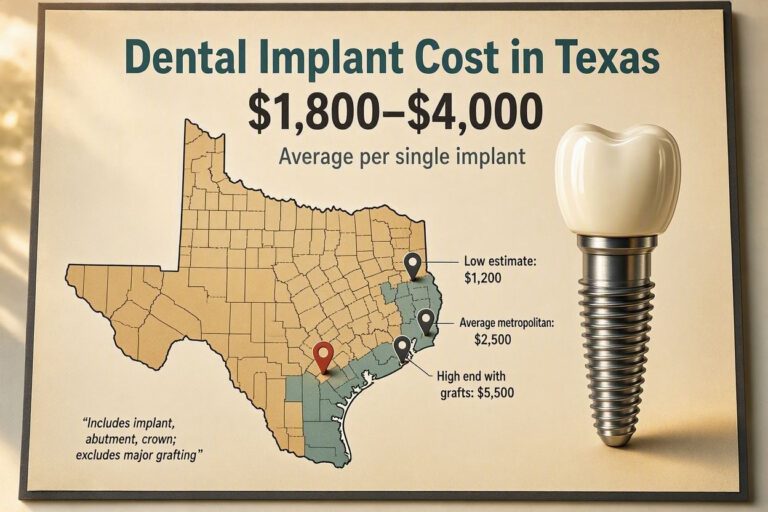
A woman in Texas needed two implants. Private quote: 7,200.ThedentalschoolinHoustondidbothfor3,400. The work took four extra months. Five years later, her implants are perfect.
Speed is not everything. Quality and savings matter more.
Clinical Trials and Research Studies
This option is not for everyone, but it helps some people get free or low-cost implants.
Universities and implant companies sometimes run clinical trials. They need patients to test new implant designs, materials, or techniques.
What you might receive:
- Free implants
- Free surgical placement
- Free follow-up care for the study period
- Sometimes a small payment for your time
What you might risk:
- Experimental materials (rare, but possible)
- More frequent check-ups
- Being assigned to a control group (not getting the new treatment)
- Lengthy paperwork
Where to find trials:
- ClinicalTrials.gov (search “dental implant”)
- Major university dental school research pages
- Implant manufacturer websites (Straumann, Nobel Biocare, Zimmer)
Important note: Read everything carefully. Ask about who pays if something goes wrong. Most legitimate trials include coverage for complications. But never assume.
Nonprofit Organizations and Charitable Programs
Several organizations exist specifically to help people get dental care they cannot afford. Implants are not always included, but more programs add them each year.
Dental Lifeline Network
This is one of the oldest and largest programs. They connect volunteer dentists with people who have permanent disabilities, are elderly, or are medically fragile.
Some state chapters now approve implants for qualifying patients. The care is completely free.
Eligibility: You must prove financial need and have a qualifying medical condition or disability. Simple missing teeth may not qualify.
Give Back a Smile
This program helps survivors of domestic violence who lost teeth due to their abuse. They cover restorative dental work, including implants in some cases.
You need documentation from a shelter, counselor, or law enforcement. The program is run by the American Academy of Cosmetic Dentistry.
Mission of Mercy (MOM) events
These are large, weekend-long dental clinics set up in convention centers. Hundreds of dentists volunteer. Patients camp out overnight to get in line.
Most MOM events focus on extractions, fillings, and simple dentures. But larger events sometimes offer a limited number of implants. Check your state’s dental association website for schedules.
Payment Plans and In-House Financing
Many dental offices understand that patients cannot pay five thousand dollars upfront. So they create their own payment plans.
What to ask when you call a dental office:
“Do you offer in-house financing with zero percent interest?”
Some offices say yes. Others work with third-party medical finance companies.
Third-party financing options
CareCredit is the most common. It is a healthcare credit card. You apply online. If approved, you use it like a regular credit card but only at healthcare providers.
Key details about CareCredit:
- Promotional financing: 6, 12, or 18 months at zero percent interest
- Deferred interest if not paid in full by the deadline (be careful)
- Regular financing for larger amounts (up to 60 months, but with interest)
Alphaeon Credit is another option. It is similar but sometimes offers longer zero-interest periods for cosmetic dentistry.
A warning from real patients:
Deferred interest plans are dangerous. If you owe 5,000andpay4,999 by month 18, you still pay interest on the full $5,000. Always set autopay to finish early.
Traditional dental payment plans
Some independent dentists work directly with you. No third party. No credit check.
You might pay 1,000downand300 per month for twelve months. The dentist holds the risk. Because of that, they may ask for a higher down payment.
This is rare today, but it still exists. Look for smaller, family-owned practices. Ask politely. The worst they can say is no.
Dental Tourism: Getting Implants Abroad
Traveling for dental work has become very common. Americans go to Mexico, Costa Rica, Colombia, Turkey, Thailand, and Hungary.
Why do people do it?
The same implant that costs 5,000intheUSmightcost1,500 in Mexico or $900 in Turkey. Even after adding airfare and a hotel, you save thousands.
Common dental tourism destinations (single implant price estimate):
| Country | Average Implant Cost | Flight from NYC (est.) |
|---|---|---|
| Mexico (Los Algodones) | 1,200–2,000 | $300 |
| Costa Rica | 1,000–1,800 | $500 |
| Colombia | 900–1,500 | $600 |
| Turkey | 600–1,200 | $700 |
| Thailand | 800–1,300 | $1,200 |
Those prices include the implant, abutment, crown, and placement. Sometimes they include your hotel for a few nights.
Risks you must understand:
- Follow-up care is difficult. If something goes wrong after you return home, your local dentist may not touch someone else’s work.
- Language barriers can cause misunderstandings.
- Infection or implant failure means another expensive trip.
- Quality varies wildly. Some foreign clinics are world-class. Others are dangerous.
- No US legal recourse if something goes wrong.
How to do it safely:
- Use only clinics accredited by the Joint Commission International (JCI)
- Read reviews on independent forums, not the clinic’s own website
- Ask for before-and-after photos of patients like you
- Get a written treatment plan with brand names of implants
- Confirm that the implant brand is available in your home country (for future repairs)
Dental tourism works well for many people. But it is not for everyone. If you have complex medical issues or anxiety about travel, it is probably not worth the risk.
Crowdfunding for Dental Implants
Asking strangers for money feels uncomfortable. But thousands of people do it every year for medical and dental needs.
Best platforms for dental crowdfunding:
- GoFundMe (most popular, no fee for medical campaigns)
- Ketto (works well in some regions)
- YouCaring (now part of GoFundMe)
What makes a successful campaign:
A clear, honest story. A specific dollar amount. Regular updates with photos. Sharing the link on Facebook, Instagram, and with local news stations.
Real example:
A single father in Ohio needed full-mouth implants after a motorcycle accident destroyed his teeth. His quote was 32,000.HesetupaGoFundMewithavideoofhissmileandX−rays.Localnewspickedupthestory.Heraised28,000 in six weeks.
Not every campaign succeeds. But even raising 1,000or2,000 makes a difference.
Tip: Offer small rewards. A handwritten thank-you note. A photo of your new smile. People like to see their impact.
Employer Benefits and Flexible Spending Accounts
Many people forget to check their work benefits. This is free help you might already have.
Health Savings Account (HSA) or Flexible Spending Account (FSA)
If you have an HSA or FSA, you can use that money for dental implants. The IRS specifically allows it.
How it helps: You use pre-tax dollars. If you earn 60,000peryearandpay5,000 for implants, that $5,000 is tax-free. You save roughly 20% to 30% depending on your tax bracket.
Important reminder: FSAs are “use it or lose it.” You need to schedule the implant within the plan year. HSAs roll over forever.
Employer wellness benefits
Some large employers now offer dental implant coverage as a voluntary benefit. You pay a small monthly premium, and the plan pays a set amount per implant.
Ask your HR department: “Do we offer any supplemental dental benefits that cover implants?” You might be surprised.
Union and association plans
If you belong to a union, trade association, or even AARP, check their dental plans. Group buying power sometimes includes implant coverage that individuals cannot get alone.
Negotiating with Your Dentist
This sounds bold. Many people never try it. But dentists are business owners. They would rather have some money than no money.
What you can realistically ask for:
“I have a quote for $5,500. If I pay in cash today, what is your best price?”
Cash discounts of 5% to 10% are common. Credit card processing fees cost the dentist about 3%. Paying with cash or a check saves them that fee.
Another approach:
“Can you remove the temporary crown and have a dental lab student make my final crown?”
Some dentists will reduce the price by 500to1,000 if you accept a slower lab or fewer cosmetic features.
The most important negotiation rule: Be kind. Dentists are human. If you come in angry or demanding, they will not want to work with you. If you say, “I really want to do this, but my budget is tight. Can we find a way?” many will try to help.
Public Health Centers and Sliding Fee Clinics
Federally Qualified Health Centers (FQHCs) exist in almost every county in the United States. They offer medical, dental, and sometimes mental health care.
What FQHCs offer for implants:
Most FQHCs do not place implants. They focus on preventive care, fillings, extractions, and dentures.
But here is the trick:
Some FQHCs have a relationship with a nearby dental school or hospital. They can refer you to an implant program at a reduced rate. The FQHC handles your paperwork and determines your sliding fee discount.
Sliding fee scale example:
| Household Size | Income Level | Discount |
|---|---|---|
| 1 | Under $15,000 | 80% |
| 1 | 15,001–25,000 | 60% |
| 2 | Under $20,000 | 80% |
| 2 | 20,001–35,000 | 60% |
That discount applies to the FQHC’s own services. For referrals, it may apply to certain parts of the implant process, like the initial exam or follow-up care.
How to find your local FQHC:
Search “Federally Qualified Health Center [your county]” or use the HRSA Health Center Finder online.
Grants and Scholarships for Dental Implants
Real grants for dental implants are rare. Be very careful of anyone promising free grant money in exchange for an application fee. That is usually a scam.
But some legitimate options exist:
The Smile Grant – A small nonprofit that awards a few grants per year for restorative dental work, including implants. You submit a letter of need, photos, and a dental estimate. The grant is usually 1,000to3,000.
Cosmetic Dentistry Grants – Run by a network of dentists who donate one case per month to a qualifying patient. You apply online. If selected, you pay a reduced fee (often 50% to 70% off). This is not a free grant, but it is significantly discounted.
State dental association foundations – Many state dental associations have charitable foundations. For example, the Texas Dental Association Smiles Foundation, the California Dental Association Foundation. Contact yours directly and ask about implant assistance.
A hard truth: Grants are competitive. Thousands of people apply. A few win. Do not depend on grants as your only plan. But it only takes ten minutes to apply. The potential reward is worth the effort.
Military and Veteran Benefits
If you served in the US military, you have options that civilians do not.
VA dental benefits for implants:
The VA covers dental implants only in specific situations:
- Service-connected dental condition or injury
- Former POWs
- Veterans with a 100% disability rating
For other veterans, the VA offers a Dental Insurance Program (VADIP). This is private insurance sold at group rates. Some VADIP plans cover a portion of implant costs.
Project Save-A-Smile (Navy and Marines):
This Navy-Marine Corps Relief Society program provides grants for active duty and retired personnel for dental care not covered by military benefits. Implants may be approved on a case-by-case basis.
Air Force Aid Society:
Similar program. Contact their dental assistance officer at your nearest base.
A note for all veterans:
Even if the VA does not cover your implant, you can use VA facilities for low-cost X-rays and exams. Then take those records to a private dentist. That saves you a few hundred dollars right away.
Medicaid and Medicare: What They Actually Cover
Let us be clear about government insurance. Neither traditional Medicare nor most state Medicaid programs cover routine dental implants.
But there are exceptions.
Medicare Advantage plans (Part C): Many private Medicare Advantage plans include dental benefits beyond original Medicare. Some now cover up to 1,500oreven3,000 per year for major services. That could include a portion of implant costs.
Medicaid for adults in certain states:
As of 2025, a small number of states cover dental implants through Medicaid for adults. These include:
- Minnesota (limited cases)
- California (through Denti-Cal for certain medically necessary implants)
- New York (rare, usually for cancer patients)
- Washington (some managed care plans)
Medicaid for children (Early and Periodic Screening, Diagnostic and Treatment):
Children in all states have better dental coverage. If a child is missing a permanent tooth due to accident or congenital condition, Medicaid sometimes pays for an implant. The legal argument is that it is medically necessary for jaw development.
If you have a child in this situation, fight for it. Ask for a referral to a pediatric dentist at a children’s hospital.
Bartering and Service Trades
This sounds unusual. But it works for some people.
Dentists need many services. Website design. Accounting. Plumbing. Car repair. Painting. Social media help.
If you have a valuable skill, offer a trade.
Real example:
A graphic designer in Florida needed two implants. Her dentist needed a new logo and marketing materials. They agreed on a trade: 15 hours of design work for 2,500offthetotal7,500 bill. She paid the remaining $5,000 over six months.
How to propose a barter:
Call the office manager, not the dentist. Say: “I am interested in implants, but my budget is limited. I am a professional [your skill]. Would you consider a partial barter for my services?”
Be ready to show proof of your skill. Offer references. Be flexible.
Important: Bartered services are taxable income in the US. Technically, you and the dentist should report the fair market value. Most small barter arrangements fly under the radar, but know the rules.
Support Groups and Community Resources
Sometimes help comes in unexpected forms.
Local dental society loan closets:
Some dental societies have emergency funds for patients in pain or with serious dental needs. These are small grants of 500to1,500. Not nearly enough for a full implant, but enough to cover the extraction or the crown at the end.
Faith-based organizations:
Catholic Charities, Lutheran Social Services, and Jewish Family Services sometimes have dental assistance funds. They focus on low-income families, elderly, and disabled adults. Call your local branch and ask.
Rotary Club or Kiwanis:
These service clubs raise money for community health projects. A few clubs have funded dental implants for local residents. Show up to a meeting. Explain your situation politely. Bring a letter from your dentist. You never know.
Online support communities:
Facebook groups like “Dental Implant Support Group” or “Dental Grants and Assistance” are full of people sharing real-time tips. Some members share discount codes, name specific low-cost clinics, or even offer to drive you to an appointment.
Choosing the Right Help for Your Situation
You now know many ways to get help with dental implants. But which one is right for you?
That depends on three things:
- Your budget
- Your timeline
- Your health
Decision table based on your situation:
| If you have… | Your best help option |
|---|---|
| No insurance, low income, flexible time | Dental school or clinical trial |
| Some savings but not enough | Payment plan + FSA/HSA + negotiating |
| Good credit, steady income | Third-party financing (CareCredit) |
| Willing to travel, healthy | Dental tourism with JCI clinic |
| Service-connected disability | VA benefits + Dental Lifeline Network |
| Child needing implant | Medicaid EPSDT + Children’s hospital |
| Domestic violence survivor | Give Back a Smile |
| Just need one or two implants | Discount plan + nonprofit grant |
No single solution works for everyone. But combining two or three methods often works well.
Example combination strategy:
- Step 1: Get a quote from a dental school (3,000insteadof5,000)
- Step 2: Use an FSA to pay with pre-tax dollars (saves $900 in taxes)
- Step 3: Put the remaining $2,100 on a 12-month zero-interest CareCredit plan
- Step 4: Apply for a $500 grant from a local foundation
That turns a 5,000problemintoa150 monthly payment. Realistic. Achievable.
Quotes From Real Patients
“I spent six months calling every dentist in a fifty-mile radius. Finally found one who let me pay $200 per month with no interest. It took two years. But I have my smile back.” – Mark, Ohio
“The dental school was slow. I won’t lie. Eight months for a single implant. But it cost me $1,800 total. That was the only way I could afford it.” – Linda, Illinois
“I used a grant from a church group. Only $1,000, but that paid for my CT scan and the temporary tooth. Every little bit helped.” – David, Georgia
“Dental tourism in Costa Rica saved me twelve thousand dollars. I was terrified, but the clinic was cleaner than any American office I have seen. That was four years ago. No problems.” – Rachel, California
These are real people. They were not rich. They did not have perfect credit. They just kept asking until they found an answer.
What to Avoid: Scams and Bad Advice
Help exists. But so do people who want to take advantage of your desperation.
Red flags to watch for:
- “Free implants” if you sign up for a $200 consultation
- Unusually low prices from a clinic with no address or real dentist names
- Pressure to pay the full amount upfront in cash
- No written treatment plan
- A dentist who refuses to tell you the implant brand (stick with major brands like Straumann, Nobel Biocare, Zimmer, Hiossen, or Dentsply)
- Online ads promising government grants for dental implants (the government does not offer these)
One more warning:
Avoid mail-order clear aligners or “new smile” services that promise implants without an in-person exam. Implants require bone evaluation, X-rays, and surgical skill. Nothing can replace that.
A Realistic Timeline for Getting Help
Good things take time. If you need implants, start the process early—before you are in pain or desperate.
Typical timeline for affordable implants:
| Step | Time Estimate |
|---|---|
| Research options (this guide) | 1 week |
| Get 3 to 5 quotes | 2 to 4 weeks |
| Apply for grants/financing | 2 to 6 weeks |
| Complete dental school application | 4 to 12 weeks (if accepted) |
| Initial implant placement | 1 to 3 months after acceptance |
| Healing period | 3 to 6 months |
| Abutment and crown placement | 1 to 2 months |
Total: 6 to 12 months from start to finish.
That sounds long. But without help, many people wait years. Start today.
Important Notes for Readers
- Do not let perfect be the enemy of good. If you can afford an implant but not the premium zirconia crown, get a standard porcelain crown. It still works well.
- Bone grafting adds time and cost. If your jawbone is thin, you may need a graft first. That can add 500to3,000 and three to six months. Some of the help options above still cover grafted cases.
- You do not need to replace every missing tooth. Two implants can support a three-tooth bridge. Four implants can support a full arch. Ask about implant-supported dentures. They cost less than individual implants.
- Ask about student discounts. Some teaching clinics offer 10% off if you agree to let a student document your case for their portfolio.
- Check your credit score before applying for financing. A good score (670+) gets you the best rates. If your score is low, focus on dental schools or in-house plans first.
Conclusion
Getting help with dental implants is possible if you know where to look and how to ask. Dental schools offer the same quality for half the price. Payment plans and financing spread the cost into manageable monthly amounts. Nonprofit programs, grants, and even crowdfunding fill the gaps when money is tight. Your specific situation—whether you are a veteran, a domestic violence survivor, a parent, or just someone with limited income—determines which path works best. Start with one option today. Make one phone call. You will be closer to a new smile than you were yesterday.
FAQ: How Can You Get Help With Dental Implants
1. Does Medicare pay for dental implants?
Original Medicare does not cover dental implants. Medicare Advantage (Part C) plans sometimes offer limited coverage. Check your specific plan’s evidence of coverage document.
2. Can I get free dental implants?
Completely free implants are rare. They happen through clinical trials, certain nonprofit programs (like Give Back a Smile), or very specific VA cases. For most people, “help” means reduced cost or affordable payments, not free.
3. How long does it take to get help approved?
Grants and clinical trials take two to four months for a decision. Dental school applications take one to three months. Financing approval happens in minutes. Payment plans are discussed same-day.
4. Is dental tourism safe for implants?
It can be if you choose a JCI-accredited clinic, use a major implant brand, and have a clear follow-up plan. It carries more risk than local care but saves significant money.
5. What credit score do I need for CareCredit?
CareCredit typically approves scores of 620 or higher. Lower scores may get approved with a higher interest rate or lower credit limit.
6. Can I use my HSA for dental implants after the surgery date?
No. Your HSA or FSA must be open before the service date. You cannot retroactively reimburse yourself for care received before the account was active.
7. What if my dentist refuses to negotiate?
Find another dentist. Not every office negotiates. That is their right. But many do. Call ten offices if you have to.
8. Do dental schools do same-day implants?
Generally no. Dental schools follow traditional protocols. Same-day implants require advanced technology and experience that students typically do not have yet.
9. Can I get an implant years after an extraction?
Yes. But you may need a bone graft to rebuild the jawbone. That adds cost and time. Earlier is easier, but later is still possible.
10. What is the cheapest country for dental implants?
Turkey, India, and Mexico offer the lowest advertised prices (600to1,200 per implant). Always factor in travel, lodging, and the cost of fixing potential complications.
Additional Resource
Free Dental Implant Cost Calculator and Clinic Finder
Visit the Dental Implant Cost Helper (dentalimplantcosthelper.org). This nonprofit tool lets you enter your zip code, see average local prices, filter by payment plan availability, and read verified patient reviews. It also includes a directory of all US dental schools with implant programs and their current wait times. The tool is completely free and does not require registration.
Disclaimer: This article is for informational purposes only and does not constitute medical or financial advice. Dental implant needs vary based on individual health, bone density, and medical history. Always consult with a licensed dentist and, for financial decisions, a qualified advisor. Prices and program availability change over time. Verify all details directly with providers before making decisions. The author and publisher are not responsible for any outcomes resulting from the use of this information.