how fast can gum disease progress
We often take our gums for granted. They silently hold our teeth in place, acting as a protective seal against a world of bacteria. You might notice a little pink in the sink after brushing and think nothing of it. Maybe you skip flossing for a few days, which turns into weeks. Life gets busy. But beneath the surface, a silent question ticks away like a biological clock: how fast can gum disease progress?
The answer is not a simple number of days or weeks. The speed of gum disease depends on a complex battlefield inside your mouth. For some people, it can remain in a mild stage for years without causing major damage. For others, the shift from healthy gums to severe bone loss can happen in a matter of months. Understanding this timeline is the key to saving your teeth. This guide will take you through every stage, every risk factor, and every hidden sign. We will explore realistic timelines and help you understand exactly what is happening inside your gums right now.
Understanding the Silent Onslaught: What Is Gum Disease?
Before we measure speed, we must understand the enemy. Gum disease is not a single event. It is a chronic bacterial infection. It attacks the gingiva, which is the soft tissue hugging your teeth, and the alveolar bone, which anchors your teeth into your jaw. Most people think cavities are the leading cause of tooth loss. They are wrong. Periodontal disease is the number one reason adults lose their teeth.
The process starts invisibly. A sticky, colorless film called plaque constantly forms on your teeth. Bacteria live in this plaque. If you do not remove plaque with brushing and flossing, it hardens into tartar, or calculus. Tartar is rough and provides an even larger surface for bacteria to cling to. You cannot remove tartar at home. Only a dental professional can scrape it away.
Your body’s immune system senses the bacterial invasion. It launches an inflammatory response. This is why infected gums bleed. The bacteria release toxins, and your body’s white blood cells release enzymes to fight them. Unfortunately, this “friendly fire” destroys gum tissue and bone. The longer the inflammation persists, the faster the destruction.
The Gingivitis Phase: The Starting Line
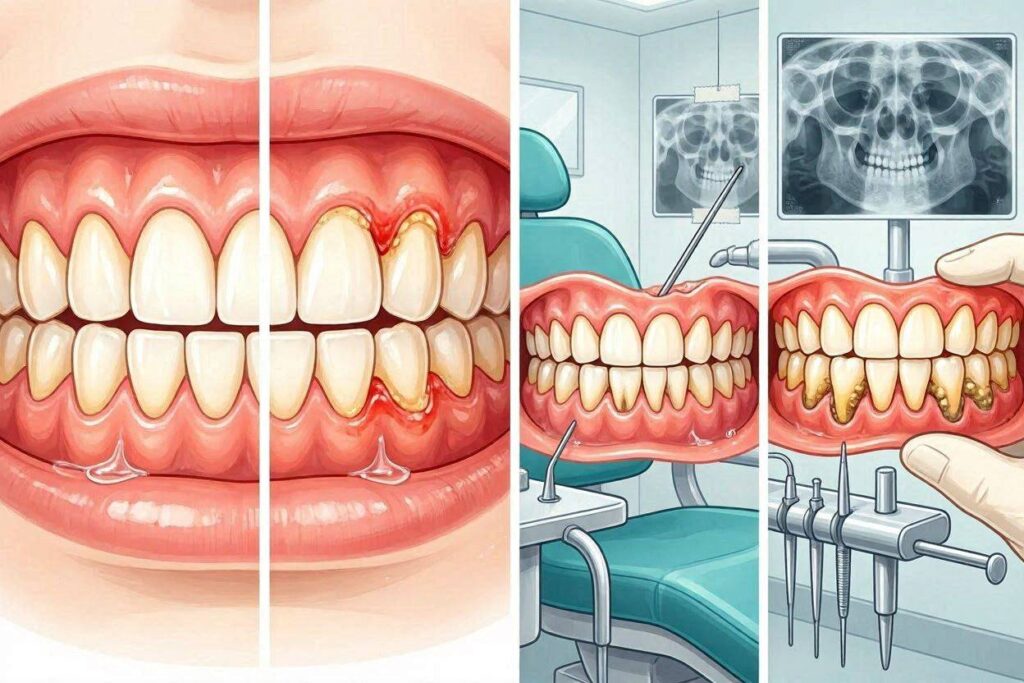
Gingivitis is the mildest and earliest form of gum disease. At this point, the damage is superficial. The battle rages only in the soft gum tissue. The deep supporting structures—the periodontal ligament and bone—remain untouched.
You can identify gingivitis by red, swollen gums that bleed easily during brushing or flossing. You might also notice bad breath that does not go away. The crucial fact about the speed of gingivitis is this: it can develop in as little as 24 to 72 hours after stopping oral hygiene. If you skip brushing entirely, bacterial colonies multiply exponentially. Inflammation begins almost immediately.
However, the key word here is “reversible.” Because the bone is not yet involved, you can completely reverse gingivitis. A professional cleaning and a return to diligent home care can restore health within about one to two weeks. The speed of healing is almost as fast as the speed of onset. If you catch it here, you stop the clock entirely.
The Transition to Periodontitis: The Point of No Return
If you ignore gingivitis, the seal between the gum and the tooth weakens. The gum pulls away, forming a pocket. This space traps more food and bacteria. As the infection moves deeper, it crosses an invisible line. This is the shift from gingivitis to periodontitis.
In periodontitis, the destruction is irreversible. The bacterial toxins and your body’s immune response begin to eat away the bone. You cannot grow this bone back naturally. The speed at which this transition happens varies wildly. For a perfectly healthy person with no risk factors, it might take months or years of neglect. For a smoker or a diabetic, the breakdown can accelerate dramatically.
A Detailed Look at the Stages and Their Speed
To understand how fast gum disease can progress, we need to map out its specific stages. Dentists classify periodontal disease by severity and complexity. The speed is rarely linear. A person can stay in an early stage for a decade, then rapidly crash into an advanced stage after a stressful life event, an illness, or a change in habits.
Here is a breakdown of the recognized stages according to modern periodontal classification, focusing on the realistic timeline of each.
Stage 1: Initial Periodontitis (The Silent Drift)
At this stage, the damage has just begun. The bone loss is very slight, usually less than 15% of the tooth root length. Probing depths, which is how deep the dentist’s measuring tool goes under the gum, are around 4 to 5 millimeters. A healthy pocket is 1 to 3 millimeters deep.
Realistic Speed: The shift from healthy gums to Stage 1 periodontitis does not happen overnight. It generally requires a sustained period of neglect. Studies suggest that without any oral hygiene, a susceptible person can enter Stage 1 in as little as 3 to 6 months. However, for a person brushing once a day but never flossing, this stage might take several years to arrive.
You likely will not feel pain here. The bleeding might be more consistent. Your breath might start to change permanently due to the deeper bacteria colonies. Because the signs are subtle, this stage often persists for years without a diagnosis. The speed of progression is slow but steady, like rust forming on a metal beam.
Stage 2: Moderate Periodontitis (The Acceleration Zone)
In Stage 2, the destruction is measurable. Bone loss extends to 15% to 30% of the root. Pocket depths reach 5 to 7 millimeters. At this depth, a toothbrush and floss cannot reach the bottom of the pocket. The bacteria at the base of the pocket become anaerobic—they thrive without oxygen and are highly toxic.
Realistic Speed: This is where the disease can accelerate. The environment inside the deep pocket is primed for aggressive bacterial growth. The speed of progression here is often driven by risk factors. A non-smoker with good genetics might linger in moderate periodontitis for 5 to 10 years without losing teeth. A heavy smoker can burn through this stage in 12 to 24 months, moving rapidly toward severe disease.
You might notice gum recession, making teeth look longer. The “black triangles”—spaces between teeth where gum tissue used to fill—appear. Teeth may start to feel slightly loose. Pus can be expressed from the gums. The destructive process speeds up geometrically because the deep pockets provide a greater surface area for bacterial toxins.
Stage 3: Severe Periodontitis with Potential Tooth Loss (The Cascade)
This is a critical zone. Bone loss extends to the middle third of the root or beyond. Pocket depths are 7 millimeters or deeper. The damage has destroyed more than 30% of the supporting bone.
Realistic Speed: The speed here can be catastrophic. Teeth that have held on for years can suddenly become extremely mobile. A phenomenon known as “bursts of activity” occurs. The disease is not always continuous. A tooth can be stable for months, then a pocket ulcerates, a small abscess forms, and bone loss accelerates in a matter of days or weeks. You can lose a significant amount of bone around a specific tooth during a single episode of acute inflammation.
The timeline for tooth loss varies. Once a tooth loses 50% of its bone support, the prognosis is hopeless. A patient ignoring Stage 3 periodontitis can go from functional teeth to dentures within 2 to 5 years. In aggressive forms, this timeline shrinks to less than a year.
Stage 4: Advanced Periodontitis (The Final Collapse)
Stage 4 is defined not just by bone loss, but by the secondary consequences. You have lost multiple teeth. The remaining teeth are hyper-mobile, drifting, or flaring out. The bite collapses. Chewing becomes difficult because the teeth no longer have a stable foundation.
Realistic Speed: If the disease reaches Stage 4 without intervention, the pace of total dental breakdown is rapid. Large segments of the jawbone resorb. A complete loss of the dentition can occur over the final 1 to 2 years. The body eventually expels teeth that have lost too much bone, much like ejecting a splinter.
Factors That Slam the Accelerator
The question “how fast can gum disease progress” has no universal answer because human biology varies so much. The difference between a slow crawl and a rapid sprint lies in your individual risk factors. These factors do not just add to the risk; they multiply the speed of destruction.
The Smoking Gun
Smoking is the single most powerful accelerator of gum disease. If you smoke, your timeline is fundamentally different from that of a non-smoker. Nicotine constricts blood vessels. This tricks you into thinking your gums are healthy because they do not bleed much. Meanwhile, the lack of blood flow chokes the gum tissue, reducing its ability to fight infection and heal.
How fast does it progress for smokers?
- A smoker can develop 3 to 6 times more bone loss than a non-smoker over the same period.
- The healing response is completely paralyzed. A non-smoker might reverse gingivitis in a week. A smoker’s gums might remain stubbornly inflamed.
- A 30-year-old smoker can have the bone levels of a 60-year-old non-smoker.
“I have seen patients who smoked a pack a day since their teens present with severe bone loss by age 25. It mimics an aggressive form of the disease that usually takes decades to develop.”
The Diabetes Connection
Uncontrolled blood sugar acts like jet fuel for oral bacteria. High glucose levels seep into the saliva and gingival crevicular fluid (the fluid inside the gum pockets). Bacteria feast on this sugar and multiply faster.
This is a two-way street. Severe gum disease also makes it harder to control blood sugar. The inflammatory cytokines produced in the gums spill into the bloodstream and cause insulin resistance.
The speed factor:
A well-controlled diabetic can maintain a slow progression rate similar to a healthy person. A poorly controlled diabetic with an HbA1c over 9% can progress from gingivitis to severe periodontitis in months rather than years. The risk of developing periodontitis increases by 2 to 3 times. The speed of bone loss can double.
Aggressive Periodontitis (Grade C)
This form of disease defies the slow-and-steady model. Formerly known as “juvenile periodontitis,” this type breaks the rules. It happens to young people, often under 30. The amount of plaque and tartar present seems out of proportion to the severe destruction.
Unbelievable speed:
In aggressive periodontitis, the rate of bone loss can be 3 to 4 times faster than in chronic cases. First molars and incisors can lose half their bone support in 6 to 12 months. This is a genetic-immune dysfunction. Specific bacteria, like Aggregatibacter actinomycetemcomitans (Aa), infiltrate the tissues and release potent toxins that kill white blood cells. The body cannot control the infection. Without immediate, heavy-duty antibiotic therapy combined with deep cleaning, these patients can lose teeth in their twenties.
The Hormonal Storm
Pregnancy, puberty, and menopause change the blood flow and bacterial susceptibility of the gums. Progesterone and estrogen spikes increase vascular permeability. This means bacteria and their toxins can sneak into the gum tissue more easily.
Pregnancy Gingivitis to Pyogenic Granuloma:
A “pregnancy tumor,” a bright red, bleeding overgrowth of gum tissue, can balloon from nothing to a large mass in a matter of weeks. While usually benign and resolving after delivery, the underlying gum disease does not resolve. If a pregnant person has untreated periodontitis, the breakdown continues silently.
The Stress and Medication Brake Failure
Chronic stress raises cortisol levels. Cortisol suppresses the immune system. Periodontal disease is an immune-mediated breakdown. When cortisol dampens the immune response, bacteria win.
Medications can also hit the gas pedal. Hundreds of drugs cause xerostomia, or dry mouth. Saliva is the mouth’s natural rinse. It contains enzymes and antibodies that control bacterial populations. Without saliva, plaque thickens faster. Calcium channel blockers, anti-seizure drugs, and immunosuppressants can cause gingival hyperplasia. The gums swell massively, creating false pockets that trap debris and speed up the transition to periodontitis.
Comparative Table: Realistic Progression Timelines
This table illustrates estimated timelines for a person who completely stops removing plaque, based on generalized clinical observations. These are not guarantees but represent average patterns of destruction.
| Risk Profile | Healthy to Gingivitis | Gingivitis to Stage 1 | Stage 1 to Stage 3 | Overall Speed Assessment |
|---|---|---|---|---|
| Healthy, Non-Smoker (Low Risk) | 10-21 days | 3-5 years | 10-20 years | Very Slow. Disease may never progress beyond mild bone loss with minimal intervention. |
| Moderate Risk (Inconsistent Hygiene) | 5-10 days | 1-3 years | 4-8 years | Moderate. Moves in fits and starts. Deep pockets form gradually. |
| Heavy Smoker (High Risk) | 2-5 days (masked bleeding) | 3-6 months | 1-3 years | Extremely Fast. Destruction is hidden. Bone loss is chemical and biological. |
| Uncontrolled Diabetes | 3-7 days | 6-12 months | 2-4 years | Fast. Inflammatory response is heightened; healing is impaired. |
| Aggressive/Genetic Form | 24 hours | 1-3 months | 6-18 months | Explosive. This is an immune-system meltdown, not just a hygiene issue. |
| Pregnancy (Temporary Effect) | 48 hours | N/A (Deepening of existing pockets) | N/A | Accelerated surface inflammation, not necessarily permanent bone loss if treated. |
The Hourglass of Healing: How Fast Can We Stop It?
While the progression down feels fast, the stabilization and healing process moves at a different pace. Understanding the biological time required to stop gum disease is just as important as knowing how fast it advances.
The 24-Hour Cycle of Plaque
Plaque biofilm reaches a critical mass capable of causing inflammation within 24 hours. This is why once-a-day brushing is the bare minimum for survival, not optimization. Every time you brush and floss, you reset the clock. You set the bacterial army back to zero. If you do a perfect job, they need a full day to reorganize enough to cause harm.
This explains why people who brush perfectly in the morning but not at night still get disease. The bacteria have 24 hours of uninterrupted growth time. If you skip one day, gingivitis ignites. If you skip a week, the inflammation becomes a chronic, festering issue.
The Six-Week Rule of Deep Cleaning
Non-surgical treatment, called scaling and root planing, physically removes tartar and bacterial toxins. After this deep cleaning, the gum tissue needs time to heal. You do not wake up the next day with tight gums.
The initial healing takes about 1 to 2 weeks. The gum swelling reduces dramatically as the toxic load drops. The real test comes at the 6-week re-evaluation. It takes approximately 6 weeks for the collagen fibers in the gum pocket to attempt to reattach to the clean root surface. This is a biological law; you cannot speed it up. During this time, home care must be immaculate. If plaque builds up again during these 6 weeks, the healing stops.
The Nine-Month Bone Lag
Soft tissue heals in weeks. Bone takes months. After a deep cleaning or periodontal surgery, the inflammation resolves. But the bone does not instantly regrow. Radiographic evidence of bone healing usually lags by 6 to 9 months. This lag time is crucial. If the disease was progressing fast, you might still feel anxious because the X-rays look the same at the 3-month check-up. True stabilization of bone destruction requires a long-term view.
Real Patient Scenarios: The Clock in Action
Abstract timelines help, but real-world stories illuminate the drastic variations in speed. These composite profiles represent typical clinical realities.
Scenario A: The Slow Burn (Chronic Periodontitis)
Robert is a 55-year-old accountant. He has never smoked. He brushes twice a day but has not flossed in 20 years. He drinks coffee and has dry mouth from allergy medication. He visits the dentist for the first time in a decade because his teeth “look longer.”
Timeline: 20 years of slow progression.
Diagnosis: Generalized moderate periodontitis with 4-6mm pockets and 20% bone loss.
Speed Assessment: His disease moved at a glacial pace. Because he brushed, he removed the surface layer of plaque, limiting the fury of the attack. His body mounted a low-grade, chronic defense. He lost bone, but slowly. His teeth are not loose. The speed was slow enough that his body partially compensated, forming dense, fibrotic gum tissue even as the pockets deepened.
Scenario B: The Cliff Diver (Aggressive Periodontitis)
Sarah is a 22-year-old college student. She is otherwise healthy but notices her front bottom teeth are shifting. Her gums bleed little. There is very little tartar visible. Yet, X-rays reveal 60% bone loss on her lower incisors and first molars.
Timeline: 6 to 18 months of catastrophic loss.
Speed Assessment: This is a sprint. The specific bacteria and her genetic immune response caused a hyper-aggressive breakdown. The speed is so fast that the body cannot form deep pockets in the classic way; instead, the tissue and bone just recede together. Without immediate surgical intervention, she will lose her front teeth within the year.
Scenario C: The Quicksand (Smoker’s Hidden Decay)
Mike is 38. He smokes a pack and a half daily. His gums look pale pink and fibrotic. They do not bleed. He thinks they are perfectly healthy. He visits for a broken tooth. The X-ray reveals extensive bone loss everywhere, with 9mm pockets on the back teeth.
Timeline: 10 years of smoking-induced decay.
Speed Assessment: The speed was constant and invisible. The nicotine strangled the blood vessels, hiding the red flag of bleeding. The disease was destroying his jaw while his gums looked “healthy.” His disease progression was twice as fast as a non-smoker’s, but without any warning signals.
Warning Signs: Reading the Speedometer
Since the disease is often painless until the very end, you must rely on visual and sensory clues to gauge how active your disease is. These signs indicate that the destructive phase is accelerating.
The Color and Texture Shift
Healthy gums are coral pink and scalloped around the teeth, with a texture like an orange peel (stippled). Diseased gums are red, smooth, shiny, and puffy. A shift from slightly pink to deep beefy red within a few days signals an active flare-up. A glossy shine on the gum indicates swelling and fluid accumulation—the destruction engine is running hot.
The Bleeding Index
Bleeding upon probing is the single most reliable sign of active disease. A non-bleeding site is stable. A bleeding site is actively losing attachment. If your floss or toothbrush consistently draws blood in the same spot, the disease is progressing in that specific pocket right now. If the bleeding stops after a week of diligent care, you have halted the process in that area.
The Taste and Smell
Volatile sulfur compounds are the gases released by bacteria digesting protein. A constant bad taste in your mouth, a film on your teeth in the morning that tastes foul, or breath that does not improve with brushing indicates high bacterial load. This metabolic activity is the engine of rapid progression.
Tooth Migration and Bite Changes
This is a late-stage, high-speed warning. If you wake up and a tooth feels higher than it was yesterday, or if spaces appear between teeth, the supporting bone is crumbling rapidly. This is not a slow drift; this is the active phase of tooth exfoliation.
Medical Conditions That Warp Time
Gum disease does not exist in a vacuum. It mirrors the state of your total body health. Certain systemic conditions compress the timeline of gum destruction into a fraction of what it should be.
The Neutropenia Paradox
People with low white blood cell counts, whether from chemotherapy, leukemia, or genetic conditions, cannot fight the oral bacteria at all. In a neutropenic patient, bacteria can invade the bloodstream directly through the gum lining. The gum tissue can break down in hours. Necrotizing ulcerative gingivitis, famously called “trench mouth,” is a painful, lightning-fast infection that destroys the interdental papillae (the gum between teeth) in 24 to 48 hours. Punched-out, crater-like ulcers appear. The speed is shocking and constitutes a dental emergency.
The Osteoporosis Link
We often worry about hip and spine density, but jawbone density matters too. Post-menopausal women with osteoporosis have a systemic skeletal weakness. The bacteria that cause gum disease also release compounds that stimulate osteoclasts—cells that eat bone. In a jaw already thinned by osteoporosis, this localized destruction happens faster. The bone is weaker to begin with, so the toxins eat through it faster. The speed of periodontal bone loss can be 1.5 times faster in osteoporotic women.
The Bacterial Hit List: Pathogens That Dictate Speed
Not all plaque is equal. The specific bacteria colonizing your pockets determine the “virulence” of the disease. This is why one person can have heavy tartar and no bone loss, while another has clean teeth and aggressive bone loss.
The Red Complex Trio
Microbiologists identify three bacteria as the “Red Complex”—Porphyromonas gingivalis, Treponema denticola, and Tannerella forsythia. These three usually appear together in the deepest, most active sites of periodontitis. Porphyromonas gingivalis is a master manipulator. It can hijack the immune system, turning off protective pathways while leaving destructive ones on. When this trio dominates the pocket, the progression is rapid. It disrupts the balance between bone formation and bone destruction.
The Aggressive Invader
Aggregatibacter actinomycetemcomitans produces leukotoxin. This toxin specifically targets and kills human white blood cells. By killing the very cells meant to fight it, this bacterium allows the disease to spread with terrifying speed. If a lab test shows high levels of this pathogen, the “slow” timeline goes out the window. We are now in the domain of aggressive, rapid periodontitis.
Can You Stop It at Full Speed? The Concept of Disease Arrest
When patients learn about the speed of gum disease, the immediate fear is paralysis. “If it moves this fast, why bother?” The truth is, periodontal disease is one of the most treatable chronic conditions. The word “cure” is tricky, but “arrest” is absolutely achievable.
The Stable Pocket
The goal of treatment is to convert an active, bleeding, deep pocket into a stable, non-bleeding, shallow sulcus. A 6mm pocket that bleeds is a wound actively getting deeper. A 4mm pocket that does not bleed is a healed scar. The speed stops when the bleeding stops. This can happen within days of a deep cleaning. Maintaining that stability is the lifelong task.
The Firm Tooth
Mobility is a direct result of inflammation. Once the bacterial load is reduced, the ligament fibers around the tooth can tighten up. A tooth that was Grade 2 mobile (wiggling back and forth) can firm up to a Grade 1 or Grade 0 within a few months. This is not bone growing back; this is the inflammation in the ligament draining. The tooth tightens in its socket, and the feeling of a “solid bite” returns. This signals that the rapid destruction phase is over.
Anatomical Dangers: Why Some Teeth Lose Faster
The shape of your roots and the position of your teeth can create microenvironments where gum disease moves at hyperspeed.
Furcation Invasions
The furcation is the place on a multi-rooted tooth where the roots split. Think of a pair of pants. The crotch of the pants is the furcation. This area is incredibly delicate. Once bone loss reaches this zone, a hidden space opens between the roots. This space is impossible to clean with a toothbrush or floss. The inside of the furcation has microscopic grooves and ridges that harbor bacteria. The speed of bone loss often accelerates exponentially once the furcation is involved. A molar can lose 50% of its support in its furcation while the outer roots still have decent bone.
Proximity and Food Impaction
Teeth that are tilted or spaced strangely can trap food. A piece of meat string stuck between two teeth acts like a localized infection grenade. The pressure pushes bacteria deep into the gum. A healthy 3mm pocket can turn into a painful 8mm abscess in 24 to 48 hours solely due to an impacted foreign body. This is why dentists always recommend flossing. It prevents the sudden, rapid descent of an otherwise stable site.
The Mouth-Body Speed Connection
Your mouth is not an isolated aquarium. It connects to the rest of your vascular system. The speed of gum disease has direct, time-sensitive consequences for your heart, brain, and blood sugar.
The Acute Inflammation Window
Chewing on loose, infected teeth pumps bacteria into the bloodstream. This is bacteremia. For a patient with a heart murmur or prosthetic heart valve, this is life-threateningly dangerous within seconds. For the average person, repetitive bacteremia causes the liver to produce C-reactive protein (CRP), a marker of systemic inflammation. High CRP levels thicken the blood and damage artery walls. The faster the gum disease progresses, the higher the bacterial load in the blood, and the greater the systemic inflammatory burden. The speed of gum disease directly correlates with the risk of a cardiovascular event in the following months.
The Pre-Term Birth Clock
The timeline is stark for pregnant women. Active periodontitis increases the risk of pre-term low-birth-weight babies. The theory is that inflammatory cytokines from the gums reach the placenta, triggering early labor. The destructive enzymes (prostaglandins) that eat jawbone also ripen the cervix. The clock is not just about saving teeth; it is about carrying a baby to term.
Nutrition: The Slow-Down Strategy
You cannot floss away a bad diet. The speed of gum destruction is heavily influenced by what you eat. Bacteria love sugar, but the real issue is the lack of building blocks for repair.
The Vitamin C Collapse
Vitamin C is essential for collagen cross-linking. Collagen is the main structural protein of gums. Without Vitamin C, the gums fall apart. Scurvy, the severe deficiency of Vitamin C, causes teeth to fall out of otherwise healthy bone. In a modern context, a subclinical deficiency slows down gum healing to a crawl and accelerates breakdown. Smokers need 3 times as much Vitamin C as non-smokers because each cigarette destroys vitamin C in the tissues. This is a biochemical reason that gum disease moves faster in smokers.
The Bone Matrix Diet
Calcium and Vitamin D are not just for the skeleton; they are for the alveolar bone. Teeth exist in a constant state of calcium flux. If systemic calcium is low, the body leeches minerals from the jawbone to supply the bloodstream. A jaw that is already under attack from bacteria crumbles much faster when the body is also stealing its minerals. A diet high in refined carbs fuels the bacteria; a diet deficient in micronutrients weakens the host defense. This combination creates a perfect storm for rapid bone loss.
The Immaculate Oral Hygiene Standard
“The only way to slow gum disease progression to zero is to keep your teeth pathologically clean.” This quote sums up the preventive philosophy. You need to physically disrupt the biofilm every single day.
The Interdental Imperative
A toothbrush cleans the tops, fronts, and backs of teeth. It does not clean between teeth. The bacteria between teeth are the ones that cause aggressive bone loss. You must use string floss, interdental brushes, or water flossers. Water flossers are especially good for deep pockets. A stream of water with antimicrobial solution can penetrate 4 to 7mm under the gum. It irrigates out the volatile sulfur compounds and paralyzes the bacteria. This takes the “fuel” away from the rapid progression engine.
The Saliva Test
Saliva is your anti-speed defense. If you have dry mouth, plaque builds up 2 to 3 times faster. You must counteract this. Stay hydrated. Chew xylitol gum. Xylitol prevents bacteria from sticking together and forming thick biofilms. If you use a dry-mouth gel at night, you slow down the overnight bacterial explosion.
Periodontal Charting: Deciphering the Numbers
When the dentist calls out numbers like “3… 2… 4… 6… 8,” they are measuring the depth of your gum pockets. This is periodontal charting. It is a real-time map of the speed of your past destruction and your current risk.
- 1-3mm: Healthy. Tight seal. No speed of disease here.
- 4mm: The “watch zone.” This is a sign that the inflammatory front is advancing. It is early gingivitis or the very start of periodontitis. The clock is ticking.
- 5-6mm: Active disease. These pockets are the gateway to bone loss. They are actively bleeding and toxic. Speed of progression is high.
- 7mm and up: Critical. These pockets are deep wounds. They represent severe, rapid bone loss. The tooth’s survival is in immediate jeopardy.
The presence of bleeding on probing and suppuration (pus) at any depth automatically upgrades the urgency to “active.”
The Recession Reality: Gums Dropping Away
Sometimes, gum disease does not manifest as a deep pocket. It manifests as recession. The gum margin drops down the root. This exposes the darker, yellower cementum of the root.
How fast do gums recede?
Traumatic brushing with a hard toothbrush can strip gums away mechanically in months. In periodontal disease, the tissue thins and drops away as the underlying bone resorbs. You might lose 1-2mm of gum height in a year of moderate inflammation. Exposed roots are not just ugly; they are defenseless. Cementum is softer than enamel and decays easily. Root cavities form quickly and are close to the nerve, causing sharp, lightning-bolt pain.
The Maintenance Interval: The Three-Month Law
Once you have periodontitis, you have it for life. The clock never stops. The pathogenic bacteria recolonize the deep pockets to full disease-causing maturity in approximately 90 days.
This is why the standard recall for periodontal maintenance is every 3 months. If you wait 6 months, the bacterial load reaches the threshold where toxin production begins destroying bone again. If you wait a year, you essentially have a brand-new, aggressive infection layered on top of the old scar tissue. The three-month interval is the biological safety net that catches the disease before it can pick up speed again.
Home Care Technology: Slowing the Clock
Modern technology gives you tools that previous generations did not have to slow the disease progression.
The Powered Toothbrush Advantage
Oscillating-rotating or sonic brushes disrupt plaque biofilm farther beyond the bristle tip than manual brushes. This non-contact removal is critical for inflamed gums that are painful to touch. A sonic toothbrush can drive fluid dynamics into the entry of the pocket, disorganizing the bacteria.
The Mouthwash Debate
Cosmetic mouthwash does nothing for speed. Therapeutic mouthwash with chlorhexidine is a nuclear weapon. However, it cannot be used forever. For rapid progression cases, a dentist might prescribe a 2-week chlorhexidine cycle to knock down the bacterial load. For long-term slowing, diluted hydrogen peroxide or essential oil rinses can reduce bacterial load by 20-30%, buying precious time.
When It Progresses Despite Perfect Hygiene
This is the most psychologically devastating scenario. You brush 3 times a day, floss religiously, and yet the pockets get deeper. This is refractory periodontitis.
Why does the speed not stop?
- Tissue Invasion: Bacteria like P. gingivalis do not just float in the pocket; they invade the gum tissue cells and the dentinal tubules. You cannot brush them away because they are hiding inside your gum tissue.
- Host Response: Your own immune system is destroying the bone. Sometimes, the inflammation is so dysregulated that even if you kill 90% of the bacteria, the 10% remaining still trigger a massive, bone-eating cytokine storm. Controlling the speed here often requires host-modulation therapy, like low-dose doxycycline, which chemically calms the gum-eating enzymes rather than killing bacteria.
The Reality of “Watch and Wait”
A common phrase in dentistry is “We’ll just watch that pocket.” This means the dentist sees a depth of 4 or 5mm but no bleeding or bone loss on the X-ray. You are in a state of equilibrium.
How long can you watch? If the pocket does not bleed and does not deepen, you can watch it for years. A “stagnant” 5mm pocket is a scar. An “active” 5mm pocket is a ticking time bomb. The switch from stagnant to active can happen in a single missed week of flossing when combined with a cold or flu that stresses the immune system. The speed of change requires vigilance.
The Future: Genetic Testing and Speed Prediction
Salivary diagnostics now can measure the specific DNA of the bacteria in your mouth. They can also test your genetic predisposition for rapid destruction (the IL-1 gene). If you have the genetic marker and the high-risk bacteria, your predicted speed of progression is severe. In these cases, the standard “wait and see” approach fails. These patients need aggressive pre-emptive care. They need to reduce pocket depth surgically before the rapid destruction phase starts.
Summary Table: The Rapidity of Gum Disease
| Phase | Time to Develop (Neglect) | Time to Arrest/Heal | Key Sign |
|---|---|---|---|
| Biofilm Maturation | 24 hours | 12-24 hours after brushing | Fuzzy feeling on teeth. |
| Gingivitis | 3-21 days | 1-2 weeks | Bleeding upon brushing. Redness. |
| Early Periodontitis | 3-6 months | 6 weeks (tissue); 9 months (bone) | Persistent bad breath. 4mm pockets. |
| Moderate Periodontitis | 1-3 years (smokers); 5+ years (non-smokers) | Stability possible; gum recession permanent | Visible gum recession. Deep pockets. |
| Severe/Tooth Loss | <1 year (aggressive); 3-5 years (chronic) | Requires surgery; often extraction | Loose teeth. Pus. Painless drifting. |
Putting the Brakes On: A Practical Action Plan
You do not have to be a victim of speed. Here is a tactical guide to slamming the brakes on gum disease, regardless of how fast it has been moving.
Day 1: The Reset
- Purchase an electric sonic toothbrush and a pack of interdental brushes.
- Flush your mouth with an essential oil antiseptic rinse.
- Schedule a periodontal evaluation. You need X-rays and a full probing chart. Without data, you are flying blind regarding the speed of your disease.
Week 1: The Professional Blitz
- Undergo scaling and root planing if necessary. This removes the calculus that acts as a bacterial scaffolding.
- Anesthesia is your friend. The deeper the pocket, the more you need it to ensure the clinician can scrape the bottom aggressively.
- Begin a strict 2-minute brushing timer.
Month 1 to 3: The Biological Window
- This is the critical healing phase. Do not skip a single night.
- Salt water rinses 3 times a day reduce inflammation chemically.
- Avoid sugary drinks completely. You are starving the bacteria.
Month 3: The Evaluation
- The periodontist re-probes your gums. Pocket depths should shrink. Bleeding should be nearly gone.
- If deep pockets persist, the speed of your disease required a mechanical fix. Surgery to lift the gum and physically clean the roots might be the only way to stop the clock.
Year 1 and Beyond: The Vigilant Maintenance
- Attend 3-month cleanings. This interval is non-negotiable.
- Check blood sugar and Vitamin D levels annually.
- If you smoke, quit. This single act slows the speed of the disease more than any mouthwash ever could.
Resources: Finding Support
American Academy of Periodontology (AAP)
Visit perio.org for patient education tools and a “Find a Periodontist” locator. If your disease is moving fast, a board-certified periodontist is the specialist trained to stop it.
Conclusion
The speed of gum disease ranges from a slow, decades-long erosion to a catastrophic, months-long meltdown, dictated primarily by your oral hygiene, smoking status, and genetics. The disease moves silently through gingivitis into irreversible bone loss, often accelerating dramatically once deep pockets and specific pathogenic bacteria take hold. You can halt this destruction by eliminating bleeding, maintaining professional three-month cleanings, and understanding that a stable pocket is a win. The moment you notice a tooth feeling different is the moment you must act, because the clock never stops ticking.
Disclaimer
This article provides educational information only and does not constitute medical or dental advice. Individual cases of gum disease vary drastically. Do not ignore loose teeth, bleeding gums, or persistent bad breath. Seek immediate evaluation from a licensed dental professional or periodontist for an accurate diagnosis and personalized treatment plan.
Frequently Asked Questions
Can gum disease progress in a few days?
Yes. While chronic bone loss takes months, acute flare-ups like necrotizing ulcerative gingivitis can destroy gum tissue in 24 to 48 hours. Impacted food can also cause an abscess and rapid bone loss in a localized area within days.
How long can I ignore bleeding gums?
You should never ignore bleeding gums. It is the body’s check engine light. Waiting 2 to 4 weeks to improve hygiene is reasonable for suspected gingivitis. If bleeding persists beyond this, the disease may have progressed under the gum line, and you need a professional exam.
Is aggressive gum disease reversible?
Gingivitis is fully reversible. Once bone loss occurs (periodontitis), the damage is permanent. However, you can arrest the disease, shrink the pockets, and stop all future bone loss. You can keep your teeth for life if the disease is arrested, even with a history of rapid progression.
Why did my tooth suddenly become loose if it felt fine yesterday?
This is typical of “burst progression.” The supporting bone was likely already severely damaged, but inflammation in the periodontal ligament suddenly spiked, causing the final destabilizing shift. It feels sudden, but it is usually the final chapter of a long, silent story.
Additional Resource
For deeper reading on the systemic effects and latest research, consult the Centers for Disease Control and Prevention (CDC) page on Periodontal Disease: https://www.cdc.gov/oralhealth/conditions/periodontal-disease.html