How Many Arches In Dental Implants
Imagine walking into a dental office, frustrated with loose dentures or failing teeth. You have heard about dental implants and how they can change lives. But then the dentist starts using words like “arch,” “full-arch restoration,” or “All-on-4.” Your mind goes blank. Suddenly, a simple question pops into your head, one that feels almost too basic to ask: “Exactly how many arches are in my mouth, and what does that mean for implants?”
This question is far more common than you might think. It is also the foundation of understanding almost every major treatment plan for full-mouth reconstruction. Without a clear answer, the entire process can seem like a confusing maze of jargon and price tags.
In this article, we will explore this topic from the ground up. We will break down the anatomy, the terminology, and the real-world treatment options. You will learn what a dental arch is, why the number of arches matters, and how different implant solutions—from single arch to quad arch treatments—can restore your smile. By the end, you will have a clear, confident understanding of exactly what you need to know to make informed decisions about your oral health.
Understanding the Basics of a Dental Arch
Before we dive into the complex world of implant surgery, we need a solid definition. The term “dental arch” is used constantly, but it is rarely explained in a simple way. Let’s fix that right now.
What Is a Dental Arch? A Clear Definition
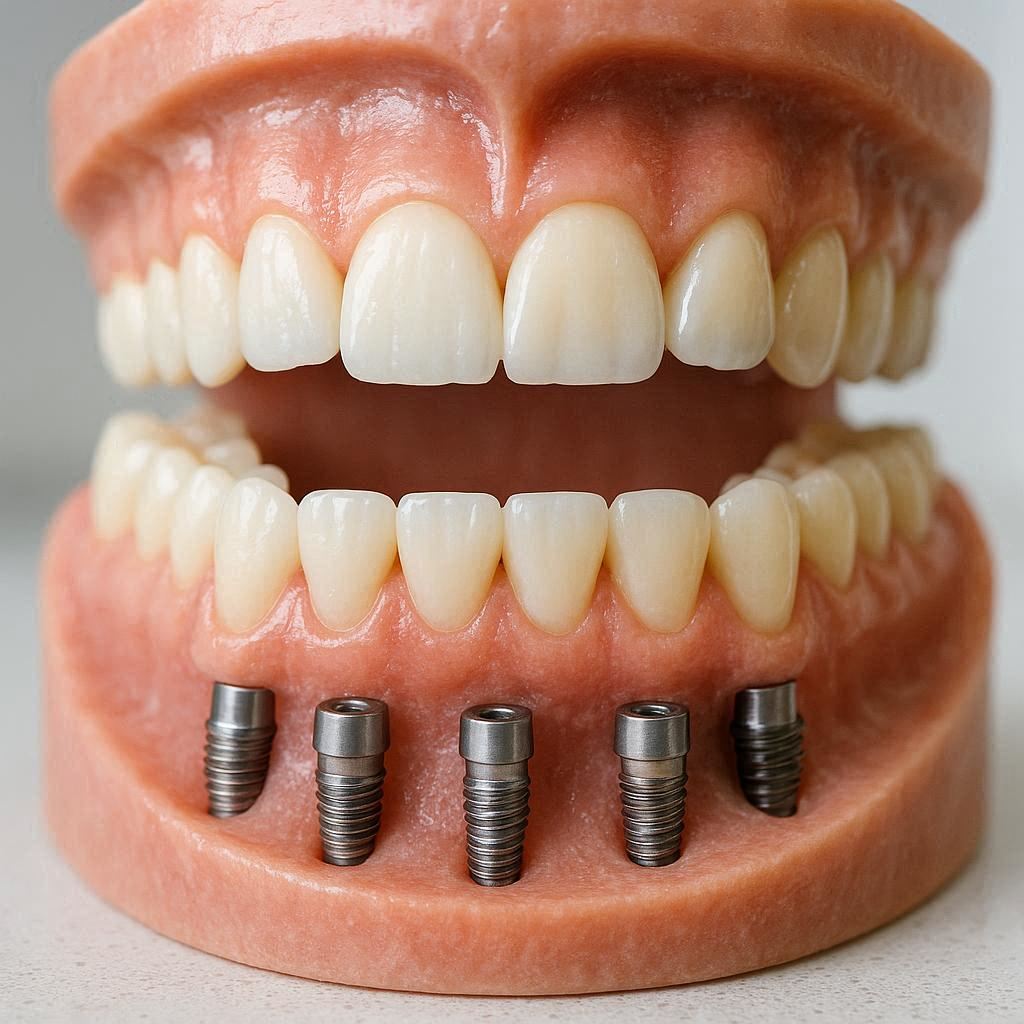
A dental arch is the curved, horseshoe-shaped structure formed by the teeth in either your upper or lower jaw. Think of it as the architectural foundation of your smile. The word “arch” perfectly describes the curved line that your teeth follow, from one end of your jaw to the other.
In a healthy adult mouth, you have two distinct dental arches. The upper arch, which dentists call the maxillary arch, sits in the maxilla bone. This arch is fixed and does not move. The lower arch, known as the mandibular arch, sits in the mandible. This is the one that moves up and down when you talk and chew.
Each arch is a complete set of teeth designed to work in harmony with the other. When you bite down, the two arches come together in a precise relationship that dentists call occlusion. A problem in one arch almost always affects the other.
The Two Arches in a Natural Mouth
Let’s humanize this a bit. Open your mouth right now and look in a mirror if you can. The row of teeth you see on top is your upper arch. The row on the bottom is your lower arch. That is it. You have exactly two arches.
A complete adult dentition has 16 teeth in each arch, for a total of 32 teeth. This includes your incisors at the front, canines at the corners, premolars, and molars at the back. Many people have had their wisdom teeth removed, bringing the count down to 14 teeth per arch, or 28 total.
The key point is this: when we talk about “how many arches” in the context of dental implants, we are almost always referring to the upper arch, the lower arch, or both. It is a deceptively simple question that opens the door to a world of treatment possibilities.
The Fundamental Answer: How Many Arches In Dental Implants?
Now we arrive at the heart of the matter. If you searched for this question online, you probably found vague or overly technical answers. Let’s give a direct, human answer right here.
In human anatomy, you always have two dental arches. This does not change, regardless of how many teeth you have lost. You do not grow new arches. The bone structure that forms the arch remains for your entire life, even if it shrinks over time after tooth loss.
However, in the world of dental implant treatment, the term “arch” takes on a second meaning. It refers to a complete prosthetic set of teeth that replaces all the teeth in one jaw. So, a “full-arch restoration” is a single, horseshoe-shaped bridge of false teeth fixed onto dental implants.
Therefore, you could receive a treatment that dentists call:
- A single-arch restoration (upper or lower only).
- A double-arch restoration (both upper and lower).
- In rare, complex cases, a “quad arch” treatment, which is a specific advanced approach that divides each jaw into two segments.
Let’s break down each scenario clearly, so you know exactly what you might be paying for and living with.
Single Arch Restoration: Treating One Jaw at a Time
For many patients, one arch is in much worse condition than the other. The lower teeth might be completely gone, while the upper teeth are still mostly salvageable. Or, the upper teeth are failing, but the lower teeth are healthy. In these cases, a single arch restoration is the perfect solution.
When Is a Single Arch Needed?
John, a hypothetical patient, came to a clinic with a full upper denture that he hated. It rocked back and forth, made him gag, and stopped him from eating steak. His lower teeth, however, were his natural teeth and in decent condition after a few fillings.
John did not need a full mouth of implants. He only needed one arch treated. This is an incredibly common scenario. Gum disease often affects one jaw more severely. An accident might damage only the upper teeth. Financial considerations may also lead a patient to treat the more urgent arch first and save up for the other later.
A single arch restoration replaces all teeth on the chosen jaw using a set of dental implants as anchors. The number of implants used can vary, typically between 4 and 8, depending on the technique and the patient’s jawbone density.
The Patient Experience with a Single Arch
The process for a single arch is very focused. The dentist removes any remaining failing teeth from that jaw. Then, they place the implants. After a healing period, a custom-made, fixed bridge is screwed onto those implants.
The most transformative part of the experience is that the opposite arch remains untouched if it is healthy. The new implant bridge will be carefully designed to fit perfectly against the natural teeth on the other arch. This preserves your natural bite relationship and maintains the sensation of having some real teeth, which many patients say feels very grounding and comfortable.
Here is a quick breakdown of a typical single-arch timeline:
| Stage | Action | Typical Duration |
|---|---|---|
| 1 | Consultation, 3D imaging, and treatment planning | 1-2 weeks |
| 2 | Removal of hopeless teeth and implant placement surgery | 1 day |
| 3 | Temporary fixed bridge attached to implants | Same day or shortly after |
| 4 | Healing and bone fusion (osseointegration) | 3-6 months |
| 5 | Final custom bridge delivery | 2-3 appointments over 1 month |
Important Note: A single arch restoration does not mean you will have a set of teeth that looks or feels like a traditional denture. These are fixed in your mouth. You cannot take them out. You brush them like natural teeth.
Double Arch Restoration: The Full-Mouth Transformation
This is the scenario that most people picture when they hear about “full-mouth dental implants.” A double arch restoration, often marketed as “full-mouth reconstruction,” involves replacing all teeth on both the upper and lower jaws with implant-supported prosthetics.
Why Choose a Double Arch Solution?
Imagine losing all your teeth to advanced gum disease or decades of wear. Living with two full dentures is a daily struggle. They both move. They both require messy adhesives. The lower one, in particular, floats on a sea of muscle and provides almost no chewing power.
A double arch restoration solves this problem completely. You replace both arches simultaneously. You walk out of the process with two fixed bridges that look, feel, and function like a new set of permanent teeth. The psychological impact is immense. Patients report gaining back years of lost life.
Breaking Down Double Arch Treatment
Treating two arches is, obviously, a larger procedure than treating one. But the principles are exactly the same. The dentist plans both arches digitally, using CT scans to map out bone quality and the ideal implant positions.
Surgeries can sometimes be completed on the same day, though some clinicians prefer to stage them a week or two apart for patient comfort. Four to six implants per arch is a common standard for a fixed full bridge. A popular and well-researched protocol uses just four implants for one arch, known as the All-on-4 concept.
With a double arch restoration, the dentist and lab technician have a unique opportunity. They can design both arches from scratch. They can optimize the bite, the lip support, and the smile line in a way that is impossible when you are just fixing one side. This is true, comprehensive oral rehabilitation.
The Emotional and Financial Scope
Let’s be honest with a comparative view. A double arch restoration is a significant investment. It requires a higher upfront cost than a single arch, but the value per arch is usually better than doing them separately years apart. You also only go through the major surgical and healing phases once.
Here is a simple comparison to make it real:
| Aspect | Single Arch Restoration | Double Arch Restoration |
|---|---|---|
| Scope of Work | One jaw treated. Other jaw remains natural. | Both jaws treated completely. |
| Surgical Time | Typically 1 surgery session. | Often 1 or 2 closely scheduled sessions. |
| Temporary Teeth | A single temporary bridge. | Two temporary bridges, bite aligned together. |
| Recovery Focus | Chew on the untreated side. | A soft diet, as both sides are healing. |
| Relative Cost | Lower overall, higher per-arch cost. | Higher overall, better value per arch. |
| Life Impact | Partial transformation. | Total transformation of confidence and function. |
“When I placed the final bridges for a double arch case, the patient cried. She said she hadn’t smiled in a photo for 20 years. That moment is why we do what we do.” — A practicing implantologist’s reflection.
The Confusion of “Quad Arch” Implants
Now we enter a slightly more advanced area of discussion. You may have come across the term “quad arch” implants and wondered if you actually have four arches in your mouth. The short answer is no, you do not. But the treatment concept exists for a reason.
What Does “Quad Arch” Actually Mean?
In a small number of complex cases, a surgeon might treat the mouth as having four separate quadrants for implant purposes. The upper arch is divided into a right segment and a left segment. The lower arch is divided the same way. This gives you four “quadrants,” leading to the non-anatomical term “quad arch” restoration.
This approach is not a standard way to describe the human mouth. It is a specific treatment philosophy. It typically involves placing an implant-supported bridge in each of the four segments, rather than one single horseshoe-shaped bridge for an entire jaw. This means you would end up with four separate fixed bridges.
When Might This Be Used?
This approach is incredibly rare in modern implant dentistry for full-arch cases. It is a more historical or highly specialized protocol. There are very specific reasons a dentist might consider it:
- A patient has extreme bone loss only in certain zones but excellent bone in others.
- A patient cannot afford a full-arch bridge but can finance the mouth in sections over a very long period.
- Managing a case where the patient’s bite forces would be better distributed across individually segmented bridges.
However, for 99% of patients, a single continuous bridge per arch provides superior strength, hygiene, and comfort. The continuous bridge, often called a full-arch prosthesis, splints all the implants together. This spreading of force is a key advantage of modern full-arch dentistry.
A Note of Caution on Terminology
Be very careful if a clinic leads with “quad arch” implants as if it is a premium or unique service without a strong medical reason. The gold standard for replacing a full arch of teeth with implants is a single, complete bridge per jaw, supported by a sufficient number of well-distributed implants. The anatomy of your mouth has two arches. Any treatment plan should make clear why it is deviating from restoring one continuous arch per jaw.
Implant Numbers per Arch: The Supporting Cast
So far, we have talked about arches as complete units of teeth. But under the pink gum-colored acrylic or porcelain of a bridge, there are dental implants. The number of implants needed per arch is a topic of constant discussion among dentists. It directly affects your surgery, healing time, and cost.
The 4-Implant Arch: The All-on-4 Principle
The All-on-4 treatment concept is arguably the most famous full-arch technique in the world. It was developed by Dr. Paulo Malo in the 1990s and uses exactly four implants per arch to support a full bridge of teeth.
The genius of this technique lies in the angulation of the posterior implants. The two back implants are tilted at up to 45 degrees. This avoids the sinus cavities in the upper jaw and the nerve canal in the lower jaw. It also allows for a longer implant, which grabs onto better quality bone. This clever angulation often eliminates the need for bone grafting, even in jaws with moderate bone loss.
For many patients, the 4-implant arch is a sweet spot of clinical success, reduced surgical time, and manageable cost. The success rates for well-planned All-on-4 cases are published and impressive, consistently above 95% over long-term studies.
The 6-Implant Arch: Added Security
Some dentists prefer a 6-implant protocol for a full arch. This might be their standard of care, or it might be recommended for specific patient factors. If you have a very strong bite, if you are a known tooth grinder, or if the opposing arch is also a fixed implant bridge, a dentist might suggest six implants.
The logic is simple. Six implants distribute the chewing forces across more anchor points. If one implant were to ever fail, the bridge still has five others to rely on. This concept of “implant redundancy” provides peace of mind. The downside is a slightly higher cost for the additional implants and components, and you need sufficient bone to place them without grafting.
The 8+ Implant Arch and the Hybrid Difference
At the high end of the spectrum, some patients receive 8 or more implants per arch. Why so many? In cases where the patient will receive a final bridge made from a milled titanium bar with individual porcelain crowns glued onto it (a fixed hybrid prosthesis), the treatment philosophy shifts.
A titanium bar bridge is extremely rigid and strong. It requires perfect passive fit over multiple implants to avoid any strain. Eight implants offer a very large platform to support such a structure. This type of restoration is often considered the most luxurious and long-lasting option. It mimics the feel of individual teeth but is secured as one solid frame.
Another reason for eight implants is for patients who want a removable implant denture that clips onto a bar. More implants provide better retention and stability.
For an average patient with average bone quality, 4 to 6 implants per arch is the modern standard for a fixed, full-arch restoration. More is not always better. The key is proper distribution around the curve of the arch.
“It’s not just the number of implants; it’s the A-P spread.” This is a phrase you might hear. It refers to the distance between the front-most and back-most implants on an arch. A wide spread gives a biomechanical advantage that even a large number of implants clustered together cannot match.
Factors That Determine Your Personal Treatment Arch Number
Now we get personal. No two mouths are exactly alike. How many arches will you personally need to have treated? The answer comes from a careful evaluation of your unique situation. You might only need one arch replaced. You might need both. You might not need a full arch at all.
The Health of Your Remaining Natural Teeth
This is the single biggest factor. Your natural teeth are priceless. A good implant dentist will always try to save teeth that have a solid long-term prognosis. If you come in with a fully healthy upper arch but a severely damaged lower arch, the answer is clear: a single lower arch restoration.
Being realistic and honest here is critical. If a dentist tells you that all your teeth need to come out, regardless of their condition, get a second opinion. Full-arch implants are an amazing solution for terminal dentition, where teeth are not salvageable. They should not be a cosmetic shortcut to replace teeth that could be saved with crowns, bridges, or partials.
Your Jawbone Density and Volume
Your bone is the soil in which the implants will be placed. Cone Beam Computed Tomography (CBCT) scans give a 3D view of the bone available. For a full arch bridge, we need bone in the anterior part of the jaw (the front, between the canines) to place the primary stability implants.
If bone is severely lacking in one arch but good in the other, the treatment plans might diverge. You might proceed with a standard fixed bridge in the good arch. For the deficient arch, you might need bone grafting, a subperiosteal implant, or a different type of prosthesis like an implant-retained overdenture.
Your Budget and Financial Planning
Let’s talk openly about the financial aspect. A full-arch implant restoration is a significant investment in your quality of life. You might be a candidate for a double-arch treatment but choose to start with a single arch for financial ease.
A good clinic will help you phase the treatment safely. A common path is fixing the lower arch first. The lower denture is usually the one that causes the most grief with movement and discomfort. Providing a patient with a fixed lower arch can be life-changing, even while they wear a conventional upper denture temporarily. They can then return later to complete the upper arch.
A realistic comparison table for phasing based on budget can be helpful:
| Financial Phase | Treatment Focus | Experience |
|---|---|---|
| Phase 1 | Single lower arch fixed bridge (All-on-4/6). Upper conversion denture. | Stable lower teeth for eating. Upper denture still removable but made to click onto lower. |
| Phase 2 (Months or years later) | Upper arch fixed bridge. | Full mouth fixed. Complete transformation. |
This phasing allows you to break the financial commitment into manageable segments without compromising the final outcome. It is a perfectly valid, honest, and widely adopted strategy.
The Anatomy of a Full-Arch Bridge: Materials and Components
An implant-supported arch is a complex assembly of parts. Understanding these parts helps you feel more in control of the process.
An arch restoration is made of three main layers:
- The Implants: Titanium or zirconia screws placed in the jawbone. They act as the roots. Their tops (platforms) sit at the level of the gum tissue.
- The Abutments or Interface: Small connector pieces that screw into the implants. In many modern systems, the bridge directly connects to a “multi-unit abutment” that sits on top of the implant.
- The Prosthesis: The actual set of teeth. This is a precisely milled framework covered with gum-colored acrylic and high-quality acrylic or porcelain teeth.
The prosthesis material matters a great deal.
- Acrylic Hybrid: A titanium bar covered in sprayed-on gum acrylic with individual acrylic teeth bonded on. This is the most common, most repairable, and lightest-weight option.
- Porcelain Fused to Metal (PFM): A very strong option, but heavy and can chip.
- Zirconia Full-Arch (Prettau, etc.): A completely metal-free option. A solid monolithic block of zirconia is milled into a full arch shape and then stained and glazed with porcelain. It is extremely strong and incredibly aesthetic. It is also the most expensive material and requires a high number of implants (typically 6-8) to support its weight.
Important Note: The prosthetic you choose impacts how daily life feels. Acrylic bridges have a little flex and absorb impact, which feels more natural to some patients. Monolithic zirconia bridges feel extremely hard and clicky to the teeth on the opposite arch if they are also zirconia. Your dentist will discuss the best material for your specific bite.
A Step-by-Step Journey Through Full-Arch Treatment
Walking through the steps can remove fear. Here is the typical flow of a single or double arch reconstruction. This journey has a clear beginning, middle, and spectacular end.
Step 1: Records and Design
You come in for a comprehensive exam. The dentist takes photos, intraoral digital scans or physical impressions, and a CBCT scan. All this data is merged in software. The dentist virtually plans the surgery and designs your new smile before you even sit down for the procedure.
Step 2: Surgery Day (Extractions and Implant Placement)
You are made comfortable with local anesthesia and usually some form of sedation. The dentist carefully removes all the failing teeth. The jawbone is smoothed and prepared. Then, using a surgical guide, the dentist places the implants with precise torque. This is a controlled, measured process, not a rushed one.
Step 3: Immediate Temporary Bridge Attachment
This is the magic moment. A pre-made, screw-retained temporary bridge, created in a lab from the digital plan, is fitted onto the implants immediately. You will leave the office with a full set of fixed teeth. They are temporary in material but fully functional in purpose. You will eat a soft diet on them while the implants heal.
Step 4: The Healing Phase (Osseointegration)
Over the next 3 to 6 months, your bone cells grow intimately onto the threaded surface of the titanium implants. This is called osseointegration. You must protect the implants from heavy forces during this time. The temporary bridge stays in, doing its job of holding space and allowing you to smile.
Step 5: The Final Bridge Delivery
Once the implants are fully fused, you return to the clinic. The temporary bridge is removed. The implants are checked for stability. The dentist takes a final impression of the exact implant positions. A master dental lab technician uses this to fabricate your final bridge with its beautiful titanium or zirconia frame and aesthetic finish. When it is ready, you try it in. You check the smile, talk a bit, and feel the bite. Then, the dentist screws it into place and seals the tiny screw access holes. You walk out with your final, new permanent smile.
Living with Implant Arches: The Daily Reality
This section matters because you will live with this choice every single day. It is not just about the surgery; it is about the maintenance and the new normal.
The Feeling Under Your Lip
A full-arch bridge covers the entire gum ridge. There is no exposed palate like a denture. The bridge sits snugly against the gum. This leaves a tiny space between the underside of the curved bridge and your gum tissue where food can sneak in.
Hygiene is crucial. You will use a Waterpik water flosser with a special non-metal tip, along with super floss or interdental brushes, to clean under the bridge daily. You will brush the teeth as normal. You will see your dentist or hygienist at least twice a year to have the bridge removed, the implants checked, and the prosthesis professionally cleaned. This removal is quick, painless, and done by unscrewing it.
Eating and Speaking Again
The return of function is what patients rave about. A lower fixed arch is the most dramatic change. It holds your tongue in place. It lets you bite into an apple. You can chew a piece of gristly steak without the denture flipping up in the back.
Speech takes a small adjustment if you have been missing teeth for a long time. The temporary bridge is often a bit bulkier, and you may have a slight lisp for a week or two. Your tongue quickly adapts to the slimmer and smoother final bridge. Most patients report speaking perfectly within a few days.
Long-Term Care and Longevity
How long do these arches last? A candid answer: the implants themselves can last a lifetime with proper care. The prosthetic bridge, however, is a mechanical device under huge daily forces. The teeth on an acrylic bridge will wear down over 10 to 15 years and may need replacement. The framework is usually intact, so replacing the teeth and acrylic is often possible without replacing the entire expensive bar.
Zirconia bridges resist wear incredibly well but may contribute to wear on the opposing natural teeth or implant bridge. Your bite situation dictates the wisdom of material choice. Honesty in these discussions with your dentist is paramount.
Comparing Full-Arch Options: A Decision-Making Summary
Let’s place the major options side-by-side. This table is a tool to help you orient your thoughts, but it is not a substitute for a personalized diagnostic workup.
| Feature | Single Arch Bridge (e.g., All-on-4) | Double Arch Bridge (Full Mouth) | Implant-Retained Overdenture |
|---|---|---|---|
| What It Is | A fixed, full-arch bridge on one jaw. | Fixed full-arch bridges on both jaws. | A removable denture that clips onto 2-4 implants. |
| Implant Number | 4 to 6 per arch. | 4 to 6 per arch (8-12 total). | 2 to 4 implants per arch. |
| Removability | Patient cannot remove; screw-retained. | Patient cannot remove; screw-retained. | Patient removes daily for cleaning. |
| Stability | Very high, like natural teeth. | Total stability. Bite is fully locked in. | High retention (clicks in) but may have slight movement. |
| Hygiene | Cleaned in mouth, requires water flosser. | Same as single arch, both arches cleaned in mouth. | Removed and brushed outside the mouth, simpler home care. |
| Cost Relative | High. | Highest overall, but value-per-arch best. | Lower. Often the most cost-effective implant option. |
| Bone Preservation | Excellent, full bridge distributes load. | Excellent. | Good, but the removable denture still sits on soft tissue. |
“Which is better?” This is a question without a universal answer. For a patient with ample bone who wants a fixed, permanent result, a fixed single or double arch is the ultimate goal. For a patient with severe bone loss, significant financial constraints, or a preference for easier home cleaning, a removable overdenture can be a beautiful, satisfying, and highly functional solution. There is no shame in any path that improves your health and happiness.
Realistic Risks and Honest Conversations
It would be disingenuous to create an article that only shows the bright side. You deserve to know the real risks and the honest, temporary discomforts. This is not to scare you. It is to build trust.
Surgical and Healing Realities
Bruising and swelling are normal, especially in the first 48 to 72 hours after surgery. The lower jaw tends to swell less than the upper. Your dentist will give you detailed post-operative instructions. Ice packs, pain medications, and a soft diet are your tools.
A rare but possible early complication is implant failure to integrate. Smoking, uncontrolled diabetes, and certain medical conditions increase this risk dramatically. The honest conversation is that if you are a heavy smoker, your risk for full-arch implant failure crosses a line where many responsible dentists will refuse to start treatment until you stop.
Long-Term Maintenance Costs
These prosthetics are not a single, one-and-done purchase. You must budget for annual maintenance. An aseptic cleaning of the bridge in a hygiene visit uses an ultrasonic device and special techniques. The tiny rubber o-rings inside the screw channels, which seal the bridge from bacterial leakage, need replacement every few years. This is a trivial component cost but requires the dentist’s time.
After a decade, the acrylic teeth may show wear. Replacing the set of teeth on the framework is called a “conversion” of the prosthetic. This cost is significant but far less than the original implant surgery. Discuss these long-life costs upfront with your provider.
A Living Resource: Connecting for Peer Support
One of the most valuable additional resources is the shared experience of people who have walked this path. You can find forums and communities where patients document their journeys, post their immediate post-surgical photos, and talk about the emotional recovery.
While no single online post should dictate your medical decision, reading through a forum like the Dental Phobia Support forum or the Implant Dentistry forum on the RealSelf platform can give you a raw and unedited view of what the first week feels like, how people adjusted their diets, and how they felt emotionally.
Additional Resource Link:
For authentic patient journey stories and Q&A, visit the RealSelf Dental Implants Community: https://www.realself.com/dental-implants
Connecting with others removes the feeling of isolation. You will see your own fears reflected in their stories and your hope reflected in their after photos.
Frequently Asked Questions (FAQ)
Can I have only one arch of dental implants?
Yes. A single arch restoration is very common. If your upper or lower teeth are healthy, you do not need to treat both arches. The implant bridge is designed to function perfectly with the natural teeth on the opposite jaw.
How many implants do I need for one arch?
In modern dentistry, a fixed, full-arch bridge typically requires between 4 and 6 implants. The exact number depends on your bone quality, the type of final bridge material, and your biting forces. The widely successful All-on-4 technique uses four strategically placed implants.
What is the difference between a full-arch and a full-mouth restoration?
A full-arch restoration replaces all the teeth on one jaw. A full-mouth restoration replaces all the teeth on both jaws.
Does a full-arch implant bridge cover the roof of my mouth?
No. This is a major advantage over a conventional denture. A fixed, implant-supported bridge follows the horseshoe shape of your jaw and leaves your palate completely uncovered, allowing you to taste food and feel normal temperature.
Is the full-arch implant procedure painful?
The surgery is performed under local anesthesia and often with sedation, so you feel no pain during placement. Post-surgical soreness, swelling, and bruising are normal and manageable with prescribed medications and ice packs for a few days.
Conclusion
The human mouth has two dental arches, and dental implant treatment works with this anatomical reality to restore one or both. A single arch restoration transforms a failing jaw, while a double arch procedure provides a complete, life-changing full-mouth reconstruction. Understanding the difference between these, and the number of implants required for a sturdy, functional bridge, empowers you to navigate your dental journey with clarity and confidence.