How Many Dental Implants Can You Have
If you are missing teeth, you have probably asked yourself this question at some point. You see advertisements for dental implants everywhere. Some clinics offer “all-on-four,” while others talk about full mouth restorations. It is natural to wonder: is there a limit? Can you replace every single tooth with an implant?
The short answer is yes, you can have as many dental implants as you have missing teeth. However, the real answer is a bit more detailed. The number of implants you can receive depends on your jawbone health, your budget, your overall medical condition, and the type of restoration you want.
This guide will walk you through everything you need to know. We will explore how many implants are typically used for different cases, from one missing tooth to a full set of upper and lower teeth. We will also look at the factors that might limit you, the alternatives, and what dentists recommend for long-term success.
The Simple Truth: One Implant Per Missing Tooth?
Many people assume that if you are missing ten teeth, you need ten dental implants. That is not always true. In fact, that is rarely how modern implant dentistry works.
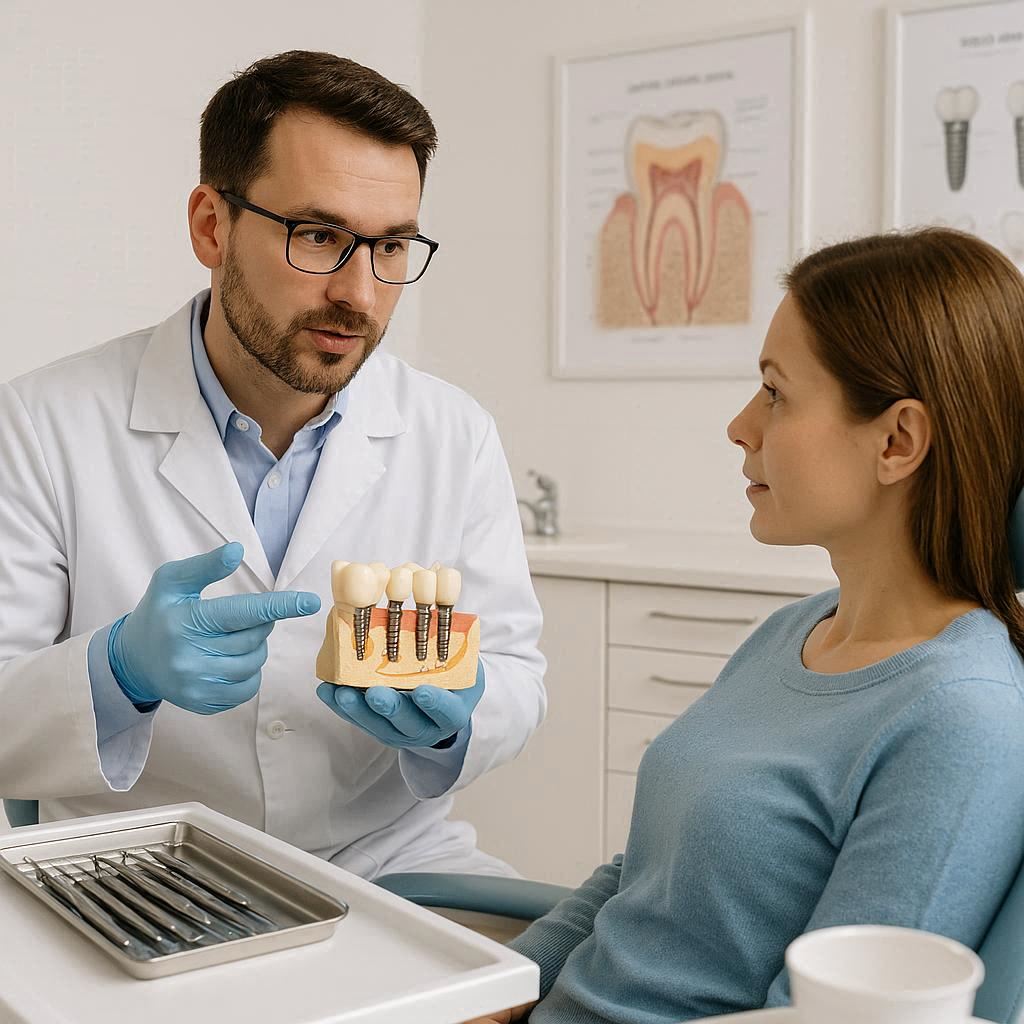
Think of dental implants as posts or anchors. One implant can often support more than one artificial tooth. For example, a single implant can hold a crown for one missing tooth. But a few strategically placed implants can support a bridge that replaces several missing teeth in a row.
So, while you could place one implant for every missing tooth, dentists usually avoid that approach. It is more invasive, more expensive, and often unnecessary.
Important Note: Placing an implant for every missing tooth is rarely done. The human jaw has limited space and bone density. Most dentists focus on using the fewest implants possible to achieve a stable, functional, and aesthetic result.
Let us break it down by case.
Single Tooth Replacement
This is the simplest scenario. If you are missing one tooth, you will receive one dental implant. The implant is placed into the jawbone. After healing, a single crown is attached to it.
- Number of implants: 1
- Number of teeth replaced: 1
This is considered the gold standard for single-tooth loss. It does not affect neighboring teeth, unlike a traditional bridge.
Multiple Missing Teeth in a Row
This is where things get interesting. Imagine you are missing three teeth in a row: teeth number 4, 5, and 6. A dentist will not automatically place three implants. Instead, they might place two implants: one at each end of the gap. Then, they will create a three-unit bridge that is screwed or cemented onto those two implants.
- Missing 2-3 adjacent teeth: Usually 2 implants.
- Missing 4-5 adjacent teeth: Usually 2 or 3 implants, depending on the location and bite force.
For a longer gap of six or seven missing teeth, a dentist might use three or four implants to support a larger bridge.
Why not one implant per tooth?
Here are three solid reasons.
- Cost: Each implant adds significant expense.
- Surgical trauma: More implants mean more surgery, more healing time, and more discomfort.
- Bone quality: The jawbone is not uniform. Some areas have excellent bone. Others are too soft or too thin. A dentist will place implants only where the bone is strongest.
Replacing All Teeth: Full Arch Restorations
Now we arrive at the big question. What if you have no teeth left on your upper jaw, your lower jaw, or both? How many implants do you need?
This is where you will hear terms like “All-on-4,” “All-on-6,” or “fixed hybrid dentures.”
The number of implants for a full arch (one whole jaw, upper or lower) typically ranges from 4 to 8 implants.
| Type of Full Arch Restoration | Number of Implants | Best For | Typical Outcome |
|---|---|---|---|
| All-on-4 | 4 per arch | Patients with some bone loss | Fixed bridge of 12-14 teeth |
| All-on-6 | 6 per arch | Patients with good bone density | Extra stability and support |
| Traditional Full Bridge | 6 to 8 per arch | Patients with excellent bone volume | Maximum longevity and comfort |
| Removable Implant Denture | 2 to 4 per arch | Patients on a budget or with medical limits | Denture snaps onto implants |
The All-on-4 Concept Explained
This technique uses only four implants to support a full set of fixed teeth for one jaw. Two implants go straight into the front of the jaw. Two implants in the back are tilted at a 30 to 45-degree angle. This angle allows the dentist to avoid areas of low bone and use what bone is available.
For most people with significant tooth loss, the All-on-4 is the most common solution. It is reliable, less invasive than placing eight straight implants, and more affordable.
Can you get 8 or 10 implants in one jaw?
Yes, it is possible. Some patients receive 8, 10, or even 12 implants in a single jaw. However, this is rare today. It was more common decades ago. Modern dentistry has moved toward doing more with less. Placing 10 implants in one jaw means 10 surgical sites. It also means a much higher bill.
Most experienced implant dentists will tell you that 4 to 6 implants per arch are more than enough for a lifetime of normal chewing. Adding more implants does not always add more benefit. It only adds more risk and cost.
Full Mouth Reconstruction: Both Jaws
If you need to replace all teeth in both the upper and lower jaws, you will need implants for each arch.
- Minimum full mouth (both jaws): 8 implants total (4 upper, 4 lower) using All-on-4 for both arches.
- Standard full mouth: 10 to 12 implants total (5 or 6 upper, 5 or 6 lower).
- Maximum full mouth (rare): 16 to 24 implants total (8 to 12 per jaw).
However, placing 20-plus implants is extremely uncommon today. Most dentists will try to talk you out of it. It is overkill. It does not improve function. It only increases the chances of implant failure, nerve damage, and financial strain.
Realistic advice from prosthodontists: A healthy adult with normal bone structure and a typical budget should expect 4 to 6 implants per jaw. That is 8 to 12 implants for the entire mouth. Anything beyond that is unnecessary for 99% of patients.
Factors That Limit The Number of Implants
Even if you want 16 implants, your body might say no. Several factors will determine the maximum number of implants you can safely receive.
1. Jawbone Volume and Density
This is the number one limiting factor. Dental implants need bone to hold them. The bone must be at least 1 to 2 millimeters thick around each implant. If you have been missing teeth for years, your jawbone has likely shrunk. This is called resorption.
- In the upper jaw: The maxillary sinuses are located above the back teeth roots. If the bone is too thin, implants cannot be placed without a sinus lift.
- In the lower jaw: The inferior alveolar nerve runs through the mandible. Implants cannot touch or damage this nerve.
If you have severe bone loss, you might only be able to receive 2 or 3 implants per jaw. Bone grafting can help, but it adds time (months) and cost.
2. General Health Conditions
Some medical conditions reduce the body’s ability to heal or fight infection around implants. Your dentist will need a full medical history.
- Uncontrolled diabetes: High blood sugar slows healing and increases infection risk.
- Autoimmune diseases: Conditions like lupus or Sjögren’s syndrome can cause implant rejection.
- Osteoporosis medications (bisphosphonates): Drugs like Fosamax or Actonel, especially taken intravenously for cancer, can lead to osteonecrosis of the jaw. This rare but serious condition means implants are not safe.
- Smoking: Heavy smokers have higher implant failure rates. Some dentists will limit the number of implants placed at one time in smokers.
3. Financial Considerations
Let us be honest. Dental implants are not cheap. In the United States, a single implant and crown costs between $3,000 and $6,000. A full mouth All-on-4 reconstruction costs $20,000 to $40,000 per arch. That is $40,000 to $80,000 for both jaws.
If you try to place 16 individual implants with 16 individual crowns, you could easily spend over $100,000. Most people cannot afford that. Dentists know this. That is why multi-implant bridges and hybrid dentures exist. They give you a full smile with fewer implants.
4. Time and Healing Capacity
Your body can only heal so much at once. Placing 10 implants in one surgery is possible, but it puts significant stress on your system. Most dentists prefer to stage the treatment.
- Small cases (1-3 implants): Often done in one surgery.
- Medium cases (4-6 implants): Usually one surgery, but sometimes two separate appointments (left side then right side).
- Large cases (8+ implants): Often staged over several months. The dentist might place implants in the lower jaw first. Then, after 3-4 months, they place implants in the upper jaw.
This staged approach allows your body to heal properly and reduces post-operative pain and swelling.
What Does The Science Say? Maximum Limits
From a purely anatomical perspective, what is the absolute maximum number of dental implants a human could have?
Let us count the potential spaces. An adult usually has 28 to 32 teeth. In theory, you could place one implant for each tooth root. That means up to 32 implants in the entire mouth.
However, no ethical dentist would ever do this. Here is why.
- The front teeth (incisors) are small and have small roots. Placing an implant for each incisor would leave very little bone between implants. This increases the risk of bone death and implant failure.
- The back teeth (molars) are larger, but the bone in the back of the mouth is often softer. Two implants for two neighboring molars might be fine. But four implants for four molars in a row is risky.
The realistic maximum per jaw is 8 implants. That is placing implants in positions 2, 4, 6, 7, 8, 9, 11, and 13 (using dental numbering). That would replace all 14 or 16 teeth in that arch.
The realistic maximum for the full mouth is 14 to 16 implants. That is 7 or 8 implants per jaw. Beyond that number, you are entering experimental territory with no proven benefits.
A quote from the American Academy of Implant Dentistry: “There is no fixed maximum number of dental implants a person can receive. However, the minimum number to restore function is always preferred. More implants do not equal better outcomes. Strategic placement equals better outcomes.”
Can You Add Implants Later?
Yes, absolutely. This is a common question from patients who want to start small and add more later.
Let us say you receive an All-on-4 on your lower jaw. You have four implants. Five years later, you have more money or your bone health has improved. You can add two more implants to the back of your jaw, converting your All-on-4 into an All-on-6.
This is called “retrofitting” or “adding secondary implants.” The process is possible but requires a new bridge or bar to connect everything. Your dentist will need to assess if the new implants can be aligned with the old ones.
Important note: You cannot add an implant directly next to an existing implant if there is not enough bone between them. The minimum distance between two implants is usually 3 millimeters.
Scenarios That Limit You to Fewer Implants
Not everyone can have 4 or 6 implants. Some people are medically or anatomically limited to just 2 implants per jaw.
The 2-Implant Overdenture
This is a very common and successful solution for people with:
- Severe bone loss preventing more implants.
- Medical conditions that limit healing.
- Tight budgets.
In this case, the dentist places two implants in the front of the lower jaw. A special denture snaps onto these implants. The denture is still removable. However, it does not wobble or float like a traditional denture. It is stable and comfortable. You can eat apples and corn on the cob again.
For the upper jaw, sometimes 4 implants are still possible. But the lower jaw often gets only 2 implants because the lower denture is harder to stabilize.
The Single Implant Retained Denture
In very rare cases, a patient might have only one healthy bone site in the entire jaw. A single implant can be placed. A denture is then modified to clip onto that one implant. This is not ideal. It is better than nothing, but the denture will still pivot or rotate. Most dentists recommend at least two implants for any removable denture.
Comparing Implant Numbers: A Practical Table
Let us look at real-world examples. This table shows typical treatment plans based on the number of missing teeth.
| Missing Teeth | Typical Number of Implants | Type of Restoration | Approximate Cost (USD) |
|---|---|---|---|
| 1 tooth | 1 | Single crown | $3,000 – $5,000 |
| 2 adjacent teeth | 1 or 2 | Bridge or 2 crowns | $4,000 – $9,000 |
| 3 adjacent teeth | 2 | 3-unit bridge | $6,000 – $12,000 |
| 5 adjacent teeth | 2 or 3 | 5-unit bridge | $9,000 – $18,000 |
| All teeth (one arch) | 4, 6, or 8 | Fixed hybrid bridge | $15,000 – $30,000 |
| All teeth (both arches) | 8, 12, or 16 | Full mouth fixed bridge | $30,000 – $70,000+ |
| Edentulous with bone loss (one arch) | 2 | Implant overdenture | $5,000 – $12,000 |
Note: Costs vary dramatically by location, dentist expertise, materials, and whether bone grafting is needed.
Step-by-Step: How A Dentist Decides Your Number
You might be wondering how a dentist actually makes this decision. It is not random. It follows a logical process.
Step 1: Clinical Exam and X-Rays
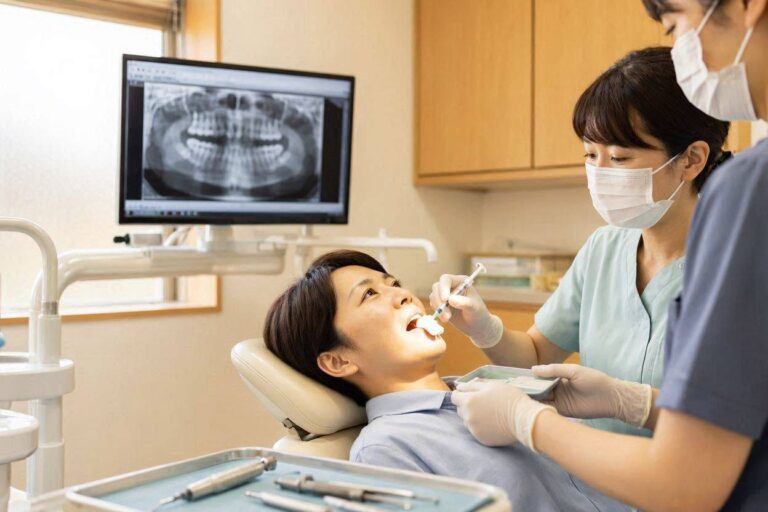
The dentist looks inside your mouth. They check the space between your remaining teeth. They take a panoramic X-ray to see the general shape of your jawbone, sinuses, and nerves.
Step 2: CBCT Scan (3D Imaging)
This is the most important step. A CBCT (Cone Beam Computed Tomography) scan creates a 3D model of your jaw. The dentist can measure bone height, width, and density in millimeters. They can see exactly where the nerve runs. They can measure how far the sinus drops.
Using special software, the dentist “places” virtual implants into your bone. They can test different numbers and positions without touching you. This scan will answer the question: how many implants can you really have?
Step 3: Bite Force Analysis
Your back molars generate the most chewing force. The front teeth generate much less. A dentist will place more implants in the back of the mouth to handle heavy forces. If you grind your teeth (bruxism), you may need more implants to distribute the load.
Step 4: Medical and Financial Discussion
Finally, the dentist reviews your health history and your budget. They will propose a plan with a specific number of implants. They will also offer alternatives with fewer implants (to save money) or more implants (if you want extra security).
Common Myths About Implant Numbers
Let us clear up some misinformation you might find online.
Myth 1: “You need one implant for every missing tooth.”
Truth: No. One implant can support a bridge that replaces multiple missing teeth.
Myth 2: “More implants mean the teeth will last longer.”
Truth: Not necessarily. A well-planned All-on-4 with good oral hygiene can last 20+ years. Adding two more implants does not double the lifespan. It only adds cost and surgical risk.
Myth 3: “You cannot have implants if you have no bone.”
Truth: You can have bone grafting, sinus lifts, or ridge expansion. These procedures add bone. After healing (4-12 months), you can often receive implants. However, you may still be limited to fewer implants than someone with natural bone.
Myth 4: “Implants in the upper jaw are easier than the lower jaw.”
Truth: Actually, the lower jaw has denser bone. The upper jaw has softer bone and the sinus cavity. Many dentists find the lower jaw more predictable for multiple implants.
Living With Many Implants: What To Expect
If you receive 6, 8, or even 12 implants, your daily life will change in mostly positive ways. However, there are some realities to accept.
The Positives
- Stable chewing: You will forget you have implants. You will eat steak, nuts, and crunchy vegetables without fear.
- No denture adhesives: Never again use sticky creams or powders.
- Bone preservation: Implants stimulate your jawbone. It will not shrink over time like it would with dentures.
- Confidence: Your teeth will not click, slip, or fall out when you talk or laugh.
The Challenges
- Cleaning takes longer: You cannot simply brush and floss normally. With multiple implants supporting a bridge, you will need special floss (super floss), water flossers, and interdental brushes. Cleaning under a 6-implant bridge can take 5-10 minutes each night.
- Professional maintenance: You will need to see your dentist or hygienist every 6 months for implant-specific cleanings. They will use special instruments that will not scratch the titanium or ceramic surfaces.
- Potential for peri-implantitis: This is like gum disease but around an implant. It is inflammation and bone loss. The more implants you have, the more potential sites for this problem. Good oral hygiene is essential.
The Cost Breakdown By Number of Implants
Let us get practical about money. These are average estimates for the United States. Your actual costs will vary.
| Number of Implants (excluding crowns/bridge) | Typical Cost Range (Surgery Only) | With Final Restorations |
|---|---|---|
| 1 implant | $1,500 – $3,000 | $3,000 – $6,000 |
| 2 implants | $3,000 – $6,000 | $6,000 – $12,000 |
| 4 implants (All-on-4, one arch) | $8,000 – $15,000 | $20,000 – $30,000 |
| 6 implants (All-on-6, one arch) | $12,000 – $20,000 | $25,000 – $40,000 |
| 8 implants (full arch traditional) | $16,000 – $28,000 | $35,000 – $55,000 |
| 8 implants (full mouth, 4 per arch) | $16,000 – $30,000 | $40,000 – $70,000 |
| 12 implants (full mouth, 6 per arch) | $24,000 – $45,000 | $60,000 – $90,000+ |
A hard truth: Dental insurance usually covers very little of these costs. Most plans have a yearly maximum of $1,000 to $2,000. That might cover the CT scan and one crown. You will likely pay most of the cost out-of-pocket. Some dentists offer payment plans or third-party financing (CareCredit, LendingClub).
Special Case: Zygomatic Implants
What if you have no bone in your upper jaw? The sinus has expanded. The bone is paper-thin. A standard implant is impossible, even with grafting.
In this rare situation, some oral surgeons offer zygomatic implants. These are very long implants (30 to 50 millimeters) that anchor into the zygomatic bone, also known as your cheekbone.
- How many zygomatic implants? Usually 2 to 4 per upper jaw.
- Can you combine them with regular implants? Yes. A common plan is 2 zygomatic implants in the back and 2 standard implants in the front. That gives you 4 implants total for the upper arch.
Zygomatic implants are complex and expensive. Only a handful of specialists perform them. They are a last resort. But for people told they “cannot have implants,” they are a life-changing option.
How Many Implants For A Smile Makeover?
Sometimes, you do not need to replace all missing teeth. You only want to improve your smile. For example, maybe you are missing your upper lateral incisors (the teeth next to your front teeth) and one premolar.
A smile makeover focuses on the aesthetic zone: the teeth that show when you smile. That is usually teeth number 6 to 11 on the upper arch.
- Missing 2-3 teeth in the smile zone: Usually 2 implants supporting a small bridge.
- Missing 4-6 teeth in the smile zone: Usually 3 to 4 implants supporting a larger bridge or individual crowns.
The goal is not to fill every gap. The goal is to create a natural-looking continuous smile. Often, the dentist will not replace the very last molars if they do not show and you do not miss them.
What About Mini Implants?
You may have heard of mini dental implants (MDIs). These are narrower than standard implants (1.8mm to 3.0mm vs 3.5mm to 5.0mm for standard).
Mini implants are sometimes used for:
- Stabilizing a lower denture (usually 4 to 6 mini implants).
- Replacing small front teeth in very narrow bone.
However, mini implants are not recommended for heavy chewing areas like molars. They are weaker than standard implants. Many experts consider them a temporary or compromised solution.
Number of mini implants: You can have more mini implants because they are narrower. Some patients have had 10 or 12 mini implants in one jaw. But again, this is not standard care. Always ask your dentist: “Why mini implants instead of standard implants?”
The Psychological Aspect: More Is Not Always Better
We need to talk about a hidden factor. Some patients want as many implants as possible. They think, “If 4 is good, then 8 must be twice as good.” This is not true.
When patients demand too many implants, they often experience:
- Prolonged surgery time: 3 to 5 hours instead of 1 to 2 hours.
- Increased post-operative pain and swelling.
- Higher risk of infection or nerve injury.
- Much higher cost with no functional benefit.
A good dentist will sometimes say no to a patient. If the dentist believes 4 implants per arch are sufficient, they should not place 8 just because the patient wants them. It is unethical to overtreat.
Listen to your dentist. They are trained to find the minimum number of implants needed for a predictable, long-lasting result.
Step-by-Step: Consultation Questions To Ask
When you visit an implant dentist, bring these questions. They will help you understand the right number for your specific case.
- “Based on my CBCT scan, what is the maximum number of implants you could safely place in my upper jaw? In my lower jaw?”
- “What is the minimum number you would recommend to restore full function and aesthetics?”
- “If I choose the minimum number (e.g., 4 per arch), what is the long-term success rate? What are the risks?”
- “If I choose a higher number (e.g., 6 or 8 per arch), what additional benefits will I really notice day-to-day?”
- “How will the number of implants affect how easy or difficult it is to clean my teeth?”
- “Can we start with fewer implants and add more later if needed?”
Long-Term Maintenance By Number of Implants
The number of implants directly affects your home care routine. Here is a realistic breakdown.
1-2 Implants (Single crown or small bridge)
- Cleaning time: 2 minutes extra per day.
- Tools: Regular floss, floss threader, or interdental brush.
- Hygiene visits: Standard cleanings, plus the dentist checks the implant.
3-4 Implants (Moderate bridge or All-on-4)
- Cleaning time: 5 minutes extra per day.
- Tools: Water flosser (Waterpik), super floss, small interdental brushes.
- Hygiene visits: Your hygienist will use plastic or titanium instruments to avoid scratching implants.
5-8 Implants per arch (Full arch hybrid)
- Cleaning time: 8-12 minutes once per day for the full mouth.
- Tools: Water flosser on high pressure, multiple sizes of interdental brushes, implant-specific floss, possibly an electric brush with a special head.
- Hygiene visits: Every 3 to 4 months if you have a history of gum disease. Every 6 months if your gums are healthy.
9+ Implants per arch (Very rare)
- Cleaning time: 15-20 minutes per day. This is a significant commitment.
- Tools: Same as above, but more time-consuming because you have more abutments (connections) and more tight spaces.
A note from dental hygienists: “Patients with 10+ implants often struggle to keep them clean. By the time they finish cleaning the last implant, they have missed spots on the first implant. Fewer, well-spaced implants are much easier to maintain over 20 years.”
Real Patient Examples
Let us look at three hypothetical patients. Each has a different situation. Each needs a different number of implants.
Patient A: Sarah, 45 years old
- Missing: Teeth #14, #15, #16 (upper left back molars)
- Bone volume: Good, but sinus is moderately low.
- Medical history: Healthy, non-smoker.
- Recommended plan: 2 implants (positions #14 and #16). A 3-unit bridge spans the gap.
- Total implants: 2
Patient B: James, 67 years old
- Missing: All teeth on lower jaw. Has worn a lower denture for 15 years.
- Bone volume: Severe resorption. Bone is knife-edged in many areas.
- Medical history: Well-controlled type 2 diabetes. Former smoker (quit 10 years ago).
- Recommended plan: 2 implants in the front of the lower jaw (positions #22 and #27). A locator overdenture snaps onto them.
- Total implants: 2
Patient C: Maria, 55 years old
- Missing: All teeth on upper jaw except two front teeth (#8 and #9).
- Bone volume: Excellent bone density. No sinus issues.
- Medical history: Healthy. Does not smoke. Exercises regularly.
- Recommended plan: 6 implants in the upper jaw (positions #3, #5, #7, #11, #12, #14). A fixed hybrid bridge from #3 to #14.
- Total implants: 6
Notice that none of these patients received 10, 12, or 16 implants. The treatments are realistic, evidence-based, and tailored to each person’s bone and medical reality.
Regional Differences: How Many Implants In Different Countries?
The number of implants recommended can vary by country. This is due to differences in training, cost of living, and regulatory standards.
- United States & Canada: Conservative. Typically 4 to 6 implants per arch. Strong emphasis on CBCT scanning and staged treatment.
- Western Europe (Germany, UK, France): Similar to North America. Slightly more likely to use 6 implants per arch for full hybrids.
- Eastern Europe (Hungary, Poland, Turkey): Often recommend 8 to 10 implants per arch for full mouth. This is often driven by lower implant costs. Some clinics advertise “full mouth with 20 implants” as a luxury package. Be cautious.
- Asia (Thailand, India, South Korea): Wide variation. Top clinics follow Western protocols (4-6 implants). Budget clinics may place more implants than necessary to increase revenue.
Advice: If a clinic offers a package with an unusually high number of implants (12-16 per arch), ask why. Get a second opinion. More is not always ethical or better.
The Future: Will We Need Fewer Implants?
Yes. Technology is moving toward fewer, stronger implants.
- Wider diameter implants: A 5mm or 6mm wide implant can replace a molar and distribute force better than a 3.5mm implant. This means one wide implant might replace one missing molar, but in the future, one wide implant might replace two missing premolars.
- Short implants: Implants as short as 4mm are now available. They can be placed in areas with low bone height without grafting. This allows dentists to place implants where they previously could not. It does not necessarily reduce the number, but it makes it possible to place implants in more people.
- 3D-printed custom implants: In the next 5-10 years, we may see implants designed for specific gaps. A single custom implant could have a wider top that supports multiple teeth. This would dramatically reduce the number of implants needed for a full arch (maybe 2 or 3 per jaw).
For now, stick with the proven range of 4 to 8 implants per arch. It is safe, predictable, and well-studied.
Conclusion (Summary in Three Lines)
Most adults need between 4 and 8 dental implants per jaw to replace a full set of missing teeth, not one implant per tooth. The number depends on your jawbone health, medical history, and budget, with 4 to 6 implants per arch being the most common and successful range. Always trust a CBCT scan and an experienced dentist to find the minimum number needed for a stable, comfortable, and long-lasting smile.
Frequently Asked Questions (FAQ)
1. Is there a legal limit to how many dental implants you can have?
No. There is no law limiting the number. The limit is anatomical (your bone) and medical (your health). A dentist cannot legally place an implant if it would damage a nerve or sinus without informed consent.
2. Can you have 32 dental implants (one for every tooth)?
In theory, yes. In practice, no ethical dentist would do this. The bone between implants would be too thin, risking failure. You would also face an enormous cost and recovery time.
3. How many implants can you get in one day?
A surgeon can place up to 8 to 10 implants in a single day (one jaw). For both jaws, some clinics do 12 to 16 implants in one day under general anesthesia. However, this is aggressive. Most patients prefer staging the treatment over two or three appointments.
4. Can you have implants if you already have some implants that failed?
Yes, but with caution. The dentist must understand why the previous implants failed. Was it infection? Smoking? Grinding? Bone quality? If the cause can be corrected, new implants can often be placed in different positions.
5. How many implants do you need for a full mouth of fixed teeth?
The most common answer is 8 total (4 upper, 4 lower) using All-on-4. The most stable answer is 12 total (6 upper, 6 lower). The absolute maximum you should ever consider is 16 total (8 upper, 8 lower).
6. Does dental insurance cover more implants if you need them?
No. Most dental insurance plans have a yearly maximum ($1,000-$2,000) regardless of how many implants you receive. Medical insurance rarely covers dental implants unless they are needed due to an accident or tumor removal.
7. Can a smoker get the same number of implants as a non-smoker?
Usually not. Smokers have higher failure rates. Many dentists will recommend fewer implants placed at one time, or they will require the patient to quit smoking for 2 weeks before and 2 months after surgery. Some smokers are limited to 2-4 implants per arch.
8. How many implants are used for implant-supported dentures?
For a removable implant denture (overdenture), the typical number is 2 to 4 implants per arch. Two is the minimum for stability. Four provides exceptional stability but costs more.
9. Can you have implants in both jaws on the same day?
Yes. This is called “full mouth immediate function.” It is common with All-on-4. You can have 8 implants placed (4 upper, 4 lower) in a single 3-4 hour surgery. You leave with temporary fixed teeth on the same day.
10. What happens if you try to place too many implants?
Possible complications include: jaw fracture (rare but serious), nerve damage (numbness or tingling), sinus perforation, excessive bleeding, prolonged pain, and higher risk of infection. A responsible dentist will stop at a safe number.
Additional Resource
For a more detailed look at the surgical process, healing times, and step-by-step costs of full-mouth reconstruction, visit the American Academy of Implant Dentistry (AAID) patient education page.
👉 AAID Patient Resources – Dental Implants Explained (Open in a new tab. This link leads to an independent, authoritative source.)
Disclaimer: This article is for informational purposes only. It does not constitute medical or dental advice. Every person’s oral health situation is unique. Always consult a licensed dentist or oral surgeon for a personal examination, CBCT scan, and treatment plan tailored to your anatomy and medical history. The author and publisher are not liable for any actions taken based on the contents of this guide.