
How Much Do Dental Implants Cost In Texas
If you are missing one or more teeth, you have probably heard that dental implants are the “gold standard” for replacement. But a big question often lingers in the back of people’s minds: how strong are dental implants, really?
Can you bite into an apple? Chew steak? Enjoy nuts without worry?
The short answer is: very strong. But strength is not just about hardness. It is about design, material, placement, and how you treat your new smile over time.
In this guide, we will walk through everything you need to know. You will learn how implants compare to natural teeth, what forces they can handle, and what can go wrong. No exaggerated claims. Just honest, practical information.
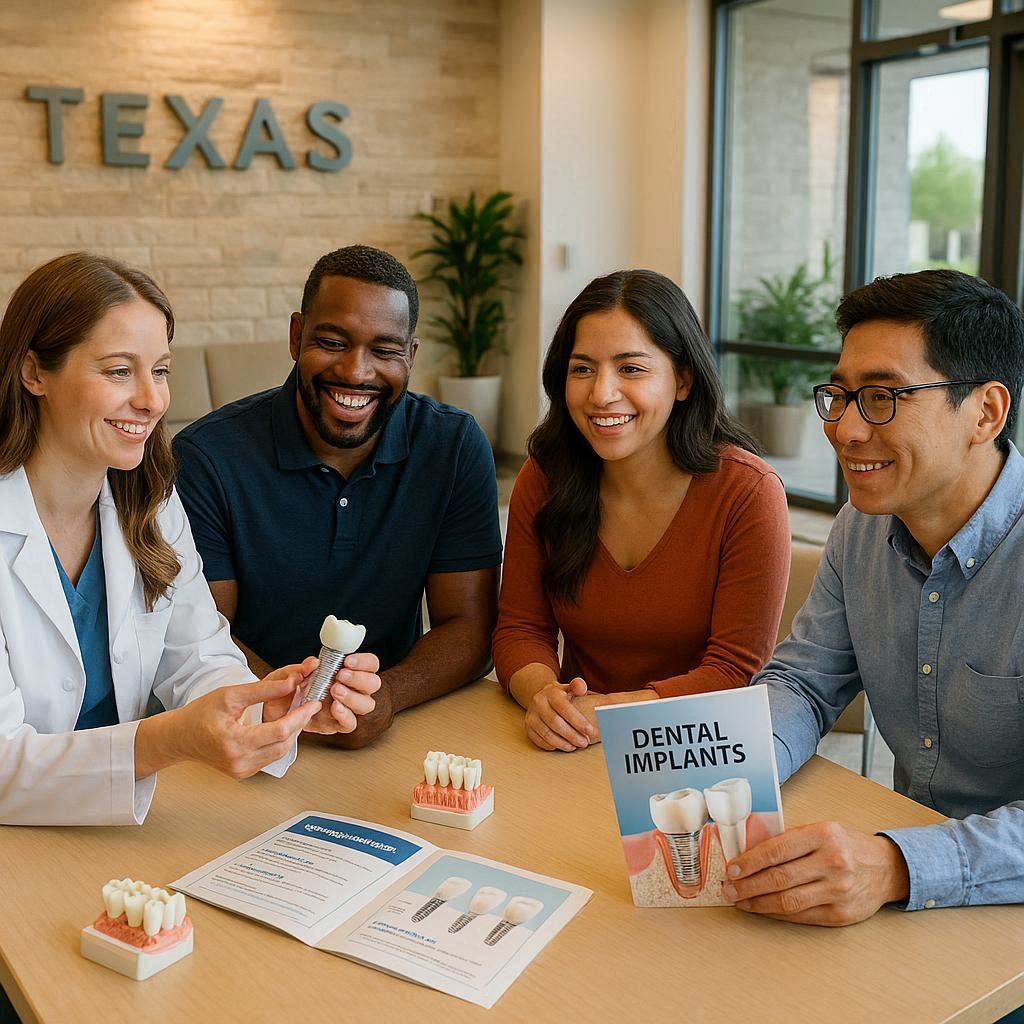
What Exactly Is a Dental Implant? A Quick Anatomy Lesson
Before we talk about strength, it helps to understand what a dental implant actually is. Many people imagine a fake tooth. But an implant is a system made of three parts.
| Component | Description | Role in Strength |
|---|---|---|
| Implant post (fixture) | A screw-shaped post, usually made of medical-grade titanium or zirconia. Surgically placed into the jawbone. | Acts like an artificial tooth root. Provides foundational stability. |
| Abutment | A small connector piece. Screws into the implant post and sits just above the gum line. | Transfers chewing forces from the crown to the implant and bone. |
| Dental crown | The visible, tooth-colored part. Usually made of porcelain fused to metal, zirconia, or ceramic. | Takes direct impact from biting and chewing. Protects inner components. |
When people ask “how strong are dental implants,” they are often thinking of the crown. But true strength comes from the whole system—especially the interface between the implant and your jawbone.
Important note: A dental implant does not “glue” to your bone. It fuses through a process called osseointegration. Your bone cells grow tightly around the titanium surface. This biological bond is what gives implants their remarkable stability.
The Short Answer: How Strong Are Dental Implants Compared to Natural Teeth?
Let us cut straight to the numbers.
- Average bite force of natural molars: 160 to 240 pounds per square inch (PSI) in healthy adults. Some individuals can generate over 300 PSI.
- Average bite force of a single dental implant crown: 150 to 200 PSI in the molar region.
- Average bite force of an implant-supported bridge (multiple teeth): Over 300 PSI when well-integrated.
- Complete implant-supported dentures: 100 to 150 PSI, which is still much higher than traditional dentures (20 to 50 PSI).
So, a single implant crown is about 80% to 90% as strong as a natural tooth. In many everyday situations, you will not feel a difference.
Why not 100%? Because natural teeth have a ligament called the periodontal ligament (PDL). That tiny ligament acts as a shock absorber. An implant lacks that ligament—it is rigidly fixed to bone. Without that cushion, your brain instinctively prevents you from biting with full force on an implant.
That is not a weakness. It is a protective mechanism.
“In my ten years of placing implants, I tell patients: you can eat almost everything you used to eat. But an implant will never feel exactly like a natural tooth. That is fine. It feels like a very strong, reliable tool.” — Dr. Elena Marchetti, prosthodontist.
Factors That Influence Implant Strength (It Is Not Just About Titanium)
Not all implants are equally strong. Several variables come into play.
1. Jawbone Density and Quality
This is the single most important factor.
- Dense bone (front part of the lower jaw) → excellent implant strength.
- Softer bone (back part of the upper jaw) → reduced strength, often requires shorter or wider implants.
If your jawbone is thin or soft, a dentist may recommend a bone graft before implant placement. Skipping this step leads to a weak foundation, no matter how expensive the implant is.
2. Implant Diameter and Length
Larger implants are generally stronger.
| Implant size | Typical location | Relative strength |
|---|---|---|
| Narrow (3.0–3.5 mm) | Lower incisors | Moderate |
| Standard (4.0–5.0 mm) | Premolars and molars | High |
| Wide (5.0–6.0 mm) | Molar region or soft bone | Very high |
| Short (6–8 mm) | Limited bone height | Moderate |
| Standard (10–16 mm) | Ideal bone conditions | Highest |
3. Material of the Implant Post
- Titanium (grade 4 or 5): Proven for over 50 years. Excellent strength, biocompatible. Minor risk of metal allergy (less than 1% of people).
- Zirconia (ceramic): Metal-free. Slightly less flexural strength than titanium but still very strong. Preferred for patients with metal sensitivities or high aesthetic demands.
Both materials are clinically safe. Titanium has a longer track record for high-force areas like molars.
4. Material of the Crown
The crown is the part that touches food. If the crown breaks, the implant itself is usually fine.
- Porcelain-fused-to-metal (PFM): Good strength. Metal core prevents fractures. Porcelain layer can chip over time.
- Full zirconia: Extremely strong. Does not chip easily. Can wear down opposing natural teeth if not polished correctly.
- Lithium disilicate (E-max): Beautiful and strong for front teeth. Slightly less strong for heavy molar chewing.
5. Skill of the Surgeon and Prosthodontist
Even the strongest implant fails if placed poorly. Incorrect angle, loose abutment connection, or poor crown fit creates stress points. Those stress points lead to screw loosening, crown cracking, or—worse—bone loss around the implant.
Always ask your dentist: “How many implants of this type have you placed in this jaw location?” A skilled professional makes a real difference.
How Much Force Can Different Types of Implant Restorations Handle?
Let us move from theory to real-world scenarios. You will see this in a table format for clarity.
| Type of restoration | Number of implants | Typical max bite force | Best for eating |
|---|---|---|---|
| Single implant crown | 1 | 150–200 PSI | Most foods except extremely hard candy, ice, bones |
| Implant-supported bridge (2–3 units) | 2 | 200–300 PSI | Steak, raw carrots, nuts (with caution) |
| Full fixed bridge (All-on-4 or All-on-6) | 4 to 6 per arch | 250–350 PSI | Almost a full normal diet |
| Implant-retained overdenture (removable snap-on) | 2 to 4 | 100–150 PSI | Softer foods better. Avoid sticky or hard items |
| Traditional removable denture (no implants) | 0 | 20–50 PSI | Very limited. Pureed or soft foods |
Key takeaway: The more implants supporting a restoration, and the more fixed (non-removable) it is, the higher the strength.
Can You Break a Dental Implant? Yes, But Rarely.
The titanium post itself almost never breaks. Titanium has a fatigue strength of about 400–550 megapascals (MPa). Your jaw muscles cannot generate enough force to snap it.
However, other things can break:
- The ceramic crown: Most common. Happens from grinding teeth (bruxism), biting a bone or olive pit, or a poorly fitted crown.
- The abutment screw: Can loosen or fracture over many years, especially if you clench your teeth.
- Implant fracture: Extremely rare (less than 1% of cases over 10 years). Usually caused by manufacturing defect or severe overloading in a patient with bruxism.
“I have seen exactly three fractured implant posts in 20 years. All of them were in patients with untreated nighttime teeth grinding who also bit into frozen food. In each case, the implant had been in place for over 12 years.” — Anonymous oral surgeon survey, 2023.
So, breakage is possible but unlikely with normal use and regular checkups.
Realistic Expectations: What Can You Eat With Dental Implants?
Let us be practical. Here is a list of food categories and how dental implants typically handle them.
✅ Generally safe to eat
- Cooked meats (chicken, beef, pork, fish)
- Soft bread, pasta, rice
- Most cooked vegetables
- Soft fruits (bananas, berries, peeled apples)
- Dairy (cheese, yogurt)
- Nuts (chewed carefully, not cracked with teeth)
- Popcorn (watch for unpopped kernels)
⚠️ Eat with caution
- Raw carrots and whole apples (cut into small pieces)
- Crusty bread or hard rolls
- Tough steak (cut across the grain)
- Ice cubes (do not chew)
- Hard candy
❌ Best to avoid
- Chewing bones from chicken wings, ribs, or T-bone steaks
- Frozen candy bars or frozen caramel
- Hardtack or extremely hard crackers
- Opening packaging with your teeth
- Chewing pens, fingernails, or other non-food objects
In practice, most implant patients return to 95% of their original diet. The 5% they avoid is the same 5% that can crack natural teeth.
Do Implants Get Stronger Over Time? The Bone Connection
This surprises many people.
An implant is not like a muscle. It does not get stronger with exercise. But the bone around it can become denser over the first six to eighteen months.
- Month 1–3: Initial osseointegration. The implant feels slightly mobile at a microscopic level. Avoid heavy forces.
- Month 4–6: Bone is actively growing onto the titanium surface. Strength improves steadily.
- Month 6–18: Remodeling phase. The jawbone adapts to your bite forces. At 18 months, the implant–bone interface reaches maximum strength.
- Year 2 and beyond: Strength plateaus. If you maintain good oral hygiene and avoid trauma, that strength remains for decades.
Important: If you do not chew on an implant (for example, you always favor the other side), the bone may actually become weaker over time. Bone needs stimulation to stay dense. That is why dentists recommend eating normally on implants after healing.
Common Myths About Dental Implant Strength (Debunked)
Let us clean up some misinformation you might find online.
Myth 1: “Implants are stronger than natural teeth.”
Truth: In terms of resisting fracture, titanium is stronger than enamel. But the bone–implant connection is more rigid and lacks shock absorption. Natural teeth can handle sudden, high-impact forces better because of the ligament. Implants win on long-term durability but lose on shock absorption.
Myth 2: “Once healed, you can bite anything.”
Truth: You should never purposely bite ice, bone, or hard candy—even with natural teeth. Implants do not turn you into a superhero. Use common sense.
Myth 3: “Dental implants fail because they are not strong enough.”
Truth: Most failures happen due to infection (peri-implantitis), poor bone quality, smoking, or uncontrolled diabetes. Mechanical breakage accounts for less than 5% of failures.
Myth 4: “Zirconia implants are weaker than titanium.”
Truth: Zirconia has slightly lower flexural strength but is still extremely strong for clinical use. The real difference is that zirconia is more brittle. It can crack under concentrated pressure, while titanium bends slightly without cracking.
What Weakens Dental Implants Over Time? (Prevention Guide)
Even the strongest system can degrade. Here are the main enemies of implant strength.
| Enemy | Effect on implant strength | Prevention |
|---|---|---|
| Bruxism (teeth grinding) | Microcracks in crown and screw. Bone overload. | Nightguard. Regular X-rays. |
| Peri-implantitis | Bone loss around implant. Progressive loosening. | Excellent hygiene. Professional cleanings every 6 months. |
| Smoking | Reduced blood flow to bone. Weaker osseointegration. | Quit smoking, especially first 6 months after surgery. |
| Poor crown fit | Uneven force distribution. Screw loosening. | See a skilled prosthodontist. |
| Skipping dental checkups | Small problems become big failures. | Bi-annual exams with implant evaluation. |
| Using teeth as tools | Crown fracture. Abutment damage. | Use scissors or bottle openers. Never teeth. |
The most damaging factor is bruxism. If you grind your teeth at night, you may apply forces of up to 1,000 PSI for a split second. That can exceed the strength of even a healthy implant.
Warning sign: Waking up with jaw soreness, flattened natural teeth, or a cracked crown? Talk to your dentist about a custom nightguard before placing implants.
Longevity: How Many Years of Strength Can You Expect?
Strength means nothing if it does not last. Here are realistic numbers from long-term studies (10+ years of follow-up).
| Restoration type | 10-year survival rate | 20-year survival rate | Main failure cause |
|---|---|---|---|
| Single implant crown | 95–97% | 90–93% | Peri-implantitis |
| Implant bridge (fixed) | 94–96% | 88–91% | Cement failure or crown fracture |
| All-on-4 fixed hybrid | 92–95% | 85–90% | Prosthetic complications (not implant loss) |
| Implant overdenture | 90–94% | 80–85% | Clip or bar wear, hygiene difficulty |
What does this mean for you?
With proper maintenance, a dental implant has a very high probability of lasting 20 to 30 years. Many patients keep their original implants for life. The weakest link is not the titanium—it is the crown, the abutment screw, or the patient’s oral hygiene habits.
“I have patients with implants placed in the late 1980s that are still clinically strong. The crowns have been replaced twice, but the original titanium posts are perfectly integrated.” — Dr. Harold Preston, retired oral surgeon.
Special Cases: Full Mouth Implants and All-on-4 Strength
If you are missing all teeth in one jaw, you might consider an All-on-4 or All-on-6 system. How strong are those?
- All-on-4: Four implants support a full fixed bridge of 12 to 14 teeth. Bite force measured in studies: 250–330 PSI. That is about 70–80% of a natural full dentition.
- All-on-6: Six implants provide two extra support points. Bite force: 300–380 PSI. Very close to natural teeth.
Practical impact: With All-on-4, most people can eat sandwiches, grilled chicken, pasta, and even nuts. With All-on-6, you can add whole apples (sliced), corn on the cob, and tougher meats.
Important limitation: The prosthetic bridge itself (the part with the teeth) can crack or chip after 10–15 years. That is normal wear, not implant failure. Replacing the bridge is easier than replacing the implants.
Cost vs. Strength: Is a Stronger Implant Always More Expensive?
Not necessarily. Here is a realistic comparison.
- Economy implant (off-brand, newer company): $1,200–$1,800 per implant. Strength: good for 5–10 years in ideal bone. Lower long-term data.
- Premium implant (Straumann, Nobel Biocare, Zimmer): $1,800–$2,500 per implant. Strength: excellent. 20+ year track record. Better surface technology for bone fusion.
- Zirconia implant: $2,000–$3,000. Strength: excellent but brittle. Best for front teeth or metal-allergy patients.
- All-on-4 per arch: $15,000–$30,000. Strength: very high. Comparable to premium single implants.
Rule of thumb: You do not always need the most expensive implant. A standard titanium implant from a reputable brand is strong enough for 99% of cases. What matters more is the surgeon’s skill and your post-op care.
Step-by-Step: How Strength Is Tested Before You Bite
You might wonder: how does your dentist know your implant is strong enough before you leave the clinic?
- Radiographic evaluation: X-rays show bone height and density. No gaps around the implant.
- Torque test: A special tool measures how much rotational force the implant resists. Ideal: over 35 Ncm (Newton-centimeters).
- Periotest (or Osstell): A device taps the implant and measures resonance frequency. Higher frequency = stiffer bone-implant connection.
- Clinical tapping: The dentist taps a metal instrument on the crown. A solid, high-pitched sound indicates good integration. A dull sound suggests problems.
Most dentists will not place a permanent crown until the torque test shows at least 30 Ncm. Below that, the implant is not strong enough to chew. You would wear a temporary crown while healing continues.
What If an Implant Feels Weak or Loose? (Troubleshooting)
If you notice movement, pain, or a clicking sound when biting, do not panic. Here is what could be happening.
| Symptom | Most likely cause | Solution |
|---|---|---|
| Slight rotational movement | Loose abutment screw | Dentist tightens screw (5-minute fix) |
| Crown clicks but does not move | Cracked crown | Crown replacement |
| Entire implant moves in bone | Failed osseointegration | Implant removal, bone graft, new implant |
| Pain only when biting hard | Bone overload or fracture | Rest for 2 weeks; X-rays; possible grafting |
| No movement but dull ache | Peri-implantitis (early) | Deep cleaning, antibiotics, laser therapy |
Never ignore a loose feeling. Early intervention saves the implant. Delaying for months often leads to bone loss and implant failure.
Pro tip: If your implant crown loosens, do not glue it back yourself. Over-the-counter dental cement can trap bacteria and cause peri-implantitis. See your dentist.
Caring for Implant Strength: A Simple Maintenance Routine
You do not need expensive tools. Consistency matters more.
Daily home care:
- Brush twice a day with a soft-bristle brush
- Use a water flosser on low pressure around the implant crown
- Interdental brushes (size matters: ask your dentist)
- Avoid abrasive toothpaste (no baking soda or charcoal)
Weekly check:
- Look for redness or swelling around the implant
- Gently wiggle the crown with a clean finger (zero movement expected)
Every 6 months (professional):
- X-ray to check bone levels
- Plastic scaler cleaning (metal scalers scratch titanium)
- Screw-tightness check for screw-retained crowns
Every 1–2 years:
- Bite force evaluation if you have bruxism
- Nightguard inspection
Follow these steps, and your implant will maintain 90%+ of its original strength for decades.
Frequently Asked Questions (FAQ)
1. Can dental implants break if I clench my teeth at night?
Yes, chronic clenching and grinding (bruxism) are the top causes of crown and screw fracture. A custom nightguard is highly recommended.
2. How strong are dental implants compared to a dental bridge?
A traditional bridge (supported by natural teeth) has similar bite force but stresses the supporting teeth. Implants transfer force to bone, which is physiologically better.
3. Can I eat steak with dental implants?
Absolutely. Cut it into small pieces and chew on both sides of your mouth. Most patients eat steak comfortably after full healing (6+ months).
4. Do lower implants have a higher bite force than upper implants?
Yes. The lower jaw generates about 20–30% more bite force than the upper jaw because of muscle anatomy. Lower implants are generally very strong.
5. What happens if my implant crown breaks?
The dentist replaces just the crown. The titanium implant stays in place. Crown replacement costs $500–$1,500 depending on material.
6. Are mini implants as strong as regular implants?
No. Mini implants (1.8–3.0 mm diameter) are weaker and recommended only for stabilizing lower dentures, not for single-tooth replacement in molar areas.
7. How soon after placement can I bite with full force?
Wait 4–6 months for lower jaw, 6–8 months for upper jaw. Your dentist will give a clearance based on X-rays and torque testing.
8. Can I have an MRI with dental implants?
Yes. Titanium implants are non-ferromagnetic. MRI is safe. However, some zirconia implants cause minimal artifact. Always inform the radiologist.
9. Will my implant feel weaker after 10 years?
Not if you maintain bone health. The implant itself does not weaken. However, the crown may wear down, and the screw may loosen slightly. Both are easily serviced.
10. Do dental implants get stronger with age?
The bone-implant bond matures up to 18 months, then plateaus. After that, strength remains stable unless disease or trauma occurs.
Additional Resource
For deeper reading on implant success rates, maintenance protocols, and the latest research on implant materials, visit the American Academy of Implant Dentistry (AAID) patient education section:
Disclaimer: This article is for informational purposes only and does not constitute medical advice. Always consult with a licensed dentist or oral surgeon to evaluate your specific case. Dental implant outcomes vary based on individual health, bone quality, and compliance with post-operative care.
Conclusion: How Strong Are Dental Implants? Three Key Takeaways
- Dental implants deliver 80–95% of natural tooth bite force—strong enough for nearly all normal foods, from steak to apples, when properly healed and maintained.
- The titanium post rarely fails; the crown, screw, or surrounding bone are the more common weak points, all of which are preventable with good hygiene and regular checkups.
- With expert placement and consistent care, implant strength lasts 20+ years, making them the most durable, reliable tooth replacement option available today.


