How Much Are Dental Bridge Implants?
When you have a gap of two, three, or more missing teeth, a single dental implant for each tooth becomes very expensive and sometimes physically impossible due to bone loss. This is where the dental bridge implant comes into play. This solution uses a few strategically placed implants to support a bridge of multiple teeth.
Understanding the cost of this procedure is essential for planning your budget. This article breaks down the costs, variations, and long-term value of dental bridge implants.
The Concept: Implants Supporting a Bridge
To understand the cost, you must understand the anatomy of the restoration.
What is a Dental Bridge Implant?
It is a hybrid of two technologies:
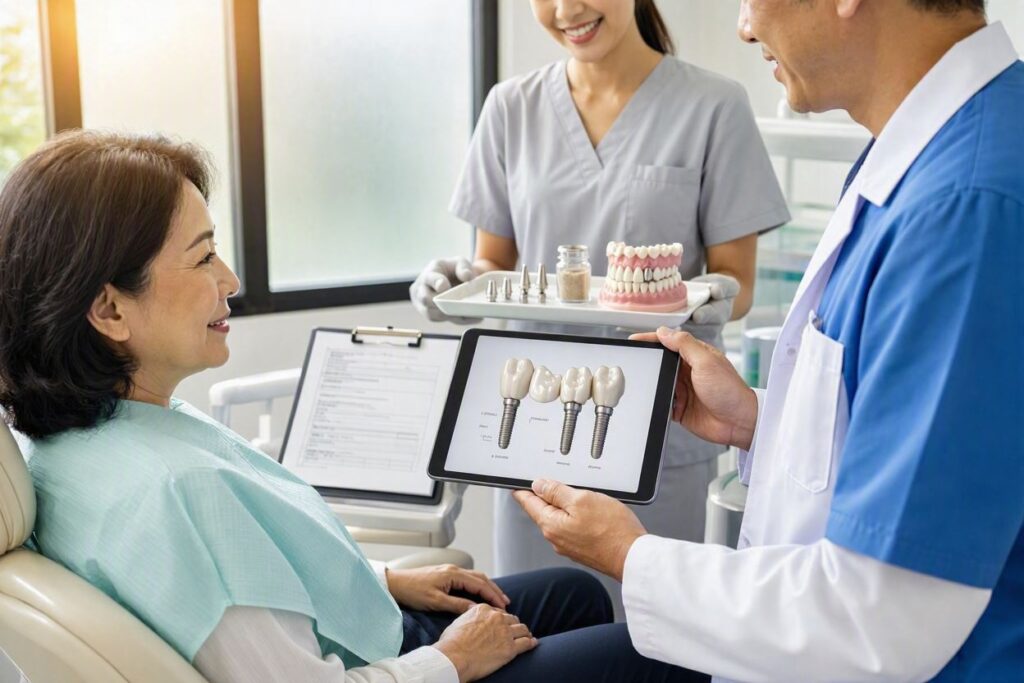
- The Implants: Titanium screws placed into the jawbone to act as roots.
- The Bridge: A row of connected porcelain or zirconia teeth (pontics and crowns) that spans the gap.
Instead of replacing one tooth with one implant, you replace three teeth with two implants (a 3-unit bridge). This is more cost-effective and requires less bone volume.
Average Cost Breakdown for a 3-Unit Bridge
Let’s look at the most common scenario: you are missing three teeth in a row, and you get two implants with a bridge connecting three crowns.
| Item | Quantity | Average Cost per Unit (USD) | Total Cost (USD) |
|---|---|---|---|
| Implant Fixture | 2 | $1,500 – $2,500 | $3,000 – $5,000 |
| Abutment | 2 | $400 – $800 | $800 – $1,600 |
| Bridge Restoration (3 units) | 1 | $2,500 – $5,000 | $2,500 – $5,000 |
| Diagnostics (X-rays/CT) | 1 set | $200 – $500 | $200 – $500 |
| Bone Grafting (if needed) | 1 site | $500 – $1,500 | $500 – $3,000 |
| Grand Total | $7,000 – $15,100 |
Types of Implant Bridges and Their Costs
The complexity of the bridge changes the price.
1. Standard Fixed Bridge (Cemented or Screwed)
- Description: The bridge is fixed permanently in the mouth. It does not come out. It feels like natural teeth.
- Cost: $7,000 – $15,000 (as above).
- Best for: Patients who want the closest thing to natural teeth.
2. Implant-Supported Overdenture (Snap-On)
- Description: This is a removable “bridge” or denture. Two to four implants stick out from the gum, and the denture snaps onto them. You can take it out to clean it.
- Cost: $4,000 – $10,000 (for 2 implants + denture).
- Best for: Patients who need full arch replacement but want a cheaper option than a fixed bridge.
3. Full Arch Fixed Bridge (All-on-4)
- Description: Replaces all teeth on one jaw. Usually 4 to 6 implants support a full bridge of 12 teeth.
- Cost: $15,000 – $30,000 per jaw.
- Best for: Patients who have lost all their teeth or whose remaining teeth are failing.
The “Hidden” Costs: Bone Grafting and Extractions
Many patients focus on the bridge itself but forget the foundation.
Tooth Extractions
If you still have broken or decayed teeth in the area, they must be removed first. Surgical extractions can cost $200 – $600 per tooth.
Bone Grafting
If the tooth has been missing for years, the jawbone shrinks (resorption). You need a solid base of bone to place the implant.
- Ridge Augmentation: $500 – $1,500 per site.
- Sinus Lift: $1,500 – $3,000 per side (for upper back teeth).
The “Cost per Tooth” Illusion
A single implant might cost $4,000. A bridge of 3 teeth might cost $12,000. Per tooth, the bridge costs less ($4,000 per tooth vs. $4,000 for one). While the upfront check is bigger, the value is often better.
Material Choices: The Aesthetic vs. Budget Trade-off
The lab bill for the bridge is a huge portion of the cost.
| Material | Cost (Relative) | Durability | Aesthetics |
|---|---|---|---|
| Acrylic (Temporary) | Low | Low (1-3 years) | Fair |
| Porcelain Fused to Metal (PFM) | Medium | Medium (10 years) | Good (metal line risk) |
| Monolithic Zirconia | High | Very High (20+ years) | Excellent |
| Layered Zirconia/Porcelain | High | High | Superior (most natural) |
Insurance and Payment Options
Dental insurance often covers bridges, but implants are trickier.
The “Least Expensive Alternative” Clause
Many insurance plans will pay for a traditional tooth-supported bridge but not an implant-supported bridge. They consider the implant version “upgraded” and will only pay the amount they would have paid for the cheaper option.
Payment Plans
Almost all dental offices offering these high-cost procedures partner with financing companies (CareCredit, LendingClub). You can spread the cost over 24 to 60 months.
Dental Tourism
Flying to Mexico, Costa Rica, or Thailand can cut these prices by 50-70%. A $12,000 bridge in the US costs $4,000 in Costa Rica.
The Long-Term Value
Why spend $10,000 on an implant bridge when a removable partial denture costs $1,500?
1. Bone Preservation
A removable partial denture rests on the gums. It does not stimulate the bone. The bone continues to melt away. An implant bridge transmits chewing forces to the bone, keeping it dense and healthy.
2. Chewing Efficiency
An implant bridge gives you 90% of your natural chewing force. A partial denture gives you maybe 20%. This affects your nutrition and enjoyment of food.
3. Survival Rate
Implant bridges have a survival rate of over 95% at 10 years. Removable partials often need relining, rebasing, or replacement every 5-7 years, and they can damage the anchor teeth.
Questions to Ask Your Dentist
Before you sign the treatment plan, ask:
- “Is this a fixed bridge or a removable overdenture?”
- “What material are you using for the bridge?”
- “Does this price include the temporary bridge?”
- “What happens if one of the implants fails? Is there a warranty?”
Conclusion
Dental bridge implants represent a significant financial investment, ranging from $7,000 for a simple case to over $30,000 for a full arch. While the price is high, the procedure preserves bone, restores full chewing function, and avoids the recurring costs of dentures. By understanding the components of the price, you can make an informed decision that balances your budget with your long-term health.
Frequently Asked Questions (FAQ)
Q: How long do dental bridge implants last?
A: The titanium implants themselves can last a lifetime. The bridge (the white teeth part) typically lasts 10 to 20 years depending on the material and your oral hygiene.
Q: Is it painful to get a dental bridge implant?
A: The surgery is performed under local anesthesia or sedation, so you should not feel pain during the procedure. Afterward, there is usually mild soreness manageable with over-the-counter pain relievers.
Q: Can I get a bridge implant if I have been missing teeth for years?
A: Yes, but you will likely need a bone graft first. When teeth are missing for a long time, the bone resorbs. The dentist must rebuild the bone before placing the implant.
Q: What is the difference between a traditional bridge and an implant bridge?
A: A traditional bridge relies on your natural teeth for support. The dentist shaves down the teeth on either side of the gap. An implant bridge relies on titanium screws in the bone, leaving your natural teeth untouched.
Q: Can I eat normally with a dental bridge implant?
A: Yes. Once healed, you can eat most foods, including steak and apples. You should still avoid extremely hard items like ice cubes or hard candies, just as you would with natural teeth.
Additional Resource
For more detailed information on dental restoration options, visit the American College of Prosthodontists at www.prosthodontics.org.