Alexandria VA Dental Implants
If you are missing one tooth, several teeth, or even all of your teeth, you have probably searched for “Alexandria VA dental implants” more than a few times. And you are not alone. Thousands of people in Northern Virginia are choosing dental implants because they want a solution that looks, feels, and functions like natural teeth.
But let us be honest. The world of dental implants can feel overwhelming. You have questions about pain, price, timing, and whether the procedure is right for you. This guide walks you through everything you need to know. No jargon overload. No unrealistic promises. Just clear, friendly, and useful information to help you make a confident decision.
What Exactly Are Dental Implants? A Simple Explanation
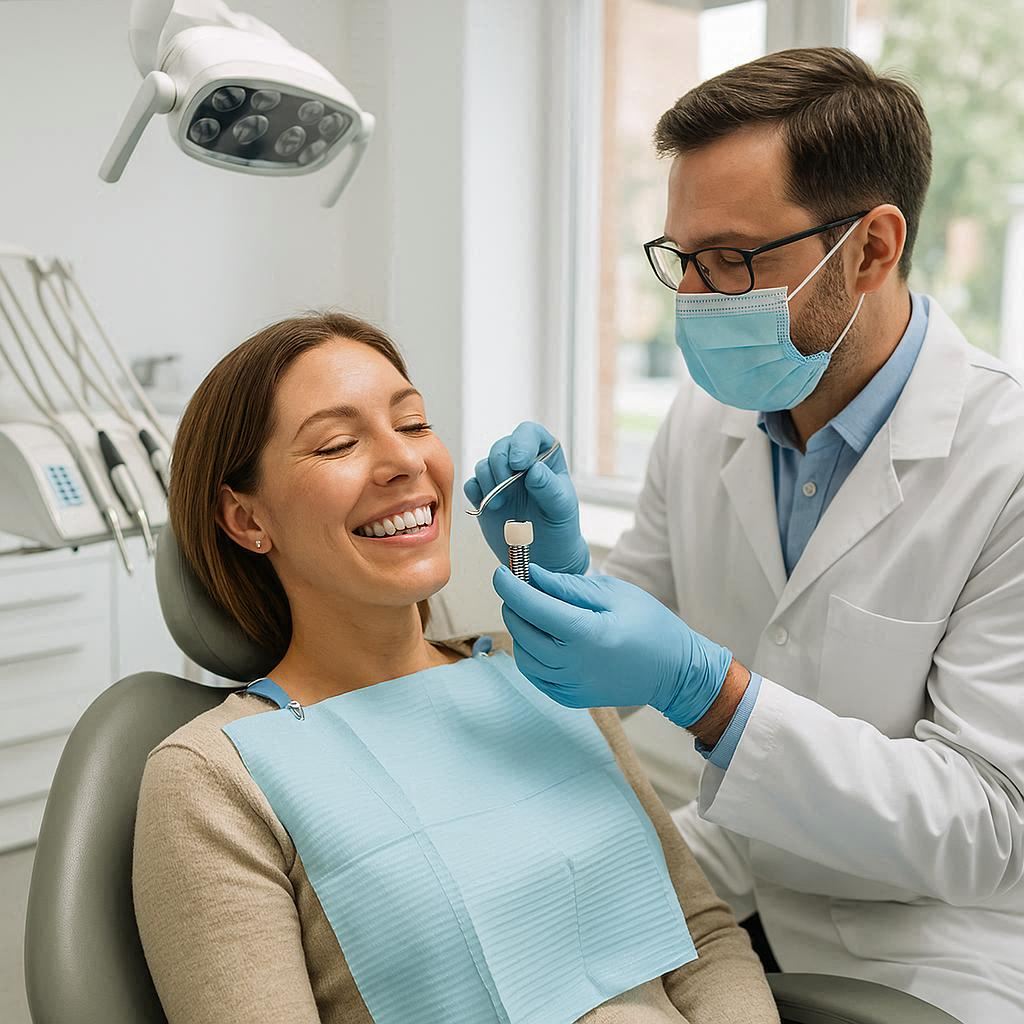
Think of a dental implant as an artificial tooth root. A dentist places a small, screw-like post made of titanium into your jawbone. Over time, your bone grows around that post. This creates a rock-solid foundation. Then, the dentist attaches a custom-made crown on top. That crown looks and works just like a real tooth.
Unlike dentures or bridges, implants do not sit on top of your gums. They become part of your body. That is why they feel so natural and last so long.
The Three Main Parts of a Dental Implant
- The implant post: The titanium screw inserted into the jawbone.
- The abutment: A connector piece placed on top of the post.
- The restoration: The visible crown, bridge, or denture that attaches to the abutment.
Who Is a Good Candidate for Implants?
Most healthy adults with missing teeth can get implants. However, you need enough jawbone density to support the post. You also need healthy gums free from active periodontal disease. Smokers, people with uncontrolled diabetes, or those who grind their teeth heavily may face additional challenges. But many of those issues can be managed with proper planning.
Important note: A good implant dentist in Alexandria will never promise you implants without a thorough exam. That exam almost always includes 3D imaging (CBCT scan) to check your bone volume and nerve positions.
Why Choose Dental Implants Over Dentures or Bridges?
This is the most common question patients ask. Let us break down the real differences in a way that makes sense.
| Feature | Dental Implants | Traditional Dentures | Dental Bridge |
|---|---|---|---|
| Stability | Permanent. Does not move or slip. | Can shift, click, or fall out. | Fixed, but relies on adjacent teeth. |
| Bone health | Prevents bone loss. Stimulates jawbone. | No bone stimulation. Bone shrinks over time. | Does not prevent bone loss under the missing tooth. |
| Adjacent teeth | No impact on neighboring teeth. | None. | Requires shaving down healthy adjacent teeth. |
| Lifespan | 20+ years or lifetime with care. | 5–8 years typically. | 7–10 years on average. |
| Cleaning | Brush and floss normally. | Requires removal, soaking, special cleaners. | Requires special floss threaders. |
| Comfort | Feels like natural teeth. | Can cause sore spots and gagging. | Usually comfortable but can trap food. |
A Quick Story From a Real Patient
Sarah, a 52-year-old teacher from Alexandria, wore partial dentures for six years. She hated the clicking sound during class. She also noticed her face looking sunken. After switching to implant-supported dentures, she told her dentist: “I forgot what it felt like to bite into an apple. Now I eat whatever I want. Nobody even knows I have implants.”
That kind of transformation is common. But it requires good planning and realistic expectations.
The Step-by-Step Dental Implant Process in Alexandria, VA
Every dental implant journey is slightly different. But most patients follow a similar roadmap. Knowing what comes next reduces anxiety and helps you prepare.
Step 1: Initial Consultation and Digital Imaging
Your first visit is all about information gathering. The dentist will:
- Examine your teeth and gums.
- Take a CBCT scan (3D X-ray).
- Discuss your medical history and medications.
- Explain how many implants you actually need.
Some offices also use intraoral scanners instead of goopy impressions. That is a nice bonus.
Step 2: Treatment Planning
The dentist creates a surgical guide. This is a custom-made template that shows exactly where to place each implant. Modern implant dentistry uses computer-guided surgery. It is safer, faster, and more precise than freehand placement.
Step 3: The Implant Placement Surgery
This is the day you have been thinking about. Here is what actually happens:
- Local anesthesia numbs the area. You stay awake but feel no pain.
- The dentist makes a small incision in your gum.
- A tiny hole is drilled into the jawbone.
- The titanium implant post is screwed into place.
- A healing cap or temporary crown is placed on top.
Most single implant surgeries take 45 to 90 minutes. For multiple implants, expect two to three hours.
Does it hurt? You will feel pressure and vibration, but not sharp pain. After the numbness wears off, you will have some soreness. Over-the-counter pain relievers usually manage that just fine.
Step 4: Osseointegration (The Healing Phase)
This is the most important part. Osseointegration means your jawbone grows around the implant. It locks the post into place like a natural root. This takes time: usually three to six months. During this period, you eat soft foods and avoid chewing directly on the healing implant.
Step 5: Abutment Placement
Once the implant is fully fused, you return for a minor procedure. The dentist reopens the gum, attaches the abutment (the metal connector), and lets the gum heal around it. This visit is much shorter than the surgery. Local anesthesia is still used, but recovery is only a few days.
Step 6: Placing the Final Crown, Bridge, or Denture
Your dentist takes a final impression or digital scan. A dental lab creates your custom restoration. When it arrives, you return for the final fitting. The dentist checks the bite, color, and fit. Then they screw or cement the restoration onto the abutment.
Congratulations. You now have a new tooth that should last for decades.
Types of Dental Implants Available in Alexandria
Not all implants are the same. Depending on your situation, your dentist may recommend one of these options.
Single Tooth Implant
Replaces one missing tooth. One post, one crown. Ideal when adjacent teeth are healthy.
Implant-Supported Bridge
Replaces two or more missing teeth in a row. Uses two or three implants to support a multi-unit bridge. More stable than a traditional bridge.
Full Arch Fixed Implants (All-on-4 or All-on-6)
For patients missing all teeth in an arch (upper or lower). Four to six implants support a fixed, non-removable denture. You do not take it out at night. You clean it like natural teeth.
Implant-Retained Dentures
A removable denture that snaps onto two to four implants. More stable than regular dentures, but you still remove it for cleaning.
Mini Dental Implants (MDIs)
Smaller diameter implants. Sometimes used for lower denture stabilization or when bone volume is low. They are not as strong as standard implants, so they work best in specific cases.
| Implant Type | Number of Implants | Best For | Typical Cost Range (per arch) |
|---|---|---|---|
| Single tooth | 1 | One missing tooth | 3,000–5,000 |
| Implant bridge | 2–3 | 2–3 missing teeth in a row | 6,000–10,000 |
| All-on-4 | 4 | Full upper or lower arch | 15,000–25,000 |
| Implant-retained denture | 2–4 | Lower denture wearers | 7,000–12,000 |
The Real Cost of Dental Implants in Alexandria, VA
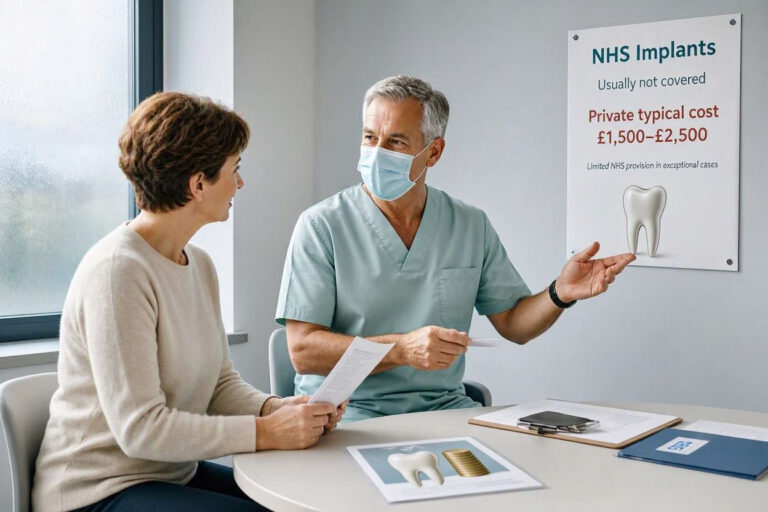
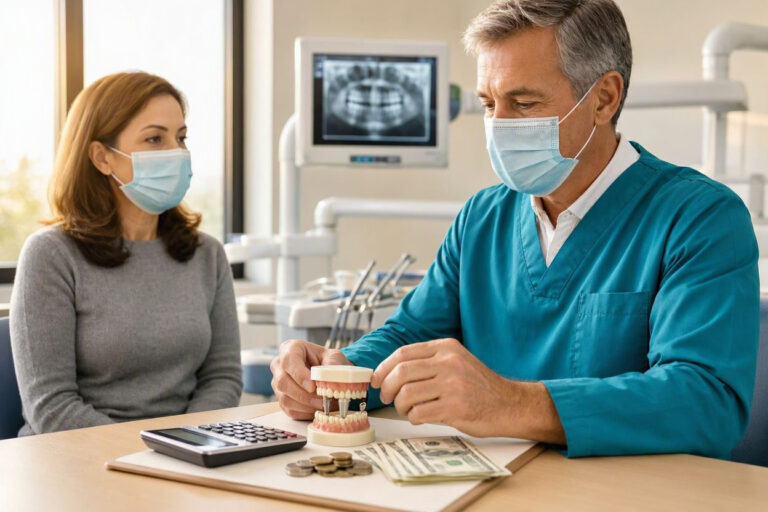
Let us talk money. This is often the biggest concern for patients. And for good reason — dental implants are an investment. But here is the truth: they are usually cheaper in the long run than dentures or bridges that need replacement every few years.
Average Prices in Alexandria (2025 Estimates)
- Single implant with crown: 3,500–6,000
- Implant-supported bridge (three units): 8,000–12,000
- All-on-4 per arch: 18,000–28,000
- Implant-retained denture (lower): 7,000–10,000
These prices typically include: consultation, CT scan, surgery, abutment, and the final crown. Always ask for an itemized treatment plan. Some offices charge separately for the crown or the abutment.
Does Dental Insurance Cover Implants?
This depends on your plan. Many traditional PPO plans do not cover implants at all. However, more plans now offer partial coverage — usually 30% to 50% of the cost. Medically necessary cases (such as implants after accident-related tooth loss) have better coverage.
Check these details with your insurer:
- Is there a missing tooth clause? (Some plans exclude teeth missing before you enrolled)
- What is the annual maximum? (Often 1,000–2,000)
- Does the plan cover the crown separately?
Financing Options in Alexandria
Most implant dentists work with third-party financing companies. Popular options include:
- CareCredit (healthcare credit card)
- LendingClub (patient financing)
- Proceed Finance (specializes in dental implants)
Many local offices also offer in-house membership plans or payment plans with zero or low interest. Do not be shy about asking. A good office wants to help you afford care.
Choosing the Best Implant Dentist in Alexandria VA
You have many choices. That is a good thing. But how do you separate excellent implant dentists from average ones? Use this checklist.
What to Look For
- Advanced training: Look for terms like “Fellow of the International Congress of Oral Implantologists (ICOI)” or “Diplomate, American Board of Oral Implantology.”
- In-house CBCT scanner: 3D imaging on site, not referred elsewhere.
- Guided surgery: The dentist uses a surgical guide, not freehand placement.
- Before-and-after photos: Ask to see real cases similar to yours.
- Clear pricing: No hidden fees for the CT scan, abutment, or temporary restorations.
- Sedation options: Nitrous oxide, oral sedation, or IV sedation for anxious patients.
Questions to Ask During Your Consultation
- How many implants do you place per month?
- What is your success rate for implants in my specific situation?
- Do you use a surgical guide?
- What happens if the implant fails? Is there a warranty?
- Can you provide three patient references?
Red flag warning: Be cautious of any dentist who quotes you a price over the phone without an exam. Also avoid “same-day implants” advertised as a routine solution. While immediate loading is possible in select cases, most patients need a healing period.
Recovery and Aftercare: What to Expect
You just had surgery. Now what? The first week is the most important for healing.
Days 1–3
- Some swelling and bruising are normal.
- Bite on gauze for 30–60 minutes to stop bleeding.
- Apply ice packs (15 minutes on, 15 minutes off).
- Eat only cold or lukewarm soft foods: yogurt, smoothies, mashed potatoes, scrambled eggs.
- No spitting, no drinking through a straw, no rinsing forcefully.
Days 4–7
- Swelling peaks around day three, then goes down.
- Start warm salt water rinses (gently).
- Introduce soft solids like pasta, fish, or bananas.
- Avoid the surgical site when chewing.
Weeks 2–4
- Most soreness is gone.
- You can return to normal eating, but avoid hard or sticky foods near the implant.
- Resume brushing and flossing, but be gentle around the healing cap.
Long-Term Maintenance
Implants cannot get cavities, but they can get gum disease. That disease is called peri-implantitis. It is serious. It can cause bone loss and implant failure. So you must care for your implants like natural teeth — actually, even better.
Daily care checklist:
- Brush twice a day with a soft toothbrush.
- Floss daily. Use implant-specific floss or super floss.
- Use a water flosser (Waterpik) on a low setting.
- Avoid chewing ice, hard candy, or pens.
- Visit your dentist every six months for cleanings.
- Wear a night guard if you grind your teeth.
Common Myths About Dental Implants (Busted)
Let us clear up some misinformation floating around the internet and even some dental offices.
Myth 1: “Implants are painful.”
Reality: Most patients say implant surgery hurts less than a tooth extraction. Local anesthesia numbs everything. Post-op soreness is mild to moderate and responds well to ibuprofen.
Myth 2: “The procedure takes a whole year.”
Reality: The average case takes four to eight months from start to finish. Complex cases with bone grafting can take longer. But a straightforward single implant often takes about four months.
Myth 3: “I’m too old for implants.”
Reality: Age is not a barrier. Healthy adults in their 80s and 90s get implants successfully. The real factors are overall health, bone density, and medication use — not your birthdate.
Myth 4: “My body will reject the implant.”
Reality: Rejection is extremely rare. Titanium is biocompatible. True implant failure is almost always due to infection (peri-implantitis), failed osseointegration, or excessive bite force — not an allergic reaction.
Myth 5: “Implants are only for rich people.”
Reality: Implants cost more upfront, but over 20 years they often cost less than replacing dentures or bridges every 5–10 years. Plus, financing makes monthly payments manageable for many budgets.
Bone Grafting and Sinus Lifts: What If You Lack Bone?
This is a common situation. Many people lose jawbone density because they waited too long after losing a tooth. Without a root, the bone resorbs (melts away). If you have inadequate bone, you cannot place an implant directly. But you have options.
Bone Grafting
A bone graft adds artificial or natural bone material to your jaw. It takes about four to six months to heal. After that, you can place the implant. Small grafts are simple. Large grafts require more healing time.
Sinus Lift
For upper back teeth (molars), the maxillary sinus sits above the jawbone. If that bone is thin, the dentist lifts the sinus membrane and places bone graft material underneath. Then you wait six to nine months for the graft to mature.
Does a bone graft hurt? It feels similar to the implant surgery. Most patients manage just fine with over-the-counter pain relievers. The extra waiting time is the hardest part, not the pain.
Same-Day Implants (Teeth in a Day): Is It Real?
You have seen the ads: “Get new teeth in one day!” Is that true? Partially. Same-day implants exist, but they are not for everyone.
How Teeth in a Day Works
The dentist places four to six implants and attaches a temporary fixed bridge on the same visit. You walk out with a full arch of teeth that day. However, those are temporary teeth. You must eat a soft diet for four to six months while the implants heal. After that, you return for the final permanent teeth.
Who Is a Candidate for Same-Day Implants?
- Patients with enough dense bone.
- Non-smokers (or willing to quit temporarily).
- No active gum disease.
- Realistic expectations (you will still have a healing period).
Who Should Avoid Same-Day Implants?
- Heavy smokers.
- People with bruxism (tooth grinding).
- Patients with very low bone density.
- Anyone with uncontrolled diabetes or autoimmune conditions.
Bottom line: Same-day implants are convenient, but they are not magic. The implants still need time to fuse with your bone. Do not let a marketing promise rush your biological healing.
Local Resources for Dental Implants in Alexandria VA
You live in or near Alexandria. That means you have access to excellent dental care. Here are some local resources to help you in your research.
Top Types of Implant Providers in Alexandria
- Periodontists: Specialists in gums and bone. Excellent for complex grafting and single implants.
- Oral Surgeons: Handle difficult extractions, full-arch implants, and sinus lifts.
- General dentists with advanced implant training: Many GDs place implants successfully after hundreds of hours of continuing education.
- Prosthodontists: Experts in the restoration phase (crowns and bridges on implants).
What to Know About Dental Schools
If budget is a major concern, consider the dental schools in the DC area. Howard University College of Dentistry and VCU School of Dentistry (Richmond) offer implant treatment at reduced fees. The trade-off: longer appointments and more visits.
Local Support Groups and Resources
- Northern Virginia Dental Society: Provides patient referrals and educational materials.
- American Academy of Implant Dentistry (AAID): Search for “Fellow” or “Master” level dentists in Alexandria.
- CareCredit website: Find Alexandria dentists who accept this financing option.
Potential Complications and How to Avoid Them
Being honest means talking about risks. Most implant procedures go smoothly. But complications do happen. Knowing them helps you avoid them.
| Complication | Likelihood | Prevention |
|---|---|---|
| Implant failure (early) | 2–5% | Do not smoke, control diabetes, follow post-op instructions |
| Peri-implantitis (late infection) | 5–10% over 10 years | Excellent home care, regular cleanings |
| Nerve injury (numbness) | <1% with CBCT-guided surgery | Choose a dentist who uses 3D planning |
| Sinus perforation | 1–5% for upper implants | Work with an experienced surgeon |
| Screw loosening | 5–10% over time | Normal maintenance. Easily tightened by your dentist. |
Signs of Trouble You Should Never Ignore
- The implant feels loose or moves.
- Persistent pain after the first two weeks.
- Swelling that gets worse, not better.
- Pus or foul taste in your mouth.
- The crown feels too high or your bite changed.
If you notice any of these, call your dentist immediately. Early intervention saves implants.
Long-Term Success Rates: What the Research Says
You want numbers. Here are real statistics from peer-reviewed dental literature.
- Single tooth implants: 95–98% success rate after 10 years.
- Implant-supported bridges: 90–95% success at 10 years.
- All-on-4 full arch: 94–98% success at 10 years.
- Implants in smokers: 85–90% success (lower, but still high with good hygiene).
The single biggest factor in long-term success is your home care. Not the dentist, not the implant brand, not the cost. You. Brush. Floss. See your hygienist. Do those things, and your implants should outlive you.
A Note on Cheap Dental Implants
You will see ads for $999 implants. Be careful. Extremely low prices often mean:
- The crown is extra (now you pay $2,000 more).
- The abutment is billed separately.
- No CBCT scan was taken.
- The dentist places implants without guided surgery.
- The implant is a no-name brand with no warranty.
Quality implant dentistry costs money because it requires expensive materials, skilled labor, and advanced imaging. Affordable is fine. Cheap is dangerous.
How to Find Reasonable Prices Without Sacrificing Quality
- Ask for an in-house dental savings plan.
- Use FSA or HSA dollars pre-tax.
- Combine implant treatment with insurance-covered cleanings and X-rays.
- Stage your treatment over two calendar years to use two annual insurance maximums.
Preparing for Your First Implant Consultation
Walk into that appointment ready. Here is what to bring and what to expect.
What to Bring
- Insurance card and ID.
- List of current medications (including supplements).
- Any recent X-rays from your general dentist.
- A notepad for questions.
What the Dentist Will Do
- Review your medical history (especially heart conditions, diabetes, osteoporosis, cancer treatments).
- Take a CBCT scan (about 30 seconds, very low radiation).
- Examine your mouth with a probe and mirror.
- Discuss treatment options, timeline, and costs.
- Give you a written treatment plan.
What You Will Walk Away With
- A clear understanding of whether you are a candidate.
- A price quote with no surprises.
- A timeline from surgery to final teeth.
- Answers to your specific questions.
Pro tip: Visit at least two implant dentists before deciding. Compare their treatment plans and fees. Go with the one who explains things clearly and makes you feel comfortable — not necessarily the cheapest.
Real Patient Journey Timeline
Let us follow Lisa, a 45-year-old from Old Town Alexandria, as she gets a single implant for tooth #19 (lower left first molar).
| Time | Event | Details |
|---|---|---|
| January 10 | Consultation & CT scan | Lisa had enough bone. No graft needed. |
| January 24 | Implant placement | 50-minute surgery. Local anesthesia. |
| January 25–30 | Healing | Soft foods. Mild swelling. Tylenol only. |
| February – May | Osseointegration | Lisa ate carefully but lived normally. Temporary partial. |
| June 5 | Abutment placement | 20-minute visit. Local anesthesia. |
| June 19 | Final crown delivery | Color matched perfectly. Bite felt great. |
| Total time: 5 months | Total cost: $4,200 | Lisa’s comment: “Worth every penny.” |
Every case is different. But this timeline gives you a realistic expectation.
Why Alexandria VA Is a Great Place for Dental Implants
You live in a region with world-class dental care. Northern Virginia has some of the highest concentrations of implant-trained dentists in the country. Competition keeps prices reasonable. Access to specialists is excellent. And because the cost of living is high, dentists invest in better technology (CBCT scanners, intraoral cameras, 3D printers) to stay competitive.
Plus, you have easy access to Washington DC for even more specialist options. That is a good position to be in as a patient.
Conclusion
Dental implants in Alexandria, VA offer a permanent, natural-looking solution for missing teeth. They preserve your jawbone, restore your ability to eat comfortably, and eliminate the hassles of dentures. The process takes several months and requires an investment, but the long-term benefits — confidence, function, and oral health — are undeniable. Choose an experienced implant dentist, follow all aftercare instructions, and commit to excellent home hygiene. Your new smile will serve you well for decades.
Frequently Asked Questions (FAQ)
1. How long do dental implants last?
With proper care, implants can last 20 years to a lifetime. The crown on top may need replacement after 10–15 years due to normal wear.
2. Does insurance cover any part of dental implants?
Some PPO plans cover 30–50% of the cost, especially if the tooth loss was due to an accident. Always check your specific plan for a missing tooth clause and annual maximums.
3. Can I get implants if I have gum disease?
You must treat active gum disease first. Once your gums are healthy, you can proceed with implants. Placing implants into infected gums leads to failure.
4. Are dental implants safe for seniors?
Yes. Healthy seniors with good bone density are excellent candidates. Many patients in their 70s, 80s, and even 90s receive implants successfully.
5. What is the failure rate for dental implants?
The overall failure rate is 2–5% for lower jaws and up to 10% for upper jaws. Smoking, diabetes, and poor oral hygiene increase the risk.
6. How much pain should I expect after surgery?
Most patients rate post-op pain as 2–4 out of 10. Over-the-counter ibuprofen or acetaminophen usually controls it. Severe pain is not normal.
7. Can I eat normally with implants?
Yes. After full healing, you can eat steak, apples, nuts, and any other food. Implants restore about 90–95% of your natural chewing power.
8. What is the alternative if I don’t have enough bone?
Bone grafting or a sinus lift can build up your bone. In rare cases, mini implants or a traditional denture may be alternatives.
9. How do I clean my implants?
Brush twice daily, floss with implant-specific floss, and use a water flosser. Avoid metal scrapers during professional cleanings.
10. Do I need to take antibiotics before implant surgery?
Most healthy patients do not. However, if you have certain heart conditions, joint replacements, or a compromised immune system, your dentist may prescribe premedication.
Additional Resource
For a dentist-finder tool and detailed patient education videos about the implant process, visit the American Academy of Implant Dentistry’s patient resource page:
https://www.aaid.com/patients
This site allows you to search for AAID-credentialed implant dentists in Alexandria, VA, and learn more about implant types, risks, and success statistics.
Disclaimer: This article is for informational purposes only and does not constitute medical or dental advice. Always consult a licensed dentist in Alexandria, VA, for a personal examination and treatment plan. Individual results vary based on health, anatomy, and compliance with aftercare instructions.