How Much Does A Dental Crown Cost?
A dental crown is one of the most common and versatile restorative procedures in modern dentistry. It is a solution for a wide range of dental problems, from a broken tooth to a tooth that has undergone a root canal. A crown, often called a “cap,” is a custom-made restoration that fits over the entire visible portion of a tooth, restoring its shape, size, strength, and appearance.
For many patients, the recommendation for a crown comes after years of battling a troublesome tooth. It is the final step to saving a tooth that might otherwise be lost. This makes the decision to proceed significant, and the question of cost is a primary concern.
This comprehensive guide is designed to be your definitive resource on the cost of dental crowns. We will explore the different types of crowns, provide realistic cost breakdowns, explain the factors that influence the price, and discuss how insurance can help. Our goal is to give you the clear, honest information you need to make a confident decision about your dental care.

What is a Dental Crown? The Purpose and the Process
To understand the cost, it is helpful to understand what a crown is and why it is needed. A dental crown is essentially a protective helmet for your tooth. It is cemented over the entire tooth, starting at the gum line, and it becomes the new outer surface.
When is a Crown Necessary?
A dentist will recommend a crown for several reasons:
- To Protect a Weak Tooth: A tooth that has been severely weakened by decay or a large filling is at risk of fracturing. A crown holds the tooth together and prevents this.
- To Restore a Broken Tooth: If a significant portion of a tooth has broken off, a crown can restore its function and appearance.
- To Cover a Tooth After a Root Canal: After a root canal, a tooth becomes more brittle and prone to fracture. A crown is almost always recommended to protect it.
- To Cover a Dental Implant: A crown is the final step in the dental implant process, providing the visible, functional tooth.
- For Cosmetic Reasons: A crown can be used to cover a severely discolored or misshapen tooth.
The Two-Visit Process
Getting a traditional crown is a two-appointment process.
- Preparation and Impression: The dentist numbs the tooth, removes any decay, and shapes it to receive the crown. An impression is taken and sent to a dental lab. A temporary crown is placed.
- Fitting and Cementation: The temporary crown is removed, and the new permanent crown is fitted and cemented into place.
Some dentists now use CEREC technology, which allows them to design and fabricate a crown in their office in a single visit.
How Much Does A Dental Crown Cost? A Realistic Breakdown
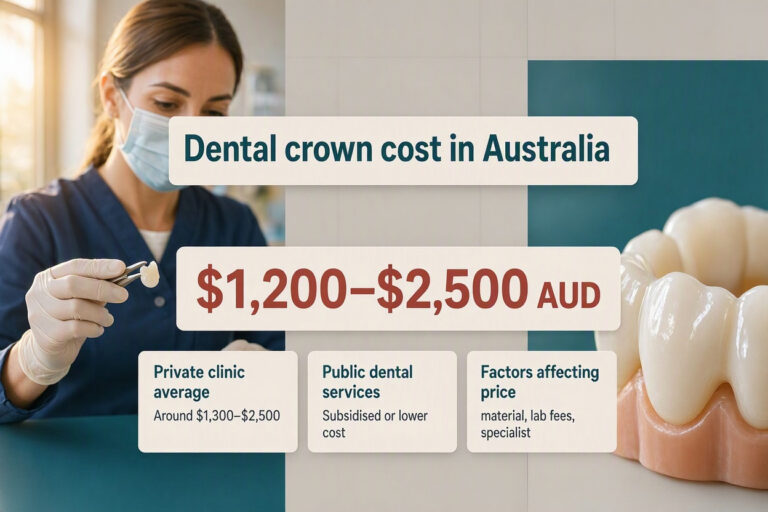
Now, let’s address the central question. The cost of a crown varies significantly based on the material used, the location of the tooth, and your geographic area.
Average Costs by Crown Type
| Type of Crown | Average Cost Range (Per Tooth) | Key Characteristics |
|---|---|---|
| Metal (Gold or Base Alloy) | $800 – $1,500 | Most durable. Least aesthetic. Best for back teeth. |
| Porcelain-Fused-to-Metal (PFM) | $900 – $1,400 | Strong and more aesthetic. Can show a dark line at the gum. |
| All-Ceramic (E-max/Lithium Disilicate) | $1,000 – $2,000 | Most aesthetic. Excellent for front teeth. |
| Zirconia | $1,000 – $2,500 | The strongest ceramic. Excellent for back teeth and grinders. |
| Same-Day CEREC Crown | $1,000 – $2,000 | Made in a single visit. Convenient and high-quality. |
What Does the Fee Include?
The fee quoted for a crown is a comprehensive one. It typically includes:
- The initial examination and X-rays.
- The administration of local anesthesia.
- The preparation of the tooth.
- The taking of the impression.
- The fabrication of the temporary crown.
- The laboratory fee for making the permanent crown.
- The final fitting and cementation of the crown.
The Factors That Influence the Price
The range provided is broad. Here are the specific variables that will determine where your case falls within that range.
1. The Material
This is the most significant factor, as shown in the table above. The choice of material is a balance between strength and aesthetics. Your dentist will help you choose the best material for the location of the tooth and your personal needs.
2. Your Geographic Location
As with all dental procedures, the cost of living in your area has a direct impact on the price. Dental practices in major cities have higher overhead costs, which are reflected in their fees. A crown in Manhattan will cost significantly more than the same crown in a rural area of the Midwest.
3. The Complexity of Your Case
A straightforward crown on a relatively healthy tooth is less expensive. If the tooth is severely broken down, has had a root canal, or requires additional procedures like a post-and-core buildup (a foundation to support the crown), the cost will be higher.
4. The Dentist’s Expertise
A prosthodontist (a specialist in restoring and replacing teeth) may charge more than a general dentist. Similarly, a dentist with a reputation for excellence in cosmetic work may command a premium.
Does Dental Insurance Cover Crowns?
Yes, in most cases. A crown is considered a “major” restorative procedure, and it is typically covered by dental insurance. However, the amount of coverage varies.
Understanding Your Coverage
- Typical Coverage: Most plans cover major procedures at a percentage of 50% to 80%, after your deductible is met.
- Annual Maximum: Your coverage is limited by your plan’s annual maximum benefit (e.g., $1,500 or $2,000 per year). A crown costing $1,200 could use up a significant portion of this maximum.
- The “Downgrade” Issue: This is a common occurrence with crowns. If you choose a premium crown, like a zirconia crown, your insurance company may only reimburse you for the cost of a “lesser” alternative, like a metal crown. This is called the “benefit of the lesser alternative.” You would be responsible for the difference.
Important Note: Always ask your dentist’s office to submit a “pre-treatment estimate” to your insurance company before you begin treatment. This will provide a clear, written breakdown of what your plan will pay and what your out-of-pocket cost will be.
The Hidden Cost of Delay
When a dentist recommends a crown, it is usually because the tooth has reached a point where a simple filling is no longer sufficient. Delaying the treatment can have serious consequences.
A weakened tooth that is not protected by a crown is at high risk of fracturing. If a tooth fractures below the gum line, it may not be salvageable. The only option then is extraction.
The cost of an extraction is $200-$500. But that is not the end of the story. The missing tooth must then be replaced. The options are:
- Dental Implant: $3,000 – $6,000
- Dental Bridge: $2,000 – $5,000
- Partial Denture: $1,000 – $2,000
As you can see, the cost of replacing a lost tooth is far greater than the cost of a crown. A crown is an investment in saving your natural tooth.
“I tell my patients that a crown is the last, best chance to save a tooth. It’s an investment, but it’s an investment that pays off by preventing a much bigger, more expensive problem down the road.” — A Perspective from a General Dentist
Frequently Asked Questions (FAQ)
1. Is getting a crown painful?
No. The procedure is performed under local anesthesia, so you will not feel any pain. You may experience some mild sensitivity after the anesthesia wears off.
2. How long does a crown last?
The lifespan of a crown depends on the material and how well you care for it. On average, a crown lasts 10-15 years. Gold crowns can last even longer.
3. Can a crown be whitened?
No. The porcelain or ceramic material of a crown does not respond to teeth whitening agents. If you are planning to whiten your teeth, you should do so before getting your crown made.
4. What is the difference between a crown and a veneer?
A crown covers the entire tooth, while a veneer is a thin shell that only covers the front surface. Crowns are for more severely damaged teeth.
5. What is a “build-up”?
A build-up is a procedure where the dentist uses filling material to rebuild a severely broken-down tooth to create a stable foundation for the crown. It is billed as a separate procedure.
6. Can I eat normally with a crown?
Yes. A crown is designed to restore full function. However, you should avoid chewing on extremely hard objects like ice or hard candy.
Additional Resource
For more information on restorative dental procedures, visit the American Dental Association’s patient education website, MouthHealthy.
Conclusion
The cost of a dental crown varies considerably based on the material, location, and complexity of the case, with prices ranging from $800 for a basic metal crown to over $2,000 for a premium zirconia restoration. This comprehensive fee covers the entire process, from preparation to final cementation, and is often partially covered by dental insurance. While it is a significant investment, a crown is a cost-effective way to save a natural tooth and prevent the far greater expense and complications of tooth loss and replacement.