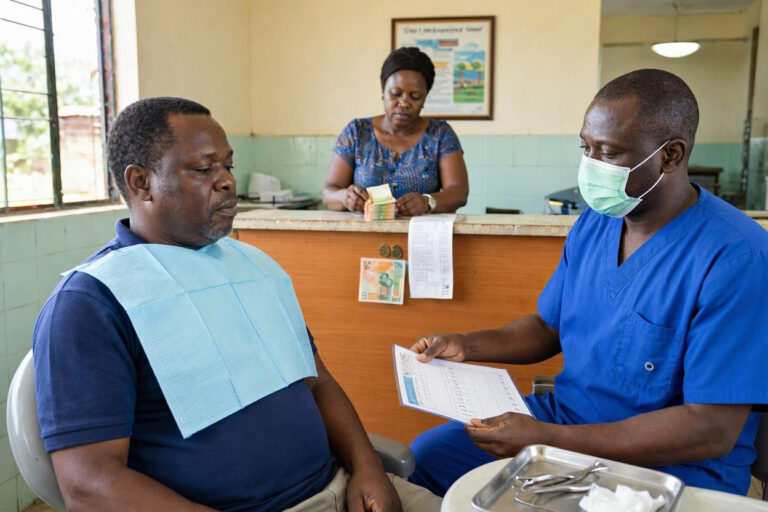
How Much Does A Korean Dentist Cost?
A Korean dentist in South Korea typically charges between KRW 30,000 and KRW 150,000 ($25 to $120 USD) for a basic checkup and cleaning. More complex procedures cost more. A filling costs KRW 50,000 to KRW 150,000. A root canal costs KRW 200,000 to KRW 500,000. A crown costs KRW 300,000 to KRW 800,000. A dental implant costs KRW 1,000,000 to KRW 2,500,000. Prices are higher in Seoul and lower in rural areas. The National Health Insurance Service (NHIS) covers part of many dental treatments. This guide explains the real costs of dental care in South Korea, what affects the price, and how to save money.

What Is A Korean Dentist?
A Korean dentist is a licensed dental professional in South Korea. They complete a six-year dental degree and pass a national licensing exam. Many Korean dentists study abroad or take continuing education courses. They use modern equipment and techniques. Dental clinics in Korea range from small neighborhood offices to large multi-specialty clinics in Seoul. Some clinics cater to international patients and offer English-speaking staff.
Why Dental Costs Vary In Korea
The cost of dental care in Korea varies widely. A simple checkup at a rural clinic may cost KRW 20,000. The same checkup at a luxury clinic in Gangnam may cost KRW 100,000 or more. There are several reasons for this.
First, the location matters. Seoul, especially districts like Gangnam, has higher rents and overheads. Rural areas have lower costs. Second, the type of clinic matters. A general dentist charges less than a specialist. A cosmetic dentist charges more. Third, the materials matter. A metal crown is cheaper than a zirconia crown. Fourth, insurance coverage matters. The NHIS covers part of many treatments, but cosmetic procedures are not covered. Fifth, the dentist’s experience and reputation matter. A famous dentist may charge premium fees.
Typical Dental Costs In South Korea
Here is a comparison of typical dental costs in South Korea. Prices are given in Korean Won (KRW) and US Dollars (USD) for reference.
| Procedure | Low Estimate (KRW) | Average Estimate (KRW) | High Estimate (KRW) | Approx. USD Range |
|---|---|---|---|---|
| Checkup and consultation | 10,000 | 30,000 | 80,000 | $8–$60 |
| Scaling (cleaning) | 20,000 | 50,000 | 100,000 | $15–$75 |
| Filling (composite) | 50,000 | 100,000 | 150,000 | $40–$120 |
| Root canal (per tooth) | 200,000 | 350,000 | 500,000 | $150–$400 |
| Crown (porcelain) | 300,000 | 500,000 | 800,000 | $250–$650 |
| Crown (zirconia) | 400,000 | 600,000 | 900,000 | $300–$700 |
| Extraction (simple) | 20,000 | 50,000 | 100,000 | $15–$75 |
| Extraction (surgical) | 80,000 | 150,000 | 300,000 | $60–$250 |
| Wisdom tooth (impacted) | 150,000 | 300,000 | 500,000 | $120–$400 |
| Dental implant | 1,000,000 | 1,500,000 | 2,500,000 | $800–$2,000 |
| Orthodontics (braces) | 3,000,000 | 5,000,000 | 8,000,000 | $2,400–$6,500 |
| Teeth whitening | 200,000 | 400,000 | 800,000 | $150–$650 |
| Veneer (per tooth) | 500,000 | 800,000 | 1,500,000 | $400–$1,200 |
These prices are for private clinics. Public health centers and university hospitals may charge less. NHIS covers part of many treatments, reducing the out-of-pocket cost.
NHIS Coverage For Dental Care
The National Health Insurance Service (NHIS) is Korea’s universal health insurance. It covers part of many dental treatments.
- Covered: Checkups, scaling (once a year), fillings, root canals, extractions, and some crowns.
- Not covered: Cosmetic procedures like whitening, veneers, and orthodontics for adults.
- Partial coverage: Implants are covered for patients over 65 and some others. The coverage is limited to two implants per patient.
For covered treatments, the patient typically pays 30% of the cost. The NHIS pays 70%. For non-covered treatments, the patient pays 100%.
What Affects The Cost Of A Korean Dentist?
Several factors change the price.
Location
Seoul, especially Gangnam, Apgujeong, and Cheongdam, has the highest dental fees. Rural areas and smaller cities have lower fees. A clinic in a luxury district may charge double or triple the price of a rural clinic.
Type Of Clinic
A general dental clinic charges less than a specialist clinic. Orthodontists, oral surgeons, and prosthodontists charge more. University hospitals charge more than private clinics but may offer advanced care.
Dentist’s Experience
A dentist with many years of experience and a strong reputation may charge more. A new graduate may charge less. Some clinics employ foreign-trained dentists who charge premium fees.
Materials Used
The material used for crowns, fillings, and implants affects the price. Metal crowns are cheaper than porcelain or zirconia. Generic implants are cheaper than premium brands like Straumann or Nobel Biocare.
Insurance Coverage
NHIS covers part of many treatments. If you have private insurance, it may cover more. International patients may not be eligible for NHIS. They pay the full price.
Language And Convenience
Clinics that cater to international patients often charge more. They may offer English-speaking staff, translation services, and concierge care. This convenience comes at a premium.
How The Process Works
Knowing the steps helps you understand where your money goes.
- Consultation and exam. The dentist checks your teeth and takes X-rays. Cost: KRW 10,000–80,000.
- Treatment planning. The dentist explains your options and gives you an estimate. Cost: included.
- Treatment. The dentist performs the procedure. Cost: varies by procedure.
- Follow-up. You may need a follow-up visit. Cost: usually included or a small fee.
For major procedures like implants or orthodontics, you will have multiple visits over several months.
How To Save Money On Dental Care In Korea
You do not have to pay the highest price. Here are practical ways to lower your costs.
- Use NHIS. If you are eligible, use the National Health Insurance Service. It covers part of many treatments.
- Go to a public health center. Public health centers (보건소) offer low-cost dental care.
- Use a university hospital. University dental hospitals offer quality care at moderate prices.
- Compare clinics. Call different clinics and ask for a written estimate for the same procedure.
- Choose a general dentist. Specialists charge more. For simple procedures, a general dentist is fine.
- Choose standard materials. Metal crowns and generic implants are cheaper than premium options.
- Avoid cosmetic procedures. Whitening, veneers, and adult orthodontics are not covered by insurance and cost more.
- Ask about discounts. Some clinics offer discounts for cash payments or multiple procedures.
- Use a dental school. Dental schools offer treatment at reduced rates.
- Get a second opinion. For major procedures, get a second opinion from another dentist.
Important note: Do not choose a dentist based only on price. Poorly done dental work can cause pain, infection, and more expensive problems later. Always choose a licensed dentist.
Real-World Examples
Example 1: Checkup and cleaning in a rural clinic.
A patient visits a rural clinic for a checkup and scaling. The NHIS covers part of the cost. The patient pays KRW 20,000 ($15 USD).
Example 2: Root canal and crown in Seoul.
A patient needs a root canal and crown on a back tooth. The clinic in Seoul charges KRW 350,000 for the root canal and KRW 600,000 for a zirconia crown. NHIS covers part of the root canal. The patient pays KRW 700,000 ($525 USD).
Example 3: Dental implant in a university hospital.
A patient needs a dental implant. The university hospital charges KRW 1,200,000 for the implant and crown. NHIS covers part of the cost for the patient (over 65). The patient pays KRW 800,000 ($600 USD).
These examples show how much prices can vary. Your own quote will depend on your unique needs.
Quotations From Dental Professionals In Korea
“Many international patients are surprised by the quality of dental care in Korea. The technology is advanced, and the prices are reasonable compared to the US or Europe.” — Dr. Kim J., dentist in Seoul.
“I always recommend that patients use NHIS if they are eligible. It can save them a lot of money.” — Dr. Park S., dentist in Busan.
Frequently Asked Questions
How much does a dental checkup cost in Korea?
A checkup costs KRW 10,000–80,000 ($8–$60). NHIS covers part of the cost for eligible patients.
Is dental care in Korea cheaper than in the US?
Yes. Dental care in Korea is generally 50–70% cheaper than in the US for many procedures. Implants and orthodontics are significantly cheaper.
Does NHIS cover dental implants?
NHIS covers implants for patients over 65 and some others. Coverage is limited to two implants per patient. The patient pays about 30% of the cost.
Can foreigners use NHIS?
Foreigners who live in Korea and pay into NHIS may be eligible. Tourists are not eligible. They pay the full price.
How much does a dental implant cost in Korea?
A dental implant costs KRW 1,000,000–2,500,000 ($800–$2,000). The price depends on the clinic and the implant brand.
How much do braces cost in Korea?
Braces cost KRW 3,000,000–8,000,000 ($2,400–$6,500). Orthodontics for adults is not covered by NHIS.
Is teeth whitening popular in Korea?
Yes. Teeth whitening costs KRW 200,000–800,000 ($150–$650). It is not covered by insurance.
How do I find an English-speaking dentist in Korea?
Look for clinics in Seoul that cater to international patients. Many have English websites and staff. Ask for recommendations from other foreigners.
Can I get dental treatment in Korea as a tourist?
Yes. Many clinics accept international patients. You will pay the full price. Some clinics offer packages for dental tourism.
How long does a dental implant take in Korea?
The process usually takes 3–6 months. You will need multiple visits. Some clinics offer same-day implants.
Additional Resources
For more information on dental care in Korea, visit the Korean Dental Association at kda.or.kr. You can also check with the National Health Insurance Service at nhis.or.kr for coverage details.
Conclusion
A Korean dentist costs KRW 30,000 to KRW 150,000 for a basic checkup and cleaning. More complex procedures cost more: fillings KRW 50,000–150,000, root canals KRW 200,000–500,000, crowns KRW 300,000–800,000, and implants KRW 1,000,000–2,500,000. NHIS covers part of many treatments. Prices are higher in Seoul and lower in rural areas. To save money, use NHIS, go to a public health center or university hospital, compare clinics, and choose standard materials.