How Much Does A Nightguard Cost?
Do you wake up with a sore jaw, a dull headache, or teeth that feel sensitive? You might be grinding your teeth at night. This condition is called bruxism, and it affects millions of people. It can wear down your enamel, cause jaw pain, and even lead to cracked teeth. The solution is often a nightguard. But how much does a nightguard cost?
The answer depends on where you get it and what it is made of. You can buy a cheap boil-and-bite guard at a pharmacy for $20. You can order a custom guard online for $100. Or you can get a professional guard from your dentist for $300 to $800. Each option has pros and cons.
This guide will break down the costs of every type of nightguard. We will explain the materials, the fitting process, and how insurance works. We will also share tips to save money and protect your smile. By the end, you will know exactly what to expect.
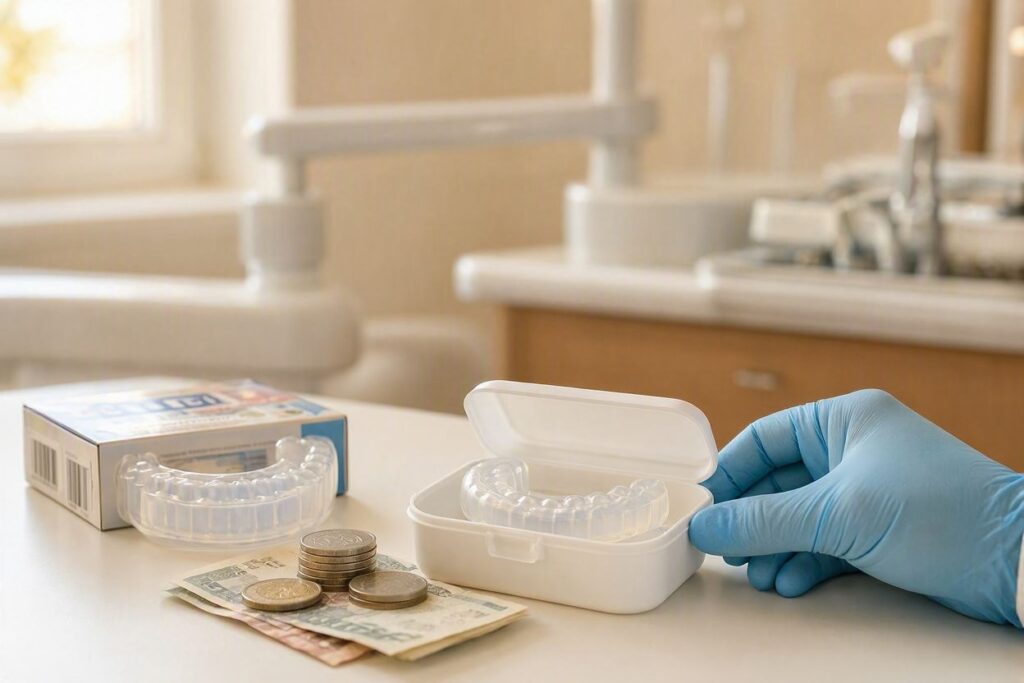
What Is A Nightguard?
A nightguard is a removable dental appliance that fits over your teeth. You wear it while you sleep. It creates a barrier between your upper and lower teeth. This prevents them from grinding against each other. It also absorbs the force of your jaw muscles, reducing strain on your jaw joint.
Nightguards are different from sports mouthguards. Sports guards are designed for impact. Nightguards are designed for long-term wear and comfort. They are usually thinner and made of softer materials.
Types Of Nightguards And Their Costs
There are three main types of nightguards. Each has a different price point and level of quality.
1. Over-The-Counter (OTC) Boil-And-Bite Nightguards
These are the cheapest option. You can find them at drugstores, supermarkets, and online. They cost between $15 and $40.
How they work:
You boil the guard in hot water to soften it. Then you place it in your mouth and bite down. The material molds to the shape of your teeth. Once it cools, it becomes hard.
Pros:
- Very cheap.
- Easy to find.
- No dentist visit required.
Cons:
- Poor fit. They are bulky and can fall out.
- Uncomfortable. They can make it hard to breathe or sleep.
- Not durable. They wear out quickly, often within a few months.
- Can actually worsen jaw problems if the fit is bad.
2. Custom Nightguards From Your Dentist
This is the gold standard. Your dentist takes an impression or a digital scan of your teeth. A dental lab then makes a guard that fits your teeth perfectly. The cost ranges from $300 to $800.
How they work:
Your dentist takes a mold of your teeth. You may need a second visit to pick up the finished guard. The guard is made of hard acrylic or a soft-hard laminate.
Pros:
- Perfect fit. Comfortable and secure.
- Durable. Lasts for years with proper care.
- Effective. Protects your teeth and jaw.
- Your dentist can monitor your grinding and adjust the guard.
Cons:
- Expensive.
- Requires dental visits.
- Not always covered by insurance.
3. Online Custom Nightguards
A newer option is to order a custom guard online. You order a kit, take an impression at home, and mail it back. The company makes a guard and sends it to you. The cost ranges from $80 to $250.
How they work:
You receive a putty-like material and trays. You make an impression of your teeth. You send it to the lab. They fabricate the guard and ship it back.
Pros:
- Cheaper than a dentist.
- More convenient than multiple dental visits.
- Better fit than boil-and-bite.
Cons:
- You do the impression yourself, which can be inaccurate.
- No professional oversight.
- Customer service can be hit or miss.
- Not ideal for complex cases.
Comparison Table: Nightguard Costs
| Type | Average Cost | Durability | Fit | Professional Supervision |
|---|---|---|---|---|
| OTC Boil-and-Bite | $15 – $40 | 3-6 months | Poor | No |
| Online Custom | $80 – $250 | 1-3 years | Good | No |
| Dentist Custom | $300 – $800 | 3-5 years | Excellent | Yes |
What Affects The Cost Of A Dentist-Made Nightguard?
Not all dentist-made nightguards cost the same. Several factors influence the price.
1. The Material
Nightguards can be made from different materials.
- Soft acrylic: Comfortable but wears out faster.
- Hard acrylic: Durable but can be uncomfortable at first.
- Dual-laminate (soft inside, hard outside): The best of both worlds. More expensive.
- Thermoformed plastic: Thinner and lighter. Good for mild grinding.
2. The Dental Lab
Your dentist sends the impression to a dental lab. Some labs charge more than others. A high-end lab uses better materials and more precise techniques. This increases the cost.
3. Your Dentist’s Fees
Dentists charge for their time, expertise, and overhead. A specialist (like a prosthodontist) may charge more than a general dentist.
4. Your Location
Prices vary by region. In a big city like New York or San Francisco, a nightguard might cost $600 to $900. In a smaller town, it might be $300 to $500.
5. Additional Services
If you need a TMJ exam, X-rays, or adjustments, these add to the cost.
Does Insurance Cover A Nightguard?
Sometimes. It depends on your insurance plan and your diagnosis.
Medical Insurance
If your nightguard is prescribed to treat a medical condition like TMJ disorder or severe bruxism, your medical insurance might cover part of the cost. You will need a diagnosis from a doctor or dentist.
Dental Insurance
Most dental insurance plans do not cover nightguards. They consider it a “comfort” item, not a medical necessity. However, some plans may cover a portion if you have a specific rider or if the guard is deemed medically necessary.
How to check:
Call your insurance company. Ask:
- Is a nightguard covered under my plan?
- Do I need a pre-authorization?
- What is my deductible and co-pay?
- Are there any limits on the type of guard?
What If I Don’t Get A Nightguard?
Grinding your teeth can cause serious damage over time. Here is what can happen.
1. Tooth Wear
Your enamel wears down. This can lead to sensitivity, cavities, and even exposed nerves.
2. Cracked Or Broken Teeth
The force of grinding can crack your teeth. This may require crowns, root canals, or extractions.
3. Jaw Pain And TMJ Disorder
Grinding strains your jaw muscles and joint. This can cause chronic pain, headaches, and difficulty opening your mouth.
4. Sleep Disruption
Grinding can wake you up or disturb your partner’s sleep.
5. Costly Repairs
Fixing damaged teeth is expensive. A single crown costs $1,000 to $2,000. A nightguard is much cheaper.
How To Save Money On A Nightguard
You do not have to pay full price. Here are some tips.
1. Start With An OTC Guard
If you are on a tight budget, try a boil-and-bite guard first. It is not perfect, but it is better than nothing. You can upgrade later.
2. Use An Online Custom Service
If you want a better fit without the dentist price, try an online custom guard. Read reviews carefully. Make sure the company has a good return policy.
3. Ask Your Dentist For A Discount
Some dentists offer discounts for cash payments or for patients without insurance. It never hurts to ask.
4. Check Dental Schools
Dental schools often offer nightguards at a reduced cost. The work is done by supervised students. It takes longer, but it saves money.
5. Use Your FSA Or HSA
If you have a Flexible Spending Account or Health Savings Account, you can use pre-tax dollars to pay for a nightguard. This can save you 20% to 30%.
6. Negotiate A Bundle
If you need other dental work, ask if your dentist will bundle the nightguard at a lower price.
Quotes From People Who Bought Nightguards
“I bought a boil-and-bite guard from CVS for $25. It was okay, but it kept falling out. I finally got a custom one from my dentist for $500. It was worth every penny.” — Mark, Ohio
“I ordered a custom guard online for $150. The impression kit was easy to use. The guard fits well. I have been using it for a year. No complaints.” — Lisa, Texas
“My insurance covered 50% of the cost because I have TMJ. I paid $250 out of pocket. I am glad I went to the dentist. The guard is so comfortable.” — Karen, Florida
How To Care For Your Nightguard
A nightguard is an investment. You need to take care of it so it lasts.
1. Clean It Daily
Rinse it with cool water after each use. Brush it gently with a soft toothbrush and mild soap. Do not use toothpaste, as it can be abrasive.
2. Deep Clean Weekly
Soak it in a denture cleaner or a mixture of water and white vinegar. This kills bacteria and removes odors.
3. Store It Properly
Keep it in a ventilated case when you are not wearing it. Do not leave it in direct sunlight or in a hot car. Heat can warp the plastic.
4. Bring It To Your Dental Visits
Your dentist should check the guard at your regular check-ups. They can adjust it if it becomes loose or worn.
5. Replace It When Needed
A nightguard does not last forever. Replace it every 3 to 5 years, or sooner if it is cracked, torn, or no longer fits.
The Process Of Getting A Dentist-Made Nightguard
Here is what to expect.
Step 1: Consultation
Your dentist examines your teeth and jaw. They look for signs of grinding, such as worn enamel or flat spots on your teeth.
Step 2: Impressions
The dentist takes a mold of your teeth using a putty-like material. Some dentists use a digital scanner instead.
Step 3: Lab Fabrication
The impression is sent to a dental lab. The lab makes the nightguard. This takes 1 to 2 weeks.
Step 4: Fitting
You return to the dentist. They check the fit and adjust it if needed. You take it home and start wearing it.
Step 5: Follow-Up
You may need a follow-up visit to ensure the guard is comfortable and effective.
Important Note For Readers
Prices for nightguards change over time. The ranges in this article are estimates based on current market data. Always get a personalized quote from a licensed dentist. Do not rely solely on online information for your treatment decisions. Your specific needs may result in a different price.
Frequently Asked Questions (FAQ)
1. How much does a nightguard cost without insurance?
Without insurance, a custom nightguard from a dentist costs $300 to $800. An online custom guard costs $80 to $250. An OTC boil-and-bite guard costs $15 to $40.
2. Is a custom nightguard worth the money?
Yes, for most people. A custom guard fits better, lasts longer, and is more comfortable. It is more effective at protecting your teeth and jaw.
3. Does Medicare cover nightguards?
Original Medicare does not cover nightguards. Some Medicare Advantage plans may offer coverage.
4. Can I use my HSA or FSA for a nightguard?
Yes. A nightguard is considered a qualified medical expense. You can use pre-tax dollars from your HSA or FSA to pay for it.
5. How long does a nightguard last?
A dentist-made nightguard lasts 3 to 5 years. An OTC guard lasts 3 to 6 months. An online custom guard lasts 1 to 3 years.
6. Can I wear a nightguard if I have braces?
Yes, but you need a special guard. Talk to your orthodontist. They can make a guard that fits over your braces.
7. What is the difference between a nightguard and a retainer?
A retainer keeps your teeth from shifting after braces. A nightguard protects your teeth from grinding. Some appliances do both.
8. Can I buy a nightguard at Walmart or CVS?
Yes. You can buy OTC boil-and-bite guards at pharmacies and supermarkets. They are cheap but not as effective as custom guards.
9. How do I know if I need a nightguard?
Signs include waking up with a sore jaw, headaches, sensitive teeth, and visible wear on your teeth. Your dentist can confirm if you grind your teeth.
10. Will a nightguard stop my headaches?
If your headaches are caused by grinding or TMJ disorder, a nightguard can help. It reduces the strain on your jaw muscles. However, it is not a cure for all headaches.
Conclusion
The cost of a nightguard ranges from $15 for a basic boil-and-bite guard to $800 for a custom dentist-made appliance. The best option for you depends on your budget, your grinding severity, and your need for professional supervision. A custom nightguard is an investment in your dental health. It can prevent costly damage to your teeth and jaw. By understanding your options and checking your insurance, you can find a solution that protects your smile without breaking the bank.
Additional Resource:
For more information on bruxism and nightguards, visit the American Dental Association: