How To Care A Dental Implant At Home?
Investing in a dental implant is a commitment to your oral health. The surgery is only half the battle; the other half is maintenance. A dental implant cannot get a cavity, but it can fail if the surrounding gum and bone become infected.
Caring for an implant at home is similar to caring for natural teeth, but it requires specific tools and techniques. This article provides a comprehensive home care routine to keep your implant healthy for decades.
The Enemy: Plaque and Bacteria
The primary goal of home care is to remove plaque. Plaque is a sticky film of bacteria. If it stays on the implant surface, it hardens into tartar (calculus). This leads to inflammation.
Peri-Implant Mucositis
This is inflammation of the gum around the implant. It is reversible.
- Symptoms: Redness, bleeding when brushing.
Peri-Implantitis
This is when the inflammation spreads to the bone. It destroys the bone supporting the implant.
- Symptoms: Deep pockets, pus, bone loss on X-rays. This is not reversible and can lead to implant loss.
The Daily Cleaning Protocol
1. Brushing
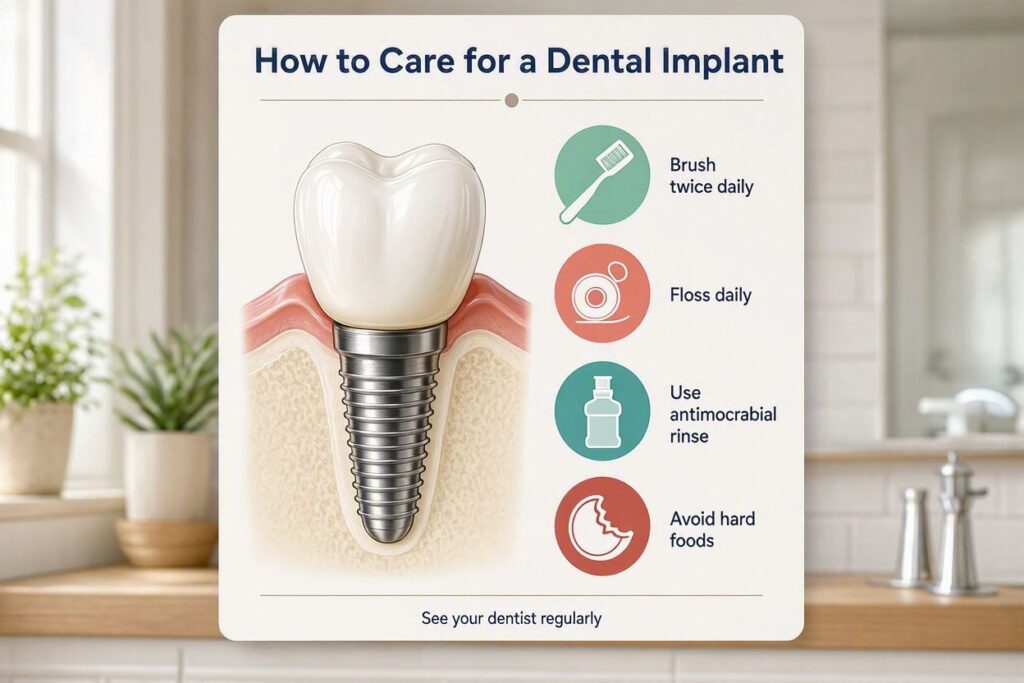
- Toothbrush: Use a soft-bristled toothbrush. Hard bristles can scratch the gum tissue and the abutment surface. Electric toothbrushes (like Sonicare or Oral-B) are excellent because they do the work for you and have pressure sensors.
- Toothpaste: Use a low-abrasive toothpaste. Avoid “whitening” or “tartar control” toothpastes that contain harsh grit (silica). This grit can scratch the polished surface of the crown.
- Technique: Brush twice a day for two minutes. Angle the brush towards the gum line. Make small circular motions.
2. Flossing
Standard string floss is difficult to use around implants because the space is usually wider and the gum attachment is different.
- Implant-Specific Floss: Use “Super Floss” or “Post-Care Floss.” This is a thick, fuzzy floss with a stiff end. You thread the stiff end under the crown and pull the fuzzy part through. The fuzzy texture scrubs the side of the implant.
- Interdental Brushes (Proxabrushes): These look like tiny pipe cleaners. They come in different sizes. You insert them between the implant and the adjacent tooth. They are very effective at cleaning the curved surfaces of the implant.
3. Water Flossers (Waterpik)
Water flossers are highly recommended for implant patients.
- How it works: A high-pressure stream of water dislodges food and bacteria from hard-to-reach areas.
- Why it is great: It flushes out the “sulcus” (the pocket around the implant) without touching it. It is much gentler than string floss for fragile gums.
- The Tip: Use a specialized tip (often a “Plaque Seeker” or “Implant tip”) which is designed to be safe on metal.
4. Rinsing
- Salt Water Rinse: Mix ½ teaspoon of salt in a glass of warm water. Swish for 30 seconds. This is excellent for soothing irritated gums.
- Antimicrobial Rinse: If your dentist recommends it, use a non-alcoholic mouthwash containing Chlorhexidine (prescription) or Cetylpyridinium Chloride (OTC). Avoid rinses with alcohol, as they dry out the gums.
The “No-No” List
Avoid these habits to protect your implant.
- Chewing Ice: This can fracture the porcelain crown.
- Using Teeth as Tools: Do not open packages or bottles.
- Smoking: As discussed, it restricts blood flow and leads to bone loss.
- Using Abrasive Cleaners: Do not use baking soda or household cleaners on your teeth.
The Role of the Water Flosser vs. Traditional Floss
Many patients ask if a Waterpik replaces floss. The answer is: It can, but ideally you use both.
| Tool | Function | Best Use |
|---|---|---|
| String/Floss Thread | Scrapes sticky plaque off the sides | Evening routine |
| Interdental Brush | Cleans large gaps | Daily |
| Water Flosser | Flushes debris, massages gums | After meals or morning |
Conclusion
Caring for a dental implant at home requires diligence. By using a soft toothbrush, specialized floss, and a water flosser, you can prevent the bacterial buildup that leads to peri-implantitis. Remember, the implant itself is indestructible, but the bone holding it in place is not. Protect the bone by keeping the gums clean.
Additional Resource
For visual guides on cleaning implants, visit the Mayo Clinic at www.mayoclinic.org.