How to Fix a Broken Dental Implant?
Hearing that your dental implant is broken is a deeply unsettling experience. You invested time, money, and hope into a permanent solution, and now something has gone wrong. It is important to understand that “broken dental implant” can mean several very different things, and the majority of these problems are fixable. This guide will walk you through the diagnosis of a failed or fractured implant, explain the difference between a broken implant screw, a fractured crown, and a lost implant body, and outline the step-by-step clinical methods your dental surgeon will use to fix the problem. This is a realistic, honest, and in-depth resource to help you navigate this complication with clarity and a clear path forward.
Step One: Accurate Diagnosis – What Exactly is Broken?
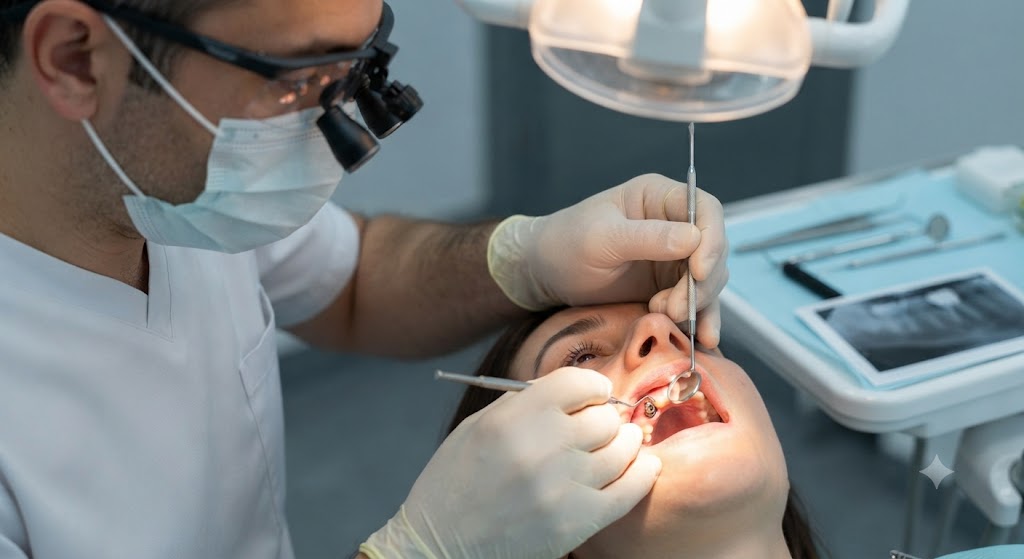
The phrase “my implant is broken” is a symptom, not a diagnosis. When you present to your dentist or oral surgeon, the first and most critical step is a meticulous clinical and radiographic examination to determine the precise point of failure. The three main components of an implant restoration are the implant body (the titanium root in the bone), the abutment (the connector that attaches to the implant and emerges through the gum), and the prosthetic crown (the visible tooth). Any one of these can fail, and each requires a completely different repair protocol.
The most common failure is a loose or fractured abutment screw. You will feel the tooth itself is wobbly, but it has not fallen out. A periapical X-ray may show a fracture line within the screw. The next level is a fractured abutment. The abutment itself, the metal or ceramic post, has snapped. The third, and most serious, is a fractured implant body. This is a catastrophic, but rare, mechanical failure where the titanium implant itself breaks, usually below the level of the bone. Finally, the porcelain crown can chip or fracture. The dentist will test for mobility, tap on the implant, take a radiograph, and sometimes remove the crown to inspect the components directly. You cannot fix the problem until you know exactly what broke.
Fixing the Most Common Problem: The Loose or Fractured Prosthetic Screw
The overwhelming majority of “broken implant” emergencies are actually a loose or fractured abutment or prosthetic retaining screw. The patient will complain, “My implant tooth is loose, but it’s not coming out.” This is a fixable situation with a high success rate. If the screw is simply loose, the solution is straightforward. The dentist will locate and carefully drill through the small composite resin filling that covers the screw access hole on the chewing surface of the crown or the back of the tooth. Once the screw head is exposed, they will insert the correct manufacturer-specific driver. The dentist will attempt to tighten the screw to the prescribed torque value, often around 20 to 35 Ncm. The tooth becomes stable again immediately. The access hole is then resealed.
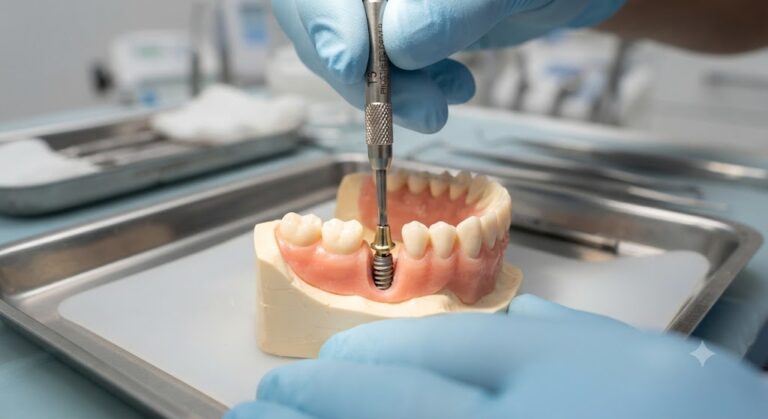
If the screw has fractured, the situation is more delicate. A fragment of the screw remains threaded into the implant. The dentist, often using a surgical operating microscope for enhanced vision, must remove this broken fragment without damaging the delicate internal threads of the implant body. Specialized broken screw retrieval kits are used. These kits contain thin-walled, reverse-threaded extractors. The dentist very carefully drills a small pilot divot in the center of the broken screw fragment, then engages the extractor, which turns counter-clockwise to gently back the fragment out. This requires immense skill and patience. If the internal threads of the implant are undamaged, a new, genuine manufacturer’s prosthetic screw is placed, torqued to specification, and the crown is recemented or re-screwed into place.
Repairing a Fractured Abutment
If the abutment itself, the metal or ceramic connector piece, has fractured, it must be replaced. An abutment fracture is often caused by a heavy bite force, bruxism (grinding), or a misfitting restoration that placed uneven stress on the component. The dentist will remove the loose crown and any remaining abutment fragments from the implant’s internal connection. The internal implant connection is inspected under magnification for any damage. A new impression, often digital, is taken. A new custom abutment is ordered from the dental laboratory. The new abutment is placed, torqued, and a new crown is fabricated if the old crown does not fit the new abutment. To prevent a recurrence, the dentist will carefully evaluate the patient’s bite. If the patient grinds their teeth, a custom occlusal night guard is a non-negotiable requirement to protect the new restoration from another catastrophic overload.
The Rare Catastrophe: A Fractured Implant Body
Fracture of the titanium implant body itself is a very serious, but very rare, complication. It occurs in a small percentage of cases, usually in the posterior jaw where chewing forces are highest, and is often associated with a combination of factors: a narrow-diameter implant, a heavy grinding habit, and an implant design with a weak point at a particular internal connection or the first thread. When the implant fractures, the coronal (top) piece is often loose and mobile, while the apical (bottom) piece remains embedded in the bone.
The “fix” for a fractured implant body is not a repair. The broken implant must be surgically removed. This is a challenging procedure. The surgeon creates a flap, and uses a specially designed trephine bur, which is a hollow, circular drill, to carefully cut a core of bone around the broken implant fragment. The goal is to remove the implant with as little trauma and bone loss as possible. The site is then thoroughly debrided, removing any inflammatory tissue. A bone graft is packed into the defect. After a healing period of four to six months, a new implant can often be placed in the grafted site. The entire process starts over.
The Simple Fix: A Chipped or Fractured Crown
If the issue is solely a fractured porcelain crown, this is a purely restorative problem and the underlying implant is healthy and unaffected. A small chip in the porcelain can sometimes be repaired with a bonded composite resin, much like a filling on a natural tooth. This is a fast, economical fix, though it may not be as strong or aesthetically perfect as a new crown and may stain over time. For a larger fracture, the entire crown must be replaced. The dentist removes the old crown, takes a new impression, and a dental laboratory fabricates a brand new implant crown. If the patient is a known grinder, a solid zirconia crown, which is extraordinarily resistant to fracture, is the material of choice instead of a layered porcelain-fused-to-metal crown.
Understanding and Managing Biological Failure: Peri-Implantitis
Not all implant problems are mechanical. You may not have “broken” the implant, but it feels loose because the bone around it has been destroyed by infection. This is peri-implantitis, a chronic bacterial infection analogous to gum disease around a natural tooth. The gums bleed, pus may be present, and the bone recedes. This is a biological failure, not a fracture. In its early stages, peri-implantitis is treated with a surgical cleaning and debridement of the implant surface, often with bone grafting. In advanced cases where so much bone is lost that the implant is truly mobile, the implant is failing. A mobile implant, by definition, has lost osseointegration and cannot be saved. The “fix” is explantation: the implant is removed, the infection is cleaned out, and the site is grafted for a future replacement. This is the most common cause of long-term implant loss, and it underscores the critical importance of meticulous daily home care and regular professional maintenance.
Conclusion
Fixing a broken dental implant begins with a precise diagnosis to determine if the failure is in the easily replaceable prosthetic screw, the abutment, the crown, or the catastrophic but rare fracture of the implant body itself. The loose or broken screw, the most common culprit, is a routinely salvageable problem using manufacturer-specific drivers, surgical microscopes, and retrieval kits to extract the fragment and place a new torqued screw without damaging the implant’s internal threads. For the patient, the immediate step is to see the restoring dentist immediately upon feeling any mobility, as a loose screw that is ignored will inevitably fracture under load, transforming a simple retightening into a complex retrieval.
Frequently Asked Questions
My implant crown feels loose but doesn’t hurt. Can I wait?
No. You should treat this as an urgent dental appointment. A loose implant crown means the screw is loose or fracturing. If you continue to chew on it, the screw will break, turning a simple five-minute retightening into a complex, technically demanding, and expensive retrieval.
Is a broken implant covered by warranty?
It often is, partially. Premium implant manufacturers provide a lifetime warranty on the implant body itself against fracture. The dental laboratory may provide a multi-year warranty on the crown. The dental practice may provide a warranty on their restorative work. You must check the specific warranty documents. Warranty typically covers the cost of the replacement component, not the surgical and restorative professional fees to place it.
Can my body reject a dental implant?
This is an extremely rare immunologic phenomenon. True “rejection,” as seen with an organ transplant, does not occur with titanium. What is commonly called rejection is either a failure to integrate due to surgical complications, excessive heat during drilling, or contamination, or a late failure due to peri-implantitis. It is a failure of biology or mechanics, not an allergic rejection.
How long does it take to fix a broken implant screw?
A simple loose screw retightening takes 15 to 30 minutes. A fractured screw retrieval is a longer procedure, often 60 to 90 minutes, requiring precision work under a microscope. Your dentist will schedule the appropriate amount of time based on the diagnosed problem.
What can I do to prevent my implant from breaking?
Wear a professionally-fabricated night guard if you grind or clench your teeth. This is the single most protective device for an implant restoration. Attend all scheduled professional maintenance and cleanings. Do not use your implant crown to open packages or crack hard nutshells. Maintain excellent daily oral hygiene around the implant.
Additional Resource
To find a prosthodontist, a specialist in the restoration and replacement of teeth including the management of implant complications, you can visit the American College of Prosthodontists. Visit the ACP Find a Prosthodontist Page