Can Old People Get Dental Implants?
There is a common misconception that dental implants are only for the young. Many older adults assume they have missed the window. They believe that once they reach a certain age, they are stuck with dentures.
This is simply not true.
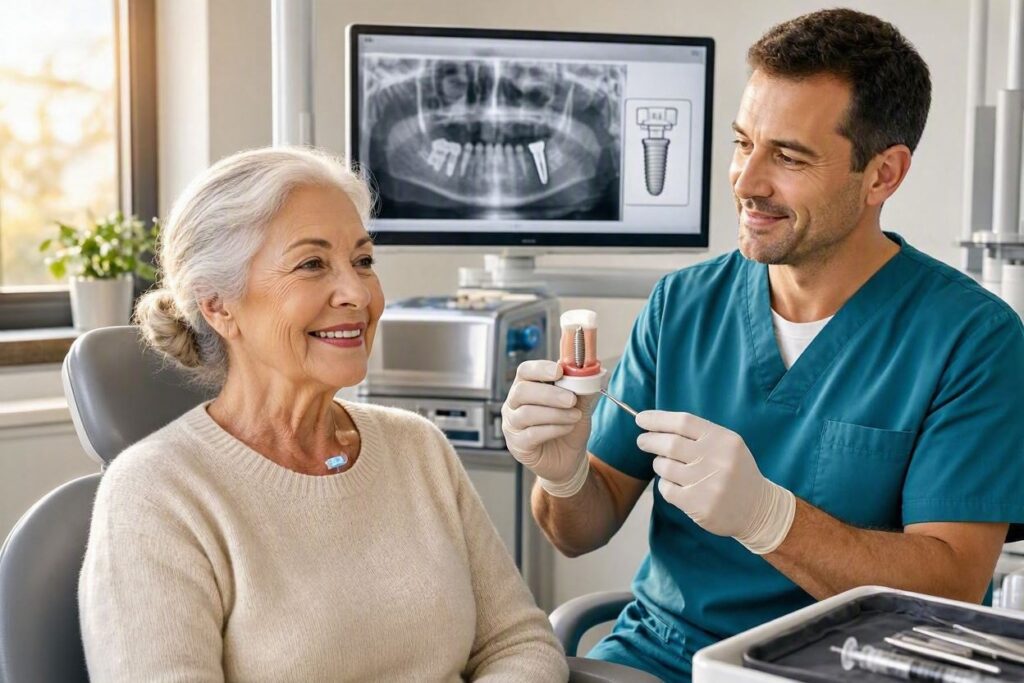
Can old people get dental implants? The answer is a resounding yes. In fact, senior citizens are among the most common recipients of dental implants. Age alone is rarely a barrier to treatment.
The decision to place an implant is based on your overall health, not the number of candles on your birthday cake. This guide will explain why age does not matter, what factors do matter, and how seniors can benefit greatly from modern implant dentistry.
The Myth of the “Age Limit”
Where does this myth come from? It is a holdover from a time when dentistry was less advanced. In the past, older patients were often considered “poor candidates” for surgery simply because they were old.
Modern medicine has shifted this perspective. We now understand that chronological age is a poor indicator of biological health. A healthy 80-year-old can heal just as well as a healthy 50-year-old.
The Key Distinction:
- Chronological Age: How many years you have been alive.
- Biological Age: How well your body functions.
Dentists care about your biological age. Are your cells dividing well? Is your blood flow adequate? Is your immune system strong? These are the factors that determine success.
The Benefits for Seniors: Why It Matters More
For older adults, the quality of life improvements from dental implants are often more profound than for younger patients.
1. Nutrition and Health
This is the most critical benefit. Many seniors struggle with nutrition. Traditional dentures make it difficult to chew fibrous foods like salads, fruits, and meats. As a result, seniors often shift to soft, processed diets.
The Consequence:
- Muscle loss (sarcopenia)
- Vitamin deficiencies
- Weakened immune system
- Digestive problems
Dental implants restore the ability to chew properly. A senior with implants can eat a balanced, nutritious diet. This directly contributes to longevity and overall health.
2. Social Engagement
Isolation is a major health risk for seniors. When an older person is embarrassed by their teeth—when they are afraid a denture will slip—they stop going out. They decline dinner invitations. They avoid family gatherings.
Dental implants provide the confidence to engage socially. They allow a person to speak clearly and smile without fear. This social connection is vital for mental health and cognitive function.
3. Preventing Bone Loss
As we age, bone loss accelerates. This is especially true in the jaw when teeth are missing. A sunken, collapsed facial appearance makes a person look older and frailer.
Implants stimulate the jawbone, preserving facial structure. They help maintain a more youthful appearance and prevent the “witch’s chin” look associated with long-term denture wear.
The Real Risk Factors: What Matters More Than Age
While age itself is not a barrier, certain health conditions common in older populations require careful evaluation.
1. Chronic Diseases
- Diabetes: Uncontrolled diabetes impairs healing. However, well-managed diabetes is usually not a problem. You will need to coordinate with your physician.
- Heart Disease: If you have had a recent heart attack or stroke, surgery may need to be delayed. If your condition is stable, implants are generally safe.
- Osteoporosis: This condition weakens the bones. While it affects the spine and hips more than the jaw, some dentists are cautious. Important: If you take bisphosphonates (like Fosamax or Boniva) or Prolia (denosumab) for osteoporosis, you must tell your dentist. These medications can, in rare cases, cause osteonecrosis of the jaw (bone death) after invasive dental surgery.
2. Medications
Seniors often take multiple medications. Some of these can affect the mouth.
- Blood Thinners: Anticoagulants (like Warfarin, Eliquis, or Xarelto) increase the risk of bleeding. Your dentist will coordinate with your doctor to manage this. You may need to pause the medication briefly or adjust the dosage.
- Dry Mouth Medications: Many medications cause xerostomia (dry mouth). This increases the risk of infection around the implant.
3. Cognitive and Physical Dexterity
Here is the hard truth: dental implants require meticulous cleaning. If a senior has severe arthritis and cannot hold a toothbrush well, or if they have advanced dementia and cannot remember to clean, implants might fail due to infection.
The Solution:
- Caregivers can be trained to clean the implants.
- Water flossers can make cleaning easier.
- If a patient cannot maintain hygiene, a traditional denture might be the safer option.
The Alternative: When Dentures Are the Right Choice
For some seniors, implants are not the best idea. If a patient is:
- Extremely frail and unable to undergo even minor surgery.
- Severely immunocompromised.
- Unable to maintain oral hygiene due to physical or mental limitations.
In these cases, a well-fitting traditional denture is a perfectly acceptable solution. The goal is to find the best option for the patient’s specific situation.
Success Rates in Older Adults
You might be surprised to learn that implant success rates in healthy seniors are very similar to those in younger patients.
The Data:
Studies show that dental implants in patients over 70 have a success rate of 90% to 95%. This is nearly identical to the general population.
Why?
The bone in the jaw responds to the titanium implant regardless of age. As long as the blood supply is good and the patient is healthy, the bone will heal.
The Process for Seniors
The process for getting implants is the same for seniors as it is for anyone else. However, the dentist may take extra precautions.
- Medical Clearance: The dentist will likely send a form to your primary care physician to ensure you are cleared for surgery.
- Medication Review: A thorough review of all prescriptions and supplements.
- Gentle Anesthesia: The dentist may use a lighter sedation protocol or adjust the anesthesia based on your health status.
- Slower Healing Expectations: Healing may take slightly longer in older adults, but the outcome is usually the same.
The Verdict
Can old people get dental implants?
Absolutely. If you are in your 70s, 80s, or even 90s and you are healthy enough to have a tooth extracted, you are likely a candidate for dental implants. Age is not a disease.
The benefits for seniors—better nutrition, improved confidence, and preservation of facial structure—are immense. They can truly change the trajectory of your later years.
Do not let the number on your birth certificate dictate your quality of life. Consult with a qualified dentist who understands the unique needs of senior patients. You deserve to eat well, smile freely, and enjoy your golden years with a healthy, functional mouth.
Frequently Asked Questions
Q: Is there an upper age limit for dental implants?
A: There is no specific upper age limit. The oldest patients receiving implants have been in their 90s. The decision is based on health status, not age.
Q: Do implants hurt more for older people?
A: Not necessarily. Pain tolerance varies from person to person. The surgical technique is the same. Older adults may have slightly slower healing, which can prolong soreness, but the pain level is generally comparable.
Q: Can I get implants if I have high blood pressure?
A: Yes, if your blood pressure is well-controlled with medication. Uncontrolled hypertension is a risk factor for bleeding during surgery. Your dentist will check your blood pressure before the procedure.
Q: What if I have no bone left? Can I still get implants?
A: Possibly. Bone grafting techniques can rebuild the jawbone. This is common in seniors who have worn dentures for decades. The graft material (synthetic, human donor, or animal) is placed and allowed to heal before the implants are placed.
Additional Resource:
For information on senior health and dental care, visit the National Institute on Aging: https://www.nia.nih.gov/.