How To Insurance Your Dental Implants?
Dental implants are a significant investment in your oral health. With costs ranging from $2,300 to $6,700 per tooth, finding ways to insure your implants and reduce out-of-pocket expenses is essential. Understanding how dental insurance works for implants, what alternatives exist, and how to maximize your coverage helps you manage the financial burden.
This guide explores strategies for insuring dental implants, navigating insurance coverage, and finding alternative funding options.
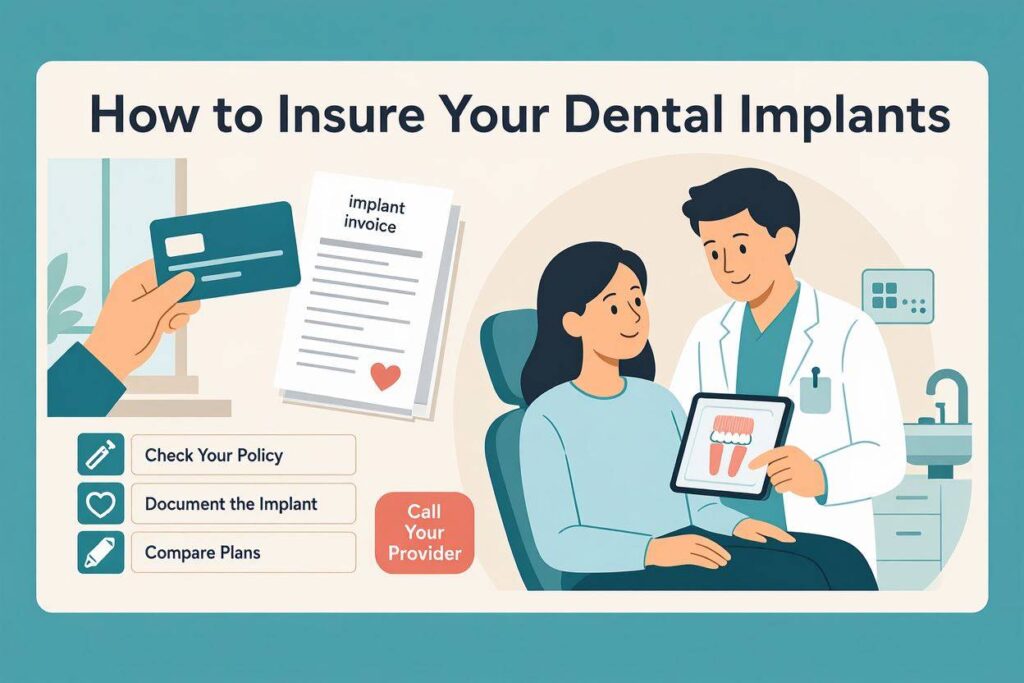
Understanding Dental Insurance for Implants
Before exploring how to insure implants, it helps to understand how dental insurance handles them.
How Dental Insurance Classifies Implants
Dental insurance plans typically classify implants as a “Major” service.
What This Means:
- Coverage is usually 50% of the allowed amount
- Annual maximums apply
- Waiting periods may exist
- Not all plans cover implants
The Limitations of Dental Insurance
Dental insurance has significant limitations for implant coverage.
Annual Maximums:
Most plans cap benefits at $1,000 to $2,500 per year. A single implant can exceed this amount.
Waiting Periods:
Many plans require 6 to 12 months before major services are covered.
Missing Tooth Clauses:
Some plans exclude coverage for teeth missing before enrollment.
Strategies to Insure Your Dental Implants
Here are approaches to maximize insurance coverage for implants.
1. Choose the Right Dental Insurance Plan
Not all plans are equal when it comes to implant coverage.
What to Look For:
- Implant coverage included
- High annual maximum ($2,500+)
- No missing tooth clause
- Short or no waiting period
- Coverage percentage of 50% or higher
Plan Types to Consider:
- PPO plans often offer the best implant coverage
- Indemnity plans provide flexibility
- High-option plans have higher maximums
2. Time Your Treatment Strategically
Timing affects how much insurance covers.
Strategy: Split Treatment Across Years
- Year 1: Implant placement and bone grafting
- Year 2: Abutment and crown placement
- This uses two annual maximums
Strategy: Start Treatment Early in the Year
- Begin in January to maximize the benefit period
- Avoid starting treatment in December
3. Use Both Dental and Medical Insurance
In some cases, medical insurance covers implant-related procedures.
When Medical Insurance Applies:
- Trauma or injury cases
- Congenital conditions
- Cancer-related tooth loss
- Medically necessary procedures
How to Coordinate:
- Submit claims to medical insurance for surgical portions
- Use dental insurance for restorative portions
4. Get Pre-Treatment Estimates
Before starting treatment, request a pre-treatment estimate.
What This Provides:
- Written confirmation of coverage
- Your expected out-of-pocket cost
- The plan’s allowed amount
How to Request:
- Ask your dentist to submit a pre-treatment estimate
- Follow up with the insurance company
- Review the estimate carefully
5. Choose In-Network Providers
In-network dentists have agreed to contracted rates.
Benefits:
- Lower total costs
- Higher coverage percentages
- No balance billing
6. Appeal Denials
If your claim is denied, you have the right to appeal.
How to Appeal:
- Request the denial in writing
- Gather supporting documentation
- Submit a formal appeal letter
- Work with your dentist on documentation
Alternatives to Traditional Dental Insurance
If traditional insurance is inadequate, alternatives exist.
Dental Discount Plans
Discount plans provide access to reduced rates.
How They Work:
- Pay an annual membership fee
- Access a network of dentists
- Receive discounts of 20% to 50%
Cost: $80 to $200 per year
Advantages:
- No annual maximums
- No waiting periods
- No missing tooth clauses
- Immediate savings
Dental Savings Accounts
Some patients create their own dental savings.
How It Works:
- Set aside money monthly for dental expenses
- Use the funds for implants and other care
- Combine with insurance for maximum coverage
Health Savings Accounts (HSA)
If you have a high-deductible health plan, you can use an HSA.
Advantages:
- Contributions are tax-deductible
- Withdrawals for dental expenses are tax-free
- Funds roll over year to year
Flexible Spending Accounts (FSA)
FSAs allow you to set aside pre-tax dollars for medical and dental expenses.
Advantages:
- Reduces your taxable income
- Funds available for dental implants
- Use-it-or-lose-it rules apply
Financing Options for Dental Implants
When insurance is insufficient, financing helps.
CareCredit
CareCredit is a healthcare credit card.
Features:
- Promotional interest-free periods
- Available for dental procedures
- Application process is straightforward
In-House Payment Plans
Many dental offices offer payment plans.
Features:
- Spread costs over months
- May or may not charge interest
- Requires agreement with the dental office
Personal Loans
Personal loans from banks or online lenders can fund implants.
Features:
- Fixed monthly payments
- Interest rates vary by credit
- No collateral required
Dental Tourism
Some patients travel abroad for affordable implants.
Potential Savings: 50% to 70%
Considerations:
- Travel costs
- Quality verification
- Follow-up care
Understanding the Total Cost
Before insuring implants, understand the full cost.
Cost Breakdown
| Component | Average Cost |
|---|---|
| Consultation | $100 – $300 |
| CT Scan | $200 – $500 |
| Implant Post | $1,000 – $3,000 |
| Abutment | $300 – $500 |
| Crown | $1,000 – $3,000 |
| Bone Graft (if needed) | $300 – $1,200 |
| Total | $2,300 – $6,700+ |
Factors Affecting Cost
- Geographic location
- Provider experience
- Implant system used
- Complexity of the case
- Additional procedures needed
Questions to Ask Your Insurance Provider
Before proceeding, ask these important questions.
- Does my plan cover dental implants?
- What percentage is covered?
- What is the annual maximum?
- Is there a waiting period?
- Is there a missing tooth clause?
- Are bone grafting and related procedures covered?
- Which providers are in-network?
Questions to Ask Your Dentist
Your dentist can help navigate insurance.
- Do you accept my insurance?
- Are you in-network or out-of-network?
- Can you submit a pre-treatment estimate?
- Do you offer payment plans?
- What financing options do you accept?
- Can you help with insurance appeals?
The Importance of Documentation
Proper documentation supports insurance claims.
What to Keep
- Treatment plans
- X-rays and imaging
- Clinical notes
- Correspondence with insurance companies
- Receipts and bills
Why Documentation Matters
- Supports claims and appeals
- Provides evidence of medical necessity
- Helps track expenses for tax purposes
Tax Considerations
Dental implants may be tax-deductible.
Medical Expense Deduction
Dental implants qualify as medical expenses for tax purposes.
Requirements:
- Expenses must exceed 7.5% of adjusted gross income
- You must itemize deductions
- Keep detailed records
HSA and FSA Withdrawals
Withdrawals from HSAs and FSAs for dental implants are tax-free.
Conclusion
Insuring your dental implants requires understanding your coverage, choosing the right plan, and timing treatment strategically. Dental insurance may cover 50% of implant costs, but annual maximums and waiting periods limit benefits. Alternatives like discount plans, HSAs, and financing options help manage costs. By asking the right questions, obtaining pre-treatment estimates, and documenting expenses, you can maximize your coverage and reduce out-of-pocket spending.
Frequently Asked Questions (FAQ)
Q: Does dental insurance cover implants?
A: Some plans cover implants at 50%, but coverage varies. Check your specific policy.
Q: How can I get insurance to pay for implants?
A: Choose a plan with implant coverage, time treatment strategically, use both dental and medical insurance, and obtain pre-treatment estimates.
Q: What is the best dental insurance for implants?
A: PPO plans with high annual maximums and implant coverage are often best. Compare plans carefully.
Q: Can I use my HSA for dental implants?
A: Yes, HSA funds can be used for dental implants tax-free.
Q: Are dental discount plans worth it?
A: Discount plans can save 20% to 50% and have no annual maximums, making them worthwhile for implant patients.
Q: How can I appeal a denied implant claim?
A: Request the denial in writing, gather documentation, and submit a formal appeal letter with your dentist’s support.
Additional Resource
For more information on dental insurance and implant coverage, visit the National Association of Dental Plans (NADP) at www.nadp.org. They provide consumer resources on dental benefits.