How To Clean Dental Implants At Home?
Proper home care is essential for the long-term success of dental implants. While implants cannot decay like natural teeth, they are still susceptible to complications if not cleaned correctly. Peri-implantitis, an infection around the implant, can develop when plaque and bacteria accumulate. The good news is that with the right tools and techniques, cleaning dental implants at home is straightforward.
This guide provides a comprehensive approach to cleaning dental implants at home. You will learn about the best tools, proper techniques, and daily routines to keep your implants healthy for decades.
Why Cleaning Dental Implants Matters
Understanding the importance of implant hygiene helps you stay motivated.
The Risk of Peri-Implantitis
Peri-implantitis is the most significant threat to dental implants.
What Is Peri-Implantitis?
Peri-implantitis is an inflammatory condition that affects the tissues around a dental implant. It causes bone loss and can lead to implant failure if untreated.
How It Develops:
- Plaque accumulates around the implant
- Bacteria trigger inflammation
- The inflammation destroys gum tissue and bone
- The implant loses support
The Difference Between Implants and Natural Teeth
Implants differ from natural teeth in important ways.
Key Differences:
- Implants lack the periodontal ligament
- Implants have a different attachment to surrounding tissue
- Implants are more susceptible to certain types of bacterial buildup
- Implants require specialized cleaning tools
Essential Tools for Cleaning Dental Implants
Several tools are recommended for effective implant care.
1. Soft-Bristled Toothbrush
A soft-bristled brush is essential.
Why Soft Bristles:
- Gentle on gum tissue
- Prevents gum recession
- Effectively removes plaque
Recommendations:
- Use a manual soft-bristled brush or an electric toothbrush
- Replace the brush every 3 to 4 months
2. Implant-Specific Floss
Specialized floss is designed for implants.
Types:
- Floss with stiff ends for threading under the crown
- Floss with a soft, thick middle section
- Floss designed to clean around abutments
3. Interdental Brushes
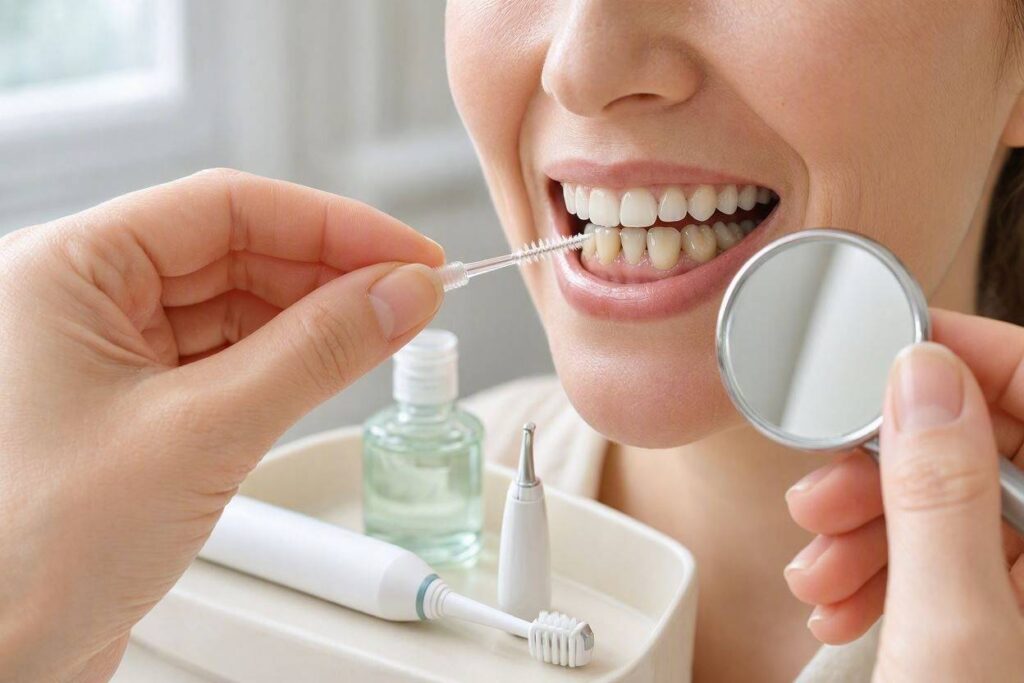
Small brushes clean between teeth and around implants.
How to Use:
- Insert the brush between the implant and adjacent teeth
- Gently move back and forth
- Use the appropriate size for the space
4. Water Flosser
Water flossers use a stream of water to remove debris.
Benefits:
- Effective for cleaning around implants
- Gentle on gum tissue
- Removes food particles from hard-to-reach areas
5. Antimicrobial Mouthwash
Antimicrobial rinses reduce bacteria.
What to Look For:
- Alcohol-free formulas
- Chlorhexidine (prescription) for specific situations
- Cetylpyridinium chloride (over-the-counter)
6. Soft Picks
Soft picks clean between teeth and around implants.
Benefits:
- Gentle on gum tissue
- Easy to use
- Effective for removing plaque
The Daily Cleaning Routine
Establishing a consistent routine is essential.
Morning Routine
Step 1: Rinse
Rinse your mouth with water to loosen debris.
Step 2: Brush
Brush all teeth, including the implant crown, for two minutes.
Step 3: Floss
Use implant-specific floss around the implant.
Step 4: Interdental Cleaning
Use an interdental brush or soft pick around the implant.
Step 5: Mouthwash
Rinse with an antimicrobial mouthwash for 30 seconds.
Evening Routine
Repeat the morning routine, taking extra care to remove all food debris from the day.
After Meals
- Rinse with water after eating
- Use a soft pick if food is trapped
- Brush if possible
Step-by-Step Cleaning Techniques
Proper technique is as important as the tools.
Brushing Technique
For the Implant Crown:
- Hold the brush at a 45-degree angle to the gum line
- Use gentle, circular motions
- Brush all surfaces of the crown
- Spend extra time where the crown meets the gum
For Surrounding Teeth:
- Brush all teeth thoroughly
- Do not neglect teeth adjacent to the implant
Flossing Technique
How to Floss Around an Implant:
- Thread the floss under the crown if using implant-specific floss
- Gently move the floss back and forth
- Curve the floss around the implant
- Slide the floss up and down
- Be gentle to avoid damaging gum tissue
Water Flosser Technique
How to Use a Water Flosser:
- Fill the reservoir with warm water
- Select the appropriate pressure setting
- Aim the tip at the gum line around the implant
- Move the tip along the gum line
- Pause briefly between teeth
Cleaning Different Types of Implant Restorations
Different restorations require slightly different approaches.
Single Implant Crown
- Clean around the entire circumference of the crown
- Pay attention to the junction between crown and gum
- Use floss and interdental brushes
Implant-Supported Bridge
- Clean under the bridge using floss threaders or water flossers
- Pay attention to the areas between implants
- Use interdental brushes for difficult spaces
Implant-Supported Denture
For Removable Dentures:
- Remove the denture daily
- Clean the denture separately
- Clean around the implants
- Use a water flosser for the implant attachments
For Fixed Dentures:
- Use a water flosser under the restoration
- Use floss threaders for cleaning under the bridge
- Consider specialized brushes
Common Mistakes to Avoid
Avoid these mistakes for optimal implant health.
1. Using a Hard-Bristled Brush
Hard bristles damage gum tissue and cause recession.
2. Brushing Too Aggressively
Aggressive brushing harms gums and does not clean better.
3. Neglecting Interdental Cleaning
Brushing alone does not clean between teeth and around implants.
4. Skipping Flossing
Flossing is essential for implant health.
5. Using Abrasive Toothpaste
Abrasive toothpaste can scratch the implant crown.
6. Ignoring Signs of Problems
Bleeding, swelling, or discomfort should be addressed promptly.
Professional Maintenance
Home care complements professional maintenance.
Recommended Schedule
| Visit Type | Frequency |
|---|---|
| Dental Examination | Every 6 months |
| Professional Cleaning | Every 6 months |
| X-Rays | Annually |
| Implant Assessment | Annually |
What Professionals Do
- Remove hardened tartar
- Assess implant stability
- Check for signs of peri-implantitis
- Evaluate bone levels
- Clean hard-to-reach areas
Signs of Implant Problems
Recognizing problems early allows for prompt treatment.
Warning Signs
- Bleeding gums around the implant
- Swelling or redness
- Pus or discharge
- Bad breath or bad taste
- Implant mobility
- Gum recession
- Pain or discomfort
What to Do
Contact your dentist if you notice any of these signs.
Products to Avoid
Some products can damage implants.
Avoid These:
- Abrasive toothpaste with baking soda
- Hard-bristled toothbrushes
- Metal-tipped cleaning tools
- Harsh whitening products
- Alcohol-based mouthwashes (can dry tissues)
The Cost of Home Care Supplies
Home care supplies are relatively affordable.
Typical Costs
| Supply | Average Cost |
|---|---|
| Soft-Bristled Toothbrush | $3 – $10 |
| Electric Toothbrush | $30 – $150 |
| Implant-Specific Floss | $5 – $15 |
| Interdental Brushes | $5 – $15 |
| Water Flosser | $30 – $100 |
| Antimicrobial Mouthwash | $5 – $15 |
Investing in Prevention
These costs are minimal compared to treating complications.
Cost of Treating Peri-Implantitis: $200 to $3,000+
Cost of Implant Replacement: $2,300 to $6,700
Conclusion
Cleaning dental implants at home requires the right tools and techniques. A soft-bristled brush, implant-specific floss, interdental brushes, water flosser, and antimicrobial mouthwash form the foundation of good implant care. Establish a daily routine, use proper techniques, and attend regular professional checkups to protect your investment and ensure your implants last for decades.
Frequently Asked Questions (FAQ)
Q: Can I use a regular toothbrush on my dental implant?
A: Yes, but use a soft-bristled brush to avoid damaging gum tissue.
Q: How often should I floss around my implant?
A: Floss daily, just like you would with natural teeth.
Q: Is a water flosser necessary for implants?
A: While not strictly necessary, water flossers are highly effective for cleaning around implants.
Q: Can I use whitening toothpaste on my implant crown?
A: Whitening toothpaste is generally safe for implant crowns, but avoid abrasive formulas.
Q: What is the best mouthwash for dental implants?
A: Alcohol-free antimicrobial mouthwashes are best.
Q: How do I know if I am cleaning my implant properly?
A: Your dentist can assess your cleaning technique and provide feedback during checkups.
Additional Resource
For more information on dental implant care, visit the American Academy of Implant Dentistry (AAID) at www.aaid.com. They provide educational resources for patients.