How To Order Implants Dental?
Ordering dental implants is a process that typically involves dental professionals rather than patients. Dental implants are medical devices that require proper training, licensing, and clinical expertise to select and place correctly. However, understanding how the ordering process works helps you make informed decisions about your treatment.
This guide explains how dental implants are ordered, who can order them, what factors influence implant selection, and what patients should know about the process.
Understanding the Dental Implant Supply Chain
Before discussing how to order implants, it helps to understand the supply chain involved.
Who Orders Dental Implants?
Dental implants are ordered by licensed dental professionals, not patients.
Who Can Order:
- Oral and maxillofacial surgeons
- Periodontists
- Prosthodontists
- General dentists with implant training
- Dental laboratories (for components)
Why Patients Cannot Order Implants Directly
Dental implants are surgical devices that require:
- Professional diagnosis
- Treatment planning
- Surgical placement
- Proper sizing and selection
- Sterile handling
Important Note: Attempting to order implants without professional involvement is unsafe and illegal in most jurisdictions.
The Implant Ordering Process
Understanding the steps involved helps you appreciate the complexity.
Step 1: Patient Assessment
Before ordering implants, the dentist evaluates the patient.
What the Assessment Includes:
- Clinical examination
- Medical history review
- X-rays and CT scans
- Bone density evaluation
- Treatment planning
Step 2: Implant Selection
The dentist selects the appropriate implant system and specifications.
Factors Considered:
- Bone quality and quantity
- Location of the missing tooth
- Aesthetic requirements
- Functional demands
- Patient preferences
- Dentist’s experience with specific systems
Step 3: Ordering from Suppliers
The dentist orders implants from authorized suppliers.
Major Implant Manufacturers:
- Straumann
- Nobel Biocare
- Zimmer Biomet
- Dentsply Sirona
- BioHorizons
- Hiossen
- MegaGen
Step 4: Verification and Receipt
The dental office receives and verifies the order.
What They Check:
- Correct implant type and size
- Sterile packaging intact
- Expiration dates
- Proper documentation
Step 5: Surgical Placement
The dentist places the implant during surgery.
Implant Systems and Components
Understanding the components helps you understand what is ordered.
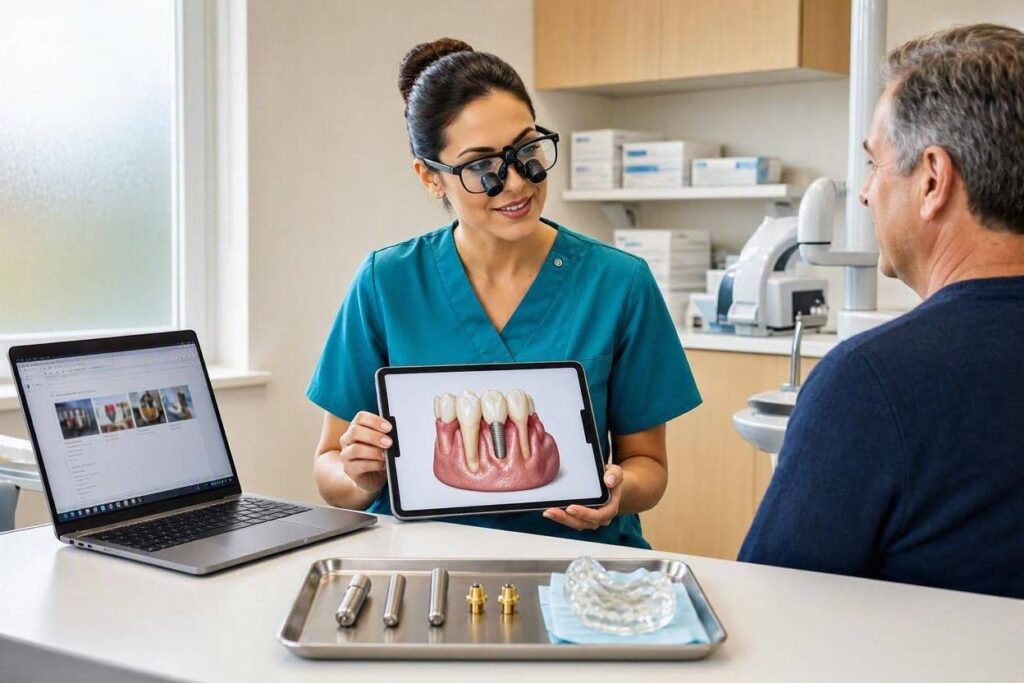
Components of a Dental Implant System
Implant Fixture:
The titanium post placed in the bone. Available in various lengths, diameters, and designs.
Abutment:
The connector piece attached to the implant. Available in different shapes and angles.
Healing Cap:
A temporary cover placed on the implant during healing.
Crown:
The visible artificial tooth attached to the abutment.
Implant Specifications
Implants come in various specifications.
Length:
- Standard: 8 to 14 millimeters
- Short: 4 to 7 millimeters
- Long: 15 to 20 millimeters
Diameter:
- Narrow: 3.0 to 3.5 millimeters
- Standard: 4.0 to 4.5 millimeters
- Wide: 5.0 to 6.0 millimeters
Surface Treatments:
- Titanium plasma spray
- Acid etching
- Sandblasting
- Hydroxyapatite coating
How Dentists Choose Implant Systems
Several factors influence implant system selection.
Clinical Factors
- Bone quality and quantity
- Surgical approach
- Restoration requirements
- Patient anatomy
Practical Factors
- Dentist’s training and experience
- Availability of components
- Cost considerations
- Laboratory support
Evidence-Based Factors
- Clinical studies
- Long-term success rates
- Scientific literature
- Regulatory approvals
The Role of Dental Laboratories
Dental laboratories play a crucial role in the implant process.
What Laboratories Do
- Fabricate custom abutments
- Create implant crowns
- Produce surgical guides
- Design full-arch restorations
How Laboratories Order Components
Laboratories order abutments and prosthetic components from implant manufacturers to fabricate restorations.
Digital Implant Dentistry
Technology has transformed the implant ordering process.
Digital Impressions
Intraoral scanners create digital models of the mouth.
Advantages:
- No traditional impressions
- Greater accuracy
- Faster turnaround
CAD/CAM Technology
Computer-aided design and manufacturing create precise restorations.
How It Works:
- Digital model of the mouth
- Virtual implant planning
- Milling of abutments and crowns
- Precise fit
3D Printing
3D printing creates surgical guides and temporary restorations.
Surgical Guides
Digital planning produces surgical guides for precise implant placement.
Advantages:
- Improved accuracy
- Reduced surgery time
- Predictable outcomes
What Patients Should Know
While patients do not order implants directly, understanding the process helps.
Questions to Ask Your Dentist
1. What implant system do you use?
Reputable systems have proven track records.
2. Why did you choose this system?
The dentist should explain their rationale.
3. Is the implant FDA-approved?
All legitimate implant systems have regulatory approval.
4. What is the warranty on the implant?
Many manufacturers offer warranties.
5. Can you show me the implant components?
Seeing the components helps you understand the process.
Red Flags to Watch For
- Use of unknown or unproven implant systems
- Unusually low prices suggesting inferior materials
- Lack of documentation
- Reluctance to discuss implant selection
The Cost of Dental Implants
Understanding costs helps you budget.
Average Costs
| Component | Average Cost |
|---|---|
| Implant Fixture | $1,000 – $3,000 |
| Abutment | $300 – $500 |
| Crown | $1,000 – $3,000 |
| Surgical Guide | $200 – $500 |
| CT Scan | $200 – $500 |
| Total per Tooth | $2,300 – $6,700 |
Factors Affecting Cost
- Implant system chosen
- Dentist’s fees
- Geographic location
- Complexity of the case
- Additional procedures needed
The Future of Dental Implant Ordering
Technology continues to evolve.
Emerging Trends
- Fully digital workflows
- Artificial intelligence in planning
- Customized implant designs
- Improved materials
- Faster treatment times
What This Means for Patients
Advancements will likely improve outcomes and potentially reduce costs over time.
Direct-to-Consumer Implant Components
Some online retailers sell implant components directly to consumers.
Why You Should Avoid This
- Implants require professional placement
- Improper selection risks failure
- Sterility cannot be guaranteed
- Legal issues may arise
- No professional accountability
Important Note: Never attempt to order or place dental implants yourself. This is extremely dangerous and can cause serious harm.
Conclusion
Dental implants are ordered by licensed dental professionals, not patients. The ordering process involves patient assessment, implant selection based on clinical factors, and sourcing from reputable manufacturers. Understanding how dentists choose implant systems helps you ask informed questions and ensure you receive quality care. Always work with a qualified implant dentist and avoid direct-to-consumer implant purchases.
Frequently Asked Questions (FAQ)
Q: Can I order dental implants myself?
A: No, dental implants are surgical devices that require professional diagnosis, selection, and placement. Ordering them yourself is unsafe and illegal.
Q: What are the major dental implant brands?
A: Major brands include Straumann, Nobel Biocare, Zimmer Biomet, Dentsply Sirona, and BioHorizons.
Q: How does my dentist choose an implant system?
A: Dentists consider clinical factors, their training and experience, evidence-based research, and cost when selecting implant systems.
Q: Are all dental implant systems the same?
A: No, implant systems vary in design, surface treatment, quality, and clinical evidence. Choose a dentist who uses reputable systems.
Q: What should I ask my dentist about implants?
A: Ask about the implant system, why they chose it, FDA approval, warranty, and their experience with the system.
Q: How much does a dental implant cost?
A: Total costs range from $2,300 to $6,700 per tooth, including the implant, abutment, and crown.
Additional Resource
For more information on dental implant systems and technology, visit the Academy of Osseointegration at www.osseo.org. They provide educational resources for dental professionals and patients.