How to Remove Stains from Implanted Teeth at Home
A dental implant crown is an investment in a radiant, confident smile. It is crafted from materials designed to resist staining far better than natural tooth enamel. Porcelain, zirconia, and highly polished PMMA acrylic are non-porous, inert surfaces. But they are not magically self-cleaning. Over time, particularly if you enjoy coffee, tea, red wine, or if you use tobacco, a tenacious biofilm and extrinsic surface stain can build up on the implant crown, just as it can on natural teeth. The difference is that the cleaning tools and chemicals that are safe for enamel can be catastrophically damaging to an implant restoration. A natural tooth can recover from minor surface abrasion. A scratched porcelain or acrylic surface is a permanent invitation for accelerated bacterial plaque adhesion, gum inflammation, and a dull, rough-looking restoration. Removing stains from implanted teeth at home is a task of gentle, deliberate polishing, not aggressive scrubbing. This guide provides a safe, material-specific, professional-grade home care protocol to restore the brilliance of your implant crown without causing irreversible harm.
The Material Difference: What Your Implant Tooth Is Made Of
Your home stain-removal strategy depends entirely on the material of your implant crown or bridge. You must know this before you begin.
- Porcelain-Fused-to-Metal (PFM): A metal substructure with a glossy, fired porcelain outer layer. The porcelain is hard and glassy but can be scratched by extremely abrasive pastes. The glaze, the outermost polished layer, is what gives it the lifelike sheen.
- Full Monolithic Zirconia: A solid block of high-strength ceramic, often polished to a smooth, glossy surface. It is extremely hard and resistant to scratching, but it is not indestructible.
- Layered Zirconia or Porcelain: A strong zirconia core with a more aesthetic, layered porcelain on the outside. The outer porcelain is more delicate and can be damaged by aggressive cleaning.
- PMMA Acrylic (Temporary or Full-Arch Bridge): A high-quality, dense plastic. This material is the most susceptible to surface staining and is also the most easily scratched and damaged by abrasive cleaners. It requires the gentlest approach.
The Absolute Prohibitions: What You Must Never Use
The first and most important lesson in implant stain removal is what not to do. These products and tools will cause permanent, visible, and biologically harmful damage.
- Abrasive Toothpaste: Any toothpaste marketed as “whitening,” “tartar control,” or “smoker’s toothpaste” contains harsh abrasives like silica, alumina, or baking soda particles. These will sandblast the glaze off porcelain and create microscopic scratches on zirconia and acrylic. Once the glaze is gone, the restoration stains faster, and it cannot be polished back to its original factory gloss at home.
- Baking Soda Paste: A raw paste of baking soda and water is a potent, granular abrasive. It will destroy the surface of a PMMA temporary bridge and dull porcelain. Never use it.
- Activated Charcoal: The trendy black powder is a powerful abrasive. It is completely contraindicated for implant restorations. It will scratch and darken micro-crevices.
- Acidic or Chemical Stain Removers: Vinegar, lemon juice, hydrogen peroxide soaks, and bleach. These chemicals will not harm titanium or zirconia, but they can corrode the metal substructure of a PFM crown if micro-fractures are present, and they will damage the gum tissue around the implant. They are not safe for the biological seal.
- Metal Dental Scalers at Home: You must never scrape the implant crown surface with a metal instrument. The metal will leave deep, visible gouges. This is only done by a hygienist with specific non-metallic, plastic, or titanium scalers.
The Safe Home Stain Removal Toolkit
Your tools are gentle, mechanical polishers and non-abrasive chemical disruptors.
- Non-Abrasive, Gel-Based Toothpaste: A simple, plain, fluoride toothpaste with a low Relative Dentin Abrasivity (RDA) value. It is a lubricating gel, not a scrubbing agent.
- Soft-Bristled Electric or Manual Toothbrush: A brush with soft, polished nylon bristles. You are polishing the surface, not scouring it.
- Implant-Specific Polishing Paste: Some manufacturers offer a gentle, non-abrasive polishing paste specifically designed for implant restorations. It is safe for daily use and contains fine, round microparticles that polish without scratching.
- Water Flosser with a Non-Metal Tip: The pulsating water jet is excellent for disrupting biofilm at the gum line and flushing out loose stain particles.
- Rubber Tip Stimulator and Interdental Brushes: For cleaning around the abutment and under the gum cuff without touching the crown surface itself.
The Daily and Weekly Stain Prevention Routine
Preventing the stain from maturing is the most effective home strategy. A mature, sticky biofilm is what absorbs the pigments from your coffee and red wine. If you remove the biofilm daily, the pigments have nothing to adhere to.
The Daily Polishing Ritual
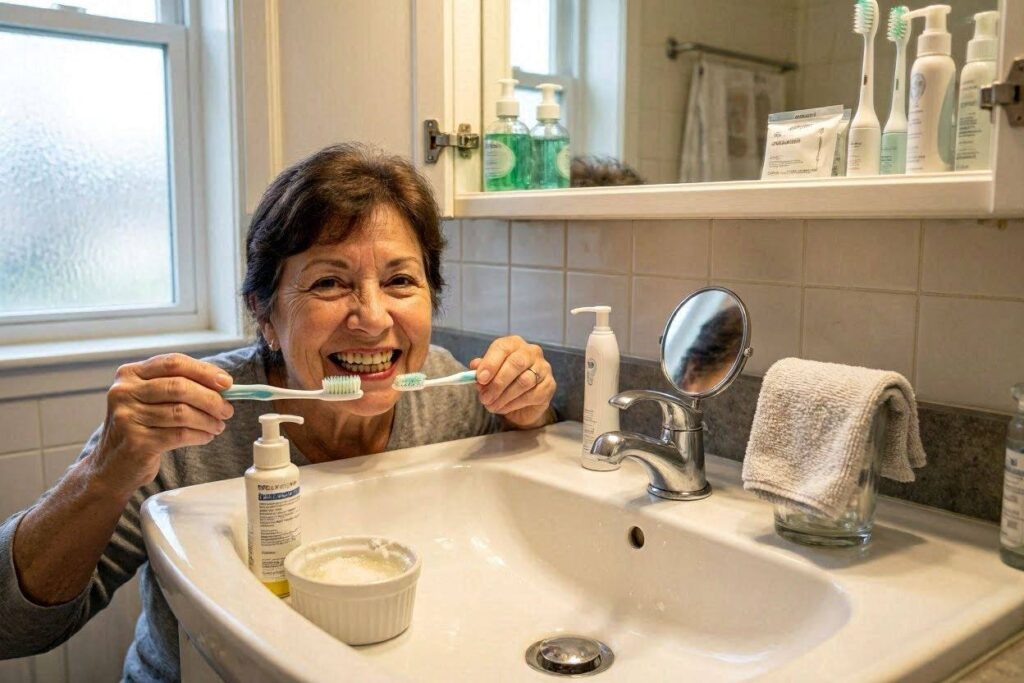
Use your soft electric toothbrush and a pea-sized amount of non-abrasive gel toothpaste. Brush the implant crown for a full two minutes, focusing on the gum line and the interproximal surfaces. The sonic or oscillating motion does the physical work of disrupting the biofilm. Rinse with plain water. After brushing, use your water flosser on a low setting to irrigate around the implant crown, flushing out any loose debris.
The Weekly Stain Disruption
Once a week, after your normal brushing, apply a small amount of implant-specific polishing paste or a gentle non-abrasive toothpaste to a soft rubber cup tip on your electric toothbrush (if available) or a soft manual brush. Gently polish the facial surface of the implant crown using a slow speed and light pressure. This is a micro-polishing, not a scrub. Rinse thoroughly. This weekly ritual removes any early, loosely bound pigment before it becomes a tenacious stain.
The Specific Method for PMMA (Acrylic) Full-Arch Bridges
A full-arch, screw-retained acrylic bridge requires a unique and stringent home care protocol. The acrylic is highly polished but more porous than ceramic. Stains, particularly from coffee, tea, and smoking, can penetrate the surface over time.
You must soak the bridge daily. You cannot remove it, but you can bathe it. Use a non-alcohol, oxygenating denture cleaning tablet dissolved in a cup of water. Take a mouthful of the solution and gently swish it over the bridge for 30 seconds, then spit it out. Do this twice a week. This chemical cleaning breaks down the organic pigment film. Brush the bridge gently with a very soft brush and plain water. Never use toothpaste on a PMMA bridge. The abrasives in toothpaste are too harsh for acrylic and will create a dull, rough surface.
When Home Care Fails: The Professional Solution
If a stubborn, dark stain persists between your maintenance visits, you are not a failure. The restoration likely needs a professional polish. During your routine implant maintenance appointment, the dental hygienist uses a glycine powder air polisher. This device sprays a gentle, sub-micron glycine (amino acid) powder mixed with water. The powder is fine enough to flow under the gum and disrupt biofilm, but it is non-abrasive to titanium, porcelain, and acrylic surfaces. It removes the stain without scratching. For a tenacious stain on a porcelain crown, the hygienist may use a fine diamond polishing paste and a felt wheel, a professional polishing protocol that restores the original high glaze. This is a 5-minute, painless procedure. Do not attempt to recreate this at home.
Conclusion
Safely removing surface stains from dental implant crowns and bridges at home requires the exclusive use of non-abrasive gel toothpastes, soft-bristled brushes, and gentle mechanical polishing, completely avoiding whitening pastes, baking soda, and harsh chemicals that permanently scratch and dull the ceramic or acrylic surface. The most effective strategy is daily biofilm disruption with an electric toothbrush and water flosser, preventing pigment from adhering in the first place. For PMMA full-arch bridges, a weekly non-alcohol oxygenating tablet soak provides safe chemical stain removal, while stubborn stains are safely eliminated by a professional glycine air polish during routine dental hygiene visits.
Frequently Asked Questions
Can I use a whitening strip on my implant crown?
No, and it is completely ineffective. Whitening strips contain hydrogen peroxide or carbamide peroxide, which chemically oxidize organic stains within natural tooth enamel. Implant crowns are made of ceramic or acrylic; they have no organic enamel structure to whiten. The peroxide will not harm the ceramic, but it will not whiten it.
Why is my implant crown staining faster than my natural teeth?
If an implant crown is staining rapidly, it is a sign that the surface glaze has been compromised, either by previous aggressive brushing with abrasive toothpaste or by a high bacterial biofilm load. The roughened surface is retentive for stain. A professional polish by your hygienist can restore the surface.
Can I use a Waterpik to remove the stain?
A water flosser will not remove a mature, intrinsic stain that has baked onto the surface. It will, however, effectively disrupt the daily biofilm that leads to the stain. It is a powerful prevention tool, not a cure for an established dark stain.
Is it safe to use a manual toothbrush with medium or hard bristles?
No. You must use a soft-bristled toothbrush around an implant crown. Medium or hard bristles, combined with any amount of toothpaste, act as an abrasive sanding pad on the smooth surface, causing micro-scratches over time.
Additional Resource:
For professional guidance on the long-term maintenance of implant restorations, visit the patient resource library of the American College of Prosthodontists at www.gotoapro.org.
Disclaimer: This guide provides standardized, safe home care recommendations for implant restorations. Your specific restoration material and design may have unique care requirements. Always follow the individualized cleaning protocol provided by your restorative dentist or prosthodontist.