In Canada How Much Does Dental Bonding Cost?
Dental bonding is a popular and affordable cosmetic dentistry treatment in Canada. It repairs chipped, cracked, discolored, or gapped teeth using a tooth-colored resin material. Because it is minimally invasive and usually completed in a single visit, many Canadians choose bonding as a quick smile fix.
If you are wondering about the cost, you are not alone. Price is one of the top concerns for patients considering dental bonding. This guide covers everything you need to know about dental bonding costs in Canada, including average prices by province, factors that affect the fee, insurance coverage, payment plans, and tips to save money.
What Is Dental Bonding?
Dental bonding is a procedure where your dentist applies a composite resin to your tooth. The resin is shaped, hardened with a special light, and polished to match your natural teeth. It can:
- Repair chipped or cracked teeth
- Close small gaps between teeth
- Change the shape of teeth
- Cover stains or discoloration
- Protect a exposed tooth root
- Fill small cavities
Bonding is often called “composite bonding” or “tooth bonding.” It is different from veneers because it is applied directly to the tooth and usually requires no drilling or enamel removal.
Average Cost Of Dental Bonding In Canada
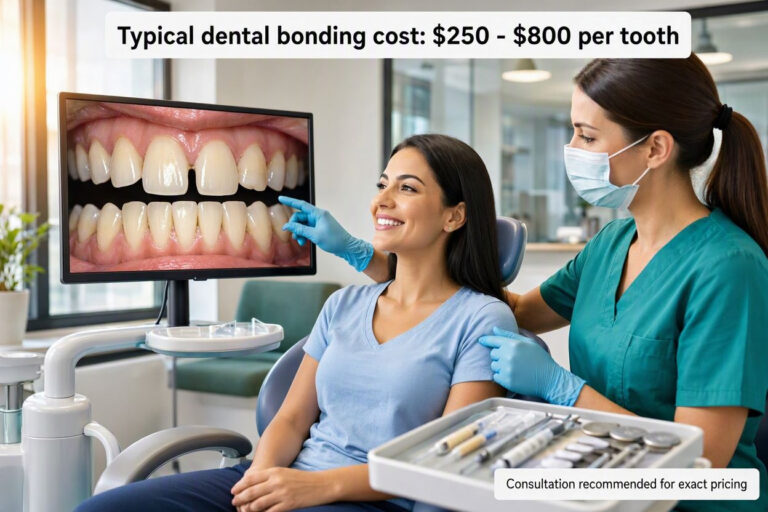
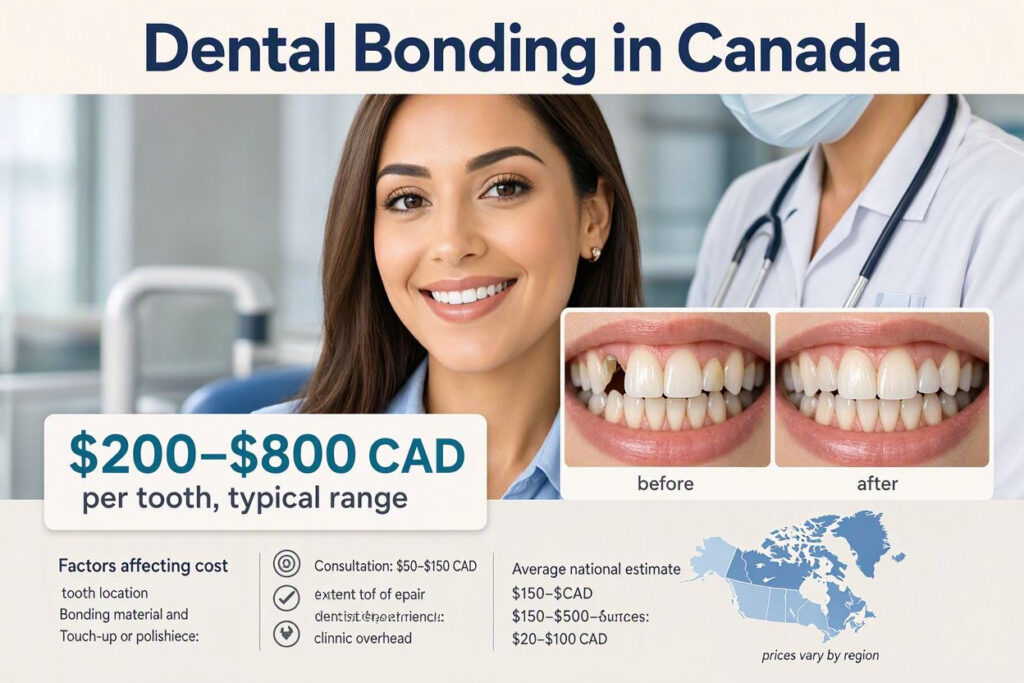
The cost of dental bonding in Canada varies by province, dentist, and the complexity of the case. On average, you can expect to pay between CAD $150 and CAD $600 per tooth. Many patients pay around CAD $300 to CAD $450 per tooth.
| Province | Average Cost Per Tooth (CAD) |
|---|---|
| Ontario | $200 – $600 |
| British Columbia | $180 – $550 |
| Alberta | $200 – $600 |
| Quebec | $150 – $500 |
| Manitoba | $160 – $500 |
| Saskatchewan | $170 – $520 |
| Nova Scotia | $150 – $480 |
| New Brunswick | $150 – $470 |
| Newfoundland and Labrador | $160 – $490 |
| Prince Edward Island | $155 – $475 |
These prices usually include the dentist’s time, the composite resin material, and polishing. Some dentists charge separately for X-rays, examinations, or follow-up visits. Always ask for a complete written estimate.
Full Mouth Dental Bonding Cost
If you need bonding on multiple teeth, the total cost adds up quickly. Many dentists offer a discount for treating several teeth at once.
| Number of Teeth | Estimated Cost Range (CAD) |
|---|---|
| 1 tooth | $150 – $600 |
| 2 teeth | $280 – $1,150 |
| 4 teeth | $500 – $2,200 |
| 6 teeth | $700 – $3,200 |
| 8 teeth | $900 – $4,200 |
| Full smile (10+ teeth) | $1,200 – $6,000+ |
For a full smile makeover with bonding, you might pay between CAD $2,000 and CAD $8,000 depending on the dentist and the province.
Factors That Influence Dental Bonding Costs In Canada
Geographic Location
Dental fees are set by provincial dental associations as suggested fee guides, but dentists can charge more or less. Big cities like Toronto, Vancouver, and Calgary tend to have higher fees than smaller towns. For example, bonding in downtown Toronto may cost 20-30% more than in a rural area of Ontario.
Dentist’s Experience And Reputation
A dentist with advanced cosmetic training or many years of experience often charges higher fees. Patients pay for skill, artistry, and a proven track record. However, a higher price does not always guarantee better results. Look at before-and-after photos and read reviews.
Complexity Of The Case
Simple bonding for a small chip costs less than rebuilding a severely broken tooth. If the bonding requires reshaping the entire tooth or matching multiple teeth, the fee increases. Cases involving gum treatment or tooth decay also cost more.
Number Of Teeth Treated
The more teeth you treat, the higher the total cost. Many dentists offer a per-tooth discount when you bond four or more teeth. This makes a smile makeover more affordable.
Type Of Composite Resin
Not all composite resins are the same. Premium nano-hybrid composites that mimic natural tooth translucency cost more. Your dentist’s material choice affects both the price and how long the bonding lasts.
Additional Procedures
Sometimes bonding requires extra steps:
- Dental cleaning before bonding
- Treatment of cavities
- Gum contouring
- Tooth whitening before shade matching
- Night guard if you grind your teeth
These add to the final bill.
Dental Bonding Vs Veneers In Canada: Cost Comparison
| Feature | Dental Bonding | Porcelain Veneers |
|---|---|---|
| Cost per tooth | $150 – $600 | $800 – $2,500 |
| Durability | 3 – 7 years | 10 – 15 years |
| Stain resistance | Moderate | High |
| Natural appearance | Good | Excellent |
| Appointment time | 1 visit | 2 – 3 visits |
| Tooth preparation | None or minimal | Moderate |
| Repairability | Easy | Difficult |
| Best for | Small fixes | Full smile makeover |
Bonding is cheaper upfront but needs replacement more often. Veneers cost more but last longer. Your choice depends on your budget and goals.
Does Canadian Dental Insurance Cover Bonding?
Dental insurance in Canada often covers bonding if it is medically necessary. For example, if bonding repairs a cavity or a broken tooth, your plan may pay part of the cost. If bonding is purely cosmetic, insurance usually does not cover it.
Most Canadian dental plans cover 50% to 80% of the cost after a deductible. However, there is usually an annual maximum, often CAD $1,000 to $2,000. Once you reach that limit, you pay 100% out of pocket.
| Type of Bonding | Likely Covered? |
|---|---|
| Repair a cavity | Yes, often |
| Fix a chipped tooth from injury | Sometimes |
| Close a gap for cosmetic reasons | Rarely |
| Cover a stained tooth | Rarely |
| Protect an exposed root | Sometimes |
If you have no insurance, you pay the full fee. Some dentists offer a discount for cash or upfront payment.
Payment Options And Financing In Canada
You do not have to pay everything at once. Many Canadian dentists offer:
- In-house payment plans: Monthly installments with no interest.
- Third-party financing: Companies like DentalCard, iFinance, and Medicard.
- Credit cards: Convenient but watch interest rates.
- Dental savings plans: Not insurance, but discounted rates.
- Health spending accounts (HSA): If your employer offers one.
- Flexible spending accounts: Use pre-tax dollars.
Always ask your dentist about payment options before treatment starts.
How To Save Money On Dental Bonding In Canada
- Get multiple quotes: Prices vary widely. Compare at least three dentists.
- Visit a dental school: Canadian dental schools offer reduced fees under student supervision.
- Ask about package deals: Many dentists discount multiple teeth.
- Use insurance before year-end: Maximize your annual maximum.
- Schedule in slow months: January and February often have promotions.
- Negotiate: Ask for a cash discount or a payment plan.
- Consider a dental savings plan: Save 10-60% at participating dentists.
The Dental Bonding Procedure In Canada
1. Consultation
Your dentist examines your teeth, discusses your goals, and provides a cost estimate. X-rays may be taken.
2. Shade Selection
Your dentist picks a composite resin shade that matches your natural teeth. If you want whiter teeth, you may whiten before bonding.
3. Tooth Preparation
Little to no drilling is needed. Your dentist cleans the tooth and roughens the surface slightly.
4. Application
The dentist applies a bonding agent, then layers the composite resin. They shape it to the desired form.
5. Curing
A special blue light hardens the resin in seconds.
6. Polishing
The dentist polishes the bonding to a smooth, natural shine.
The whole process usually takes 30 to 60 minutes per tooth.
How Long Does Dental Bonding Last?
With good care, dental bonding lasts 3 to 7 years. Some patients get 10 years, while others need replacement sooner. Longevity depends on:
- Your oral habits
- Whether you grind your teeth
- What you eat and drink
- How well you brush and floss
- Regular dental visits
Avoid biting hard objects like ice, pens, and fingernails. If you grind at night, ask about a night guard.
Expert Opinions
“Dental bonding is a wonderful option for patients who want a quick, affordable fix. In Canada, it is one of the most accessible cosmetic treatments. But patients should know it is not permanent and will need maintenance.”
— Dr. Laura Bennett, Cosmetic Dentist, Toronto
“I always tell my patients that bonding is like leasing a car. You get great results now with lower upfront costs, but you will need to reinvest sooner than with veneers.”
— Dr. Marc Tremblay, DDS, Montreal
Important Notes For Readers
Note 1: Prices in this article are estimates. Provincial fee guides are suggestions, not fixed prices.
Note 2: Dental bonding is not as strong as natural tooth enamel. Avoid biting hard objects.
Note 3: Insurance coverage for cosmetic bonding is limited. Check your plan.
Note 4: Bonding can stain over time, especially from coffee, tea, and red wine.
Note 5: Results vary by dentist. Choose someone with experience in cosmetic bonding.
Frequently Asked Questions
How much does dental bonding cost in Canada without insurance?
Without insurance, you will pay between CAD $150 and CAD $600 per tooth. The exact price depends on your province, dentist, and the complexity of the work.
Is dental bonding covered by Canadian dental insurance?
It depends. If bonding is medically necessary, such as repairing a cavity or broken tooth, insurance may cover part of the cost. Cosmetic bonding is usually not covered.
Can I get dental bonding on the same day?
Yes. Dental bonding is usually done in one visit. You can walk in with a chipped tooth and leave with a repaired smile.
Does dental bonding hurt?
No. The procedure is painless because it requires little to no drilling. You may feel some vibration or pressure, but no pain.
How long does dental bonding last in Canada?
With proper care, bonding lasts 3 to 7 years. Some patients get up to 10 years. Avoid hard foods and grinding to make it last longer.
Can dental bonding be whitened?
No. Composite resin does not respond to whitening products. If your bonding stains, your dentist can polish it or replace it.
Is dental bonding reversible?
Yes. Because it requires little to no tooth preparation, bonding can be removed if you change your mind.
Additional Resources
For more information on dental costs in Canada, visit the Canadian Dental Association website. It offers trusted resources on oral health and dental treatments across the country.
Conclusion
Dental bonding in Canada costs between CAD $150 and CAD $600 per tooth, with prices varying by province, dentist experience, and case complexity. Insurance may cover medically necessary bonding, but cosmetic work is usually out of pocket. By comparing quotes, using payment plans, and maintaining good oral hygiene, you can enjoy a beautiful smile without overspending.