What Does Dental Bonding For A Gap Cost?
A gap between your front teeth can be a source of embarrassment. It can make you hesitate to smile, affect your confidence, and even impact your bite. For many people, closing that gap is a top priority. But braces and aligners can take months or years. Veneers can be expensive. That is why dental bonding has become such a popular option.
Dental bonding is a quick, affordable, and minimally invasive way to close gaps between teeth. It can usually be done in a single visit, and the results look natural. But how much does it actually cost? Is it really cheaper than other options? And what factors affect the price?
This guide will answer all your questions about the cost of dental bonding for a gap. We will look at average prices, compare bonding with other treatments, explain what affects the cost, and share practical tips to save money. By the end, you should have a clear picture of whether bonding is right for you and how much you can expect to pay.
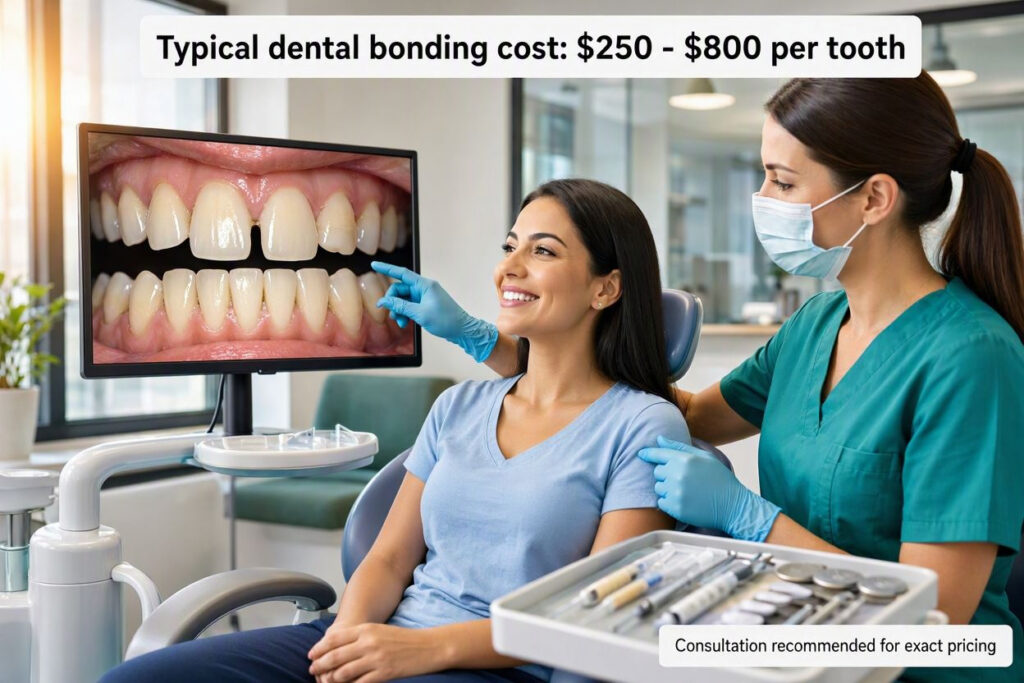
What Is Dental Bonding?
Dental bonding is a cosmetic dental procedure where a tooth-colored resin material is applied to your teeth and hardened with a special light. The resin is then shaped and polished to match the natural appearance of your teeth.
Bonding can be used to:
- Close gaps between teeth
- Repair chipped or cracked teeth
- Change the shape of teeth
- Cover stains or discoloration
- Protect exposed tooth roots
For closing a gap, the dentist applies composite resin to the sides of the teeth that border the gap. The resin is built up in layers until the gap is closed. The result is a seamless, natural-looking smile.
Bonding is different from veneers. Veneers are custom-made shells that cover the entire front surface of the tooth. Bonding is applied directly to the tooth and sculpted by hand. This makes bonding faster and less expensive, but it is also less durable.
Why Choose Dental Bonding For A Gap?
There are several reasons why bonding is a popular choice for closing gaps.
1. It Is Affordable
Compared to veneers, braces, or clear aligners, bonding is one of the cheapest options. It can cost a few hundred dollars per tooth, while veneers can cost over a thousand.
2. It Is Quick
Bonding usually takes one visit. You can walk in with a gap and walk out with a closed smile in about an hour.
3. It Is Minimally Invasive
Bonding does not require removing enamel from your teeth. This is a big advantage over veneers, which require permanent tooth reduction.
4. It Is Reversible
Because bonding does not damage your teeth, it can be removed if you change your mind. However, the resin itself is not reversible in the sense that it cannot be undone without removing the material.
5. It Looks Natural
Modern composite resins are available in many shades and can be matched to your natural teeth. When done well, bonding is almost invisible.
The Average Cost Of Dental Bonding For A Gap
The cost of dental bonding varies widely depending on where you live, the dentist you choose, and the number of teeth involved. In the United States, the average cost of dental bonding for a gap ranges from $300 to $800 per tooth. Some dentists charge by the tooth, while others charge by the hour.
Here is a rough breakdown:
| Number Of Teeth | Average Cost Range (USD) |
|---|---|
| 1 tooth | $300 – $600 |
| 2 teeth | $500 – $1,200 |
| 3 teeth | $800 – $1,800 |
| 4 teeth | $1,000 – $2,400 |
These prices usually include the bonding material, the dentist’s time, and follow-up polishing. However, some clinics charge separately for X-rays, consultation, or follow-up visits. Always ask for a complete package price.
If the gap is large, more resin may be needed, which can increase the cost. If the gap is small, the cost may be lower.
What Affects The Cost Of Dental Bonding For A Gap?
Many factors influence the final price. Let us look at the most important ones.
1. Geographic Location
Where you live makes a big difference. A dentist in New York City or San Francisco will charge more than a dentist in a small town. The cost of living, rent, and local demand all affect fees.
2. Dentist’s Experience And Reputation
An experienced cosmetic dentist will charge more than a general dentist. Cosmetic dentistry is an art. Dentists who create beautiful, natural-looking smiles are in high demand. Their fees reflect their training and results.
3. Number Of Teeth Involved
The more teeth you need to bond, the higher the cost. Closing a gap between two front teeth usually involves bonding both teeth. If you have multiple gaps, the cost multiplies.
4. Size Of The Gap
A small gap requires less resin and less time. A large gap may require more material and more sculpting. This can increase the cost.
5. Complexity Of The Case
If your teeth are misaligned or rotated, bonding alone may not be enough. You may need orthodontic treatment first. This adds to the overall cost.
6. Additional Procedures
Sometimes bonding is combined with other treatments:
- Teeth whitening: To ensure the bonding matches your whitened teeth. Cost: $300 – $1,000.
- Scaling and polishing: To prepare the teeth. Cost: $75 – $300.
- X-rays: If needed. Cost: $50 – $200.
These add to the overall bill.
7. Type Of Resin Used
High-quality composite resins cost more than basic ones. They also last longer and look more natural. Ask your dentist about the brand and quality of the resin they use.
8. Time Of Year
Some clinics offer promotions in January or during Dental Health Month. Others raise prices at the start of the year. It never hurts to ask about current specials.
Comparative Table: Cost Of Closing A Gap By Treatment
| Treatment | Average Cost (USD) | Treatment Time | Durability |
|---|---|---|---|
| Dental Bonding | $300 – $800 per tooth | 1 visit | 3 – 7 years |
| Porcelain Veneers | $900 – $2,500 per tooth | 2 – 3 visits | 10 – 15 years |
| Traditional Braces | $2,000 – $6,000 | 12 – 36 months | Permanent with retainer |
| Clear Aligners | $3,000 – $8,000 | 6 – 24 months | Permanent with retainer |
| Orthodontic Retainers | $200 – $600 | Ongoing | Varies |
Bonding is the cheapest and fastest option, but it does not last as long as veneers or orthodontics. It is a good choice for small gaps and patients who want a quick fix.
Cost Of Dental Bonding Around The World
Prices vary dramatically from country to country. Let us compare costs for bonding two front teeth in different countries.
| Country | Average Cost (Local Currency) | Approx. USD |
|---|---|---|
| United States | $500 – $1,200 | $500 – $1,200 |
| Canada | $400 – $1,000 CAD | $300 – $750 |
| United Kingdom | £200 – £500 | $260 – $650 |
| Australia | $300 – $700 AUD | $200 – $470 |
| Ireland | €250 – €600 | $270 – $650 |
| Germany | €200 – €500 | $220 – $540 |
| France | €180 – €450 | $200 – $490 |
| Spain | €150 – €400 | $165 – $440 |
| Mexico | $2,000 – $6,000 MXN | $100 – $300 |
| Costa Rica | $150 – $400 | $150 – $400 |
| Thailand | ฿3,000 – ฿8,000 | $100 – $260 |
| India | ₹2,000 – ₹6,000 | $25 – $75 |
| Turkey | $100 – $300 | $100 – $300 |
Prices vary by clinic and city. These ranges are for general comparison only.
Does Insurance Cover Dental Bonding For A Gap?
In most cases, dental insurance does not cover bonding for a gap because it is considered cosmetic. However, there are exceptions.
If the bonding is needed for functional reasons — such as repairing a chipped tooth or protecting an exposed root — insurance may cover part of the cost. But for closing a gap purely for aesthetic reasons, insurance is unlikely to help.
Here is what you need to know:
- Cosmetic exclusion: Most dental plans exclude cosmetic procedures.
- Medical necessity: If the gap is causing health problems, such as difficulty eating or speaking, insurance might cover it. But this is rare.
- Annual maximum: Even if covered, most plans have an annual maximum, such as $1,000 or $2,000.
- Pre-authorization: Some plans require pre-authorization. Ask your dentist to submit a pre-treatment estimate.
Always call your insurance company before treatment. Ask specific questions:
- Is bonding covered?
- Is there a medical necessity clause?
- What documentation is needed?
Even if insurance does not cover bonding, you may be able to use an FSA or HSA to pay with pre-tax dollars.
How To Save Money On Dental Bonding For A Gap
Here are some practical ways to reduce the cost without compromising quality.
1. Get Multiple Quotes
Prices vary. Consult at least three dentists. Compare not just the price but also the experience, technology, and results.
2. Consider A Dental School
Dental schools offer bonding at reduced costs. Students perform the work under the supervision of experienced faculty. Treatment takes longer, but you can save a lot.
3. Ask About Payment Plans
Many dental offices offer in-house payment plans. You pay a down payment and then monthly installments. Some plans are interest-free.
4. Use An FSA Or HSA
If you have a Flexible Spending Account (FSA) or Health Savings Account (HSA), you can use pre-tax dollars to pay for bonding. This can save you 20% to 30% depending on your tax bracket.
5. Negotiate
Dentistry is a business. Sometimes you can negotiate the price, especially if you are paying cash. Be polite and respectful, but do ask.
6. Combine Procedures
If you need bonding and a cleaning, ask if the office offers a package price. Some do.
7. Maintain Your Bonding
Good oral hygiene and regular dental visits can extend the life of your bonding. This means you will not need to replace it as often.
8. Avoid Stain-Causing Foods
Bonding resin can stain over time. Avoid coffee, tea, red wine, and tobacco to keep your bonding looking fresh.
9. Consider Bonding As A Temporary Fix
If you are planning to get veneers or braces later, bonding can be a temporary solution. It is cheaper and can be removed when you are ready for a more permanent treatment.
10. Plan Ahead
If you know you want bonding, start saving early. Set aside money each month. This avoids the need for high-interest loans.
The Process Of Dental Bonding For A Gap
Understanding the process helps you see where your money goes.
Step 1: Consultation
Your dentist examines your teeth, discusses your goals, and determines if bonding is right for you. They may take X-rays or photos.
Step 2: Shade Selection
Your dentist selects a composite resin that matches the color of your natural teeth.
Step 3: Preparation
The teeth are cleaned and lightly etched with a mild acid. This helps the resin bond to the tooth.
Step 4: Application
The dentist applies the composite resin to the teeth in layers. Each layer is hardened with a special light.
Step 5: Shaping And Polishing
Once the desired shape is achieved, the dentist sculpts and polishes the bonding to match your other teeth.
Step 6: Bite Check
Your dentist checks your bite to ensure the bonding does not interfere with your chewing.
Step 7: Follow-Up
You may have a follow-up appointment to check the bonding and make any adjustments.
The whole process usually takes 30 to 60 minutes per tooth.
How Long Does Dental Bonding Last?
With proper care, dental bonding can last 3 to 7 years. Its lifespan depends on:
- Your oral habits (nail-biting, chewing on hard objects)
- Your diet (staining foods and drinks)
- Your oral hygiene
- The quality of the bonding material
- The dentist’s skill
To extend the life of your bonding:
- Avoid biting your nails or chewing on pens
- Do not chew on ice or hard candy
- Wear a mouthguard if you grind your teeth
- Brush gently with a soft toothbrush
- Avoid excessive coffee, tea, and red wine
- Visit your dentist regularly for check-ups and polishing
If your bonding chips or stains, it can often be repaired or replaced. Small repairs may cost less than a full replacement.
Quotations From Dental Professionals
“Dental bonding is a great option for closing small gaps. It is affordable, quick, and looks natural. But it is not as durable as veneers. Patients need to understand that it may need to be replaced every few years.”
— Dr. Sarah Mitchell, Cosmetic Dentist
“I always tell my patients to think of bonding as a temporary fix. It is perfect for a wedding, a job interview, or a short-term solution. But for a long-term change, veneers or orthodontics are better.”
— Dr. James Carter, Prosthodontist
“The key to great bonding is the dentist’s skill. A skilled dentist can sculpt the resin to look completely natural. A less experienced dentist may leave the bonding looking bulky or uneven.”
— Dr. Emily Nguyen, Cosmetic Dentist
Important Notes For Readers
- Prices in this article are estimates. Always confirm fees with your dental clinic.
- Dental bonding is considered cosmetic. Insurance rarely covers it.
- Bonding is not as durable as veneers or orthodontics. It may need to be replaced every few years.
- Bonding can stain over time. Avoid stain-causing foods and drinks.
- Choose an experienced cosmetic dentist. The quality of the result depends on their skill.
- If you have a large gap or misaligned teeth, bonding may not be the best option. Ask your dentist about veneers or orthodontics.
- Always get a written treatment plan and cost estimate before you start.
FAQ
1. How much does dental bonding for a gap cost?
It costs $300 to $800 per tooth in the US. The total depends on the number of teeth involved.
2. Is dental bonding painful?
No. Bonding does not require drilling or anesthesia in most cases. You may feel some vibration or pressure.
3. How long does dental bonding last?
It lasts 3 to 7 years with proper care.
4. Does insurance cover dental bonding for a gap?
Usually not. It is considered cosmetic. Some plans may cover it if it is medically necessary.
5. Can dental bonding close a large gap?
It can close small to medium gaps. For large gaps, veneers or orthodontics may be better.
6. How long does the bonding procedure take?
It takes about 30 to 60 minutes per tooth.
7. Can I eat after dental bonding?
Yes, but avoid hard foods and stain-causing drinks for the first 24 to 48 hours.
8. Does dental bonding stain?
Yes, composite resin can stain over time. Avoid coffee, tea, red wine, and tobacco.
9. Can dental bonding be repaired?
Yes. Small chips or stains can often be repaired with additional resin.
10. Is dental bonding better than veneers?
Bonding is cheaper and faster. Veneers are more durable and look more natural. The best choice depends on your needs and budget.
Additional Resource
For more information on dental bonding and cosmetic dentistry, visit the American Academy of Cosmetic Dentistry:
https://aacd.com