What Does A Temporary Dental Bridge Cost?
A temporary dental bridge is a short-term restoration that protects your teeth and gums while a permanent bridge is being made. Many patients are surprised to learn that this “temporary” solution still comes with a real cost. Understanding what affects the price helps you plan your budget and avoid unexpected bills.
This guide breaks down the typical costs, the factors that change them, and how to make smart financial choices. You will also find practical tips to lower your expenses without sacrificing quality.
Understanding Temporary Dental Bridges
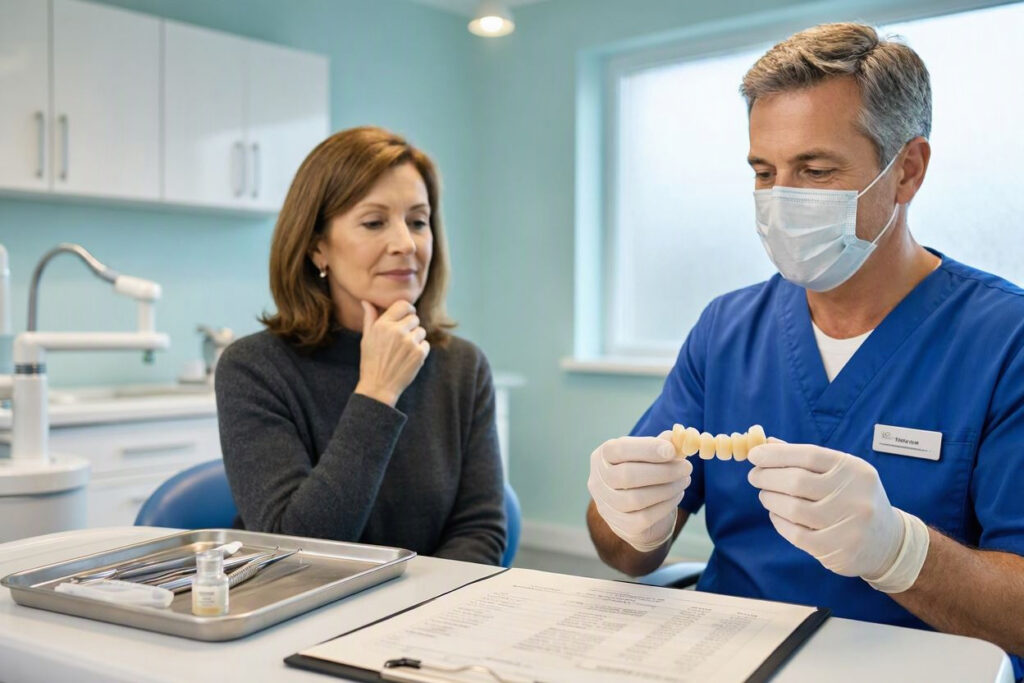
A temporary dental bridge is a custom-made appliance. It fills the gap left by missing teeth for a few weeks or months. It also covers prepared teeth that will support a permanent bridge later.
Dentists use temporary bridges for several reasons. They protect exposed dentin and nerves after tooth preparation. They help you eat and speak normally. They also maintain the shape of your gum line and prevent neighboring teeth from shifting.
Unlike a permanent bridge, a temporary one is not built to last for years. It is made from acrylic or composite resin. These materials are softer and less durable than porcelain or zirconia. This is why the price is lower, but not zero.
The Short Answer: Typical Price Range
The cost of a temporary dental bridge varies widely. In the United States, you can expect to pay between $150 and $500 for a single-unit temporary bridge. For a three-unit temporary bridge, the price usually ranges from $300 to $800. A full-arch temporary bridge can cost $1,000 or more.
These numbers are estimates. Your final bill depends on your location, your dentist, and the complexity of your case. Some clinics include the temporary bridge in the total price of the permanent bridge. Others charge it as a separate line item. Always ask for a written treatment plan before you agree to anything.
Quick Cost Overview Table
| Type of Temporary Bridge | Low Estimate | Average Estimate | High Estimate |
|---|---|---|---|
| Single unit (one tooth) | $150 | $300 | $500 |
| Three-unit bridge | $300 | $550 | $800 |
| Four-unit bridge | $400 | $700 | $1,000 |
| Full-arch temporary | $1,000 | $1,500 | $2,500+ |
Note: These prices are for the temporary appliance only. They may not include exams, X-rays, or the permanent bridge.
What Factors Influence The Cost?
Many variables affect the price of a temporary dental bridge. Understanding them helps you see why two dentists might quote very different amounts.
Geographic Location
Prices vary by region and city. A dental office in a large city like New York or San Francisco charges more than one in a rural area. The cost of living, rent, and staff salaries all play a role. For example, a temporary bridge in Manhattan might cost 50% more than the same bridge in a small town in the Midwest.
Dentist’s Experience and Specialty
A general dentist may charge less than a prosthodontist. Prosthodontists specialize in restoring missing teeth. They often handle complex cases and charge higher fees. A dentist with decades of experience may also charge more than a recent graduate.
Materials Used
Most temporary bridges are made from acrylic or composite resin. Some offices use stronger materials like fiber-reinforced composite. These cost more but last longer. The material choice affects both the price and the comfort of the temporary bridge.
Complexity of the Case
A simple single-tooth temporary bridge is quick to make. A multi-unit bridge that spans a large gap takes more time and skill. If your dentist needs to reshape teeth or manage gum issues, the price goes up. Full-arch temporaries are the most complex and the most expensive.
In-House vs. Outside Lab
Some dentists make temporary bridges in their own office. This can lower the cost and speed up the process. Others send impressions to a dental lab. Lab fees add to the final price. In-house temporaries are often cheaper, but they may not fit as precisely as lab-made ones.
Insurance Coverage
Dental insurance sometimes covers part of the cost. Many plans classify a temporary bridge as part of the permanent bridge procedure. In that case, the insurance may pay a percentage of the total. Other plans treat it as a separate service and may not cover it at all. Always check your policy before treatment.
Why A Temporary Bridge Is Not Free
Some patients assume the temporary bridge is included in the price of the permanent one. That is sometimes true, but not always. Here is why it often costs extra.
First, the temporary bridge requires its own materials and lab work. Even if the dentist makes it in-house, there is a cost for resin, acrylic, and staff time.
Second, the temporary bridge is a separate procedure. The dentist must take impressions, fit the appliance, and adjust it. This takes chair time, which is a valuable resource.
Third, some offices deliberately charge less for the permanent bridge and add a fee for the temporary. This pricing strategy makes the permanent bridge look more affordable. It also ensures the patient pays for every step of the process.
Important note: Always ask whether the temporary bridge is included in the quoted price for the permanent bridge. Get the answer in writing.
How A Temporary Bridge Compares To Other Options
A temporary bridge is not the only way to handle a missing tooth or a prepared tooth. Here is how it compares to other short-term solutions.
| Option | Typical Cost | Durability | Comfort | Best For |
|---|---|---|---|---|
| Temporary bridge | $150–$800 | 1–3 months | Good | Protecting prepared teeth |
| Flipper (removable partial) | $100–$500 | 1–6 months | Fair | Aesthetic gap filling |
| Essix retainer with tooth | $200–$600 | 6–12 months | Good | Mild tooth replacement |
| Immediate denture | $300–$1,000 | 6–12 months | Fair | Full-arch replacement |
A flipper is a removable appliance with a single fake tooth. It is cheaper than a temporary bridge but less stable. An Essix retainer with a fake tooth is another option. It is clear and comfortable but not as strong.
Your dentist will recommend the best option based on your needs. If you need to protect prepared teeth, a temporary bridge is often the best choice.
The Step-By-Step Process And Where Costs Arise
Knowing the process helps you understand where the costs come from. Here is a typical sequence for a temporary bridge.
- Initial exam and X-rays. The dentist checks your teeth and gums. X-rays reveal the condition of the roots and bone. Cost: $50–$200.
- Tooth preparation. The dentist reshapes the teeth that will support the bridge. This step requires local anesthesia. Cost: included in the permanent bridge fee or billed separately.
- Impression taking. The dentist takes a mold of your teeth. This is used to make both the temporary and permanent bridges. Cost: $50–$150.
- Temporary bridge fabrication. The dentist or a lab makes the temporary bridge. This can take a few hours or a few days. Cost: $150–$800.
- Fitting and adjustment. The dentist places the temporary bridge and checks your bite. Adjustments ensure comfort. Cost: often included in the fabrication fee.
- Follow-up visits. You may need one or two visits to check the fit. Cost: usually included or a small fee.
Each step adds to the total. Some dentists bundle the costs into one fee. Others itemize them. Ask for a detailed breakdown so you know what you are paying for.
Real-World Examples
To make the numbers more concrete, here are three realistic scenarios.
Example 1: Single missing tooth in a small town.
A patient needs a temporary bridge for one missing front tooth. The dentist makes it in-house. The total cost is $250. Insurance covers 50% after the deductible. The patient pays $125.
Example 2: Three-unit bridge in a large city.
A patient needs a temporary bridge for three missing teeth. The dentist sends the work to a lab. The total cost is $750. Insurance covers 30% because the patient has a basic plan. The patient pays $525.
Example 3: Full-arch temporary in a high-cost area.
A patient needs a full-arch temporary while waiting for implants. The dentist is a specialist. The total cost is $2,200. Insurance does not cover it because it is considered cosmetic. The patient pays the full amount.
These examples show how much the price can vary. Your situation will be unique.
How To Save Money On A Temporary Dental Bridge
You do not have to pay the highest price. Here are practical ways to lower your costs.
- Ask for a cash discount. Many dentists offer a 5–10% discount if you pay upfront.
- Use a dental school. Dental schools provide care at lower rates. Students work under supervision. The quality is often excellent.
- Check your insurance. Even if your plan does not cover temporaries, it may cover part of the permanent bridge. That can free up money for the temporary.
- Compare prices. Call three or four offices in your area. Ask for a written estimate for the same procedure.
- Negotiate. Do not be afraid to ask for a payment plan or a lower fee. Some dentists are flexible.
- Consider a flipper. If you only need a temporary solution for aesthetics, a flipper may be cheaper.
- Ask about in-house temporaries. They are often less expensive than lab-made ones.
- Use a health savings account (HSA) or flexible spending account (FSA). These accounts let you pay with pre-tax dollars.
Important note: Do not choose a dentist based only on price. Poorly made temporary bridges can cause pain, infection, and damage to your teeth. Quality matters.
What A Temporary Bridge Does Not Cover
A temporary bridge is not a permanent solution. It does not restore full chewing function. It does not prevent bone loss in the jaw. It does not last forever.
You should not eat hard or sticky foods while wearing a temporary bridge. You should not use it to bite your nails or open packages. It can break or come loose.
You also need to clean it carefully. Food can get trapped under the bridge and cause gum irritation. Your dentist will show you how to floss around it.
Important note: If your temporary bridge breaks or falls out, call your dentist right away. Do not try to fix it yourself with glue. You could damage your teeth or swallow harmful chemicals.
Quotations From Dental Professionals
We spoke with two dental professionals to get their insights.
“Patients often focus on the permanent bridge and forget about the temporary. But the temporary is what gets them through the healing period. It is not a luxury. It is a necessary part of the treatment.” — Dr. Karen M., general dentist in Ohio.
“The biggest mistake I see is patients who try to save money by skipping the temporary bridge. They end up with sensitive teeth, shifting teeth, and a longer healing time. The temporary bridge pays for itself in comfort and protection.” — Dr. Luis R., prosthodontist in Texas.
These quotes highlight an important point. The temporary bridge is not just an extra expense. It is a key part of a successful treatment plan.
Frequently Asked Questions
How long does a temporary dental bridge last?
A temporary bridge usually lasts one to three months. Some can last up to six months with good care. It is not designed for long-term use.
Can I eat with a temporary dental bridge?
Yes, but you should be careful. Avoid hard, sticky, and crunchy foods. Cut your food into small pieces. Chew on the side opposite the bridge if possible.
Does a temporary bridge hurt?
The procedure itself is not painful because the dentist uses local anesthesia. After the anesthesia wears off, you may feel mild soreness. This usually goes away in a few days.
Will my insurance pay for a temporary bridge?
It depends on your plan. Some plans cover it as part of the permanent bridge. Others do not cover it at all. Check with your insurance company before treatment.
Can I get a temporary bridge if I have gum disease?
You need to treat gum disease first. A temporary bridge can make gum disease worse if it is not controlled. Your dentist will evaluate your gums before making the bridge.
What happens if I do not get a temporary bridge?
You may experience tooth sensitivity, shifting teeth, and gum irritation. The prepared teeth are especially vulnerable. A temporary bridge protects them.
How do I clean a temporary dental bridge?
Use a soft toothbrush and mild toothpaste. Floss carefully around the bridge with a floss threader or interdental brush. Your dentist will give you specific instructions.
Can I whiten a temporary dental bridge?
No. Temporary bridges are made of acrylic or composite resin. Whitening agents do not work on these materials. They can also damage the temporary bridge.
How soon can I get my permanent bridge?
The permanent bridge is usually ready in two to four weeks. Your dentist will schedule a follow-up visit to place it.
What if my temporary bridge feels loose?
Call your dentist. A loose temporary bridge can fall out and cause problems. Do not try to reattach it yourself.
Additional Resources
For more information on dental bridges and costs, visit the American Dental Association’s website at ada.org. You can also check with your local dental society for a list of affordable clinics.
Conclusion
A temporary dental bridge costs between $150 and $800 for most patients, but prices can reach $2,500 for full-arch temporaries. The final price depends on your location, dentist, materials, and insurance. Always ask for a written estimate and check whether the temporary bridge is included in the permanent bridge fee. With careful planning, you can manage the cost and protect your smile.