In Uganda, How Much Does A Dental Implant Cost?
You are in Uganda, or planning to travel there, and you need a dental implant. Perhaps you are a Ugandan resident exploring your options for replacing a missing tooth. Perhaps you are a member of the Ugandan diaspora considering returning home for treatment. Perhaps you are a dental tourist comparing Uganda to other destinations in East Africa. Whatever your situation, you need accurate, realistic cost information, and you need it in a context that helps you make an informed decision.
Dental implant costs in Uganda vary widely depending on the provider, the implant system used, the complexity of the case, and the location of the clinic. This guide provides a comprehensive look at the current cost landscape for dental implants in Uganda. We will examine price ranges, the factors that influence cost, the types of providers available, how Ugandan prices compare to neighboring countries, and practical advice for navigating the system. By the end, you will understand what to expect to pay and how to evaluate the value you receive for that payment.
Uganda’s dental sector is a mix of public, private, and mission-based providers, with the private sector concentrated in Kampala and a few other urban centers. The cost of implants reflects this structure, the importation costs of materials, and the relatively limited number of clinicians trained in implant dentistry.
The Current Price Range for Dental Implants in Uganda
Dental implant pricing in Uganda is not standardized. Different clinics charge different fees based on their overhead, the implant brand they use, and the expertise of the clinician. However, a general price range has emerged based on surveys of private dental clinics in Kampala and conversations with practitioners.
Single Implant with Crown
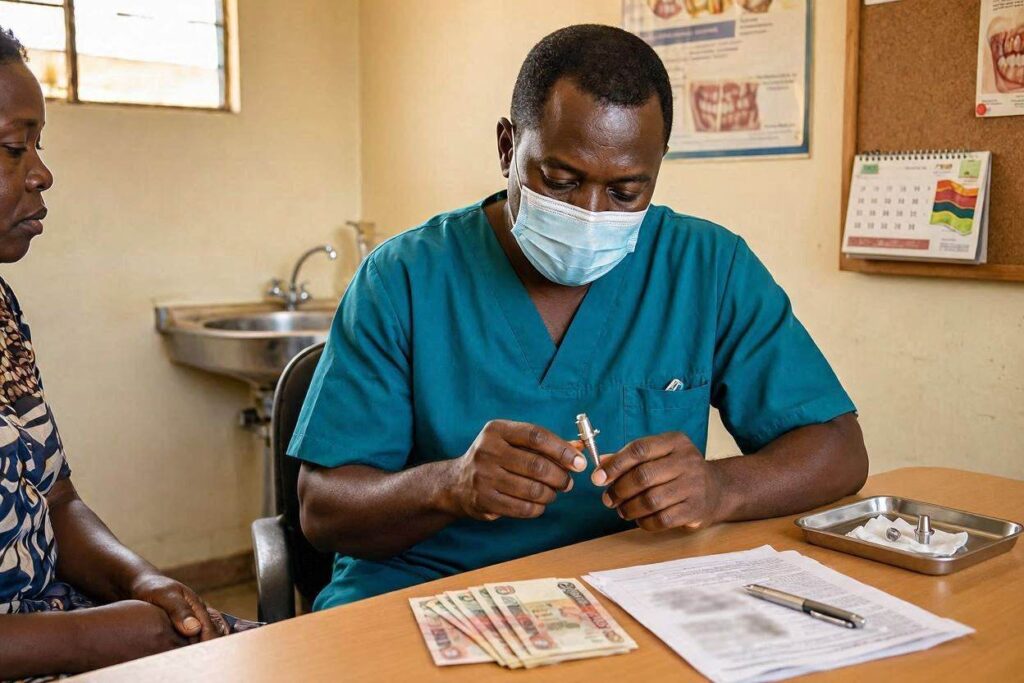
For a complete single-tooth implant, including the surgical placement of the implant fixture, the abutment, and the implant-supported crown, patients in Uganda can expect to pay between 4 million and 10 million Ugandan shillings. At current exchange rates, this translates roughly to between 1,000 and 2,600 US dollars.
The lower end of this range, around 4 to 6 million shillings, is typically found at mid-level private clinics in Kampala using mid-range implant systems, often from Korean, Indian, or Israeli manufacturers. The higher end, 8 to 10 million shillings and above, is charged by high-end private clinics, often those affiliated with or owned by specialist dentists who have trained abroad and use premium implant systems from Swiss, German, or American manufacturers.
The Cost Breakdown
Understanding how the total fee breaks down helps you evaluate quotes and understand what you are paying for.
The surgical placement of the implant fixture typically accounts for 2 to 5 million shillings. This includes the cost of the implant itself, the surgical kit, and the dentist’s professional fee for the surgery. If a tooth extraction is needed before the implant is placed, that adds 100,000 to 500,000 shillings depending on the complexity of the extraction.
The abutment, the connector that attaches to the implant and supports the crown, costs between 500,000 and 1.5 million shillings. The implant crown, the visible tooth, costs between 1.5 and 3.5 million shillings depending on the material. Porcelain-fused-to-metal crowns are at the lower end, while full zirconia or e.max ceramic crowns are at the higher end.
Additional Procedures and Their Costs
Many patients require additional procedures before or during implant placement, which add to the total cost.
Bone grafting, necessary when the jawbone has insufficient volume to support an implant, costs between 1 and 3 million shillings depending on the size of the graft and the type of graft material used. Synthetic bone grafts are less expensive than grafts using the patient’s own bone or donor bone.
A sinus lift, a procedure to raise the maxillary sinus floor to create space for an implant in the upper back jaw, costs between 2 and 4 million shillings. This procedure requires a surgeon with specific training and is typically performed by an oral and maxillofacial surgeon.
Cone beam computed tomography imaging, which is essential for proper implant planning, costs between 150,000 and 400,000 shillings. Not all clinics have CBCT machines. Those that do not may refer patients to a diagnostic imaging center for the scan.
The Factors That Influence Implant Cost in Uganda
Why does one clinic charge 5 million shillings while another charges 10 million for what appears to be the same procedure? The price difference reflects real differences in what you are receiving.
The Implant Brand and System
The brand of implant used is one of the largest cost drivers. Premium brands like Straumann from Switzerland, Nobel Biocare from Sweden, and Dentsply Sirona from the United States are the most expensive. These brands have decades of research behind them, documented long-term success rates, and global availability of components. A clinic using these systems pays more for the implant fixture and passes that cost to the patient.
Mid-range brands, including MegaGen from Korea, Osstem from Korea, and Adin from Israel, offer lower cost without necessarily sacrificing quality. These companies have established research programs and their implants have good clinical outcomes. Many clinics in Uganda use these systems to keep costs accessible while maintaining quality.
Budget brands, often from India or China, are the least expensive. Some of these brands have limited research backing and shorter track records. The lower implant cost reduces the total treatment fee, but patients should research the specific brand and verify that components will be available for future maintenance and repair.
The Clinician’s Qualifications and Experience
The dentist placing your implant may be a general dentist who has taken continuing education courses in implant dentistry, a specialist prosthodontist, a specialist periodontist, or an oral and maxillofacial surgeon. Each level of training commands a different professional fee.
A general dentist with basic implant training typically charges the lowest fee. An oral and maxillofacial surgeon, who has completed a multi-year surgical residency, charges the highest fee. The surgeon’s higher fee reflects the additional training, the ability to manage complications, and the capacity to provide sedation and handle complex cases involving extensive bone grafting.
Dentists who have trained abroad, particularly in the United Kingdom, the United States, South Africa, or Kenya, often charge higher fees than those trained entirely in Uganda. The perceived value of international training influences pricing in the private market.
The Clinic Location and Overhead
Clinic location within Uganda significantly affects pricing. Kampala, the capital, has the highest concentration of implant providers and the widest price range. High-end clinics in Kololo, Nakasero, and other affluent Kampala neighborhoods have high rent, sophisticated equipment, and a clientele that expects a premium experience. These clinics charge accordingly.
Clinics in smaller cities like Mbarara, Gulu, Jinja, or Mbale that offer implants typically charge less than Kampala clinics. Their overhead is lower, and their patient base has less ability to pay premium prices. However, the number of implant providers outside Kampala is very limited, and patients from upcountry often travel to Kampala for implant treatment.
Diagnostic and Planning Technology
Clinics that invest in three-dimensional CBCT imaging, intraoral scanners, and computer-guided implant planning charge more than clinics that use conventional two-dimensional X-rays and freehand implant placement. The technology improves accuracy and safety but adds capital and operating costs that are reflected in the treatment fee.
Public versus Private Dental Implant Services in Uganda
Uganda’s dental care system includes public facilities, private clinics, and mission or non-governmental organization providers. The availability and cost of implants differ across these sectors.
Public Dental Facilities
Uganda’s public health system provides dental care through national referral hospitals, regional referral hospitals, and district health centers. The dental departments at Mulago National Referral Hospital in Kampala and at the regional referral hospitals offer a range of services, including extractions, fillings, and dentures.
Dental implants are generally not available in the public system. The cost of the implant components and the specialized training required place implants outside the scope of public dental services, which are focused on basic, high-volume care. A patient seeking an implant through the public system will likely be referred to a private provider.
Makerere University Dental School
Makerere University in Kampala houses Uganda’s primary dental school. The teaching clinic may offer implant treatment at reduced fees as part of postgraduate training programs. Treatment is provided by postgraduate students under the supervision of experienced faculty. The fees are lower than private practice, but appointment times are longer, and the treatment timeline is extended because each step is supervised and evaluated.
Availability of implant treatment at the teaching clinic depends on the current training programs and the availability of implant components. Patients interested in this option should contact the dental school directly to inquire about current services and eligibility.
Private Dental Clinics
The overwhelming majority of dental implants in Uganda are placed in private clinics. Kampala hosts the largest concentration, with numerous clinics advertising implant services. The quality and pricing vary enormously.
High-end clinics include those affiliated with specialist dentists, those located in major hotels or upscale commercial areas, and those that market specifically to expatriates and affluent Ugandans. These clinics offer international-standard care with premium implant systems, modern technology, and a comfortable patient experience.
Mid-range clinics make up the bulk of the market. They offer implants using a mix of implant systems, often mid-range brands, at prices that are accessible to middle-class Ugandans. The quality of care is generally good, though the technology may not be as advanced as at the high-end clinics.
Low-cost clinics, sometimes called dental surgeries or dental rooms, offer the lowest implant prices. These clinics may use budget implant systems and may have less rigorous infection control protocols. Patients should evaluate these clinics carefully before proceeding.
Insurance and Payment for Implants in Uganda
The payment landscape for dental implants in Uganda differs from that in countries with widespread dental insurance.
Private Health Insurance
Private health insurance uptake in Uganda is limited, concentrated among formal-sector employees and affluent individuals. Some private insurance policies include dental coverage. The extent of implant coverage varies. Higher-tier policies may cover a portion of implant costs. Lower-tier policies typically exclude major restorative dental care.
Patients with private insurance should check their policy documents carefully. Even policies that cover implants often have annual maximums and waiting periods. The out-of-pocket cost after insurance reimbursement is usually still substantial.
Out-of-Pocket Payment
The vast majority of dental implant treatment in Uganda is paid for out of pocket by the patient or their family. Clinics typically require payment at each visit. Some offer staged payment, where the surgical fee is paid at the time of implant placement and the restorative fee is paid when the crown is delivered months later.
Because out-of-pocket payment is the norm, clinics are accustomed to discussing fees transparently and providing itemized treatment plans. Patients should request a written plan with all costs clearly stated before beginning treatment.
Medical Tourism and Diaspora Patients
Uganda attracts a small number of dental tourists from neighboring countries, including South Sudan, eastern Democratic Republic of Congo, Rwanda, and Burundi, where dental implant services are even scarcer. For these patients, the cost in Uganda is a fraction of what they would pay in Europe or North America, and the quality of care at top Ugandan clinics is acceptable.
Ugandans living abroad, particularly in the United Kingdom, United States, and Canada, sometimes return to Uganda for implant treatment. The cost savings are substantial. An implant that costs $5,000 in London might cost $1,500 in Kampala, even including the cost of flights. The diaspora patient must weigh these savings against the difficulty of follow-up care if complications arise after returning abroad.
Comparing Ugandan Implant Costs to Neighboring Countries
Uganda’s implant costs sit in the middle range for East Africa, less expensive than Kenya and more expensive than Tanzania.
| Country | Single Implant Cost (USD Equivalent) | Notes |
|---|---|---|
| Uganda | $1,000 – $2,600 | Kampala clinics, wide range |
| Kenya | $1,500 – $3,500 | Nairobi, more specialists |
| Tanzania | $800 – $2,000 | Dar es Salaam, fewer providers |
| Rwanda | $1,200 – $2,500 | Kigali, growing sector |
| South Africa | $1,200 – $3,000 | Established market, high competition |
| India | $400 – $1,200 | Dental tourism hub, high volume |
Kenya’s implant costs are higher than Uganda’s, reflecting a larger specialist workforce, higher clinic overhead in Nairobi, and a more established private dental sector. Tanzania’s costs are somewhat lower, with fewer high-end clinics and less use of premium implant brands. Rwanda’s dental sector is developing rapidly, and costs in Kigali are approaching those in Kampala.
For a patient in East Africa who is willing to travel for care, the cost differences between countries are not dramatic enough to justify medical tourism on cost grounds alone. The decision usually comes down to the availability of a trusted provider rather than a significant price differential.
Quality Considerations When Seeking Implants in Uganda
Cost is only one factor. The quality of the implant, the skill of the clinician, and the sterility of the facility determine whether your investment yields a long-term successful result or a failed implant that costs more to remove and replace.
Evaluating the Implant System
Ask the dentist what brand of implant they use. Research that brand online. Major manufacturers like Straumann, Nobel Biocare, Dentsply Sirona, MegaGen, and Osstem have detailed product information and published research. If the dentist uses a brand you cannot find information about, proceed with caution.
The implant system’s availability in Uganda matters for future maintenance. If you need a replacement abutment or crown component years later, the parts must be obtainable. Choose a brand that the clinic regularly uses and that has a reliable supply chain in Uganda or East Africa.
Sterilization and Infection Control
Infection is a leading cause of implant failure. The clinic must follow strict sterilization protocols. Observe the clinic environment. Are surfaces clean? Do staff wear gloves and change them between patients? Are instruments sealed in sterilization pouches with indicator strips? Do not be shy about asking about sterilization procedures. A reputable clinic will answer openly.
The dental unit water lines should use treated water. The handpieces, the drills used during surgery, must be sterilized between patients. Single-use items like surgical blades, sutures, and irrigation tubing must be disposed of after each patient.
The Dentist’s Implant Experience
Ask how many implant procedures the dentist has performed and how many they do in a typical month. Ask what training they have in implant dentistry. A weekend course is not the same as a year-long postgraduate program or a surgical residency.
Ask to see before-and-after photographs of cases similar to yours. A dentist who is confident in their work will have a portfolio of completed cases. If the dentist is evasive about their experience or cannot show results, consider seeking another provider.
Practical Steps for Obtaining Implants in Uganda
If you decide to proceed with implant treatment in Uganda, follow these steps to protect your health and your finances.
Schedule Consultations with Multiple Clinics
Visit at least two or three clinics before committing to treatment. A consultation typically costs between 50,000 and 150,000 shillings. Use the consultation to evaluate the clinic environment, meet the dentist, discuss your case, and obtain a written treatment plan and cost estimate.
Request a Written Treatment Plan
The treatment plan should itemize every procedure and its cost. It should include the diagnostic phase, any extractions, bone grafting if needed, the surgical implant placement, the abutment, the crown, and follow-up visits. A comprehensive plan prevents surprise bills.
Inquire About Guarantees and Follow-Up Care
Ask what happens if the implant fails. Does the dentist offer a warranty or guarantee period? What are the follow-up protocols? How often should you return for maintenance checks? Understanding the long-term care plan before treatment begins ensures you receive proper follow-up.
Confirm the Total Out-of-Pocket Cost
Get the total cost in Ugandan shillings, including all taxes and any expected laboratory fees. If you are paying with foreign currency, confirm the exchange rate the clinic uses. Request a receipt for each payment.
The Future of Implant Dentistry in Uganda
Uganda’s dental implant sector is growing. Several trends are shaping the future of implant availability and cost.
Increasing Numbers of Trained Clinicians
Makerere University is expanding its postgraduate dental training, and more Ugandan dentists are pursuing implant training abroad. As the number of trained implant clinicians increases, competition may moderate prices in urban areas. However, the majority of new clinicians practice in Kampala, and rural areas remain underserved.
Technology Transfer and Lower Equipment Costs
Digital dentistry equipment, including CBCT machines and intraoral scanners, is becoming less expensive. More Ugandan clinics are investing in this technology. As the technology base expands, the quality of implant planning and placement improves, and costs may gradually decrease as equipment costs are amortized across more patients.
Growing Middle-Class Demand
Uganda’s middle class is growing, and with it, the demand for cosmetic and restorative dentistry. This demand is driving investment in private dental clinics and attracting international implant manufacturers to establish distribution networks in the country. Increased competition among suppliers may reduce the cost of implant components over time.
Conclusion
A dental implant in Uganda costs between 4 million and 10 million Ugandan shillings, or approximately 1,000 to 2,600 US dollars, for a complete single-tooth restoration, with the wide range reflecting differences in implant brand, clinician qualifications, and clinic location. Most treatment is paid for out of pocket at private clinics concentrated in Kampala, with a smaller number of providers in regional cities. Patients should evaluate implant systems, sterilization standards, and clinician experience carefully, obtain itemized written treatment plans, and consider multiple consultations before committing to treatment.
Frequently Asked Questions
Can I get dental implants at Mulago Hospital?
Dental implants are generally not available through the public dental service at Mulago National Referral Hospital. Patients seeking implants are referred to private providers.
How long does the implant process take in Uganda?
The timeline is similar to international standards. After implant placement, a healing period of 3 to 6 months is required for osseointegration before the crown is placed. The total treatment time from extraction to final crown can range from 4 months to over a year if bone grafting is needed.
Are payment plans available at Ugandan dental clinics?
Some private clinics offer staged payments, where you pay for the surgical phase at the time of implant placement and the restorative phase when the crown is delivered. Formal third-party financing is rare. Most patients pay in cash installments.
What is the success rate of dental implants in Uganda?
There are no published national statistics for implant success rates in Uganda. When placed by a properly trained clinician using a reputable implant system in a patient with good oral hygiene, the expected success rate is similar to international norms, above 90 percent over ten years.
Can I fly to Uganda for implants and then return home?
Yes, some Ugandans in the diaspora and dental tourists from neighboring countries do this. The initial surgery and the crown placement are separated by several months of healing. You can have the surgery and return home, then come back for the crown. Some patients do the entire process in one trip if the clinic offers same-day implant protocols, though this is not appropriate for all cases.