Is It Normal Dental Implant Showing?
After dental implant surgery and restoration, patients often have questions about the appearance of their new tooth. One common concern is whether the implant itself should be visible. The short answer is no—a properly placed and restored dental implant should not be visible. The only part you should see is the crown, which looks like a natural tooth.
This guide explains why an implant might be showing, what is normal during the healing process, and when visible implant components indicate a problem requiring professional attention.
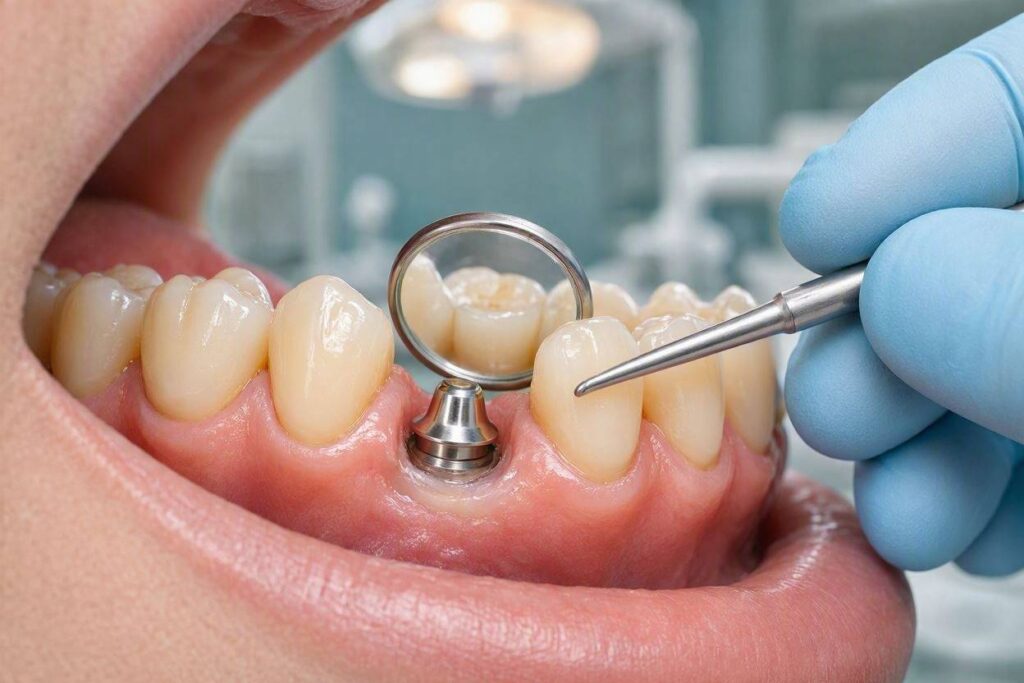
Understanding Dental Implant Components
To understand what should and should not be visible, it helps to know the different parts of a dental implant.
The Three Components
1. Implant Post:
The titanium screw placed in the jawbone. This should never be visible—it is completely embedded in bone and gum tissue.
2. Abutment:
The connector piece attached to the implant post. In a properly restored implant, the abutment should be covered by the crown and gum tissue.
3. Crown:
The visible artificial tooth. This is the only part you should see, and it should look like a natural tooth.
What You Should See
After complete healing and restoration, you should see:
- A natural-looking crown
- Healthy pink gum tissue around the crown
- No metal or titanium components
- No gaps or spaces
When Implant Visibility Is Normal
In certain situations, seeing part of the implant may be normal or expected.
During the Healing Process
Immediately after surgery, some visibility may be normal.
Healing Abutment Visibility:
After the first stage of surgery, a healing abutment may protrude through the gum. This is intentional and temporary.
What It Looks Like:
- A small metal post visible above the gum
- Surrounding gum tissue may be swollen
- This will be covered by the crown later
Temporary Restorations
If you receive a temporary crown, the fit may not be perfect.
What to Expect:
- Temporary crowns may not fit as precisely as permanent ones
- Slight gaps may be visible
- The permanent crown will fit better
Gum Recession Over Time
Some gum recession around implants is natural over time.
What Is Normal:
- 1 to 2 millimeters of gum recession over years
- Slight exposure of the abutment margin
- This is usually not concerning
When Implant Visibility Indicates a Problem
In many cases, visible implant components signal an issue.
Signs of a Problem
1. Visible Titanium Post:
If you can see the implant post itself (not the abutment), this is abnormal.
What It Indicates:
- Significant gum recession
- Bone loss around the implant
- Improper implant placement
2. Visible Abutment:
While some abutment visibility may be acceptable, excessive exposure is concerning.
What It Indicates:
- Gum recession
- Improper crown fit
- Aesthetic issues
3. Dark Line at the Gum Line:
A dark or gray line at the gum line may be visible.
What It Indicates:
- The abutment showing through thin gum tissue
- Metal components visible through the gum
- Aesthetic concerns
4. Gaps Between Crown and Gum:
Spaces between the crown and gum tissue are abnormal.
What It Indicates:
- Improper crown fit
- Gum recession
- Food trapping
Causes of Implant Showing
Several factors cause implant visibility.
1. Gum Recession
Gum recession exposes the underlying components.
Causes of Gum Recession:
- Thin gum tissue
- Aggressive brushing
- Periodontal disease
- Normal aging
2. Bone Loss
Bone loss around the implant causes the gum to recede.
Causes of Bone Loss:
- Peri-implantitis
- Overloading
- Failed osseointegration
3. Improper Implant Placement
If the implant was placed too far forward or at the wrong angle, it may be visible.
Why This Happens:
- Poor surgical planning
- Insufficient bone
- Inexperienced provider
4. Thin Gum Tissue
Some patients naturally have thin gum tissue that allows underlying components to show through.
What This Means:
- The dark color of the abutment may be visible through the gum
- Even with proper placement, the implant may be noticeable
5. Inadequate Crown Design
A poorly designed crown may not cover the abutment adequately.
Issues:
- Crown too small
- Improper margins
- Poor aesthetic design
What to Do If Your Implant Is Showing
If you notice visible implant components, take action.
1. Contact Your Dentist
Schedule an evaluation to assess the situation.
2. Do Not Ignore the Problem
Visible implants may indicate underlying issues that worsen without treatment.
3. Document the Changes
Take photos to track any changes in appearance.
4. Maintain Good Oral Hygiene
Keep the area clean to prevent infection while awaiting treatment.
Treatment Options for Visible Implants
Several treatments can address implant visibility.
1. Gum Grafting
Soft tissue grafts can cover exposed components.
How It Works:
- Gum tissue is harvested from another area
- The tissue is placed over the exposed area
- Healing creates new gum coverage
Cost: $500 to $1,500 per site
2. Crown Replacement
A new crown with better design can cover visible components.
When Appropriate:
- Poor crown fit
- Aesthetic improvements needed
- Abutment replacement required
Cost: $1,000 to $3,000
3. Abutment Replacement
A different abutment may improve aesthetics.
Options:
- Zirconia abutments (tooth-colored)
- Angled abutments
- Custom abutments
Cost: $300 to $800
4. Bone Grafting
If bone loss is the cause, grafting may restore support.
Cost: $500 to $3,000
5. Implant Replacement
In severe cases, the implant may need removal and replacement.
Cost: $2,300 to $6,700
Preventing Implant Visibility
Several strategies reduce the risk of implant showing.
1. Choose an Experienced Provider
Skillful implant placement minimizes aesthetic problems.
2. Discuss Aesthetic Goals
Communicate your expectations with your dentist.
3. Consider Zirconia Abutments
Tooth-colored abutments are less visible than metal.
4. Maintain Good Oral Hygiene
Healthy gums are less likely to recede.
5. Attend Regular Checkups
Early detection of problems allows for prompt treatment.
The Aesthetic Impact
Visible implants affect more than just appearance.
Psychological Effects
- Reduced confidence
- Self-consciousness about smiling
- Social anxiety
Functional Effects
- Food trapping
- Difficulty cleaning
- Increased risk of complications
The Importance of Addressing Aesthetic Concerns
Your smile affects your quality of life. Addressing visible implants improves both aesthetics and function.
Normal Healing vs. Problematic Visibility
Understanding the difference helps you respond appropriately.
Normal During Healing
- Healing abutment visible before crown placement
- Temporary crown with slight gaps
- Swelling that temporarily alters appearance
Problematic After Restoration
- Visible titanium post
- Dark line at the gum line
- Excessive abutment exposure
- Receding gums exposing components
Conclusion
A properly restored dental implant should not be visible—only the crown should show. During the healing process, a temporary healing abutment may be visible, which is normal. However, after final restoration, visible implant components indicate a problem such as gum recession, bone loss, or improper placement. If you notice your implant showing, contact your dentist for evaluation and treatment.
Frequently Asked Questions (FAQ)
Q: Should the dental implant post be visible?
A: No, the implant post should be completely embedded in bone and gum tissue. Only the crown should be visible.
Q: Is it normal to see the abutment after implant restoration?
A: Some minor abutment visibility may occur with gum recession, but significant exposure is abnormal and should be evaluated.
Q: What causes a dark line at the gum line around an implant?
A: A dark line is often the metal abutment showing through thin gum tissue. Zirconia abutments can prevent this.
Q: Can gum grafting fix a visible implant?
A: Yes, gum grafting can cover exposed implant components and improve aesthetics.
Q: How can I prevent my implant from showing?
A: Choose an experienced provider, maintain good oral hygiene, consider zirconia abutments, and attend regular checkups.
Q: Is a visible implant a sign of implant failure?
A: Not necessarily, but it can indicate gum recession or bone loss that requires treatment.
Additional Resource
For more information on dental implant aesthetics and complications, visit the American Academy of Periodontology (AAP) at www.perio.org. They provide educational resources for patients.