Is Teeth Whitening With UV Light Safe?
We all want a brighter, more confident smile. You walk down the oral care aisle or scroll through social media, and you see those promises of instant, dramatic results. Often, these promises feature a glowing purple or blue light. The marketing looks futuristic and scientific. But the question lingers in the back of your mind: Is teeth whitening with UV light safe?
You are not alone in asking this. The quest for whiter teeth often leads people down a path of confusing jargon and conflicting advice. On one side, influencers beam about their at-home LED kits. On the other, dental professionals warn about burns and sensitivity.
This guide does not just scratch the surface. We will go deep into the science, the risks, the regulations, and the reality. We will separate marketing hype from medical truth. By the end, you will have the knowledge to make a safe, informed choice. We will explore everything from the biology of your enamel to the specific wavelengths of light that matter. Let’s embark on this journey to uncover the truth about UV light and your smile.
Understanding the Bright Promise: What Is UV Teeth Whitening?
To answer “Is teeth whitening with UV light safe?”, you must first understand what the process actually involves. Many people use the terms “UV light” and “LED light” interchangeably. This is a dangerous mistake. They are fundamentally different, and the distinction sits at the heart of the safety debate.
The Basic Science of Light-Accelerated Whitening
Traditional teeth whitening relies on a chemical reaction. A peroxide-based gel, usually containing hydrogen peroxide or carbamide peroxide, sits on your teeth. This gel breaks down. In doing so, it releases oxygen molecules. These tiny molecules seep through the pores of your enamel. They go deep into the dentin layer. There, they break apart the complex molecules that cause stains. We call these chromophores. When the oxygen shatters these long-chain molecules, the tooth reflects less yellow light and more white light. It looks brighter.
Light-accelerated whitening adds a catalyst to this process. The idea is simple. Light energy heats the peroxide gel. Heat speeds up the chemical breakdown. More oxygen rushes into the tooth, faster. Theoretically, this cuts treatment time and boosts the whitening power. But the source of that light makes all the difference.
UV Light vs. LED Light: The Critical Distinction
Here lies the most significant confusion in the industry. Ultraviolet (UV) light exists on a specific spectrum. It has shorter wavelengths than visible light. This radiation carries significant energy. It can damage living tissue. LED (Light Emitting Diode) technology, often used today, produces visible light, usually in the blue spectrum. It contains no UV radiation.
Many professional systems and modern at-home kits have abandoned true UV light. They use high-intensity blue LED light. However, the term “UV” stuck around in casual conversation. Some older or unregulated devices still emit actual UV radiation. When we ask, “Is teeth whitening with UV light safe?”, we focus specifically on devices emitting UV-A or UV-B radiation. The answer for LED light, while still requiring caution, is different from the answer for true UV.
| Feature | True UV Light | Blue LED Light |
|---|---|---|
| Wavelength | 10nm to 400nm (Invisible) | 400nm to 500nm (Visible blue) |
| Radiation Type | Ionizing/Non-ionizing, DNA-damaging | Non-ionizing, lower energy |
| Thermal Effect | Can burn soft tissue rapidly | Generates gentle, controllable warmth |
| Primary Risk | Cellular mutation, burns, cataracts | Temporary tooth dehydration, sensitivity |
| Common Use | Older salon equipment, unregulated kits | Modern dental clinics, reputable home kits |
Important Note: Any device claiming to use “UV” for cosmetic purposes requires extreme scrutiny. The American Dental Association does not endorse any UV-based whitening. Most safety concerns vanish when clinics use modern, non-UV LED alternatives.
The “Oxygen Party” Inside Your Tooth
Let’s visualize the process without getting lost in dense chemistry. Imagine your stained tooth is a crowded, messy room. The guests are dark, complex stain molecules. The whitening gel is like opening the door and letting in a team of cleaners. These cleaners are the oxygen molecules. Left alone, they will tidy the room, but it takes time.
Now, you apply light. In the case of LED, you are playing upbeat music. It energizes the cleaners without changing their nature. They work faster. The job finishes quickly. In the case of true UV light, you are not just playing music. You are blasting the room with high-energy rays that stress the walls and furniture. The cleaners rush violently. The job gets done, but you might damage the structure of the room. That structural damage is what worries dentists about soft tissue and internal tooth health.
A Deep Dive into Peroxide Concentrations
The safety equation is not just about the light. The concentration of the whitening agent matters equally. Professional systems use high concentrations, sometimes 25% to 40% hydrogen peroxide. These demand strict isolation of the gums. At-home kits with LED lights typically use lower concentrations, between 6% and 10%. When you pair a powerful light with a max-strength gel, the reaction becomes extremely aggressive.
This aggression can lead to something called “the popsicle effect.” The dehydration caused by the intense heat temporarily makes teeth look blindingly white. Patients leave the chair thrilled. Hours later, the enamel rehydrates, the color drops back down, and the pain sets in. A thorough consultation will always set realistic expectations about this rebound effect.
Understanding Enamel Pores and Permeability
Your enamel is not a solid, impervious sheet of armor. Under a microscope, it resembles a dense forest of mineral crystals. Between these crystals lie microscopic channels or pores. These pathways allow sensation to travel into the nerve. When whitening gel hits your tooth, it flows through these pores. Light accelerates the flow.
Aggressive UV light can widen these pores temporarily. This increases permeability dramatically. When permeability spikes, the nerve inside the tooth becomes flooded with stimuli. This is the primary mechanism behind severe sensitivity. Not all light sources cause this widening. Gentle LED systems aim to accelerate the chemistry without physically expanding the enamel matrix. Understanding this porous landscape helps you grasp why “faster” is not always “friendlier” to your tooth structure.
The Burning Question: Is Teeth Whitening With UV Light Safe? An Evidence-Based Analysis
Now, we confront the central query directly. The short answer is complex. Most dental health professionals actively advise against it. The long answer involves examining cellular biology, cancer risks, and soft tissue burns. We must look at what happens at a microscopic level when UV radiation enters your mouth.
The Science of Sunburn Inside Your Mouth
You would never stare directly at the sun without protection. You apply sunscreen to your skin to prevent UV damage. Your oral mucosa—the soft, wet lining of your mouth—is significantly more vulnerable than your external skin. It is thinner. It lacks the thick, protective layer of keratin found on your epidermis. It also multiplies cells rapidly.
When UV light hits this tissue, the energy penetrates deep. It causes direct DNA damage. The cellular repair mechanisms rush to fix the lesions. If the dose is high or repeated, this repair system fails. Mutations occur. This is the exact mechanism that causes skin cancer after repeated sunburns. The lips, specifically the lower lip, are a common site for UV-induced carcinoma. Directing UV radiation into the oral cavity bypasses the skin’s natural defenses entirely.
The Cellular Chain Reaction:
- Step 1: UV photons strike the mucosal cells.
- Step 2: DNA absorbs the energy, forming “dimers” (abnormal bonds).
- Step 3: The cell halts its normal cycle to attempt repair.
- Step 4: Insufficient repair leads to programmed cell death (ulceration/burns) or mutation.
- Step 5: Over time, mutation accumulation can lead to neoplasia (cancer).
Ocular Dangers: The Forgotten Risk
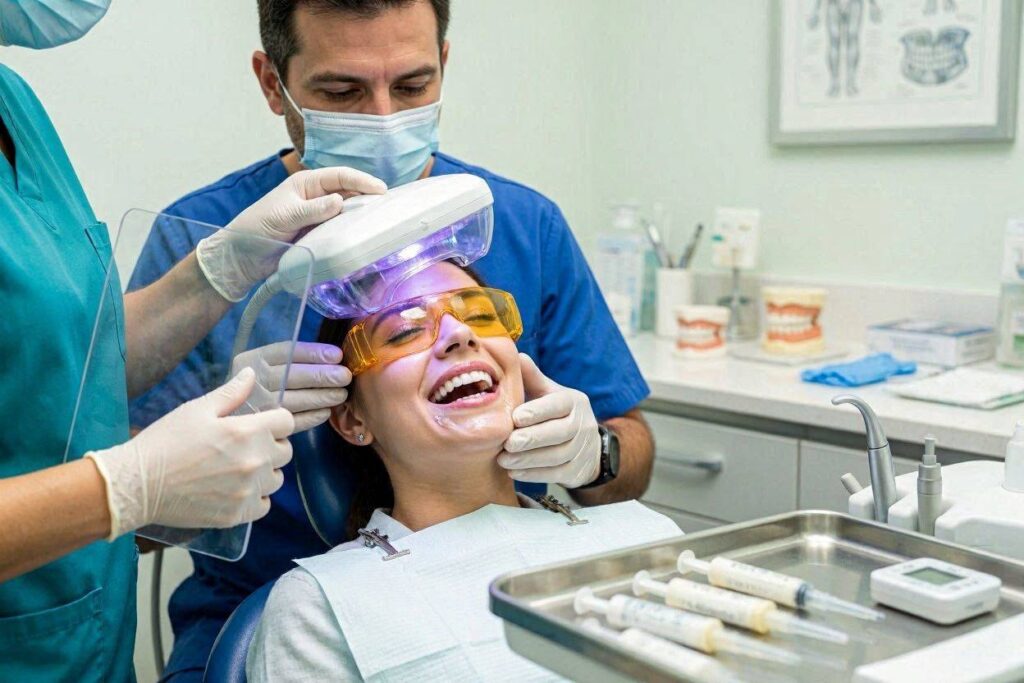
During discussions about teeth whitening, eyes often become an afterthought. This is a grave oversight. UV radiation causes cataracts, a clouding of the eye’s lens. It also drives macular degeneration. During a UV whitening session, you usually wear small orange goggles. These look fashionable but often provide inadequate protection.
Scattered or reflected UV light can easily pass around the edges of ill-fitting glasses. The eyelids and the thin skin around the eyes absorb the radiation. While the goggles block direct visible light to make the session comfortable, they may lack a certified UV 400 filter to block the invisible danger. Dental professionals working with UV curing lights for fillings have studied this extensively. The risk of accumulated ocular exposure is well-documented. Subjecting a patient to a prolonged cosmetic UV bath magnifies this risk unnecessarily.
The Soft Tissue Burn Report
Ask a dentist who has practiced for decades about early light-accelerated whitening. They will recall cases of “zebra gums.” This is a colloquial term for chemical and thermal burns. The high heat generated by early plasma arc or true UV halogen lamps literally cooked unprotected gum tissue. The gums turn white, blister, and slough off.
Modern systems use liquid rubber dams or resin barriers to paint the gums. However, the gums are not perfectly static. Saliva pools. Barriers leak. When high-power UV light hits a tiny window of exposed gum, the damage is instantaneous. Painful ulcerations last for days. While a chemical burn from peroxide heals, a UV burn carries the additional weight of mutating the basal cell layer. The aesthetic result—a white stripe on the gums—often lasts longer than the tooth whitening effect itself.
Expert Consensus: A review of safety protocols published in clinical dentistry journals consistently flags UV and plasma arc lights as “high-risk” compared to diode (LED) lasers. The thermal spike from UV is difficult to control, whereas LED maintains a stable, lower temperature curve.
Analyzing Systemic Absorption and Oxidative Stress
We rarely discuss what happens beyond the mouth. You do not swallow the whitening gel intentionally, but micro-droplets and aerosols inevitably travel down the throat. The combination of UV radiation and peroxide creates a highly oxidative environment.
This localized intense oxidation can trigger a systemic inflammatory response in sensitive individuals. The oral mucosa absorbs chemicals directly into the bloodstream, bypassing the digestive system’s first-pass metabolism. While the body’s glutathione system handles most rogue oxygen radicals, an overwhelming burst can deplete local antioxidants. The long-term studies on this are sparse, specifically regarding UV-generated reactive oxygen species in the oral cavity. Consequently, the precautionary principle dictates we should use the gentlest activation method available. The body endures enough oxidative stress from pollution and diet without adding a high-energy UV storm inside the mouth.
The Psychology of the “No Pain, No Gain” Myth
An unexpected pillar supporting UV whitening’s existence is psychology. Patients often equate discomfort with efficacy. If the light feels hot, tingles aggressively, or causes a slight burn, the brain interprets this as “it’s working.” This is a cognitive bias.
Safe, modern LED whitening is surprisingly comfortable. For some patients, this absence of pain creates doubt. They chase the aggressive treatment because the pain serves as a placebo signal of value. This psychological trap keeps dangerous UV devices in demand within the beauty parlor industry. Understanding that true efficacy does not require mucosal damage is a critical step in your safety journey. The goal is whiter teeth, not a wounded mouth.
Professional Arsenal: The Modern Tools of Power Bleaching
When you step into a dental clinic for whitening, you enter a controlled medical environment. The technology here has largely moved away from primitive UV generators. Understanding the professional arsenal clarifies why in-office treatments command a premium and offer a vastly superior safety profile compared to beauty salons.
The Rise of LED and Laser Diodes
Today, a reputable dentist uses either a blue LED array or a diode laser. Neither of these uses ultraviolet radiation. LED devices look like large, curved panels or small wands. They emit intense cool blue light, usually around the 460 to 490 nanometer wavelength. This light perfectly activates the catalysts in specialized gels, often containing photoreactive compounds like titanium dioxide or chlorophyll derivatives.
Diode lasers operate at specific infrared wavelengths (often 810 nm or 980 nm). The laser energy does not directly whiten the tooth. Instead, it excites the peroxide molecules, drastically accelerating the release of oxygen. Because the laser is monochromatic (one specific color/wavelength), the dentist can control the depth of penetration and heat with pinpoint precision. The risk of diffuse scatter and oral burns drops significantly.
Comparative Analysis: In-Office Laser vs. Clinical LED
Not all pro treatments are equal. A high-end clinic might offer you a choice between a diode laser treatment and an LED accelerator. Here is a breakdown of how they compare on safety and efficacy.
| Criterion | Diode Laser Whitening | Clinical LED Acceleration |
|---|---|---|
| Light Source | Focused infrared laser beam | High-output blue light emitting diodes |
| Thermal Control | Extremely precise, spot-specific heating | Broad, diffuse, gentle warming |
| Soft Tissue Safety | High (only if used with precise aiming) | Very High (low risk of accidental burns) |
| Sensitivity Risk | Moderate-High (intense chemistry) | Low-Moderate (longer exposure but gentler) |
| Procedure Speed | Very fast (single short session often) | Moderate (multiple 15-20 minute cycles) |
| UV Emission | None | None |
| Cost Factor | Highest tier | Mid-to-high tier |
The consensus leans toward LED as the safer “workhorse.” Laser offers speed but demands immense skill from the operator to avoid thermal damage to the pulp. Neither, however, involves the ionizing DNA damage associated with UV.
The Critical Role of the Dental Dam and Gingival Barrier
The safety secret of professional whitening lies not in the light but in the isolation. Dentists spend a significant portion of the appointment painting on a liquid rubber dam. This resin, often light-cured, seals the gum tissue away from the chemical and thermal assault completely.
You cannot overstate the importance of this step. Beauty salons frequently skip this because they lack the training to apply it safely. They rely on cheek retractors and cotton rolls. This is insufficient. A properly applied gingival barrier encapsulates each tooth down to the sulcus (the crevice where the tooth meets the gum). It prevents the gel from sliding down onto the root surface, where cementum is infinitely more porous and sensitive than enamel. If the barrier is absent, even a “safe” light can turn a high-concentration gel into a chemical weapon against your gums.
The Neutralizing Protocol and Desensitization
A professional session ends with a strict protocol. The gel is suctioned off, never rinsed with water first (which would dilute it and spread it). The teeth are wiped clean, and a neutralizing agent is applied to halt the oxidation reaction. Without this, residual oxygen continues to bombard the nerve for hours after you leave the chair.
Then comes desensitization. Professionals apply potassium nitrate, fluoride varnish, or amorphous calcium phosphate (ACP) pastes. Potassium nitrate molecules enter the enamel pores and calm the nerve by blocking potassium ion exchange. Fluoride and ACP begin the remineralization process immediately, closing the pores that the whitening opened. This “cool-down” phase is entirely absent in unsafe, unregulated UV whitening setups. The professional knows that the post-care determines the long-term health of the teeth.
The Single Tooth Darkening Protocol
A specific scenario demands professional intervention. A single tooth turns dark due to a root canal or a trauma. This is internal staining. External whitening with light rarely fixes this effectively. The standard of care is “walking bleach” or internal power bleaching.
Here, the dentist accesses the inner chamber of the tooth, seals a high-concentration peroxide paste inside, and closes it up. Sometimes, they activate it with heat, not UV light, using a controlled heating plugger. This process requires zero radiation. It remains a gold standard for a localized problem. Attempting to “over-whiten” the surrounding healthy teeth with a UV light to match one dead tooth is a catastrophic treatment plan. It sacrifices the health of eight good teeth for one bad one. The safe solution is isolated internal treatment, preserving the vibrant health of the rest of your smile.
Navigating the Market: At-Home Kits, Beauty Bars, and Counterfeit Devices
The biggest threat to your oral safety does not sit in the dental office. It sits in unregulated online marketplaces and strip-mall beauty parlors. The allure of saving hundreds of dollars pushes millions to purchase devices that no medical board has ever approved. The question, “Is teeth whitening with UV light safe?”, becomes most urgent in these uncontrolled environments.
The Danger of Unregulated “Parlor” Treatments
In many jurisdictions, a beautician is not legally allowed to handle hydrogen peroxide above a minuscule concentration (often 0.1%). A dentist can use 35%. Yet, investigators consistently find beauty bars stocking syringes of dental-grade gel. The beautician is not trained to diagnose decay, gum disease, or oral cancer. They paint a carcinogenic promoter onto compromised tissue and then fire a UV light at it.
If you have a tiny cavity, the peroxide can shoot directly into the pulp. The pain is excruciating, and the pulp can die, requiring a root canal. If you have receding gums, the exposed root has no enamel. The UV and peroxide combination burns the cementum directly. The beautician focuses on the sale, not the screening. Treating a cosmetic service as a purely aesthetic commodity, rather than a medical procedure, opens the door to irreversible harm.
Red Flags at a Beauty Bar:
- The provider does not ask about your dental history.
- They use a generic “one-size-fits-all” mouth tray.
- The gel comes from an unlabeled syringe.
- The light feels hot against your lips or gums immediately.
- There is no suction equipment visible.
Online Marketplaces: A Jungle of Fake Certifications
Searching for a whitening kit online triggers an avalanche of options. Many feature a plastic mouth tray attached to a phone’s charging port, with a purple glow described as “powerful UV.” The packaging boasts shiny CE marks and FDA logos that are often fraudulent or misleading.
The danger here is the power source. These devices plug directly into the mains or a USB port without medical-grade electrical isolation. A short circuit or faulty insulation sends mains current into your mouth. The oral mucosa, wet with saliva and conductive gel, becomes a perfect pathway for electrocution. Beyond the light danger, the unlisted gel ingredients may include high-concentration acids or chlorine dioxide—a chemical for industrial bleaching, not biological tissue. The chlorine dioxide strips enamel by acid erosion, leaving teeth permanently rough. The UV light adds insult to injury by dehydrating these weakened teeth, causing spiderweb cracking.
The Purple/Black Light Trap
A specific category of scam involves a “black light” effect. The device produces a dim purple glow. This is usually a combination of a few violet LEDs and, critically, a true UV fluorescent tube. The sellers market this as “ion cleaning” or “plasma technology.” The purple glow looks impressive. In reality, the “glow” is low-level UV radiation causing your teeth to fluoresce. While your teeth glow, the soft tissue absorbs the damaging wavelengths.
Tooth fluorescence is a natural optical property. Healthy teeth fluoresce blue-white under UV light. Fraudulent operators use this to visually “prove” the light is working. The visual effect distracts from the biological damage. A safe LED light does not make your teeth look like a glow stick. It simply looks like a bright, vivid blue beam. If your treatment makes your white shirt glow, you are being bathed in ultraviolet radiation. Walk away.
Charcoal, Coconut Oil, and “UV Activation”
A bizarre trend has emerged combining “natural” remedies with gadgetry. You will find kits that ask you to mix activated charcoal powder with water, paint it on, and activate it with a UV light. This represents a dangerous category error.
Activated charcoal is an abrasive. It scrubs the enamel surface. UV light does not activate charcoal; it simply heats the abrasive slurry, drying it out and driving the particles deeper into the enamel pores. This results in permanent grey staining and massive enamel loss. The marketing suggests “detoxification.” The reality is physical abrasion accelerated by thermal dehydration. There is no evidence that UV light interacts beneficially with carbon. It only makes the abrasive paste harder to remove and more damaging to the protein pellicle that protects your teeth.
Decoding the Safety Checklist for Home Devices
If you absolutely insist on a home device, apply military-grade scrutiny. Do not trust the star ratings on the seller’s website. Those are manipulated. Verify the technology independently.
Safe Home Device Checklist:
- Wavelength Verification: The spec sheet must state a wavelength of 460-490nm (Blue). If it says “UV,” “380nm,” or does not specify, reject it.
- Auto-Shutoff Timer: The device must power down automatically. Maximum safe single-cycle exposure is usually 10 to 16 minutes. A device that runs indefinitely invites overheating.
- Thermal Breaker: Does it get hot? A safe LED stays cool to the touch. Heat means the conversion of energy is inefficient and dangerous.
- Certification Body: Look for FDA 510(k) clearance specific to the LED control unit, not just the toothpaste. A real clearance number can be verified on the FDA database.
- Tray Material: Soft, flexible silicone that cradles the gums. Hard, sharp plastic cuts the mucosa, allowing the gel direct contact with live tissue.
The Biological Price Tag: Enamel Erosion, Sensitivity, and Pulp Health
Beyond the terrifying external burns, we must consider the deep biological cost inside the tooth. You cannot feel your enamel eroding in real-time, but it is happening. The interplay of light and chemistry writes a check that your nerve health might not be able to cash.
The Dehydration Deception
This is the most common party trick of UV and high-intensity lights. The light does not just accelerate peroxide; it increases the surface temperature of the tooth. Enamel contains water within its crystalline structure. Heat drives this water out. A dehydrated tooth scatters light differently; it appears chalky and incredibly white.
Patients look in the mirror immediately after the treatment and gasp with delight. They believe the UV light delivered a miracle. What they saw was “white-out dehydration.” Over the next 24 to 72 hours, the oral fluid rehydrates the enamel. The true, underlying shade returns. The disappointment triggers a cycle of frequent re-treatment. This thermal cycling between dehydration and rehydration stresses the enamel rods. Microscopic cracks propagate. The tooth weakens.
Irreversible Pulpitis: When the Nerve Dies for a Shade
Deep inside your tooth lives the pulp—a delicate bundle of nerves, blood vessels, and connective tissue. The odontoblast cells line the pulp chamber wall. They sense extreme changes. High-power UV accelerates a peroxide flood into the dentinal tubules. This chemical and thermal shock causes hyperemia (increased blood flow) inside the rigid pulp chamber.
Because the chamber cannot swell to relieve pressure, the blood flow strangles itself. This is irreversible pulpitis. The nerve tissue begins to necrose (die). The initial symptom is a lingering, throbbing pain that responds poorly to over-the-counter painkillers. It hurts when you lie down. It hurts when you drink hot coffee. The tooth then slowly turns darker from the inside out as the dead blood cells decompose. The very procedure meant to whiten the tooth has murdered it from within. The cost of a root canal and internal bleaching far exceeds the savings of a cheap UV whitening deal.
Clinical Insight: Studies measuring pulp temperature during whitening show that a rise of just 5.5°C in the pulp chamber causes irreversible damage in a significant percentage of cases. Certain plasma arc UV lights can spike this temperature by 15°C or more.
Cementum Catastrophe: The Gum Recession Factor
Age brings wisdom, but it also often brings gum recession. As the pink tissue moves down, it exposes the tooth’s root. The root is coated not in hard, glossy enamel, but in cementum. Cementum is a soft, rough tissue. It is about as thick as a fingernail scraping.
If you apply UV-activated whitening gel to cementum, the damage is catastrophic. The cementum dissolves chemically. The UV light denatures the remaining collagen matrix. This is immensely painful and causes scoop-shaped defects in the root surface. These defects then trap plaque, leading to rapid decay. There is almost no viable treatment to restore lost cementum. You cannot regenerate it. You can only manage the sensitivity and fill the notches with bonding material. A pre-whitening check-up identifies recession. A safe practitioner will avoid placing strong gel on these zones entirely. A UV lamp in a salon operates blindly, roasting a tissue layer you cannot afford to lose.
The Ionizing Footprint on the Oral Microbiome
Your mouth hosts a complex bacterial ecosystem. This biofilm plays a role in everything from digestion to nitric oxide production for cardiovascular health. UV light is a known germicide. It kills bacteria by zapping their DNA. When you blast the mouth with UV, you are not just whitening teeth; you are executing a mass extinction event on your oral flora.
The immediate consequence is an imbalance. Opportunistic fungi, like Candida albicans, thrive after the bacterial competition has been wiped out. Patients may develop oral thrush following aggressive UV treatments. The long-term disruption of the oral microbiome remains poorly understood. However, we know that sterilization-level cleanliness in the mouth is not physiological. It opens ecological niches for pathogens. LED light, specifically in the blue spectrum, does have some antimicrobial properties (though mild), but it lacks the catastrophic ionizing effect of true UV. You want to whiten your teeth, not napalm your immune system’s first line of defense.
Special Considerations: Pregnancy, Smokers, and Restorative Work
Biological risk varies by individual. A treatment safe for a healthy 25-year-old male could be disastrous for a 40-year-old female with a history of gum disease or a smoker with slow-healing tissue. The unique interplay between UV light and specific patient conditions deserves dedicated attention.
The Maternal and Fetal Equation
Pregnancy causes pregnancy gingivitis. The gums swell, bleed easily, and become hyper-vascular. This is a state of high inflammation. Applying a caustic peroxide gel to bleeding gums amplifies the systemic absorption. Introducing UV radiation to tissue loaded with pregnancy hormones (which can make cells more sensitive to mutations) is a line no ethical practitioner crosses.
Furthermore, there are zero randomized controlled trials testing the safety of oral UV exposure on a fetus. The oral mucosa provides rapid systemic access. While the radiation is localized, the oxidative stress markers and chemical byproducts enter the maternal bloodstream. The precautionary principle rules absolute. No reputable dentist performs UV or even strong LED whitening on a pregnant or nursing patient. The risk-reward ratio is infinitely wide. The only acceptable whitening option during this period is a low-concentration, non-light-activated, non-abrasive toothpaste designed for enamel health.
The Smoking-Related Risk Magnifier
Smokers often seek whitening to combat extrinsic tar stains. Their oral tissues, however, are in a constant state of repair due to the heat, toxins, and vasoconstrictive effects of nicotine. Blood flow to the gums is chronically reduced, though they may look normal.
UV light damages tissue that relies on a robust blood supply to heal. In a smoker’s mouth, the healing capacity is slashed by 50% or more. A minor UV burn that would heal in three days for a non-smoker can fester into a necrotic ulcer in a smoker. The localized immune suppression in the oral cavity makes the DNA repair mechanisms sluggish. Mutations from UV photons are more likely to slip through the repair checkpoints. Combining a known chemical carcinogen (tobacco) with a physical carcinogen (UV) in the same tissue environment multiplies the oncogenic risk factor substantially. Smokers must deeply consider whether the aesthetic gain justifies this biological gamble.
The Mismatch: Whitening Crowns, Veneers, and Bonding
A crucial optical and structural fact often goes unmentioned. Resin composite (white fillings), porcelain crowns, and veneers do not whiten. At all. Their color is intrinsic to the material. The aggressive chemical reaction of peroxide does not penetrate ceramic.
The catastrophic problem arises when you position a UV light over a mouth containing these restorations. The natural tooth structure whitens. The crown stays stubbornly dark. The mismatch becomes more obvious than before. More critically, UV light and high-concentration peroxide degrade the resin matrix of composite fillings. The bonding between the filling and the tooth weakens. The surface becomes rough and porous. The edges stain more aggressively post-treatment. For a patient with a “smile zone” full of bonding, UV whitening is a direct path to costly restorative failure. You will whiten the teeth only to highlight the patches that now need replacement.
The Braces Fiasco and Post-Orthodontic Care
Teenagers finishing braces dream of a perfect smile. They often demand immediate whitening. The enamel around where the bracket sat is pristine, but the surrounding tooth might have a slight mineral difference. Applying a UV-activated gel immediately after debonding is a surgical-grade error.
The process of removing braces abrades the enamel microscopically. The surface is raw and hyper-permeable. Directing UV and intense peroxide onto this freshly exposed surface causes a tidal wave of sensitivity. You also risk a “checkerboard” effect if the gel and light do not penetrate the micro-scratches evenly. Patients should wait at least a month after debonding, use fluoride remineralizing treatment, and let the pellicle layer re-establish before even considering mild LED whitening. UV light on a freshly de-bracketed mouth violates all principles of biomimetic recovery.
The Xerostomia Challenge (Dry Mouth Sufferers)
Saliva is a natural buffer, diluent, and healing serum. Patients with dry mouth—whether from Sjögren’s syndrome, radiation therapy, or medication—lack this protective fluid. Their soft tissues are already fragile and prone to ulceration.
The whitening gel does not get diluted as quickly. It pools in the floor of the mouth. A UV light directed downward hits this pool of pure chemical. The mucosa of the tongue and floor of the mouth absorbs the direct radiation with zero salivary shielding. The burn risk is extreme. Additionally, the lack of saliva prevents the natural remineralization post-bleaching. The teeth become brittle and hypersensitive permanently. Xerostomia is an absolute contraindication for any light-accelerated whitening. The risk of oral mucositis, a painful inflammation and ulceration that makes eating impossible, is too high.
The Regulatory Maze: FDA, ADA, and Global Safety Standards
Walking through the regulatory landscape reveals why the device in a salon might be illegal. You need to understand the difference between “cleared,” “approved,” and “unregulated cosmetic implement.” The agencies tasked with protecting your health have drawn specific lines, and UV light falls on the wrong side of them.
The American Dental Association (ADA) Seal of Acceptance
The ADA runs a rigorous, voluntary program. Manufacturers submit extensive data on safety and efficacy. The ADA does not just take the company’s word. They commission in-house and university-based laboratory and clinical testing. To date, no system utilizing true UV light technology has ever earned the ADA Seal of Acceptance.
The reason is simple. The safety profile is unacceptable. The ADA Seal is the gold standard. If a product lacks it, ask why. Some high-quality LED systems have earned the seal because they provided proof that they emit zero UV radiation and control temperature within safe parameters. Before you buy any kit, look for that rectangular seal on the box. In the field of light-activated whitening, the presence or absence of this seal separates legitimate medical devices from experimental aesthetic gadgets.
FDA Classification and 510(k) Clearance
The U.S. Food and Drug Administration regulates teeth whitening devices. A true UV whitening lamp is a medical device requiring clearance. However, the 510(k) clearance process often relies on “substantial equivalence” to a predicate device already on the market. Some dangerous UV devices slipped in years ago before the thermal and photobiological risks were fully understood and are grandfathered into the system.
Crucially, the FDA has issued warnings to numerous companies for selling unapproved UV devices. The agency looks for “adverse events”—reports of burns, nerve damage, or chemical injuries. A responsible consumer searches the FDA’s MAUDE (Manufacturer and User Facility Device Experience) database. This publicly accessible database contains real reports of device-related injuries. Typing in a brand name alongside “whitening” or “UV” often uncovers horror stories hidden behind glossy Instagram marketing. This due diligence takes ten minutes and can save your smile.
International Bans and Restrictions
The United Kingdom and the European Union have adopted some of the strictest laws on this matter. The EU Cosmetics Regulation limits the concentration of hydrogen peroxide in over-the-counter products to 0.1%. Products between 0.1% and 6% can only be used under the direct supervision of a registered dental practitioner.
The logic centers on chemical safety, but the ban extends logically to the tool itself. Using a UV light to turbo-charge an illegally high concentration of gel constitutes a double violation. Many UV devices sold online and shipped to the UK are seized at customs. Australia’s TGA (Therapeutic Goods Administration) similarly controls high-concentration peroxides. The emerging international consensus is a hard crackdown on unsupervised light-activated systems. If your local salon offers it, it is likely operating in a legal grey zone or outright flouting customs law. You should feel empowered to ask, “Under what license do you administer this medical device?”
The Liability Question in the Salon
Consider liability. A dentist carries malpractice insurance specifically for chemical burns and oral trauma. They know the anatomy. They can prescribe pain management and antibiotics if infection follows a burn. A beautician has none of this. Their insurance explicitly excludes medical procedures.
If you suffer a partial thickness UV burn to the gums or lip from a salon treatment, you will likely seek treatment at an emergency room or dental clinic. The beautician cannot write a prescription. They cannot bill health insurance. The legal recourse is civil litigation, a slow and painful process. The waiver you signed does not protect them from gross negligence related to the misuse of medical devices. Ask the salon owner, “Do you have an incident report system and medical oversight?” The answer will be telling. If it’s “no,” you are the experiment.
The Electronic Safety Standards for a Plug-in Device
An overlooked angle is the physical electrical safety. A medical-grade LED curing light for dentistry costs thousands of dollars because it meets the IEC 60601 standard for medical electrical equipment. It has robust isolation between the mains power and the patient circuit. A cheap purple light from an online store costs $15. The transformer is a primitive capacitor-resistor setup with inadequate creepage and clearance distances.
Saliva is a great conductor. A pinhole defect in the insulation turns the mouth tray into a live electrode. Electrocution injuries in the oral cavity are devastating because current flows directly through the brainstem. Even a mild “tingle” indicates a catastrophic failure of isolation. This is not about whitening safety anymore; it is about life safety. The return on investment for a $15 device should not be a cardiac event.
The Safe Alternative: Demystifying Modern LED Technology
If UV is the villain of this story, blue LED is the nuanced hero. But we must not blindly trust every LED. We need to understand why it is safer, how to verify it, and what the gold standard LED treatment actually feels like.
The Physics of Cold Light
Light Emitting Diodes work by electroluminescence. They pass a current through a semiconductor material. This releases photons without generating catastrophic heat. They are “cold light.”
In an LED whitening array, hundreds of tiny diodes shine blue light. The specific wavelength of 465 nanometers aligns perfectly with the absorption spectrum of the photoreactive gels. The light stimulates the reaction without generating the ionizing radiation that breaks DNA chains. The efficiency is much higher. Most of the input energy becomes light. In a UV halogen lamp, most of the input energy becomes heat. That heat is what cooks the pulp and dries the enamel. The gentle warmth you feel from a high-quality LED is often just the proximity of the electronics, not the light beam itself. The beam itself is relatively cool and forgiving.
The Role of Photocatalysts in Peroxide Gels
Why does the blue light work so well without UV? Specialized gel formulations now include biocompatible photocatalysts. These are particles, often nano-scale, that absorb the blue light and convert it into localized chemical energy. Think of it as a billion tiny antennae inside the gel.
These catalysts lower the activation energy required for the peroxide to break down. The gel remains relatively dormant until the specific wavelength hits it. This adds a layer of safety. If the gel accidentally touches the gum, the limited ambient light in the room does not trigger a massive oxidizing burst. The reaction only ramps up significantly where the focused LED beam hits it, directly on the front surfaces of the teeth. This “targeted activation” property is impossible with true UV, which activates everything indiscriminately with raw ionizing energy.
In-Office LED: The 60-Minute Transformation
Let’s walk through the gold standard of safe light-accelerated whitening: the high-end dental LED system.
- Screening: The dentist checks for cracks and decay using magnification and transillumination.
- Isolation: A hard/soft tissue laser or retraction cord gently pushes the gum away. A liquid dam is painted meticulously around every tooth in the aesthetic zone. This is cured with a small handheld blue light, creating a solid rubber seal.
- Gel Application: A 25% to 35% hydrogen peroxide gel, specifically formulated for the chairside LED brand, is applied in a thin, even layer. You avoid the “popsicle effect” by not layering it on too thick.
- The Cycle: The large overhead LED panel positions over your mouth. The device is programmed for a 15-minute cycle. The light is intense but cool. You feel nothing but a slight warmth.
- Recalibration: The gel is suctioned off. A fresh layer is applied. This repeats 2 or 3 times.
- The Post-Care: A desensitizing serum containing potassium nitrate and fluoride is placed in generic trays and left for 10 minutes. You leave with specific dietary instructions (the “White Diet”) to avoid re-staining while the enamel rehydrates and remineralizes.
This process prioritizes pulp health and mucosal integrity. The LED panels used here are medical devices, registered, insured, and serviced.
The Home LED Tray Revolution
For a fraction of the cost, customized home LED trays offer a balance between safety and convenience. The dentist takes digital scans or physical impressions of your teeth. A lab fabricates thin, flexible, tight-fitting trays.
You receive a low-concentration carbamide peroxide gel (usually 10-16%). The home LED device is a simple, battery-operated mouthpiece that slots inside your cheeks. The blue light is an order of magnitude less powerful than the in-office version, matching the lower gel concentration. You wear it for 30 to 60 minutes. Because the trays are custom-made, the gel does not squish onto the gums. The LED light source is too weak to cause thermal damage. It simply accelerates the slow release of oxygen from the carbamide peroxide. This is the safest method for a patient who wants active light involvement but wants to control the pacing.
Red Light and Near-Infrared Adjuncts
Innovation pushes beyond blue. Some holistic dental practices now combine blue LED whitening with red or near-infrared (NIR) therapy. The blue light activates the whitening. The red and NIR light bathe the cheeks and gums.
This photobiomodulation stimulates mitochondrial function. It increases ATP production in the cells, reduces inflammation, and speeds up the healing of any minor oxidative stress. Think of it as a workout for your cells. This combination therapy actively counters the dehydration and sensitivity caused by the whitening cycle. It represents a philosophy of “build while you bleach.” While not a magic bullet, it demonstrates the industry’s shift away from the “burn and destroy” approach of UV towards a regenerative, respectful interaction with living tissue.
The Chemistry of Sensitivity: Prevention and Management
Sensitivity is the number one reason people fear whitening. UV light is the leading cause of extreme, traumatic sensitivity. However, even gentle LED whitening can create a fizzy sensation in the teeth. Managing this chemically is a crucial life skill for the whitening patient.
The Zing Signal Transduction
That sharp, electric “zing” you feel is not just random irritation. It is a specific biological signal. The odontoblast cells inside the pulp extend long arms into the enamel tubules. When a pressure change occurs—like fluid rushing out during light-induced dehydration—these cells fire a signal to the trigeminal nerve.
Potassium nitrate disrupts this exact signal. It floods the tubules with potassium ions. These ions bathe the nerve ending and make it “lazy.” The nerve cannot depolarize easily. The signal for pain is blocked before it reaches the brain. UV light triggers a violent fluid shift. The sheer volume of hydrodynamic pressure overwhelms the potassium ions. Standard desensitizers fail here. This is another reason UV feels so painful; it bypasses the chemical blockade. LED creates a slower, more manageable fluid flow, making the potassium nitrate blockade highly effective.
The White Diet and Rehydration Window
The 48 hours following any light-accelerated whitening are critical. The enamel surface is porous. The pellicle (the protective protein film from saliva) has been stripped away. The tooth is a sponge waiting to absorb pigment.
The “White Diet” (consuming only white or colorless foods like chicken, rice, potatoes, and clear liquids) prevents pigment absorption. If you walk out of the salon and drink black coffee or red wine, the dehydrated, porous enamel drinks it up. The stain goes deeper than before. This is why some patients claim their teeth look darker a week later. UV light creates such extreme dehydration that the “suck-back” effect is profound. The rehydration window must involve constant exposure to remineralizing saliva and fluoride. Chewing xylitol gum stimulates saliva flow, bathing the teeth in calcium and phosphate to rebuild the crystalline structure.
The Arginine-Calcium Carbonate Technology
A breakthrough in sensitivity management comes from arginine. This amino acid, combined with calcium carbonate, physically plugs the open dentinal tubules. It mimics the natural desensitizing proteins found in saliva.
Products containing 8% arginine, available in professional take-home pastes, can be applied directly in the whitening tray. The particles are small enough to enter the tubules but large enough to form a solid occlusive plug. Using this for three days prior to an LED session and immediately after significantly reduces the incidence of pain. For UV whitening, the thermal damage extends beyond the tubule opening, causing direct inflammation of the pulp core. Topical arginine can only do so much when the pulp chamber itself is traumatized.
A Daily Anti-Sensitivity Protocol for Whiteners
If you plan to whiten, prepare your mouth like an athlete prepares for a marathon. Do not just start the gun and hope for the best.
Two-Week Pre-Whitening Bootcamp:
- Brush with Potassium Nitrate/Sodium Fluoride Paste: Start 2 weeks prior. Allow it to sit on the teeth for 2 minutes.
- Interrupt the Biofilm: Use a non-alcoholic antibacterial rinse to ensure gum health is pristine. Inflamed gums will burn.
- Hydrate Systemically: Drink copious water. Dehydrated cells are fragile cells.
- Avoid Acidic Strikes: Stop drinking lemon water or apple cider vinegar. You want a stable, non-acidic oral environment.
- The “Tray Test”: If using custom trays, wear them empty for an hour to ensure they do not pinch the gums. Pinching reduces blood flow, making the tissue susceptible to thermal injury.
Debunking the Marketing Myths: Charcoal, Lemon Juice, and “Natural” Lights
The market thrives on confusion. It fuses ancient grandma remedies with high-tech hardware to create dangerous hybrid trends. To fully answer “Is teeth whitening with UV light safe?”, we must dissect the pseudo-scientific myths that lend it false legitimacy.
The Charcoal-UV Fusion Myth
Activated charcoal’s grittiness buffs off surface stains. It is essentially fine sand for your mouth. It does not, and cannot, whiten intrinsic dentin color. The myth that UV light “activates the carbon” to release negative ions that pull toxins out of the tooth is pure alchemy, not science.
Carbon filters work by mechanical trapping, not light-induced ion exchange. When you mix this abrasive sludge with a UV light, you bake the sludge onto the tooth. The cement-like layer then requires a professional ultrasonic scaler to remove. The underlying enamel, after scraping off the charcoal concrete, is stripped of the fluoride-rich layer. It is now defenseless.
Warning: Do not mistake the bright white visual contrast of charcoal against your teeth for actual whitening. That is an optical illusion. The grit is simply scratching off the surface layer.
Lemon Juice, UV, and the Acid Bath
Search engines are filled with “DIY UV whitening” instructions involving lemon juice and a UV lamp. This is a recipe for chemical erosion that would make a corrosion engineer wince.
Lemon juice is citric acid. It chelates calcium, meaning it binds to it and pulls it directly out of the enamel crystal. This erosion exposes the softer dentin underneath. The dentin is naturally yellow. So, as you erode the white enamel, the yellow shows through more. You compound this by firing UV light, which does nothing to the lemon juice except heat it, speeding up the acid reaction. You are not whitening. You are chemically melting your smile. The glassy, shiny surface of a healthy tooth turns into a matte, rough, decay-prone surface. This damage is 100% irreversible and requires restorative intervention like veneers.
The Illusion of the “No-Peroxide” UV System
Some devices claim to whiten with “just a special light and water.” They project a laser or UV pattern onto the teeth. The marketing copy implies the light itself dissolves stains. This is physically impossible with the low wattage allowed in a consumer handheld device.
These devices often contain hidden abrasives in the “primer” gel or rely on a titanium dioxide coating placed on the teeth pre-treatment. The light activates titanium dioxide to create reactive oxygen species—a type of oxidation, yes, but without the penetration depth of hydrogen peroxide. The effect is limited to the extreme surface and washes away with the first meal. More importantly, the light sources in these gimmick devices are frequently not properly filtered blue or red LEDs. To make the titanium dioxide react, some manufacturers push the spectrum into the UV-A range to boost the photocatalytic effect. This brings back the cancer and burn risks without any real deep whitening benefit.
The “Spa” UV Lamp and the Hybrid Tanning Beds
A disturbing crossover occurs in the beauty industry. Spas sometimes use multifunctional “beautifying lamps” that claim to whiten teeth and rejuvenate facial skin using the same bulb. This is the same technology as a sunbed for the face, relocated to the mouth.
These lamps emit broad-spectrum UV-A and UV-B. The marketing focuses on “vitamin D synthesis” and “collagen stimulation.” In reality, the proximity of the bulb to the lips and gums delivers a concentrated dose of phototoxic radiation. The cumulative damage from these “two-in-one” devices is staggering. They represent the most egregious misuse of UV technology in the cosmetic field. You would not put your face in a tanning bed for 20 minutes with your mouth open; this is effectively the same thing. The dental community universally condemns these cross-purpose devices.
The “Blue Light Curing” Confusion
Sometimes, patients see the dentist use a blue light to harden a filling and assume this is UV. This is a safe, narrow-band blue LED. The confusion leads people to think, “If the dentist uses light, it must be safe for whitening too.” This generalization is dangerous.
A filling curing light emits a very specific wavelength to activate camphorquinone in the composite resin. It is highly focused and used in short, 20-second bursts. A dental UV lamp for whitening is a fundamentally different beast. You cannot extrapolate the safety of one LED application to another. The curing light creates a polymer. The whitening light creates a thermal and chemical reaction. They are engineering cousins, not twins. Just because a technology is safe in one context does not mean it is safe in another. The dentist’s blue curing light proves LED safety; it does not retroactively prove UV whitening safety.
Long-Term Results: Stability, Maintenance, and “Rebound Whitening”
You want a result that lasts. The aggressive, immediate result of UV often fades just as aggressively. Understanding the biological rhythm of color stability helps you choose a method that offers sustainability over a flash-in-the-pan shock effect.
The Rebound Color Shift
After any intense dehydration whitening (common with UV), the teeth undergo a “color relapse” in the first two weeks. This is normal but psychologically jarring. The 24-hour post-UV white is a false summit.
True whitening, achieved through gentle oxidation of the dentin, occurs over a slower trajectory. The shade stabilizes at around two to three weeks post-treatment. This stable shade reflects the actual reduction in chromophores inside the tooth. LED whitening, because it causes less dehydration and more controlled oxidation, often shows a smaller gap between the “immediate” white and the “final” white. The patient experiences less disappointment. The key is waiting for the rehydration plateau before purchasing additional touch-up kits. Patience prevents over-treatment and enamel fatigue.
The Pore-Closing Maintenance Phase
Immediately after achieving the target shade, the focus shifts from oxidation to remineralization. You must “lock in” the whiteness. This is where amorphous calcium phosphate (ACP) and casein phosphopeptide (CPP-ACP) technologies shine.
These compounds deliver bio-available calcium and phosphate to the enamel surface. They fill the microscopic voids left behind by the departed stain molecules. A tooth with closed pores reflects light uniformly and remains bright. A tooth with open pores scatters light poorly and re-absorbs stain from soy sauce, berries, and coffee instantly. For one week after whitening, use a CPP-ACP paste (like Tooth Mousse) daily. Do not rinse it off; let it dissolve into the enamel. This step is the difference between a three-month result and an eighteen-month result. It is non-negotiable for anyone who has experienced light-accelerated treatment.
Touch-Up Protocols and the 10-Second Rule
Lifestyle dictates maintenance. A heavy coffee drinker will need more frequent touch-ups. However, the tool for touch-ups should not be the initial heavy artillery. A high-concentration, light-activated session is for initial power bleaching. Maintenance uses low-concentration carbamide peroxide in a custom tray without any light.
There is a biomechanical concept called the “10-second rule” for home peroxide. If you feel sensitivity within the first 10 seconds of placing a gel in a tray, the tooth is signaling that it is not fully remineralized or the nerve is hyperactive. Remove the tray immediately. Do not try to “push through” the pain. Pain is not weakness leaving the tooth; it is inflammation entering the pulp. Wait another 48 hours, use more anti-sensitivity paste, and try again.
Monitoring the Incisal Edges for Translucency
A hallmark of a natural, youthful smile is the slight translucency at the biting edges. Aggressive UV whitening can “chalk out” these edges. The dehydration and oxidation strip the optical depth, leaving a flat, opaque, white line like a piano key.
Once incisal translucency is lost, it is very difficult to restore. It requires careful application of translucent composite bonding by an artist-level dentist. The goal of whitening is not to become “toilet-bowl white” but to lift the base shade while preserving the natural optical layers. LED whitening, particularly when stopped at the right point (using a calibrated shade guide, not a digital screen), preserves the incisal halo. UV treatments, driven by the dehydration illusion, often obliterate this delicate detail because the patient and operator chase the fake white until the edge vanishes.
Professional Voices: Expert Commentary and Clinical Anecdotes
To ground our analysis in reality, we must step into the dental clinic. The following insights are distilled from real-world experiences of restorative dentists who have had to repair the damage caused by these devices.
The Toxicological Perspective
Dr. Emma Hartwell, a cosmetic dentist with a special interest in oral pathology, notes a troubling pattern. “I see a specific lesion on the lower lip, directly in the line of the UV beam, that mimics actinic cheilitis. It is a scaly, persistent patch. When you take a biopsy, the cellular dysplasia is worrying. These patients have no history of sun damage otherwise. They are young, often in their 20s, working in beauty salons or frequent customers. The correlation with the unregulated use of UV accelerators is undeniable.” This clinical observation bridges the gap between theoretical cancer risk and documented oral pathology.
The Electrical Burn Case Study
A 34-year-old male presented to an emergency dental clinic with a blackened, punched-out hole on the hard palate. He had purchased a “plasma arc” home whitening kit. The device malfunctioned. Instead of emitting diffuse purple light, it emitted a concentrated arc through the plastic tray, burning a focal point on the palate. The tissue was necrotic down to the bone. The smell of charred protein was unmistakable. The palatal bone, now exposed, required a surgical flap to close. The tooth whitening result was zero; the shade of the teeth remained unchanged. The cost of reconstructive oral surgery ran into tens of thousands of dollars. The device had a faulty capacitor and no thermal fuse—a catastrophic convergence of electrical and thermal injury.
The Chemical Gingivectomy
A beauty salon performed a UV whitening on a patient with mild gum overgrowth. A liquid dam was applied poorly. A 35% gel mixed with the saliva and dripped onto the gum, pushed by the high-vibration fan of the UV lamp. The UV light baked this caustic cocktail directly into the gum tissue. Over the next week, the gums sloughed off entirely, leaving raw, bleeding connective tissue. This is a “chemical gingivectomy”—the removal of gum tissue by acid and heat rather than a surgical blade. The resulting recession exposed the roots, causing life-long sensitivity and aesthetic deformity. Gum grafting from the palate was required to cover the exposed bone.
The Psychosocial Fallout
Beyond the physical, the psychological scars are real. A patient with a borderline body dysmorphic disorder fixated on the “perfect” smile. She chased UV whitening treatments repeatedly, ignoring the pain. The teeth eventually became translucent, grey, and brittle. When she finally sought help, the teeth were too weak for conventional bonding, and full-coverage crowns were mandated. The emotional breakdown upon realizing the irreversible destruction was profound. The answer to “Is teeth whitening with UV light safe?” for this patient was a life sentence of restorative dentistry, a cycle she entered precisely to avoid imperfection. The psychological safety dimension is often omitted from tech spec sheets but is central to the human experience.
Comprehensive Comparative Tables for Decision Making
Navigating the options requires a clear, side-by-side look at safety parameters. These tables synthesize the technical data into actionable risk assessments.
Table 1: Safety Profile – UV Lamp vs. Clinical LED vs. At-Home LED
| Parameter | UV Lamp (Beauty Parlor) | Clinical Diode LED | At-Home Custom Tray LED |
|---|---|---|---|
| Radiation Type | UV-A / UV-B | Visible Blue Light | Visible Blue Light |
| Cancer Risk (Oral) | Documented Potential | None (Non-ionizing) | None (Non-ionizing) |
| Pulp Temperature Rise | +10°C to +15°C (Danger) | +2°C to +4°C (Safe) | +0°C to +1°C (Negligible) |
| Soft Tissue Burn Risk | Very High (Direct & Scatter) | Very Low (Controlled Beam) | Extremely Low (Diffuse diodes) |
| Enamel Dehydration | Severe (Rapid rebound) | Mild (Controlled rehydration) | Mild to None |
| Regulatory Status | Often Illegal for non-dentists | FDA Cleared Medical Device | Regulated Cosmetic/Medical |
Table 2: Technology Spectrum – From Destructive to Regenerative
| Technology | Mechanism | Biological Impact | Risk Level | Recommendation |
|---|---|---|---|---|
| Plasma Arc / UV | Ionizing radiation + Heat | DNA damage, protein denaturation | Critical Danger | Avoid entirely |
| High-Power Uncooled LED | Intense blue light, thermal spike | Heat-induced pulpitis | High Risk | Professional use only |
| Cool Clinical LED | Photocatalysis | Accelerated oxidation, minimal heat | Low Risk | Recommended (In-Office) |
| NIR + Blue LED | Photocatalysis + Biomodulation | Oxidation + Anti-inflammatory boost | Minimal Risk | Best in Class |
| Custom Tray (No Light) | Slow chemical oxidation | Gentle chromophore reduction | Very Low Risk | Gold Standard for Home |
A Detailed Step-by-Step Guide to a Safe Whitening Journey
Let’s translate all this knowledge into a concrete, safe action plan. You want whiter teeth. Here is the exact, safest pathway to achieve it without ever exposing yourself to UV.
Step 1: The Diagnostic Visit (Non-Negotiable)
Do not buy anything. Schedule a comprehensive exam with a dentist who prioritizes biomimetic and conservative principles. The goal of this visit is not whitening; it is clearance.
- Radiographic Check: X-rays rule out hidden interproximal cavities. Whitening over an active cavity leads to a root canal.
- Gum Charting: Measure the pockets. Any active bleeding or recession dictates a modified approach.
- Caries Dye Test: Stains the soft, decayed enamel. If the dye sticks, those areas must be sealed first.
- Sensitivity Baseline: Map the teeth. Identify which ones are already “talking” to cold air.
Step 2: The Pre-Treatment Foundation (Week 1-3)
You are building the infrastructure for a painless result.
- Switch to a Prescription Fluoride Paste: 5000 ppm fluoride paste (like Prevident 5000) used nightly builds a mineral-dense surface.
- Desensitizing Rinse: A rinse containing potassium nitrate used twice daily.
- Gum Health Optimization: If pockets are present, a chlorhexidine rinse (by prescription) for one week to zero out the bacterial load.
Step 3: The Tray or In-Office Decision
Now, make a choice based on biology, not budget.
- Choose Custom Tray LED: If you have mild general staining, healthy gums, and want maximal control with the slowest, safest biological pace. This is the gold standard for low risk.
- Choose In-Office LED: If you have a deadline (wedding), severe intrinsic staining (tetracycline), or a strong gag reflex that prevents wearing trays.
- Reject UV: If any provider suggests a device with a purple glow or calls it a “laser UV,” thank them for their time and leave.
Step 4: The Execution Session
For In-Office:
- Demand visual confirmation of the gingival dam. If your gums feel wet, stop the process.
- Wear certified UV 400 protective glasses, even for LED. These shield from the intense visible blue light, which can cause eye strain.
- Request a pulse oximeter-like heat check. Some advanced LEDs have thermal cameras.
For Home Tray:
- Apply a micro-drop of gel to the facial surface of the tray only. Do not fill the tray. Excess gel equals gum burns.
- Wipe excess gel from the gum line with a dry Q-tip before activating the light.
- Set a timer. Do not fall asleep.
Step 5: The Immediate Post-Care Lock-In
The light has switched off. The gel is wiped away. The clock is ticking.
- Neutralize: Wipe the teeth with a damp gauze. Do not brush for 6 hours. The enamel is too soft.
- Desensitize: Apply the provided serum or CPP-ACP paste. Let it sit.
- Diet: Strict white diet. No colored mouthwash (especially the blue ones!).
- Hydration: Sip water constantly.
Ethical Marketing and the Consumer’s Right to Know
The way UV whitening is sold often violates the basic principles of informed consent. There is a deliberate conflation of “light” with “laser” and “LED” with “UV.”
The “No-Chemical” Deception
A common tagline reads: “100% natural light therapy, no chemicals!” This is dangerously misleading. Light is physical energy. UV light is a physical carcinogen. To claim the absence of chemicals implies safety. However, a physical burn from a UV photon is just as damaging as a chemical burn from an acid.
The “no-chemical” label exploits chemophobia. The consumer believes they are escaping the “toxic peroxide.” Instead, they walk directly into the path of ionizing radiation. This is a marketing bait-and-switch of the highest order. Peroxide, used correctly and briefly, breaks down into harmless water and oxygen. It is a transient biological oxidizer. UV radiation damage to the genetic code is permanent and cumulative. The consumer’s right to know demands clarity: light is a physical agent with its own distinct risk profile, separate from, and additive to, the gel.
The “Dentist-Approved” Endorsement
Many products feature a smiling person in a white coat. The fine print might say “formulated by dentists” or “recommended by dental professionals.” This does not mean the device is safe.
A dentist may have helped formulate a specific fluoride toothpaste for the brand. The marketing then stretches this to imply the dentist endorses the UV lamp component. This is a logical fallacy of composition. Always ask, “Is the specific device, the electrical hardware emitting the radiation, cleared by the FDA and accepted by the ADA?” The answer is usually no. The toothpaste is fine. The lamp is the wolf in sheep’s clothing. Separate the chemistry from the hardware in your risk assessment.
Vulnerability of the Budget Consumer
UV devices proliferate in lower-income markets precisely because they are cheap to manufacture and sell at a high margin. The clientele seeking a $50 whitening fix is less likely to have access to a legal team if a burn occurs.
This creates an ethical public health crisis. Oral health disparities are already wide. Cheap UV whitening pushes these vulnerable populations toward catastrophic oral trauma. A patient who cannot afford a $300 professional LED session certainly cannot afford a $3,000 root canal and crown to fix the dead tooth the UV device created. The “cheap” option becomes the most expensive one in the long run. Financial safety is an integral part of health literacy.
Greenwashing and “Organic” UV
A new wave of marketing uses “organic plant-based light gel” paired with a UV lamp. The implication is that the plant ingredients protect against the radiation. Aloe vera and chamomile are lovely skin soothers, but they do not form a photoprotective barrier against UV photons at the energy levels emitted by a whitening lamp.
These botanical additives are often denatured by the UV light anyway, producing free radicals. Adding a antioxidant herb to a high-energy radiation field is like throwing a bucket of water into a volcano and claiming the volcano is now a safe spa. Do not let the presence of organic aloe distract you from the fact that a carcinogenic wavelength is penetrating your labial mucosa. The right to know is absolute.
Additional Resources and Further Reading
To continue your research with credible, scientific sources, we recommend the following resources. These provide the raw data and professional consensus that underpin this guide.
- The American Dental Association (ADA) – Oral Health Topics on Whitening: Visit
ADA.orgto view the official statements on tooth whitening safety and the Seal of Acceptance program. This is the definitive source for whether a product meets clinical standards. - FDA – MAUDE Adverse Event Database: Go to
accessdata.fda.govand search the MAUDE database. Inputting “light accelerated whitening” will pull up real injury reports that reveal the truth behind the marketing. - The International Association for Dental Research (IADR): Look for published abstracts and consensus papers on dental bleaching and pulp biology. This is where the frontier science on sensitivity and light wavelength safety is published.
- PubMed Central (PMC): Search for “photobiomodulation dentistry” and “UV oral cancer risk.” This free digital archive of biomedical journal literature offers deep dives into the specific wavelengths and cellular mechanisms discussed here.
FAQ: Your Direct Questions Answered
What is the safest type of light for teeth whitening?
Cool, blue LED light in the 460-490 nanometer wavelength range is the current safety standard. It activates specialized gels without causing ionizing radiation damage or dangerous thermal spikes inside the pulp.
Can a UV light permanently damage my gums?
Yes. UV radiation can burn the oral mucosa, causing cellular dysplasia. Repeated burns can lead to permanent tissue changes and increase the long-term risk of oral cancer, especially on the lips and under the tongue.
Why does UV whitening hurt so much more than strips?
The combination of extreme heat and rapid dehydration creates an explosive hydrodynamic pressure inside the enamel tubules. This shocks the nerve directly. Strips dehydrate slowly, allowing the nerve to adapt.
Is it legal for a beauty salon to use a UV whitening lamp?
In many jurisdictions, it is illegal. Regulations usually restrict high-percentage peroxide to licensed dentists. The UV device often falls outside the aesthetician’s scope of practice due to its medical risk profile.
Do I really need orange goggles if the light is pointed at my mouth?
Absolutely yes. The light scatters. Your eyes have no pain receptors for UV radiation until hours later when the cornea is burned. Do not settle for simple tinted glasses; insist on wrap-around, UV 400-certified blocking shields.
I burned my gums with a home kit. What do I do?
Rinse gently with saline, not mouthwash. Keep the area clean. Avoid spicy or hot food. Apply a high-quality vitamin E oil to soothe the area. If white slough appears or pain persists for more than 48 hours, see a dentist immediately for debridement and a prescription burn cream.
Does the “purple” light mean it is UV?
Not necessarily, but it is a red flag. Some purple lights are simply violet LEDs without UV. However, many unregulated “purple” lamps blend violet LEDs with actual UV-A bulbs to create a “fluorescence” effect. Without a spectrometer, you cannot tell the difference. Blue is generally safer in the LED spectrum; purple often, but not always, signals ultraviolet risk.
Conclusion
The evidence is clear. True UV light has no place in cosmetic teeth whitening due to proven risks of soft tissue burns, potential cellular damage, and extreme dental sensitivity. Modern, cool LED technology provides a vastly safer and equally effective path to a brighter smile by using gentle photocatalysis instead of ionizing radiation. Your journey to whiter teeth should always start with a professional dental diagnosis, strict tissue isolation, and a commitment to long-term enamel health, never a quick fix that gambles with your biology.