Jaw Pain After Dental Implant
So, you’ve taken a significant step toward restoring your smile with a dental implant. It’s a decision that promises long-term benefits, improved confidence, and better oral health. But now, a few days later, you are feeling an uncomfortable ache deep in your jaw. You might be wondering, “Is this normal? Did something go wrong?”
Let’s take a deep breath together.
Feeling anxious about jaw pain after a dental implant is completely understandable. Your body has just undergone a minor surgical procedure. A titanium post was placed directly into your jawbone. That is a remarkable event for your body to process. Some discomfort is not only expected but is actually a positive sign that your body is beginning the healing process.
However, not all pain is created equal. There is a significant difference between the dull, manageable ache of healing and the sharp, persistent pain that signals a complication.
In this guide, we will walk through everything you need to know. You will learn what healthy healing feels like, how to spot warning signs, and exactly how to manage your recovery so you can feel comfortable and confident again.
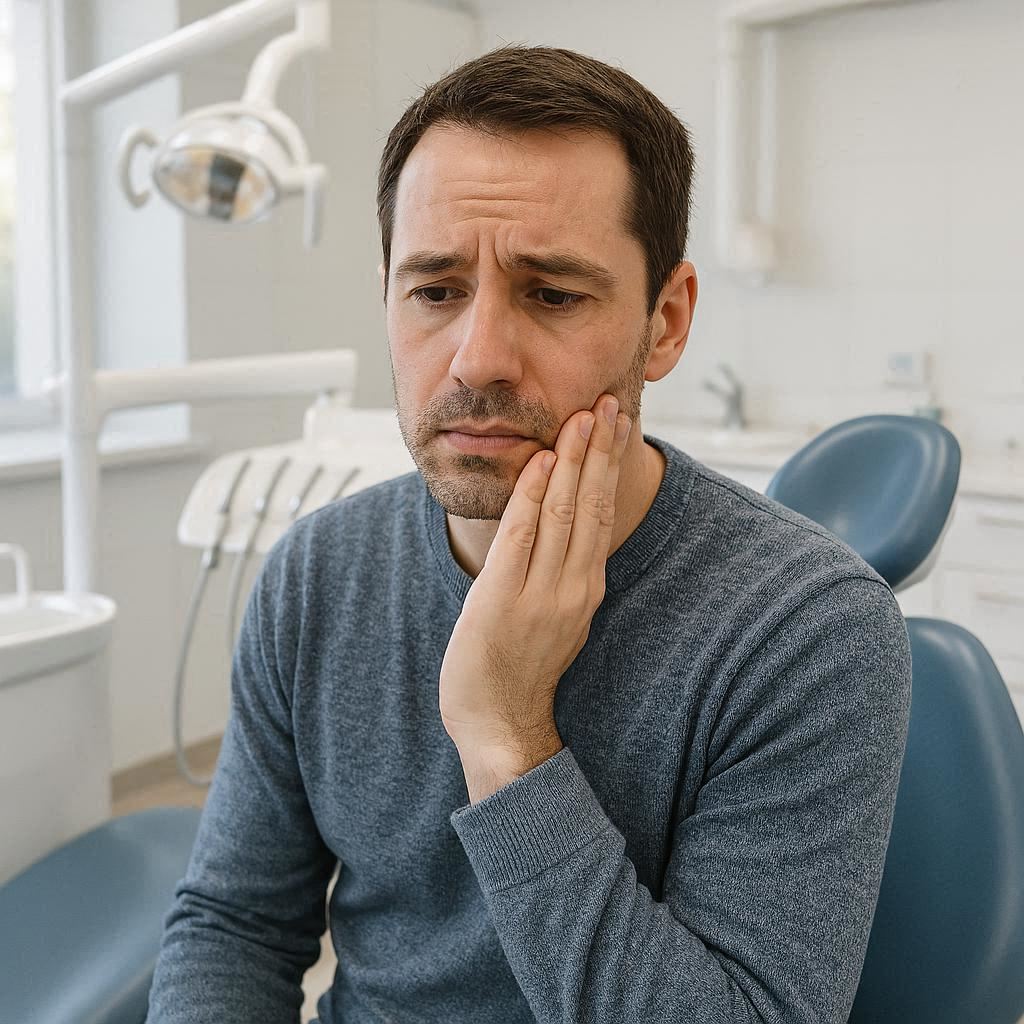
Understanding Your Jaw Pain: Is This Normal?
The first thing to remember is that you have an artificial tooth root sitting in your bone. For that to happen, your dentist or oral surgeon had to create an opening in the bone. This process inevitably causes trauma to the surrounding tissues, nerves, and muscles.
The Difference Between Soreness and Pain
It helps to think of soreness as your body’s way of remodeling itself. Pain, on the other hand, is your body’s way of sending an alarm.
- Normal Soreness: A deep, achy feeling that peaks around 48 to 72 hours after surgery and then gradually fades. It responds well to over-the-counter medication.
- Concerning Pain: Sharp, stabbing, or throbbing sensations that get worse over time. It might keep you awake at night or feel unbearable even with medication.
Why Your Jaw Specifically Hurts
Many patients expect pain at the implant site itself, but they are surprised when their entire jaw feels sore. This happens for a few reasons.
First, the muscles of mastication—your chewing muscles—are sensitive. During the procedure, you likely had to keep your mouth open for an extended period. This can strain the masseter and temporalis muscles, leading to a dull ache similar to what you feel after a tough workout.
Second, the nerves inside your jawbone, specifically the inferior alveolar nerve, run very close to where implants are often placed. Even if the nerve is not damaged, the pressure and inflammation from the surgery can cause referred pain.
Important Note: Mild to moderate jaw discomfort for the first 5 to 7 days is considered a standard part of the healing journey.
The 5 Most Common Causes of Jaw Pain After Dental Implants
To manage your pain effectively, you need to understand its source. Let us break down the most frequent reasons why your jaw might be hurting.
1. Normal Post-Operative Inflammation (The Most Common Cause)
This is the number one culprit. When the body detects injury, it floods the area with white blood cells and fluids to begin repairs. This process, called inflammation, causes swelling and pressure.
- What it feels like: A consistent, dull ache. The area around the implant might feel warm and look slightly red.
- Timeline: Starts 6-8 hours after surgery, peaks at day 2 or 3, and slowly subsides by day 7.
2. Muscle Strain from the Procedure
Think about the position your jaw was in during the surgery. You were likely reclined with your mouth held open by a bite block for 60 to 90 minutes. That is a long time to keep muscles stretched.
- What it feels like: Soreness in your cheek area, near your ear, or along your lower jawbone. Opening your mouth wide might feel tight or uncomfortable.
- Comparison: It feels very similar to a crick in your neck or a sore muscle after a long run.
3. Bone Grafting Site Pain
Sometimes, a patient does not have enough natural jawbone density to support an implant. In these cases, the surgeon adds a bone graft. While this is a fantastic solution, it adds extra healing time and often more discomfort.
- Why it hurts more: A bone graft involves placing donor bone or synthetic material into the jaw. This creates more surface area for inflammation.
- Location: The pain is usually deeper and more widespread than a standard implant site.
4. Implant Adjacent to a Nerve
This is a more specific scenario. The inferior alveolar nerve runs through the lower jaw. If the implant is placed very close to this nerve, it can create a sensation of pain or pressure.
- What it feels like: A shooting, electric-shock sensation, or a persistent burning feeling. You might also feel tingling or numbness in your lower lip, chin, or gum.
- Important: If you feel electric shocks or persistent numbness, you must contact your surgeon immediately.
5. Peri-Implantitis or Infection (The Warning Sign)
While less common in the very first week, infections can develop. Bacteria can enter the surgical site, causing an infection of the gum and bone around the implant.
- What it feels like: A throbbing, intense pain that does not respond to painkillers. The pain often gets worse, not better, as days go by.
- Visual signs: Swelling that spreads to your face or neck, a bad taste in your mouth, visible pus around the gum, or a fever.
| Cause | Pain Type | Timeline | Action Required |
|---|---|---|---|
| Normal Inflammation | Dull, achy, manageable | Days 1-7 | Rest, ice, medication |
| Muscle Strain | Sore, tight, radiating to ear | Days 1-4 | Heat packs, gentle massage |
| Bone Graft | Deep, persistent, heavy | Days 1-14 | Patience, prescribed meds |
| Nerve Irritation | Electric, burning, or numb | Immediate & constant | Urgent call to dentist |
| Infection | Throbbing, worsening, sharp | Day 3+ | Immediate medical visit |
How to Relieve Jaw Pain After a Dental Implant (Actionable Steps)
You do not have to suffer in silence. Here is a practical toolkit for managing your discomfort safely and effectively.
The First 48 Hours: The Ice Phase
During the first two days, your goal is to constrict blood vessels to reduce swelling. Do not use heat yet; heat will increase blood flow and make swelling worse.
- Method: Wrap an ice pack (or a bag of frozen peas) in a thin cloth.
- Application: Apply it to the outside of your jaw, directly over the sorest area.
- Schedule: 20 minutes on, 20 minutes off. Repeat this cycle as often as you like during waking hours.
After 48 Hours: The Heat Phase
Once the initial swelling has peaked, usually around day three, heat becomes your best friend. Heat relaxes the muscle strain caused by holding your mouth open.
- Method: Use a warm, damp towel or a microwaveable heating pad.
- Application: Apply to your jaw muscle near the angle of your jaw (close to your ear).
- Benefit: This increases blood flow to flush out inflammatory waste products from the muscles.
Medication Management
Never guess when it comes to pain relief. Follow your surgeon’s specific instructions, but here is the general rule.
- Anti-inflammatories: Ibuprofen (Advil, Motrin) is excellent for bone and muscle pain because it reduces inflammation at the source. Take it with food to protect your stomach.
- Acetaminophen: Tylenol works differently on the brain’s pain receptors. It is often combined with ibuprofen for severe pain.
- Prescription Drugs: If you were given a stronger opioid, use it only for breakthrough pain or before bed. These are not usually needed after day three.
A note on Aspirin: Avoid aspirin unless prescribed by your surgeon. It can thin your blood and increase bleeding risk.
The Salt Water Rinse Protocol
Starting 24 hours after your surgery, gentle rinsing can keep the area clean and reduce bacterial load, preventing infection-related pain.
- Recipe: Mix 1 teaspoon of salt into 1 cup of warm water.
- Technique: Do not swish aggressively. Simply tilt your head side to side and let the water fall out of your mouth. Spit gently. No spitting with force.
Foods and Habits That Reduce Jaw Strain
What you put in your mouth directly impacts how much your jaw hurts. Think of your jaw muscles as needing a vacation.
The Soft Food List (Your New Best Friends)
For at least the first week, stick to foods that require zero chewing. This gives your bone and muscles a chance to knit together without interference.
- Breakfast: Smoothies (no seeds), yogurt, oatmeal, scrambled eggs.
- Lunch: Mashed potatoes, soup (cooled down), cottage cheese, apple sauce.
- Dinner: Blended vegetable soup, refried beans, pureed pumpkin, protein shakes.
- Snacks: Pudding, gelatin, ice cream (the cold feels great on the gum).
Habits to Stop Immediately
Certain unconscious habits will aggravate your jaw pain significantly. Be mindful of these.
- Clenching: Many people clench their jaw when they are in pain or stressed. Check yourself throughout the day. Keep your teeth apart and your tongue resting gently on the roof of your mouth.
- Chewing on the opposite side: Even if you chew on the other side, the muscles still contract. Try to swallow soft foods without any chewing motion.
- Drinking through a straw: The sucking motion creates negative pressure that can dislodge the blood clot protecting your bone. This leads to a painful condition called dry socket.
Red Flags: When to Call Your Surgeon Immediately
We want to be realistic. Most jaw pain is benign. However, you must know the signs that indicate a trip back to the clinic is necessary.
The Symptom Checklist
If you experience any of the following, do not wait for your follow-up appointment. Call your dental surgeon right away.
- Worsening pain after day three: Your discomfort should peak around day two or three and then improve. If day four is worse than day two, that is a problem.
- Swelling that spreads: A little puffiness at the site is fine. Swelling that moves to your eye, neck, or the other side of your face is not.
- Fever over 101°F (38.3°C): A low-grade temperature (99-100°F) can happen with healing. A true fever suggests a systemic infection.
- Difficulty swallowing or breathing: This is rare but serious. It could mean the infection is spreading to your airway.
- Numbness that persists: If your lip or chin was numb immediately after surgery and has not changed after 24 hours, you need a nerve assessment.
- Pus or foul taste: Look at your gums in a mirror. Do you see yellow or white discharge? That is pus.
A Realistic Quote from an Oral Surgeon
“In my fifteen years of practice, the patients who call me with the most anxiety are often the ones healing perfectly normally. However, the patients who wait ‘just to see if it gets better’ are the ones who end up needing more complex treatment. When in doubt, make the call. That is what we are here for.” — Dr. Elena Vasquez, DDS, FICD.
The Psychological Side of Jaw Pain
We often forget that pain is not just physical. Anxiety makes pain worse. When you worry that your implant is failing, your body releases stress hormones that increase inflammation and muscle tension. This creates a vicious cycle.
You might feel pain → you worry → you clench your jaw → the clenching causes more pain.
Breaking the Cycle
- Distraction: Watch a comfort show, listen to a podcast, or read a light novel. Keeping your mind engaged reduces the brain’s focus on the pain signal.
- Sleep hygiene: Pain is always worse when you are tired. Prop your head up with two pillows to reduce blood pressure in your head and jaw while you sleep.
- Gentle movement: A slow walk outside distracts you and releases endorphins, which are natural painkillers.
Comparing Dental Implant Pain to Other Procedures
If you have had other dental work, it helps to have a comparison. This puts your current experience into perspective.
| Procedure | Typical Jaw Pain Level (1-10) | Duration | Notes |
|---|---|---|---|
| Simple Tooth Extraction | 4-6 | 3-5 days | Similar to implant but usually less bone trauma. |
| Wisdom Tooth Removal | 6-8 | 5-10 days | Often more intense due to deeper bone cutting. |
| Single Dental Implant | 3-6 | 5-7 days | More bone drilling than extraction, less than wisdom teeth. |
| Multiple Implants | 5-8 | 7-14 days | More surgical time equals more muscle strain. |
| Implant with Bone Graft | 6-9 | 10-14 days | The most discomfort due to two procedures in one. |
As you can see, a single implant without a graft is actually on the lower end of the surgical pain scale.
Long-Term Jaw Health After Your Implant Heals
Once the initial two weeks pass, your jaw pain should be a distant memory. However, it is worth knowing what normal sensations feel like as the implant fuses with the bone (osseointegration).
The Fusing Phase (Weeks 2 to 12)
During this time, the bone grows tightly around the titanium screw. You should feel almost nothing. A healthy, fusing implant is silent.
- Normal: No pain when biting down on the temporary crown.
- Normal: No pain when pressing on the gum over the implant.
- Abnormal: Pain when tapping the tooth. This can indicate the implant is failing to integrate.
When to Worry Later On
If you are six months or a year out from your implant and you suddenly develop jaw pain, that is a new problem. It likely is not the implant itself but something else.
- Sinusitis: Upper jaw implants can sometimes protrude into the sinus cavity, causing chronic sinus pressure.
- Grinding (Bruxism): If you grind your teeth at night, the implant can transfer shock differently than a natural tooth, leading to jaw joint pain.
- Failed crown: The porcelain crown on top of the implant might be too high, causing your bite to hit prematurely. This can cause severe muscle pain.
A Step-by-Step Recovery Timeline
Let us map out what your pain should look like day by day. This will help you know if you are on track.
Day 1 (Surgery Day)
- Pain level: 2-4 (while anesthetic wears off).
- Sensation: Numbness fades to a dull throb.
- Action: Ice, rest, soft food. Take your first dose of ibuprofen before the anesthetic fully wears off.
Day 2 and 3
- Pain level: 5-7 (peak days).
- Sensation: Swelling is visible. Jaw feels stiff. Opening mouth is hard.
- Action: Continue ice. Switch to warm compresses on day 3. Stay hydrated.
Days 4 to 7
- Pain level: 3-5 (decreasing).
- Sensation: Swelling goes down. Muscle soreness might linger.
- Action: Gentle salt rinses. Start eating slightly more solid soft foods like pasta or pancakes.
Week 2
- Pain level: 0-2.
- Sensation: Occasional twinge or sensitivity to cold liquids.
- Action: Resume normal light activity. Avoid crunchy foods.
Week 3 and Beyond
- Pain level: 0.
- Sensation: You forget the implant is there.
- Action: Normal chewing resumes. Attend your follow-up x-ray.
Natural Remedies That Actually Work
While medication is your primary tool, some natural methods can provide excellent supplementary relief.
Clove Oil (Diluted)
Clove oil contains eugenol, a natural anesthetic. Do not use it full strength, as it can burn your gum.
- How to use: Mix 2 drops of clove oil with 1 teaspoon of coconut oil. Dip a clean cotton swab and gently dab it on the gum next to the implant (not on the incision).
Cold Chamomile Tea Compress
Chamomile has mild anti-inflammatory properties and is very soothing.
- How to use: Brew a strong chamomile tea bag. Place it in the refrigerator until cold. Gently place the cold, wet tea bag against your sore jaw muscle on the outside of your cheek.
Turmeric Milk
Turmeric is a powerful anti-inflammatory when ingested.
- How to use: Warm a cup of milk (dairy or plant-based) and stir in 1 teaspoon of turmeric powder and a pinch of black pepper (which helps absorption). Drink this before bed.
Practical Tips for a Smoother Recovery
Beyond pain management, these small actions will make your recovery dramatically easier.
Prepare Your Home Before Surgery
Do not wait until you are in pain to get ready. Set yourself up for success.
- Meal prep: Cook and freeze batches of soup, mashed potatoes, and smoothie ingredients.
- Ice packs: Have at least three gel ice packs in your freezer so you can rotate them.
- Pillows: Gather extra pillows to prop yourself up in bed.
The Importance of Hydration
Dehydration slows down every aspect of healing. It makes pain worse because your tissues are not getting enough nutrients.
- The trick: Drink small sips of water constantly. Do not chug. Keep a water bottle next to your bed or couch.
- Avoid: Alcohol (increases bleeding) and caffeine (can cause dry socket and anxiety).
Communication is Key
Tell your surgeon everything. Do not hide your pain because you do not want to be a bother.
- Ask specific questions: “My jaw hurts more when I turn my head to the left. Is that normal?” (The answer is often yes, due to muscle insertion points).
- Keep a log: Write down your pain level (1-10) each morning and night. This helps you see the downward trend, which is reassuring.
Addressing Specific Scenarios
Let us look at a few specific patient stories. These are composites of real situations.
Scenario A: The Busy Professional (Age 45)
- Implant: Lower left first molar.
- Pain complaint: “I have a deep ache that radiates to my ear. I am stressed at work and keep clenching.”
- Realistic solution: The muscle pain is from clenching. A warm compress on the cheek, plus a conscious effort to unclench the jaw every hour. A temporary soft splint might be needed if the clenching continues.
Scenario B: The Retired Patient with a Bone Graft (Age 68)
- Implant: Upper right premolar with sinus bone graft.
- Pain complaint: “It hurts when I lean forward or blow my nose.”
- Realistic solution: This is common after a sinus graft. The pressure changes affect the graft site. Avoid blowing your nose for two weeks. Use a saline spray instead. The pain resolves as the graft integrates.
Scenario C: The Young Athlete (Age 30)
- Implant: Lower central incisor (front tooth).
- Pain complaint: “My chin feels tingly and numb.”
- Realistic solution: Front teeth are near the mental nerve. Mild numbness or tingling can last for a few weeks. As long as it is improving, it is usually fine. If it gets worse, call the surgeon.
The Truth About Complications
Let us be honest. Complications are rare. Studies show that dental implants have a success rate of over 95% in healthy individuals. That means the vast majority of you reading this will heal just fine.
However, when complications do happen, they are almost never catastrophic. They are usually fixable.
- Infection: Treated with antibiotics and a minor cleaning of the gum.
- Loose implant: Sometimes the bone does not grow. The implant is removed, the bone is allowed to heal for a few months, and a new implant is placed.
- Nerve issue: Most nerve irritations resolve on their own over 6 to 12 months.
A Final Word on Patience
Your body knows how to heal. It has been doing this for your entire life. The jaw pain you feel right now is temporary. It is a sign that your body is hard at work building new bone, fighting off bacteria, and adapting to the titanium post.
Do not compare your recovery to a friend’s or a story you read online. Every body is different. Some people feel nothing after an implant. Others feel sore for two weeks. Both can be perfectly normal.
Trust the process. Follow the guidelines above. Use ice and heat correctly. Eat the soft foods. Stay in touch with your surgeon. And most importantly, give yourself permission to rest.
You have invested in your health. A few days or weeks of manageable jaw discomfort is a small price to pay for decades of confident smiling and comfortable chewing. You will get through this.
Conclusion
Jaw pain after a dental implant is usually a normal part of healing, caused by inflammation and muscle strain. Manage it with ice, heat, soft foods, and over-the-counter anti-inflammatories. However, if the pain worsens after day three, spreads, or comes with a fever, call your surgeon immediately to rule out infection or nerve issues.
Frequently Asked Questions (FAQ)
1. How long does jaw pain last after a dental implant?
Most patients experience noticeable pain for 3 to 5 days. Mild soreness and stiffness can linger for up to two weeks. Beyond that, you should feel completely normal.
2. Is it normal to have jaw pain one week after the implant?
A mild, dull ache at the one-week mark is acceptable, especially if you had a bone graft. However, if the pain is still severe or throbbing at day 7, you should contact your dentist.
3. Can dental implants cause TMJ (jaw joint) pain?
Yes, temporarily. The prolonged mouth opening during surgery can strain the temporomandibular joint. Also, if your new crown is too high, it can cause TMJ pain later. Your dentist will check your bite to prevent this.
4. Why does my ear hurt after my dental implant?
Ear pain is very common. The muscles that open your jaw attach very close to your ear. When those muscles are strained or inflamed, the pain often radiates directly into the ear area.
5. When should I go to the emergency room for jaw pain after an implant?
Go to the ER immediately if you have difficulty breathing, difficulty swallowing, swelling that closes your eye, or a fever over 103°F (39.4°C). For all other concerns, call your oral surgeon first.
6. Will a heating pad help my jaw pain?
Yes, but only after the first 48 hours. Ice is for the first two days to stop swelling. Heat is for day three and beyond to relax tight muscles and improve blood flow.
7. Can I eat pizza or steak after a dental implant?
Not for at least two weeks, and ideally not for a month. Chewing tough, crunchy, or sticky foods puts pressure on the healing bone. Stick to the soft food list provided above to avoid a painful setback.
Additional Resource
For a deeper dive into the entire dental implant process—from the first consultation to the final crown placement—visit the American Association of Oral and Maxillofacial Surgeons (AAOMS) patient education center.
👉 Click here for the official AAOMS dental implant patient guide (Opens in a new tab)
Note: This external link leads to a trusted, non-profit professional organization. It provides peer-reviewed information and a surgeon locator tool.