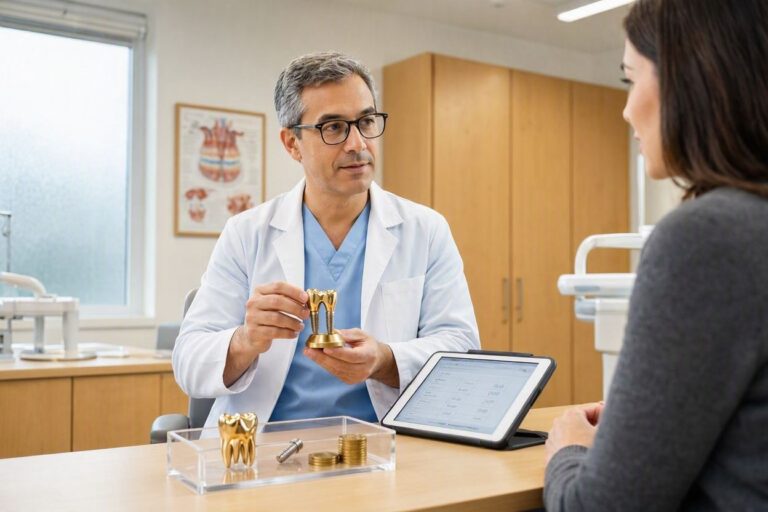
Replacement of Teeth After Extraction
Losing a tooth is never fun. Whether it happens suddenly due to an accident or after a long battle with decay, the moment you hear “we need to extract this tooth,” your mind probably jumps to the gap it will leave behind.
You are not alone. Millions of adults every year face the same decision: what comes next?
The good news is that modern dentistry offers several solid ways to fill that space. The confusing news is that there are so many options. Implants, bridges, partial dentures, even doing nothing. Each has its own pros, cons, costs, and timelines.
This guide is here to help you make sense of it all. No complicated dental school language. No sales pitch. Just clear, honest, and practical information about the replacement of teeth after extraction.
Let us walk through this together, step by step.
Why You Should Not Ignore a Missing Tooth
Let us start with a hard truth. Many people think, “It is just a back tooth. No one will see it. Why bother replacing it?”
That is a fair question. And the honest answer is that you can technically leave a gap. Your life will not end. But your mouth will slowly change in ways you might not expect.
When a tooth is removed, the surrounding teeth start to shift. They lean into the empty space. The tooth above the gap (if it is a lower tooth) has nothing to bite against, so it may start to drift downward. This can change your bite, cause jaw pain, and make cleaning harder.
Over time, the bone that used to hold that tooth begins to melt away. Your jawbone needs the stimulation of chewing to stay strong. Without a tooth root, that area shrinks. This can change the shape of your face, especially if multiple teeth are missing.
Also, chewing becomes less efficient. You might not notice it at first, but you will start favoring the other side. That can lead to uneven wear, cracked teeth, or even headaches.
“A missing tooth is like a missing brick in a wall. The wall still stands, but the bricks around it slowly loosen. One day, you realize the whole structure has shifted.” — Anonymous dentist
So yes, you can ignore a gap. But replacing it sooner rather than later usually saves you time, money, and discomfort down the road.
When Can You Start the Replacement Process?
Timing matters more than most people realize.
You cannot simply walk out of the extraction appointment and get a new tooth the same day. Well, in some very specific cases you can, but for most people, you need to wait.
Right after an extraction, your gums are healing. There is often swelling, and sometimes a blood clot fills the socket. If you place a replacement too early, you risk infection or failure.
Here is a general timeline:
- Immediate placement (same day): Only possible with certain implants if there is no infection and enough bone. Not common.
- Early placement (4 to 8 weeks): Soft tissue has healed. Good for most bridges and some implants.
- Conventional placement (3 to 6 months): Bone has fully healed. Best for standard implants.
- Delayed placement (6+ months): Still possible, but bone loss may require additional procedures like a bone graft.
Your dentist will tell you when you are ready. Do not rush. Healing is your friend.
Your Main Options for Replacing a Tooth
Let us break down the real-world choices. I have organized them from most expensive to least expensive, but also from most long-lasting to least long-lasting. There is a trade-off with every option.
1. Dental Implants
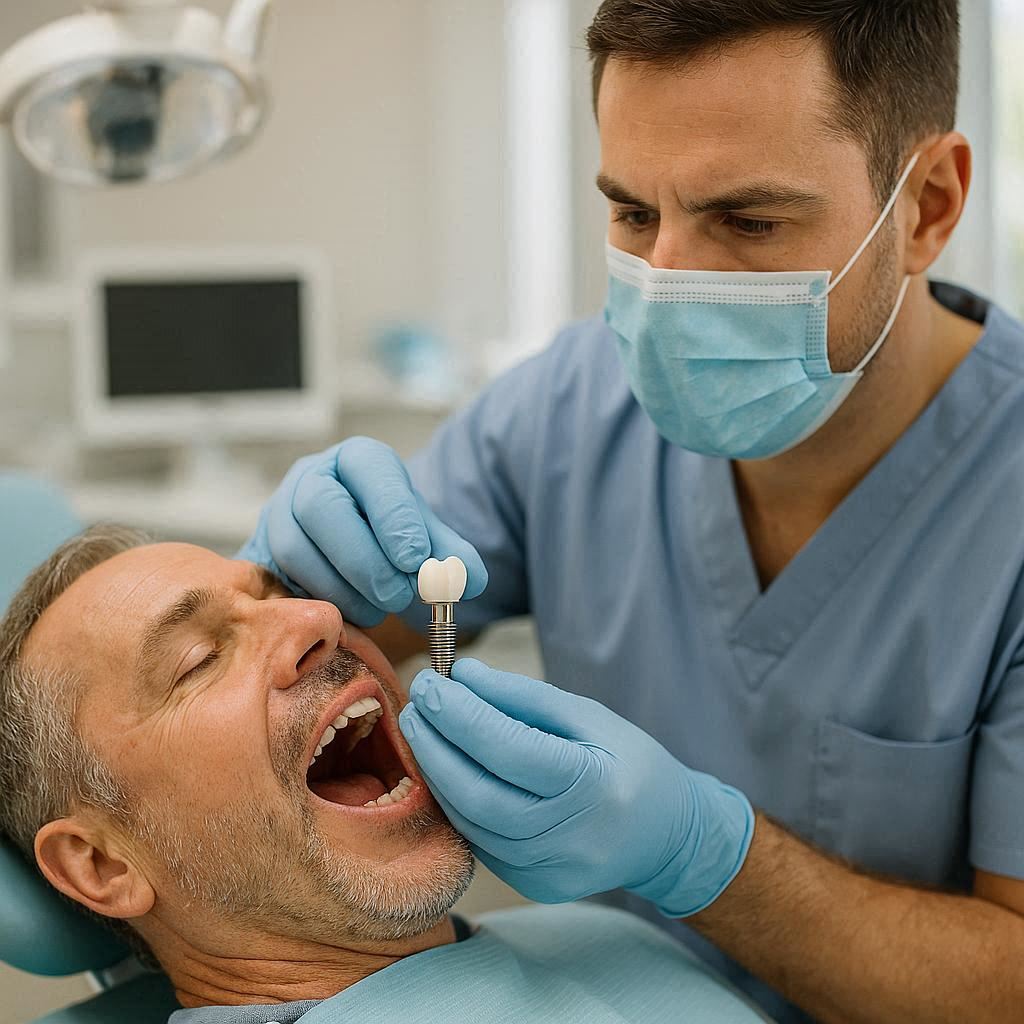
Think of an implant as a new artificial root. A small titanium post is placed into your jawbone. Over several months, the bone grows around it (a process called osseointegration). Then, a crown is attached on top.
Pros:
- Looks and feels the most like a natural tooth.
- Prevents bone loss because the implant stimulates the jaw.
- Does not affect neighboring teeth.
- Can last 20+ years or even a lifetime with good care.
Cons:
- Most expensive option. Typically 3,000to6,000 per tooth.
- Requires surgery.
- Takes several months from start to finish.
- Not everyone has enough bone. You might need a bone graft first.
Best for: People who want the closest thing to a natural tooth and are willing to invest time and money.
2. Fixed Dental Bridge
A bridge uses the teeth on either side of the gap as anchors. Those teeth are shaved down, and a single piece (the bridge) is cemented over them. The false tooth in the middle fills the space.
Pros:
- Faster than implants. Usually done in 2 to 3 weeks.
- Less expensive than implants. Typically 2,000to5,000.
- No surgery.
- Feels solid and does not come out.
Cons:
- Requires grinding down healthy teeth. That is permanent.
- Does not prevent bone loss. The bone under the missing tooth still shrinks.
- Bridges last 5 to 15 years on average, then need replacement.
- Can be harder to clean. Food gets trapped underneath.
Best for: People who want a non-surgical option and have healthy teeth next to the gap.
3. Removable Partial Denture
This is a false tooth (or teeth) attached to a gum-colored plastic base. It has metal or plastic clasps that hook onto your remaining teeth. You take it out at night.
Pros:
- Most affordable option. Often 1,000to2,500.
- No drilling or surgery.
- Quick to make. Usually 2 to 4 weeks.
- Good if multiple teeth are missing.
Cons:
- Can feel bulky or uncomfortable.
- May move while eating or talking.
- Clasps can damage the teeth they attach to over time.
- Does not prevent bone loss.
- Needs replacement every 5 to 8 years.
Best for: People on a tight budget or those who need a temporary solution before a more permanent one.
4. Resin-Bonded Bridge (Maryland Bridge)
This is a lighter version of a traditional bridge. Instead of crowns on the anchor teeth, it uses metal or porcelain wings that are bonded to the back of the adjacent teeth.
Pros:
- Minimal drilling. Healthy teeth stay mostly intact.
- Less expensive than traditional bridges. Often 1,500to3,000.
- Quick procedure.
Cons:
- Not very strong. Best for front teeth that do not do heavy chewing.
- The bonding can fail after a few years.
- Still does not prevent bone loss.
Best for: Replacing a missing front tooth in someone with good adjacent teeth.
5. Do Nothing (No Replacement)
Yes, this is technically an option. Some people choose to live with the gap.
Pros:
- Free. No cost.
- No procedures. No recovery time.
Cons:
- Teeth shift over time.
- Bone loss in the gap area.
- Possible bite problems and jaw pain.
- Harder to clean, leading to more cavities.
- Changes in facial appearance over years.
Best for: People who understand the risks and accept them. Usually only for missing molars that are not visible.
Comparison Table: Replacement Options at a Glance
| Feature | Dental Implant | Fixed Bridge | Partial Denture | Maryland Bridge | Do Nothing |
|---|---|---|---|---|---|
| Cost (per tooth) | 3,000–6,000 | 2,000–5,000 | 1,000–2,500 | 1,500–3,000 | $0 |
| Surgery required? | Yes | No | No | No | No |
| Affects adjacent teeth? | No | Yes (shaved down) | Yes (clasps) | Minimal | No |
| Prevents bone loss? | Yes | No | No | No | No |
| Lifespan | 20+ years | 5–15 years | 5–8 years | 5–10 years | N/A |
| Feels like natural tooth? | Very close | Good | Fair | Fair | N/A |
| Time to complete | 3–9 months | 2–4 weeks | 2–4 weeks | 2–3 weeks | Instant |
What About Same-Day Implants?
You may have heard of “teeth in a day” or “immediate load implants.” These are real, but they are not for everyone.
In a same-day implant, the dentist places the implant and attaches a temporary crown all in one visit. The permanent crown comes later.
You are a candidate only if:
- You have excellent bone density.
- There is no infection at the extraction site.
- The tooth being replaced is not under heavy bite force (usually front teeth).
- You are healthy and do not smoke heavily.
Most dentists prefer to wait. The success rate is slightly lower with same-day placement. So do not feel disappointed if your dentist says no. Waiting is safer.
The Bone Graft Question
Here is something many people do not know. After an extraction, your bone starts shrinking immediately. Within the first six months, you can lose 30 to 60% of the bone width.
If you wait too long to get an implant, you may not have enough bone left to hold it. That is where a bone graft comes in.
A bone graft is a simple procedure where the dentist adds bone-like material to the empty socket. Sometimes they do it right after extraction. Sometimes they wait. The graft takes about 4 to 6 months to heal and turn into your own bone.
Does it hurt? Not really. Most people say it feels like the original extraction. You are numb during the procedure, and you manage soreness with over-the-counter pain relievers.
Important note: If you think you might want an implant one day, tell your dentist before the extraction. They can sometimes place a bone graft at the same time as the extraction. This saves you an extra surgery later.
Step-by-Step: What to Expect for Each Option
Let me walk you through the real experience for the three most common choices.
Implant process (full timeline)
- Extraction and graft (if needed): Day one. Healing takes 4 to 6 months.
- Implant placement: Minor surgery. Lasts about 1 hour. Healing takes another 3 to 6 months.
- Healing period: You wear a temporary partial or nothing at all.
- Abutment placement: A small connector is attached to the implant. Two weeks of healing.
- Crown placement: The final tooth is screwed or cemented on.
Total time: 6 to 12 months. Yes, it is long. But patients almost always say it was worth it.
Fixed bridge process
- First visit (2 hours): The anchor teeth are numbed and shaved down. Impressions are taken. You get a temporary bridge.
- Wait 2 to 3 weeks: The lab makes your permanent bridge.
- Second visit (1 hour): The temporary is removed. The new bridge is checked and cemented.
That is it. Two visits. No surgery. Very straightforward.
Partial denture process
- First visit (1 hour): Impressions are taken. Your dentist chooses the tooth color and shape.
- Second visit (1 hour): You try a wax model. Adjustments are made.
- Third visit (30 minutes): The final denture is delivered.
Some dentists work faster. Some labs take longer. But generally, one month from start to finish.
Cost Breakdown: Real Numbers (USA, 2025 estimates)
Dental costs vary wildly by location, dentist, and insurance. But here are realistic ranges to help you plan.
Dental Implant (single tooth)
- Implant placement: 1,500–3,000
- Abutment: 300–500
- Crown: 1,000–2,500
- Bone graft (if needed): 500–1,500
- Total: 3,300–7,500
Fixed Bridge (3-unit)
- Shaving teeth and impressions: 500–1,000
- Bridge fabrication: 1,500–3,500
- Cementation: 100–300
- Total: 2,100–4,800
Partial Denture (one tooth)
- Basic acrylic: 800–1,500
- Cast metal frame: 1,200–2,500
- Flexible (Valplast): 1,500–3,000
- Total: 800–3,000
Does insurance help? Most dental insurance covers 50% of a bridge or partial denture. Many do not cover implants at all, or only cover the crown portion. Always get a pre-treatment estimate.
Living with Each Option: The Honest Day-to-Day
Let us talk about daily life. Because the procedure is one thing. Living with your choice for years is another.
With an implant:
- Brush and floss normally. You do not need special tools.
- Avoid biting ice or opening bottles with it (but you should avoid that with all your teeth anyway).
- See your dentist every 6 months for checkups.
- That is it. It behaves like a real tooth.
With a bridge:
- You need special floss (superfloss or floss threaders) to clean underneath.
- If food gets trapped, it can smell bad. Yes, really. Clean it daily.
- Be careful with sticky or hard foods. Caramel, taffy, and nuts can loosen the bridge.
- After 5 to 10 years, the cement can fail. You may need it re-cemented or replaced.
With a partial denture:
- Take it out every night. Soak it in water or cleaner.
- Brush it gently. Do not use regular toothpaste (it is too abrasive).
- It may feel loose over time. Denture adhesives help.
- Your gums underneath need rest. Never sleep with it in.
- Eating takes practice. Start with soft foods. Cut food into small pieces.
“Patients often tell me they forget they have an implant. No one ever forgets they have a denture.” — Prosthodontist, 20 years of experience
Special Situations
Replacing multiple teeth in a row
If you have three or more missing teeth in a row, implants are still great, but you do not need one implant per tooth. You can do an implant-supported bridge: two implants hold a bridge of three or four teeth. This costs less than individual implants.
Missing a front tooth
Aesthetics matter most here. Implants look the most natural. But a Maryland bridge is a good budget option because the front teeth do not chew heavily. A partial denture for a front tooth is noticeable and many people dislike the look.
Back molars (teeth you do not see)
If you are on a tight budget, many people skip replacing a single molar. It is a personal choice. Talk to your dentist. If the tooth above or below starts shifting, you may need to act later.
If you have gum disease
Treat the gum disease first. Placing any replacement into unhealthy gums is like building a house on mud. It will fail. Get a deep cleaning (scaling and root planing). Stabilize your gum health. Then discuss replacements.
If you smoke
Smoking dramatically lowers the success rate of implants. The healing part is harder. If you smoke, your implant failure rate is 2 to 3 times higher than a non-smoker. For bridges and dentures, smoking is less risky but still bad for your remaining teeth. Consider quitting or cutting back before investing in expensive work.
Important Notes for Readers
📌 Note 1: Do not let anyone pressure you into a same-day decision. Extractions can be emotional. Take a week to think. Get a second opinion if you are unsure.
📌 Note 2: The cheapest option today is not always the cheapest over 20 years. A partial denture every 8 years plus damage to anchor teeth can cost more than one implant.
📌 Note 3: If cost is the only thing stopping you from getting an implant, ask about payment plans. Many offices offer CareCredit, Lending Club, or in-house financing.
📌 Note 4: Dental schools offer high-quality work at half the price. Yes, students work on you, but experienced dentists supervise every step. The appointments take longer, but the savings are real.
📌 Note 5: Do not go abroad for cheap dental work unless you have done serious research. I have seen too many “dental tourism” disasters. Infections, poorly fitting bridges, implants placed wrong. Saving money is good. Saving money on something that can harm your health is not.
How to Choose the Right Option for You
There is no single “best” replacement. The best one is the one that fits your:
- Health: Enough bone for an implant? Healthy adjacent teeth for a bridge?
- Budget: Can you afford the upfront cost or a monthly payment?
- Patience: Are you okay with a 6-month implant process or do you want something finished in weeks?
- Habits: Will you floss under a bridge every day? Take out and clean a denture at night?
Ask yourself these three questions:
- “How long do I want this solution to last?”
If you are 30 years old, an implant that lasts 30 years makes sense. If you are 75, a bridge or denture is perfectly reasonable. - “Am I willing to change my cleaning habits?”
Implants need normal care. Bridges and dentures need extra steps. Be honest with yourself. - “What if my budget changes later?”
You can start with a partial denture now and save up for an implant later. That is a smart, honest plan. Many people do this.
The Psychological Side of Tooth Replacement
Let us talk about something most articles ignore. Losing a tooth affects how you feel about yourself.
You might smile less. You might cover your mouth when you laugh. You might avoid photos. These are real feelings.
Replacing a missing tooth is not just about chewing. It is about confidence. It is about feeling normal.
If a partial denture helps you smile again, that is a win. If saving up for an implant gives you peace of mind, that is a win too.
Do not let anyone shame you for your choice. Whether you spend 500or5,000, you are taking care of yourself. That is always a good thing.
Frequently Asked Questions (FAQ)
1. How long after tooth extraction can I get an implant?
Typically 3 to 6 months. This allows the bone to heal fully. In some cases with a bone graft, you may wait 6 to 9 months.
2. Is it painful to replace a tooth?
The procedures themselves are not painful because you are numb. Afterward, you may have soreness for a few days. Most people compare it to a tooth extraction or a deep cleaning.
3. Can I eat normally with a dental bridge?
Yes, but avoid very sticky or hard foods like caramel, nuts, and ice. Clean underneath the bridge daily to prevent decay in the anchor teeth.
4. Will my insurance cover tooth replacement?
Most dental insurance covers 50% of a bridge or partial denture (up to your yearly maximum). Implants are often not covered or only partially covered for the crown portion. Always check first.
5. What happens if I wait too long to replace a tooth?
Adjacent teeth shift. Bone shrinks. The tooth above may drift down. You may need orthodontics or bone grafting before a replacement becomes possible.
6. Can I replace a tooth years after extraction?
Yes, but it is harder. You will almost certainly need a bone graft. An implant is still possible. A bridge or partial denture is also possible as long as the neighboring teeth are healthy.
7. Which lasts longer: implant or bridge?
Implants last much longer. A well-maintained implant can last 30 years or a lifetime. Bridges average 10 to 15 years before needing replacement.
8. Do I have to replace a wisdom tooth?
No. Wisdom teeth are not used for chewing. Most dentists do not replace them.
9. Can I get a bridge if the teeth next to the gap have fillings?
Yes. In fact, teeth with large fillings are sometimes better candidates for bridges because they need crowns anyway.
10. What is the cheapest way to replace a missing tooth?
An acrylic partial denture is the cheapest upfront. Over 20 years, an implant may be cheaper because it does not need replacement. Do the math for your specific situation.
Additional Resource
For a trusted, dentist-reviewed guide on comparing tooth replacement costs in your specific area, visit the American College of Prosthodontists patient resource page:
🔗 www.gotoapro.org
This website lets you search for prosthodontists (specialists in tooth replacement) and offers free downloadable guides on implants, bridges, and dentures.
Conclusion
Replacing a tooth after extraction is a personal decision with many honest options. Dental implants offer the longest-lasting, most natural result but require time and money. Fixed bridges provide a faster, non-surgical solution but rely on healthy neighboring teeth. Removable partial dentures are the most budget-friendly choice, though they require daily maintenance and do not prevent bone loss. Whatever your budget or situation, the right replacement is the one you can maintain, afford, and commit to caring for. Talk to your dentist, take your time, and choose the path that gives you both a healthy mouth and peace of mind.
Disclaimer: This article is for informational purposes only and does not constitute medical advice. Always consult with a licensed dentist or prosthodontist for a diagnosis and treatment plan tailored to your specific oral health condition. Every mouth is different. Your results, costs, and timelines may vary significantly.