The Ultimate Guide to Same-Day Crowns: Technology, Benefits, Costs, and Clinical Realities
If you have ever needed a dental crown, you probably remember the traditional marathon: the gooey impression trays that make you gag, the uncomfortable temporary cap that accidentally pops off while you are eating, and the two-week wait while a distant laboratory manufactures your permanent tooth.
Dental technology has evolved dramatically. Today, you can walk into a dental office with a cracked, decayed, or broken tooth and walk out less than two hours later with a permanent, fully functional, and highly aesthetic porcelain crown. This innovation is known as a same-day crown.
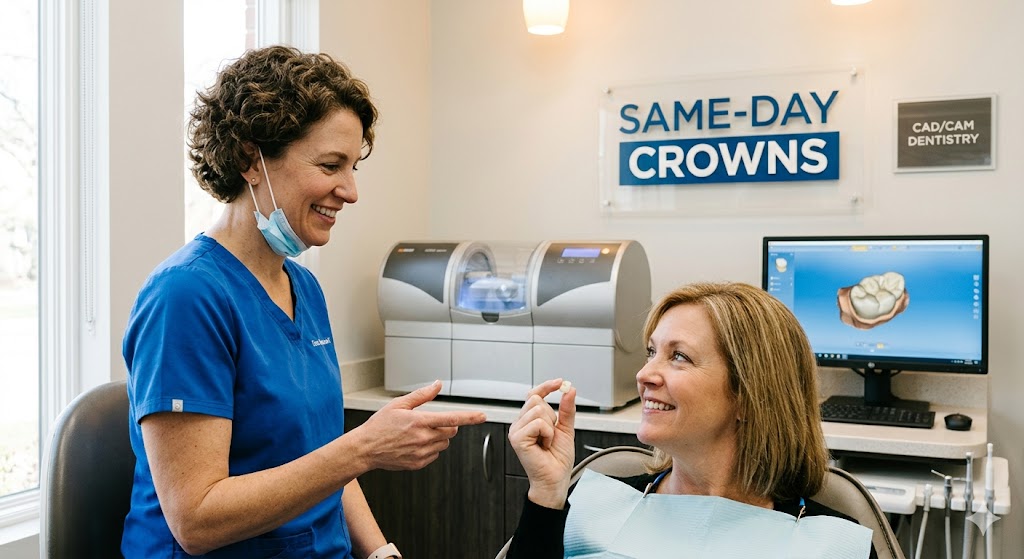
Using advanced Computer-Aided Design and Computer-Aided Manufacturing (CAD/CAM) technology—most commonly through a system called CEREC—dentists can now design, mill, and characteristically glaze a custom ceramic restoration right at the chairside.
This comprehensive guide breaks down everything you need to know about single-visit dental restorations. We will explore how the technology works, evaluate the physical material strengths, compare the clinical performance of same-day options against traditional laboratory crowns, analyze real-world costs, and help you determine whether this fast-track dental solution is the right choice for your smile.
What is a Same-Day Crown?
A same-day crown is a permanent dental restoration that a dentist creates and places during a single clinical appointment. Like a traditional crown, it acts as a custom-fitted “cap” that completely covers a damaged, root-canaled, or severely decayed tooth to restore its original shape, size, strength, and appearance.
The fundamental difference lies entirely in the fabrication process. Instead of outsourcing the creation of the tooth to an external dental laboratory, your dentist acts as both the clinician and the laboratory technician, using digital technology to manufacture the crown inside the office while you wait.
The Underlying Technology: CEREC and Digital CAD/CAM
The backbone of the single-visit dental revolution is CAD/CAM technology. While a few different proprietary software and milling systems exist on the market, the global market leader and pioneer is CEREC (Chairside Economical Restoration of Esthetic Ceramics).
Developed at the University of Zurich in 1980, CEREC technology has undergone decades of refinement. The system relies on three interconnected components:
- The Intraoral Scanner: A high-speed digital camera that captures thousands of three-dimensional images of your teeth within seconds, completely eliminating the need for traditional elastic impression materials.
- The Design Software: A sophisticated CAD program that processes the digital scan, constructs a 3D model of your mouth, and uses artificial intelligence to propose an ideal shape for your new crown based on your surrounding dentition.
- The Chairside Milling Machine: A compact, high-precision computer-controlled manufacturing unit equipped with diamond burs that sculpt the crown out of a solid block of medical-grade ceramic or zirconia.
Expert Quote:
“The integration of intraoral scanners and chairside milling units represents one of the most significant shifts in modern restorative dentistry. By compressing a two-week laboratory workflow into a 20-minute digital design and milling cycle, we eliminate multiple clinical vectors for error, such as physical material shrinkage and temporary crown failures.”
— Dr. Marcus Vance, DDS, Prosthodontist
Step-by-Step: The Same-Day Crown Clinical Workflow
Understanding exactly what happens during a same-day crown appointment can demystify the experience and help relieve any dental anxiety. The entire process generally takes between 60 and 120 minutes. Here is a detailed chronological breakdown of what you will experience in the dental chair.
+--------------------------------------------------------------+
|               1. Clinical Examination & X-Rays              |
+--------------------------------------------------------------+
                               |
                               v
+--------------------------------------------------------------+
|           2. Local Anesthesia & Tooth Preparation            |
+--------------------------------------------------------------+
                               |
                               v
+--------------------------------------------------------------+
|            3. Digital Impression (Intraoral Scan)            |
+--------------------------------------------------------------+
                               |
                               v
+--------------------------------------------------------------+
|           4. 3D CAD Virtual Crown Design & Shaping           |
+--------------------------------------------------------------+
                               |
                               v
+--------------------------------------------------------------+
|         5. Computer-Controlled Chairside Milling (CAM)       |
+--------------------------------------------------------------+
                               |
                               v
+--------------------------------------------------------------+
|            6. Characterization, Glazing & Baking             |
+--------------------------------------------------------------+
                               |
                               v
+--------------------------------------------------------------+
|          7. Permanent Bonding, Occlusion Check & Polish      |
+--------------------------------------------------------------+
1. The Initial Assessment and Diagnostics
Before any restorative work begins, your dentist must confirm that a crown is the appropriate clinical intervention. This step involves:
- Taking digital X-rays to assess the health of the tooth root and surrounding bone structure.
- Checking the vitality of the tooth nerve to ensure you do not require a root canal prior to crown placement.
- Visually examining the structural integrity of the remaining enamel and dentin walls.
2. Tooth Preparation
Once the tooth is cleared for a crown, your dentist will administer a local anesthetic to completely numb the area. Using a high-speed dental handpiece, the dentist carefully removes all active decay, old failing fillings, and structurally compromised tooth material.
The dentist then shapes the remaining tooth structure into a stable, tapered base (often referred to as a “core” or “prep”). This reduction provides the necessary physical space for the ceramic crown to sit over the tooth without making your bite feel unnaturally bulky or high.
3. The Digital Impression
This is where the same-day workflow radically departs from traditional dentistry. Instead of mixing a chemical paste, filling a metallic tray, and holding it in your mouth for several minutes while trying not to gag, the dentist utilizes an intraoral wand.
The dentist glides this slim, ergonomic electronic camera tip over your upper teeth, lower teeth, and your natural bite alignment. Within 60 seconds, a highly accurate, color-coded 3D digital model of your mouth appears on the computer screen.
4. Designing the Crown in Virtual Space
With the digital model generated, the dentist uses the CAD software to design your new tooth. The software automatically calculates the ideal contact points with your adjacent teeth and ensures the top of the crown fits perfectly against the opposing teeth when you chew.
Your dentist can manually adjust the thickness, groove depth, and margins of the virtual crown on the screen down to the micrometer, tailoring the restoration to match your natural anatomy perfectly.
5. In-Office Milling
Once the design is finalized, the dentist selects a solid, pre-fabricated block of ceramic material that perfectly matches the natural shade of your surrounding teeth. This block is locked inside the chairside milling unit.
The computer transmits the design files to the mill, which uses dual diamond-coated burs to precisely grind the ceramic block into the exact shape of your custom crown. This automated milling process typically takes between 8 and 15 minutes.
6. Characterization, Glazing, and Sintering
When the crown emerges from the milling machine, it is in a “blue” or partially cured state, depending on the exact material used. The dentist will try the crown inside your mouth to verify that the fit along the gumline is seamless.
Next, the dentist or an assistant artisticly paints specialized ceramic stains and glazes onto the exterior of the crown to mimic the natural translucency, gradient colors, and minor imperfections of your neighboring teeth. The crown is then placed into a compact, high-temperature dental oven for a quick firing cycle (sintering). This process hardens the material to its maximum physical strength and permanently fuses the aesthetic glaze to the surface.
7. Final Delivery and Bonding
After the crown cools down, your dentist performs the final insertion. They clean the prepared tooth stump, apply a medical-grade adhesive resin or permanent dental cement, and securely bond the new ceramic crown in place.
The dentist makes any microscopic adjustments needed to your bite using carbon articulating paper, polishes the margins to a smooth finish, and you are ready to go.
Materials Used in Same-Day Crowns
A common misconception among dental patients is that same-day crowns are made of cheap plastic or fragile materials because they are manufactured so rapidly. In reality, single-visit crowns utilize highly advanced, bio-compatible dental ceramics that are engineered to withstand extreme masticatory (chewing) forces.
The choice of material depends entirely on where the tooth is located in your mouth, your personal bite habits (such as whether you grind your teeth), and your aesthetic expectations.
Lithium Disilicate (E.max)
Lithium disilicate is a glass-ceramic material praised for its outstanding translucent optical properties and impressive structural durability.
- Best Used For: Incisors, canines, and premolars (the teeth highly visible when you smile).
- Advantages: It mimics natural human enamel better than almost any other restorative material on the market. It reflects light in a multi-dimensional way, preventing the crown from looking opaque or like a fake white block.
- Flexural Strength: Approximately $360 \text{ to } 400 \text{ MPa}$ (Megapascals).
Zirconia (Zirconium Dioxide)
Zirconia is a monolithic oxide ceramic often referred to in industry terms as “ceramic steel” due to its incredible resistance to fracturing and wearing down over time.
- Best Used For: Molar teeth located in the back of the mouth, which bear the brunt of heavy grinding and chewing forces.
- Advantages: Virtually indestructible. It is highly resistant to chipping, making it the ideal selection for patients who suffer from chronic bruxism (nighttime teeth grinding).
- Flexural Strength: Can exceed $1,000 \text{ to } 1,200 \text{ MPa}$, making it significantly stronger than natural human dentin.
Resin Nano-Ceramics
These hybrid materials combine a highly cross-linked polymeric matrix with ultra-fine ceramic particles.
- Best Used For: Inlays, onlays, or implant-supported single crowns where a slight degree of material flexibility can absorb unwanted impact forces.
- Advantages: They are less abrasive to the opposing natural teeth than solid zirconia and are very easy to polish and modify chairside.
- Flexural Strength: Typically ranges from $150 \text{ to } 200 \text{ MPa}$.
Same-Day Crowns vs. Traditional Laboratory Crowns
To make an informed decision about your dental health, you must evaluate how single-visit options hold up against the time-tested standard of laboratory-fabricated dental crowns. While both methods successfully restore damaged teeth, their operational workflows, aesthetic potential, and patient comfort metrics differ considerably.
Detailed Comparative Analysis
| Feature / Metric | Same-Day CEREC Crowns | Traditional Laboratory Crowns |
| Total Turnaround Time | 1 to 2 hours (Single appointment) | 2 to 3 weeks (Requires two separate visits) |
| Impression Method | 100% Digital intraoral wand scan | Sticky, high-viscosity polyvinyl silicone paste |
| Temporary Crown Needed? | No | Yes (Worn for 14-21 days) |
| Primary Materials Used | Lithium Disilicate, Monolithic Zirconia | Porcelain-Fused-to-Metal (PFM), Gold Alloys, Zirconia |
| Aesthetic Customization | Monolithic block painted and glazed chairside | Layered by hand by a professional master technician |
| Risk of Fit Errors | Low (Digital accuracy down to microns) | Moderate (Distortions can occur in paste or stone models) |
| Ideal Clinical Use Case | Standard single-tooth restorations | Complex full-mouth reconstructions, bridges, heavy cosmetic cases |
The Advantages of Selecting a Same-Day Crown
1. Ultimate Structural Convenience
The most obvious benefit is saving your valuable time. Instead of missing work or sacrificing multiple afternoons to attend a first preparation appointment and a second delivery appointment weeks later, the entire procedure is completed in a single session. This is an incredible relief for busy professionals, parents, and people who must travel long distances to see their dentist.
2. No Messy Impression Materials
For individuals with a sensitive gag reflex, traditional dental impressions can feel like torture. The thick, cold tray paste must stay completely still in the back of your throat for up to five minutes to properly set. Same-day digital scanning bypasses this unpleasant step completely. The scanner tip never triggers a gag response because it only gently hovers over your tooth surfaces.
3. Complete Elimination of Temporary Crowns
When you receive a traditional crown, the dentist fits you with a temporary acrylic cap held in place by weak, temporary cement while the laboratory makes your permanent tooth.
These temporary caps are prone to leaking, fracturing, or completely falling out when you chew sticky foods. When a temporary crown detaches prematurely, it exposes the sensitive inner dentin layer of your tooth to hot and cold liquids, causing sudden, sharp nerve pain. It can also allow the prepared tooth to subtly shift its position, meaning your final crown might not fit correctly when it arrives. Same-day crowns eliminate this problematic interim step entirely.
4. Preservation of Healthy Tooth Structure
Because the digital software measures physical forces with extreme mathematical precision, dentists can often perform more conservative tooth preparations. This means they can save more of your natural enamel and dentin walls, preserving the inherent biological strength of your original tooth.
Traditional Crown Path:
Prep Appointment -> Messy Paste -> Wear Annoying Temporary (2 Weeks) -> Return to Dentist -> Numb Again -> Final Fit

Same-Day Crown Path:
Prep & Scan -> Relax in Waiting Room (20 Mins) -> Custom Firing -> Permanent Bond -> Walk Out Done
The Inherent Limitations of Same-Day Restorations
While the technology is highly advanced, same-day crowns are not a magical cure-all for every single clinical situation. Understanding their limitations will help you manage your expectations.
1. Subtle Aesthetic Limitations in the Smile Zone
While lithium disilicate blocks look incredibly life-like, they are milled from a single, uniform color block. A dentist can paint surface glazes on top, but they cannot perfectly replicate the deep, multi-layered internal porcelain architecture that a dedicated dental laboratory ceramist can achieve by hand. For your front teeth (incisors), where subtle internal color variations, halo effects, and specific light reflections are necessary to match your other front teeth perfectly, a custom laboratory-crafted porcelain restoration may still yield a more natural aesthetic look.
2. Sub-Gingival Fracture Challenges
If a tooth is fractured or decayed deep underneath your gum line, it becomes very difficult for an optical intraoral scanner to clearly capture the deep edges of the tooth structure. Blood, saliva, and overlapping gum tissue block the camera’s line of sight. In these specific sub-gingival cases, traditional impression paste, which physically pushes the gum tissue out of the way under mechanical pressure, can sometimes yield a more accurate margin reading.
3. Inability to Fabricate Complex Dental Bridges
While a chairside milling machine can easily cut out a single crown, it generally lacks the physical size and multi-axis processing capability required to mill long-span dental bridges or complex, multi-unit splinted frameworks. These complex multi-tooth architectures still require the heavy-duty machinery and structural verification models found inside a dedicated commercial laboratory facility.
The True Cost of Same-Day Crowns
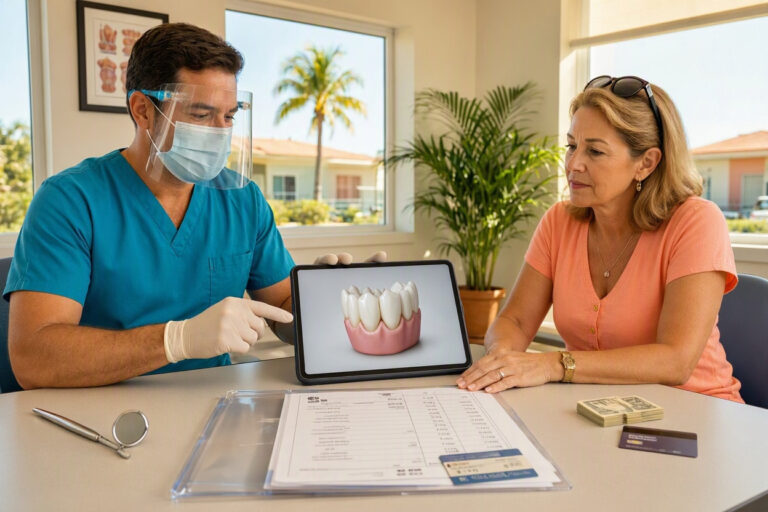
Financial transparency is essential when considering any major dental procedure. Patients often want to know: Are same-day crowns significantly more expensive than traditional laboratory crowns because of the high-tech equipment used?
Average Price Ranges
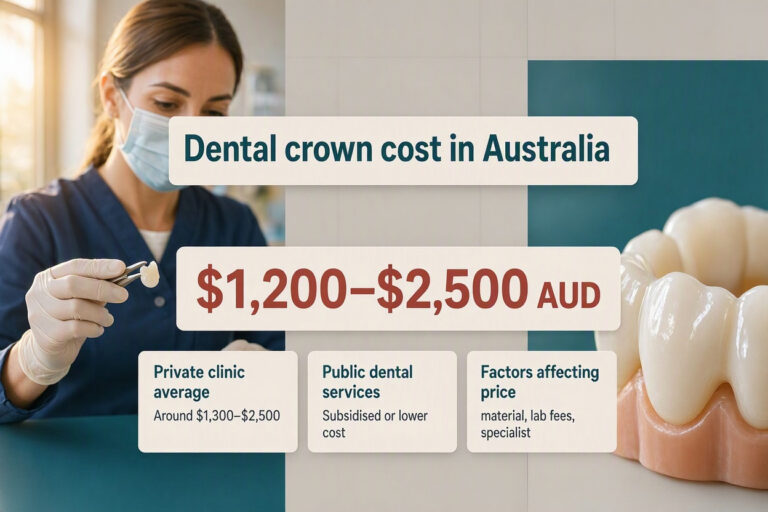
In the United States and most western dental markets, the out-of-pocket cost for a single same-day CEREC crown typically ranges from $1,200 to $2,500.
Interestingly, this cost is usually equivalent to or only slightly higher than the price of a traditional crown. While the dentist has invested significantly in acquiring the in-office CAD/CAM scanning and milling machinery, they save money by not having to pay an invoice fee to an external commercial lab group. This overhead savings is passed along to the patient, balancing out the overall operational cost.
Factors that Dictate Your Final Dental Bill
- Geographic Location: Dental practices located in major metropolitan areas with high operational overhead costs will naturally charge more than clinics situated in smaller towns or rural environments.
- The Complexity of the Tooth Prep: If your tooth is severely broken down, the dentist may need to perform a “core build-up” using specialized composite materials or place a supportive post down your root canal to create a stable foundation. This foundational step adds an extra fee to the baseline crown cost.
- Specific Material Choice: Highly aesthetic translucent lithium disilicate blocks or ultra-strong multi-layered zirconia blocks cost more wholesale than basic monolithic ceramic formulations, which can impact your final cost.
Insurance Coverage Realities
Most dental insurance policies treat same-day crowns exactly the same as traditional crowns. Insurance providers base their reimbursement rates on the dental procedure code used (typically CDT Code D2740 for a porcelain/ceramic crown), rather than the specific method or location where the crown was manufactured.
If your crown is determined to be a medically necessary procedure (to repair active decay or structural damage) rather than a purely cosmetic enhancement, a typical dental PPO insurance plan will generally cover 50% to 80% of the contract price, leaving the patient to cover the remaining balance out of pocket.
Important Note for Patients: Always ask your dental clinic’s administrative billing team to submit a Pre-Treatment Estimate to your insurance provider before starting treatment. This formal inquiry ensures you receive a clear, written breakdown of exactly what your insurance company will pay and your exact out-of-pocket financial obligation before any drilling begins.
Longevity and Success Rates: How Long Do They Last?
A major point of anxiety for patients investing in a same-day restoration is durability. Will an in-office milled tooth last as long as a hand-crafted lab crown?
Clinical Data and Survival Statistics
Long-term peer-reviewed clinical studies tracking thousands of chairside CAD/CAM restorations have yielded outstanding results. Data shows that same-day CEREC ceramic crowns have an average survival rate of:
- 95% to 97% after five years of daily operational chewing use.
- 90% to 92% after ten full years of clinical function.
These statistical survival rates are completely on par with, and in some cases exceed, the long-term clinical survival rates of traditional porcelain-fused-to-metal (PFM) or laboratory-processed all-ceramic crowns.
Long-Term CEREC Crown Survival Rates:
5 Years:  [====================] 95%-97%
10 Years: [==================  ] 90%-92%
Why Do Same-Day Crowns Perform So Exceptionally Well?
The secret to their long-term durability is the structural uniformity of the material blocks. When a laboratory technician layers porcelain powder onto a frame by hand, microscopic air bubbles or structural voids can accidentally get trapped between the layers. Over years of chewing, these internal air pockets can turn into stress fractures, causing the porcelain to chip off.
In contrast, same-day crowns are milled from a single, solid industrial block of ceramic that was pre-fabricated under immense industrial pressure. This uniform structure makes the finished crown highly resistant to internal stress fractures.
Are You an Ideal Candidate for a Same-Day Crown?
While single-visit dentistry is highly versatile, your dentist must evaluate your specific oral environment to determine if a same-day crown is your absolute best path forward.
Who is the Perfect Candidate?
You are generally an excellent candidate for a same-day restoration if you meet the following criteria:
- You have standard structural damage: Your tooth has a large cavity, a cracked cusp, or needs protection following a standard root canal treatment.
- Your margins are above the gumline: The damaged part of your tooth does not extend deep beneath your surrounding gum tissue.
- You have severe dental anxiety or a hyper-sensitive gag reflex: You want to avoid old-fashioned impression paste trays and limit your total time in the dental chair.
- You have a busy lifestyle: You cannot afford to take multiple days off work for repeated dental visits.
When is a Traditional Laboratory Crown Better?
A traditional laboratory approach remains the preferred clinical standard if you have any of the following conditions:
- Severe Nocturnal Bruxism: If you regularly grind and clench your teeth with extreme force at night, your dentist may prefer to order a lab-fabricated, solid-cast yellow gold alloy crown. Gold is highly malleable and completely immune to fracturing under severe grinding forces.
- Complex Multi-Unit Restorations: If you need to replace multiple missing teeth using a complex dental bridge, or if you are undergoing a comprehensive full-mouth cosmetic reconstruction.
- Sub-Gingival Margins: The tooth decay or structural fracture line extends deep beneath your bone or gumline, making it impossible for digital optical scanners to accurately read the structural margins.
Maintenance and Care: Protecting Your Investment
Once your same-day crown is permanently bonded in place, caring for it is simple. It does not require any specialized cleaning tools or unique chemical rinses. You treat it exactly like your natural teeth.
Daily Hygiene Best Practices
- Brush Diligently: Brush your teeth at least twice a day using a soft-bristled toothbrush and a non-abrasive fluoride toothpaste. Pay extra attention to the gumline area where the edge of the ceramic crown meets your natural tooth. While the porcelain crown cannot decay, plaque bacteria can still gather along the margin and create a new cavity in the natural root structure underneath the crown.
- Floss Every Single Day: Clean between your teeth daily using standard dental floss, a water flosser, or interdental brushes. Slide the floss smoothly through the contact point. Do not snap the floss aggressively up and down, as this can irritate your delicate gum tissue.
- Maintain Professional Checkups: Visit your dental hygienist and dentist every six months for a professional cleaning and clinical examination. Your dentist will use an explorer instrument to feel the edges of your crown margins and ensure the adhesive bond remains completely sealed.
Daily Care Checklist:
[ ] Brush 2x daily with soft bristles
[ ] Floss 1x daily around the crown margin
[ ] Wear a nightguard if you grind your teeth
[ ] Avoid chewing ice or hard candy
Habits to Avoid
To prevent your beautiful new ceramic crown from prematurely cracking or chipping, eliminate these destructive dental habits:
- Never chew on non-food objects: Avoid chewing on ice cubes, fingernails, pens, or opening plastic packaging with your teeth.
- Avoid biting directly into ultra-hard foods: Be cautious with unpopped popcorn kernels, hard candies, or dense nuts.
- Wear a protective nightguard: If your dentist notices signs of nighttime clenching or grinding, wear a custom-fabricated acrylic nightguard while you sleep. This appliance acts as a shock absorber, protecting both your ceramic crown and your natural teeth from destructive vertical forces.
Important Clinical Notes for the Consumer
Clinical Reminder:
A same-day crown is only as good as the clinician designing it. The CAD/CAM milling machine is a highly precise tool, but it relies entirely on the custom digital parameters, margin selections, and bite adjustments input by your dentist. When seeking a single-visit crown, select a practitioner who has completed extensive advanced post-graduate training with CEREC or equivalent digital dental systems.
Frequently Asked Questions (FAQ)
1. Does getting a same-day crown hurt?
No, the preparation process for a same-day crown feels exactly like getting a traditional crown or a standard deep filling. Your dentist will completely numb the area with a local anesthetic before doing any structural tooth shaping. You might feel some mild pressure during the digital scanning and final bonding phases, but you should not experience any sharp pain.
2. Can same-day crowns be used on front teeth?
Yes, they can. Modern lithium disilicate (E.max) blocks are highly aesthetic and offer beautiful translucency. However, if you are replacing a single front tooth that is highly visible, your dentist might suggest a traditional laboratory crown instead. A custom lab technician can hand-layer multiple shades of porcelain to perfectly match the unique individual characteristics of your neighboring front teeth.
3. How long do I have to wait to eat after the procedure?
If your dentist used a light-cured adhesive resin to permanently bond your crown, the glue is instantly cured and at maximum strength when you leave the office. You can eat right away. However, if your lips, tongue, or cheeks are still numb from the local anesthetic, it is wise to wait until the numbness wears off completely so you do not accidentally bite yourself.
4. What should I do if my same-day crown feels high when I bite down?
When you are numb from anesthesia, your natural bite alignment can shift slightly, making it hard to feel if your bite is perfectly balanced. If you notice that your new crown hits harder than your other teeth once the numbness wears off, call your dentist. They can use a tiny polishing burr to adjust the high spot in a quick, painless two-minute appointment.
5. Can a same-day crown get a cavity?
The porcelain or zirconia crown material itself cannot decay. However, the natural tooth structure underneath the crown and along the gumline margin is still vulnerable to plaque bacteria. If you do not maintain excellent oral hygiene, a new cavity can form at the root edge, which can compromise the entire restoration.
6. Are same-day crowns weaker than traditional lab crowns?
No. Same-day crowns are milled from factory-manufactured, dense blocks of pure ceramic or zirconia. Because these blocks are produced under immense industrial pressure, they are structurally uniform and free of the microscopic air pockets that can sometimes occur with hand-layered laboratory porcelain.
Additional Resources
To further expand your knowledge of advanced dental restorations and digital health technology, check out these reputable consumer resources:
- The American Dental Association (ADA): Offers official patient education resources regarding dental crowns, materials, and what to expect during restorative dental procedures.
- The American Academy of Cosmetic Dentistry (AACD): Provides comprehensive guides on advanced digital workflows, chairside aesthetics, and cosmetic smile designs.
Conclusion
Same-day crowns represent a brilliant synergy of medical science and digital engineering, providing a durable, highly aesthetic permanent ceramic restoration in under two hours. By eliminating messy physical impressions, uncomfortable temporary caps, and multiple time-consuming appointments, CAD/CAM technology delivers maximum patient convenience without sacrificing clinical longevity. If you need to restore a broken or decayed tooth, talk to your dentist to see if a single-visit same-day crown is the right solution for your smile.
Disclaimer
This article is provided for general informational and educational purposes only. It is not intended to be a substitute for professional medical or dental advice, diagnosis, or treatment. Always seek the direct guidance of your qualified dentist or healthcare provider with any questions you may have regarding a specific dental condition or treatment plan.