what every dentist should know about statins
Statins are among the most frequently prescribed medications worldwide. Millions of individuals take these cholesterol-lowering drugs daily to manage cardiovascular disease, prevent myocardial infarction, and lower stroke risks. Because cardiovascular health and oral health are deeply interconnected, dentists encounter patients taking statins during almost every clinical shift.
Understanding how these medications impact dental treatment, soft tissue healing, salivary flow, and bone metabolism is no longer optional—it is a fundamental requirement for modern, safe dental practice. This comprehensive guide details everything dental professionals need to know to optimize clinical outcomes and protect patient health.
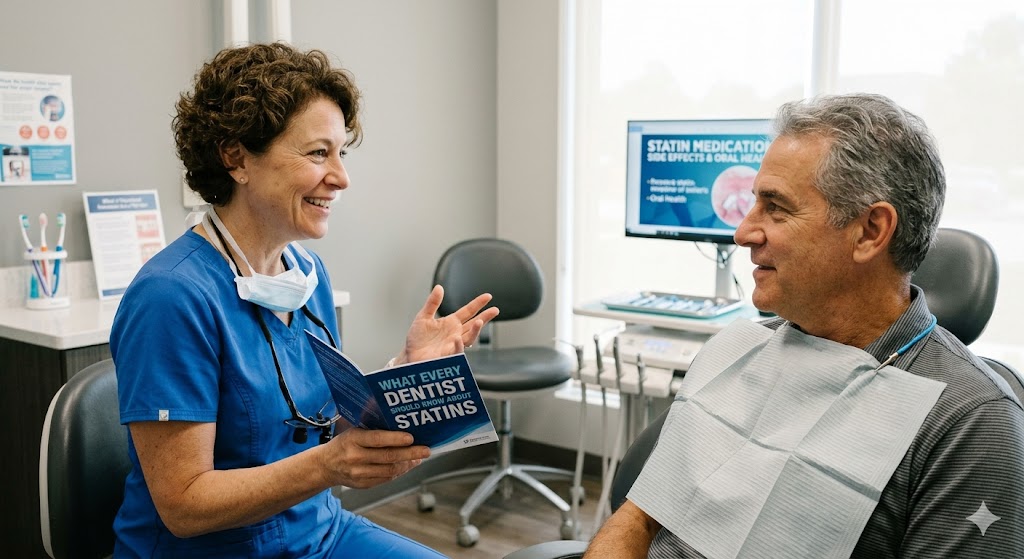
1. Introduction to Statins and Their Medical Prevalence
Statins, formally known as HMG-CoA reductase inhibitors, are the gold standard for managing hypercholesterolemia and dyslipidemia. By inhibiting the enzyme responsible for cholesterol production in the liver, statins significantly reduce low-density lipoprotein (LDL) cholesterol levels, often referred to as “bad” cholesterol.
The Scale of the Prescribing Trend
Cardiovascular disease remains a leading cause of mortality globally. Consequently, statin therapy has grown exponentially over the past three decades. Statins are prescribed for both primary prevention (in patients at high risk of developing heart disease) and secondary prevention (in patients who have already experienced a heart attack or stroke).
Because of this widespread usage, a substantial percentage of adult dental patients—especially those over the age of 40—will list a statin on their medical history form.
Why Dentists Must Care
Many dental practitioners view statins purely as a marker for cardiovascular disease. While it is true that a patient taking a statin requires a thorough cardiovascular risk assessment, the drug itself exerts direct, systemic effects that manifest clearly within the oral cavity. From altered salivary dynamics to unique drug-drug interactions with commonly prescribed dental medications, statins alter the clinical landscape in ways that require proactive dental management.
2. The Mechanism of Action: Beyond Cholesterol Lowering
To manage patients effectively, a dentist must understand how statins work at a cellular level. The primary mechanism is straightforward, but the secondary, “pleiotropic” effects are what make these drugs truly fascinating in a dental context.
Inhibition of the HMG-CoA Reductase Pathway
Statins block the enzyme 3-hydroxy-3-methylglutaryl-coenzyme A (HMG-CoA) reductase. This enzyme controls the rate-limiting step in the mevalonate pathway, which the liver uses to synthesize cholesterol.
$$\text{HMG-CoA} \xrightarrow{\text{HMG-CoA Reductase}} \text{Mevalonate} \rightarrow \dots \rightarrow \text{Cholesterol}$$
By shutting down this pathway, statins decrease intracellular cholesterol concentrations, prompting liver cells to upregulate LDL receptors. These receptors pull circulating LDL cholesterol out of the bloodstream, reducing atheroma formation within blood vessels.
Pleiotropic Effects: The Hidden Power of Statins
Beyond lowering lipids, statins exhibit significant pleiotropic effects. These are secondary actions independent of cholesterol reduction, including:
- Anti-inflammatory actions: Statins decrease systemic inflammatory markers, such as C-reactive protein (CRP).
- Improvement in endothelial function: They promote nitric oxide production, helping blood vessels relax and dilate normally.
- Antioxidant properties: They reduce the formation of reactive oxygen species (ROS), protecting tissues from oxidative stress.
- Immunomodulation: They alter T-cell responses and reduce the expression of major histocompatibility complex class II molecules, calming overactive immune reactions.
As we will explore later, these anti-inflammatory and immunomodulatory properties directly affect how periodontal tissues respond to plaque biofilm and how bone heals after surgical intervention.
3. Common Statins Encountered in Dental Practice
Not all statins are identical. They differ in their chemical structures, lipid solubility (lipophilicity vs. hydrophilicity), metabolic pathways, and potency. Recognizing these differences helps dentists anticipate potential side effects and drug interactions.
Lipophilic vs. Hydrophilic Statins
- Lipophilic Statins: These include atorvastatin, simvastatin, lovastatin, and fluvastatin. Because they dissolve easily in fats, they can passively diffuse across cell membranes into various peripheral tissues, including skeletal muscle and oral tissues. This broad tissue distribution is often linked to a higher incidence of muscular side effects.
- Hydrophilic Statins: These include rosuvastatin and pravastatin. They are water-soluble and rely on specific active transport proteins to enter liver cells. Because they do not penetrate peripheral tissues as easily, they generally carry a lower risk of systemic muscular side effects.
A Comparative Reference of Common Statins
The following table provides an overview of the statins most frequently encountered in a dental setting, highlighting their brand names, solubility, and primary metabolic routes.
| Generic Name | Common Brand Name | Solubility Profile | Primary Metabolic Pathway (CYP450) | Relative Potency |
| Atorvastatin | Lipitor | Lipophilic | CYP3A4 | High |
| Simvastatin | Zocor | Lipophilic | CYP3A4 | Moderate |
| Rosuvastatin | Crestor | Hydrophilic | CYP2C9 / Minimal | High |
| Pravastatin | Pravachol | Hydrophilic | Non-enzymatic / Minimal | Low to Moderate |
| Lovastatin | Mevacor | Lipophilic | CYP3A4 | Low to Moderate |
| Fluvastatin | Lescol | Lipophilic | CYP2C9 | Low |
Important Note for Readers: Patients taking high-potency statins (like atorvastatin or rosuvastatin) often present with more severe underlying cardiovascular histories or advanced atherosclerosis. Always cross-reference the statin dose with the patient’s overall cardiac stability before planning extensive oral surgeries.
4. Oral Manifestations and Dental Side Effects
While statins are generally well-tolerated, they can cause several adverse effects within the oral cavity that a dentist must be able to recognize, diagnose, and manage.
Hyposalivation and Xerostomia
A frequently overlooked side effect of long-term statin therapy is a subjective feeling of dry mouth (xerostomia) or an objective reduction in salivary flow (hyposalivation).
Saliva plays a critical role in lubricating oral tissues, neutralizing plaque acids, and initiating the remineralization of enamel. When statins suppress salivary flow, patients face a heightened risk for:
- Rapidly progressing dental caries, particularly cervical and root surface lesions.
- Oral candidiasis (thrush), as the protective, antifungal proteins in saliva are reduced.
- Dysgeusia (altered taste perception), which can significantly impair nutritional intake and quality of life.
- Mucositis and generalized oral discomfort, making the wear of removable prostheses painful.
Myalgia and Its Mimicry of TMD
One of the most well-known systemic side effects of statins is statin-associated muscle symptoms (SAMS), ranging from mild myalgia to severe rhabdomyolysis.
What many dentists fail to realize is that this myalgia can manifest in the muscles of mastication—specifically the masseter and temporalis muscles. A patient presenting with sudden, bilateral facial pain, jaw fatigue, or difficulty chewing may not be suffering from a primary temporomandibular disorder (TMD) or nocturnal bruxism. If the onset of facial muscle pain aligns with the initiation or dosage escalation of a statin, the drug may be the primary culprit.
Oral Mucosal Lesions and Lichenoid Reactions
On rare occasions, statins can trigger an immunologically mediated hypersensitivity reaction in the oral mucosa. These present clinically as oral lichenoid drug eruptions.
These lesions look strikingly similar to erosive or reticular lichen planus, displaying white, interlacing striae (Wickham’s striae) accompanied by painful, erythematous, or ulcerated areas on the buccal mucosa or lateral borders of the tongue. Biopsies of lichenoid drug reactions often reveal a deep inflammatory infiltrate containing eosinophils, helping pathologists differentiate them from classic lichen planus.
5. Statins and Periodontal Disease: The Surprising Connection
The relationship between statins and periodontal disease is one of the most exciting areas of dental research. Because periodontitis is a chronic inflammatory disease driven by the host’s immune response to subgingival plaque, the systemic anti-inflammatory properties of statins have a direct impact on the periodontium.
Modulation of the Host Inflammatory Response
Periodontal tissue destruction is largely caused by an overproduction of pro-inflammatory cytokines, matrix metalloproteinases (MMPs), and osteoclast-activating factors. Statins downregulate several of these destructive pathways. Specifically, they reduce the levels of:
- Interleukin-1 beta ($IL-1\beta$)
- Interleukin-6 ($IL-6$)
- Tumor Necrosis Factor-alpha ($TNF-\alpha$)
- Matrix Metalloproteinase-8 ($MMP-8$) and Matrix Metalloproteinase-9 ($MMP-9$)
By reducing these destructive enzymes and cytokines, statins can damp down the hyper-inflammatory response in the gingival tissues, effectively acting as a systemic host-modulatory agent.
Clinical Observation of Periodontal Parameters
Numerous clinical studies have shown that patients with chronic periodontitis who take systemic statins for cardiovascular health tend to exhibit better periodontal parameters than matching controls not taking the drug. When combined with conventional scaling and root planing (SRP), statin users frequently show:
- Greater reductions in clinical probing depths (PD).
- More significant gains in clinical attachment levels (CAL).
- Reduced bleeding on probing (BOP), reflecting a calmer, less inflamed microenvironment.
Topical Statin Delivery in Periodontal Therapy
Harnessing these benefits, researchers have investigated the local application of statins directly into periodontal pockets. Local delivery gels containing simvastatin, atorvastatin, or rosuvastatin have been compounded and placed into deep pockets following mechanical debridement.
The results have been highly promising, showing enhanced bone fill in vertical osseous defects and improved soft tissue healing. While not yet an everyday commercial standard in every dental office, topical statin delivery represents a significant leap forward in targeted periodontal biotherapy.
6. Impact on Bone Metabolism and Implant Dentistry
Statins influence more than just soft tissue inflammation; they have a powerful effect on bone turnover and regeneration. This has major implications for oral surgery, bone grafting, and dental implantology.
Up-regulation of Bone Morphogenetic Protein-2 (BMP-2)
At a molecular level, statins stimulate the expression of Bone Morphogenetic Protein-2 (BMP-2) in osteoblasts. BMP-2 is a critical signaling protein that drives osteoblast differentiation, activates bone formation, and induces angiogenesis (the formation of new blood vessels).
$$\text{Statin Therapy} \rightarrow \uparrow \text{BMP-2 Expression} \rightarrow \uparrow \text{Osteoblast Differentiation} \rightarrow \text{Enhanced Bone Formation}$$
Furthermore, statins inhibit osteoclast differentiation and activity by altering the RANKL/OPG ratio, thereby slowing down bone resorption.
Implications for Osseointegration of Dental Implants
The success of a dental implant hinges entirely on osseointegration—the direct structural and functional connection between living bone and the surface of a load-bearing implant. Because statins tilt the biological scale toward bone formation and away from bone resorption, they provide an advantageous systemic environment for implant healing.
Patients on long-term statin therapy often experience:
- Accelerated early osseointegration.
- Higher bone-to-implant contact (BIC) ratios.
- Improved long-term stability of the marginal bone surrounding the implant collar, protecting against peri-implant bone loss.
Bone Grafting and Sinus Lifts
During guided bone regeneration (GBR) procedures, socket preservation, or maxillary sinus augmentations, the patient’s capacity to remodel grafting materials into vital autogenous bone is paramount. The enhanced angiogenic and osteogenic activity induced by statins can lead to faster graft consolidation and superior quality of newly formed bone, reducing the healing time required before implant placement.
7. Critical Drug-Drug Interactions in Dentistry
While statins offer numerous systemic advantages, they present a major clinical challenge: dangerous drug-drug interactions. Dentists routinely prescribe antibiotics, antifungals, and analgesics. Several of these medications can interact catastrophically with statins, dramatically increasing the risk of toxicity.
The CYP3A4 Enzyme System: The Main Battleground
Many lipophilic statins (specifically simvastatin, atorvastatin, and lovastatin) are metabolized primarily by the Cytochrome P450 3A4 (CYP3A4) enzyme system in the liver.
If a dentist prescribes a medication that inhibits the CYP3A4 enzyme, the breakdown of the statin is blocked. The concentration of the statin in the patient’s blood rises sharply, causing severe muscle damage (myopathy) and potential acute kidney injury secondary to rhabdomyolysis.
Key Dental Medications to Avoid or Manage
1. Macrolide Antibiotics (Erythromycin and Clarithromycin)
Erythromycin and clarithromycin are potent CYP3A4 inhibitors. Prescribing these to a patient taking simvastatin, atorvastatin, or lovastatin is highly dangerous. If a patient requires an antibiotic and has a penicillin allergy, azithromycin is a much safer alternative. Azithromycin does not inhibit CYP3A4 to the same degree and carries a significantly lower risk of interaction.
2. Azole Antifungals (Ketoconazole, Itraconazole, Fluconazole)
Systemic azole antifungals, commonly prescribed for stubborn oral candidiasis, are incredibly strong inhibitors of the CYP3A4 pathway. Co-administration with CYP3A4-metabolized statins can cause a rapid, dangerous spike in serum statin levels. Topical antifungals like nystatin suspension or clotrimazole troches are safer, preferred first-line options for localized oral thrush.
3. Non-Steroidal Anti-Inflammatory Drugs (NSAIDs)
While NSAIDs (such as ibuprofen or naproxen) do not typically interfere with the CYP3A4 pathway, they can interact indirectly with statins by placing additive stress on renal function. Long-term, high-dose NSAID use alongside high-potency statins should be managed carefully, especially in patients with pre-existing mild renal insufficiency.
Summary of Major Dental Drug Interactions with Statins
The table below outlines critical dental prescriptions, their interaction mechanisms, and safer clinical alternatives.
| Prescribed Dental Medication | Interacting Statin Types | Mechanism of Interaction | Potential Adverse Event | Recommended Clinical Alternative |
| Clarithromycin / Erythromycin | Simvastatin, Atorvastatin, Lovastatin | Strong inhibition of the liver’s CYP3A4 enzyme system. | Severe myopathy, muscle breakdown, rhabdomyolysis, kidney failure. | Azithromycin or Clindamycin (if clinically appropriate). |
| Fluconazole / Ketoconazole | Simvastatin, Atorvastatin, Lovastatin | Deep inhibition of CYP3A4 and secondary metabolic pathways. | Acute toxicity, profound muscle pain, systemic weakness. | Nystatin oral suspension (topical therapy) or brief statin pause under MD guidance. |
| Systemic Corticosteroids | All Statins | Additive risk of myopathy and muscle weakness. | Increased incidence of profound skeletal muscle weakness. | Localized topical steroid gels (e.g., Triamcinolone acetonide 0.1%). |
Important Note for Readers: When a critical drug interaction is identified, never tell a patient to stop taking their statin without consulting their prescribing physician first. For short courses of antibiotics or antifungals, a brief, temporary suspension of the statin is often coordinated and approved by the patient’s doctor.
8. Managing the Bleeding Risk: A Common Clinical Dilemma
A common concern among oral surgeons and general dentists is whether statins increase the risk of intraoperative or postoperative bleeding during invasive procedures like dental extractions, periodontal surgery, or implant placement.
Understanding the Antiplatelet and Anticoagulant Overlap
Statins themselves are not primary anticoagulants or antiplatelet agents; they do not thin the blood in the traditional sense. However, because statins are prescribed to patients with advanced cardiovascular disease, a very high percentage of these individuals are simultaneously taking:
- Antiplatelet agents (e.g., Aspirin, Clopidogrel/Plavix)
- Direct Oral Anticoagulants / DOACs (e.g., Apixaban/Eliquis, Rivaroxaban/Xarelto)
- Vitamin K Antagonists (e.g., Warfarin/Coumadin)
Furthermore, statins do possess minor pleiotropic antithrombotic properties, such as slightly decreasing platelet aggregation and reducing tissue factor expression. While this mild effect rarely causes significant bleeding on its own, it can enhance the effects of concurrent blood thinners.
To Hold or Not to Hold?
The current consensus across both dental and medical literatures is clear: Do not alter or discontinue statin therapy prior to dental procedures.
Stopping a statin can destabilize atherosclerotic plaques, significantly increasing the patient’s immediate risk of a major adverse cardiac event (MACE) or stroke. The risk of a cardiovascular emergency far outweighs any minor local bleeding issues that might arise during standard dental treatment.
Local Hemostatic Measures for the Dental Clinician
If a patient exhibits prolonged bleeding during an extraction or oral surgical procedure due to their complex medical regimen, the dentist should rely entirely on local hemostatic techniques to control the site:
- Mechanical compression: Firm pressure with sterile gauze for a minimum of 15–20 minutes.
- Hemostatic agents: Placement of absorbable gelatin sponges (Gelfoam), oxidized regenerated cellulose (Surgicel), or collagen plugs directly into the extraction socket.
- Suturing: Placing tight, interrupted figure-eight cross-sutures to stabilize the wound margins and protect the initial blood clot.
- Topical agents: Utilizing tranexamic acid (TXA) rinses or soaking gauze in TXA before application to the surgical site.
9. Comprehensive Clinical Management Protocol for Dentists
To synthesize this information into a practical workflow, dentists should follow a structured, step-by-step clinical protocol whenever treating a patient on statin therapy.
[Patient Identification]
       │
       ▼
[Detailed Medical History Review] ──► Identify Statin Type & Comorbidities
       │
       ▼
[Cardiovascular Assessment] ───────► Evaluate Cardiac Stability & Exercise Tolerance
       │
       ▼
[Dental Medication Check] ─────────► Screen for CYP3A4 Inhibitors (Avoid Erythromycin/Fluconazole)
       │
       ▼
[Intraoral Examination] ───────────► Check for Xerostomia, Caries, & Masticatory Myalgia
       │
       ▼
[Local Hemostasis Preparedness] ───► Utilize Gelfoam, Sutures, & Pressure Post-Op
Step 1: Detailed Medical History Review
- Identify the exact statin, the exact dosage, and the duration of therapy.
- Determine if the statin is lipophilic (higher risk of drug interactions and localized myalgia) or hydrophilic.
- Identify all concurrent medications, paying special attention to antiplatelet drugs or anticoagulants.
Step 2: Comprehensive Cardiovascular Assessment
- Understand the underlying reason for the statin prescription (primary vs. secondary prevention).
- Assess the patient’s functional capacity using Metabolic Equivalents (METs). Can the patient walk up a flight of stairs without experiencing chest pain or severe shortness of breath?
- Measure baseline vital signs (blood pressure and pulse rate) at every appointment prior to administering local anesthetics with vasoconstrictors.
Step 3: Screening for Potential Drug-Drug Interactions
- Review your intended prescription plan before writing any scripts.
- Ensure that macrolide antibiotics (erythromycin, clarithromycin) and systemic azole antifungals are completely avoided if the patient is taking a CYP3A4-metabolized statin.
- If an antibiotic is necessary for an infection and the patient has a penicillin allergy, select azithromycin or clindamycin.
Step 4: Intraoral Monitoring and Preventive Focus
- Perform a thorough salivary assessment. If the patient displays signs of dry mouth, initiate a proactive preventive protocol:
- Prescribe high-fluoride toothpaste (5,000 ppm neutral sodium fluoride) to prevent root caries.
- Recommend alcohol-free, salivary-substitute mouthwashes and xylitol lozenges to stimulate flow.
- Schedule more frequent periodontal maintenance and hygiene recertification appointments (e.g., every 3 to 4 months instead of 6 months).
- Palpate the masseter and temporalis muscles during extraoral exams to rule out statin-induced myalgia mimicking TMD.
Step 5: Surgical Optimization and Local Hemostasis
- Never instruct a patient to discontinue their statin prior to dental surgery.
- Ensure a comprehensive array of local hemostatic agents (collagen plugs, Surgicel, sutures) is readily accessible chairside.
- Emphasize clear, written postoperative instructions, advising the patient to avoid intensive physical exertion and to stick to a soft diet for the first 24 to 48 hours.
10. Frequently Asked Questions (FAQ)
Can statins cause a dry mouth?
Yes. Long-term statin use can cause hyposalivation and xerostomia. This reduction in protective saliva flow increases the patient’s vulnerability to cervical caries, oral thrush, and general tissue irritation. Dentists should implement strict preventive regimens for these individuals.
Should a patient stop taking their statin before dental extractions or oral surgery?
No. Patients should never discontinue their statin therapy before any dental procedure. The cardiovascular protection offered by statins is vital, and stopping them increases the risk of major cardiac events. Any increased bleeding risk is typically minimal and can be managed effectively using local hemostatic techniques.
Why is prescribing erythromycin or clarithromycin to a statin patient dangerous?
Erythromycin and clarithromycin are potent inhibitors of the CYP3A4 liver enzyme system. This enzyme system metabolizes popular lipophilic statins like simvastatin and atorvastatin. If these medications are taken together, statin levels can spike dangerously, causing severe muscle damage (myopathy) and acute kidney injury.
Can statin side effects mimic TMJ or jaw pain?
Yes. Statin-associated muscle symptoms (SAMS) can present as a generalized myalgia that affects the muscles of mastication, including the masseter and temporalis. This can easily be mistaken for a temporomandibular disorder (TMD). A careful review of the patient’s medical history will help determine if the jaw pain began around the same time as a change in their statin prescription.
Do statins have any positive effects on dental implant healing?
Yes, they do. Statins stimulate the production of Bone Morphogenetic Protein-2 (BMP-2), which helps promote bone formation and slows down bone resorption. Patients on long-term statin therapy often experience accelerated osseointegration, improved bone density around implants, and more favorable outcomes with bone grafts.
11. Additional Clinical Resources
To further expand your clinical knowledge and keep your practice up to date, explore the following authoritative professional references:
- The American Dental Association (ADA) Center for Evidence-Based Dentistry: Provides regularly updated clinical guidelines regarding drug interactions, patient medical management protocols, and cardiovascular health considerations in dental settings.
- The American Heart Association (AHA) Guidelines on Cholesterol Management: Offers insight into how physicians determine statin dosages and primary/secondary risk categories, helping dentists understand the medical severity of their patient’s cardiovascular histories.
- Lexicomp / UpToDate Dental Therapeutics: An indispensable digital drug database specifically designed for dental professionals to cross-reference drug interactions, identify CYP3A4 pathway conflicts, and discover safe prescribing alternatives chairside.
12. Conclusion
Summary
This comprehensive guide outlines the vital connection between statin therapy and modern dental practice, highlighting how these medications influence salivary flow, bone healing, and periodontal health. Dentists must remain highly vigilant regarding dangerous drug-drug interactions with common dental prescriptions while safely managing cardiovascular risks without altering a patient’s medication routine. Integrating these protocols ensures safer clinical interventions, optimized wound healing, and a higher standard of care for patients taking statins.
Disclaimer: The information provided in this article is strictly for educational and informational purposes for dental professionals. It does not constitute formal medical or legal advice. Clinical decisions should always be made by cross-referencing updated pharmaceutical databases, consulting treating physicians, and evaluating each patient’s unique medical history and presentation.