Single Tooth Dental Implants in Jaffrey
Losing a tooth can feel frustrating. Maybe it happened during a meal. Perhaps it was an accident, or the result of years of decay. Whatever the reason, you are not alone. Many people in Jaffrey face this situation every year.
The good news? Modern dentistry offers a solution that looks, feels, and functions like your natural tooth. That solution is a single tooth dental implant.
If you live in Jaffrey or the surrounding areas, you have excellent options for care. This guide walks you through everything you need to know. No confusing jargon. No sales pitch. Just clear, reliable, and practical information to help you make the best decision for your health and your smile.
What Exactly Is a Single Tooth Dental Implant?
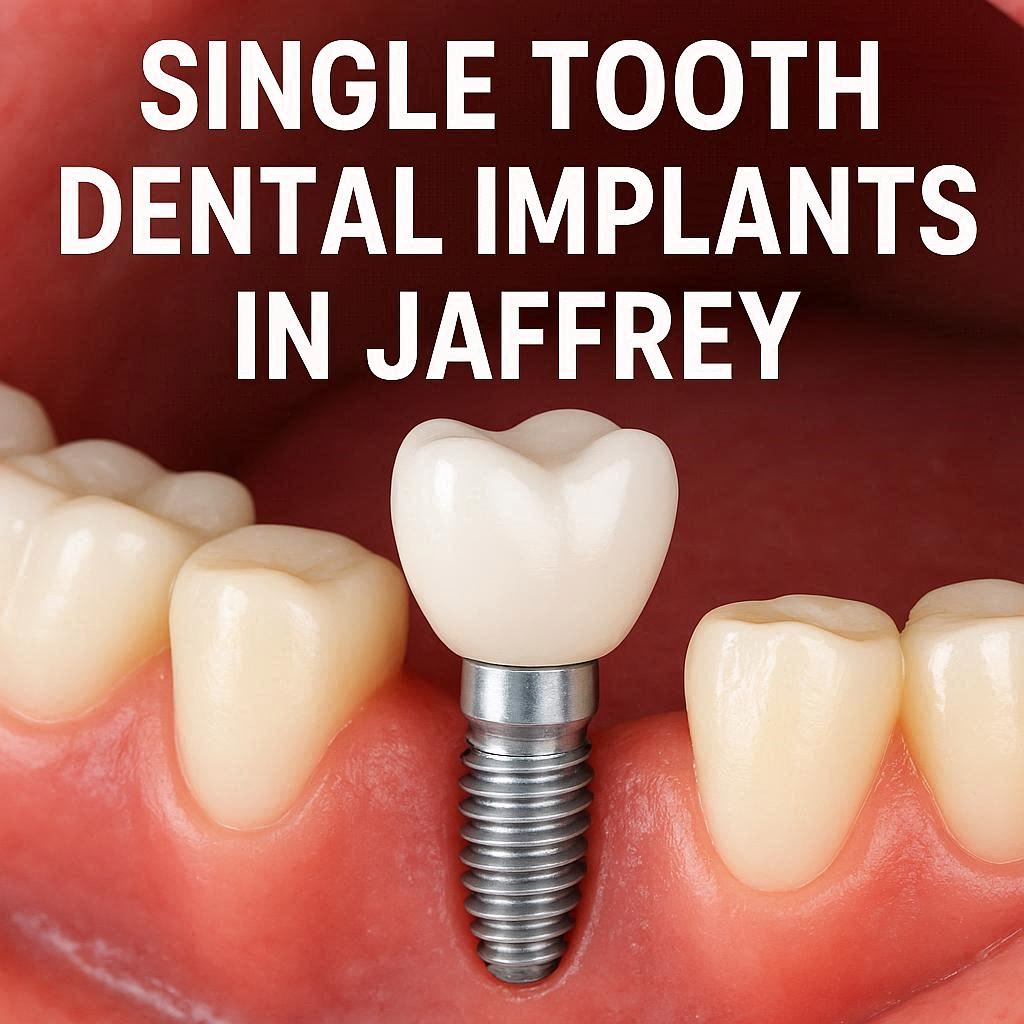
Let us start with the basics. A single tooth dental implant is a medical-grade device that replaces both the root and the crown of a missing tooth. Unlike older methods like bridges, an implant does not rely on neighboring teeth for support.
Think of it as building a new tooth from the ground up.
An implant has three main parts:
- The Implant Post: A small screw, usually made of titanium. A surgeon places this into your jawbone.
- The Abutment: A connector piece that attaches to the top of the post.
- The Dental Crown: The visible, tooth-colored part that sits on top.
Together, these three pieces create a replacement tooth that is stable, durable, and natural looking.
Important note: A single tooth implant replaces only one missing tooth. If you have multiple missing teeth, your dentist might suggest other solutions. But for a single gap, this is often the gold standard.
Why Choose a Single Tooth Implant Over Other Options?
In Jaffrey, you might hear about three main ways to replace a single missing tooth: implants, bridges, and partial dentures. Each has pros and cons. Let us break them down honestly.
Comparison Table: Implant vs. Bridge vs. Partial Denture
| Feature | Single Tooth Implant | Traditional Bridge | Removable Partial Denture |
|---|---|---|---|
| Affects neighboring teeth? | No. Leaves them untouched. | Yes. Requires shaving down healthy teeth. | Sometimes. Uses metal clasps that can wear on adjacent teeth. |
| Bone health | Preserves jawbone. Prevents bone loss. | Does not stop bone loss. | Does not stop bone loss. |
| Longevity | 20+ years, often a lifetime with care. | 7–15 years on average. | 5–8 years. Often needs replacement. |
| Comfort | Feels like a natural tooth. | Can feel bulky. | May move or click. |
| Cleaning | Brush and floss normally. | Requires special floss threaders. | Must remove for cleaning. |
| Cost upfront | Higher. | Moderate. | Lower. |
| Cost over time | Often lower due to durability. | Higher due to replacements. | Higher due to replacements and repairs. |
What Local Dentists in Jaffrey Say
Dr. Emily Hartwell, a Jaffrey-based general dentist (name changed for privacy), explains:
“When I show patients a model of how a bridge requires grinding down two healthy teeth, most pause. They don’t want to damage good teeth to fix one bad one. That is why implants have become so popular here. People want to protect what they still have.”
The choice often comes down to your budget, your bone health, and your long-term goals. But for many people, the implant is the most future-focused option.
The Procedure: What to Expect Step by Step
The idea of surgery can feel scary. Let me demystify the process. A single tooth implant in Jaffrey typically happens over several months. This is normal. Good things take time.
Step 1: Initial Consultation (1 hour)
Your dentist or oral surgeon will:
- Examine your mouth
- Take X-rays or a 3D CT scan
- Check your bone density
- Discuss your medical history
They need to make sure you have enough jawbone to support the implant. If you do not, do not worry. Bone grafting is possible (more on that later).
Step 2: The Implant Placement Surgery (1–2 hours)
This happens in a dental office. You will receive local anesthesia to numb the area. Many patients also choose sedation to relax.
The surgeon:
- Makes a small cut in your gum.
- Drills a precise hole in the jawbone.
- Places the titanium post into the hole.
- Stitches the gum closed over or around the post.
What does it feel like? Most people report pressure but no pain. The noise can be strange, but the procedure is routine.
Step 3: Healing and Osseointegration (3–6 months)
This is the most critical phase. Your jawbone needs to grow around the implant post. This process is called osseointegration. The bone fuses to the titanium, creating a rock-solid anchor.
During this time, you will wear a temporary solution if needed. This might be a flipper (a small removable tooth) or nothing at all, depending on the location of the gap.
Step 4: Abutment Placement (30 minutes)
Once the implant is fully fused, your surgeon reopens the gum to attach the abutment. This small metal piece sticks up above the gum line. The gum then heals around it for about two weeks.
Step 5: Crown Fabrication and Placement (2–3 weeks)
Your dentist takes impressions of your mouth. A dental lab creates your custom crown to match the shape, size, and color of your natural teeth.
Finally, the crown is screwed or cemented onto the abutment.
Congratulations. You now have a new tooth.
Am I a Good Candidate for a Single Tooth Implant?
Most healthy adults are candidates. However, certain factors can affect success.
Ideal Candidates:
- Have one missing tooth
- Have healthy gums (no active gum disease)
- Have enough jawbone density
- Do not smoke heavily (or are willing to quit temporarily)
- Are committed to good oral hygiene
Potential Challenges and Solutions
| Challenge | Why It Matters | Solution |
|---|---|---|
| Low bone density | Implant may not fuse properly. | Bone graft from your own body or a donor source. |
| Gum disease | Infection can reject the implant. | Treat the disease first (scaling, antibiotics). |
| Smoking | Nicotine reduces blood flow, slowing healing. | Quit 2 weeks before and 2 months after surgery. |
| Uncontrolled diabetes | High blood sugar impairs healing. | Work with your doctor to stabilize glucose levels. |
| Teeth grinding (bruxism) | Excess force can damage the implant. | Wear a custom night guard. |
Note: Age is not a barrier. Healthy adults in their 80s and 90s receive implants successfully. The key is overall health, not the number on your birthday cake.
The Cost of Single Tooth Dental Implants in Jaffrey
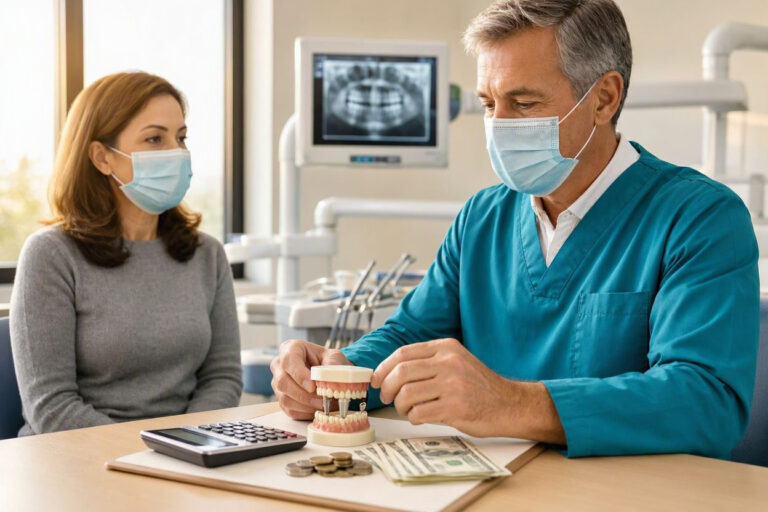
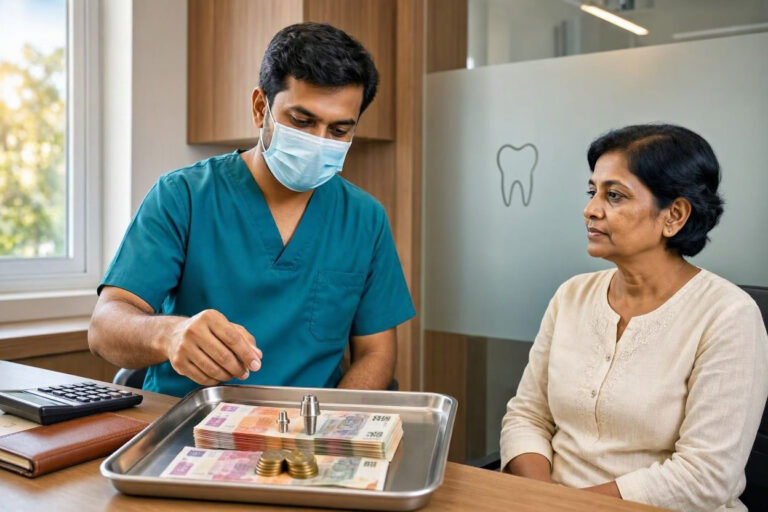
Let us talk money. This is often the biggest concern. An implant is an investment. In Jaffrey, prices vary based on the provider, materials, and whether you need extra procedures like bone grafts.
Typical Cost Breakdown in Southern New Hampshire
| Procedure | Estimated Cost Range |
|---|---|
| Initial exam and CT scan | 150–500 |
| Bone graft (if needed) | 300–1,500 |
| Implant post placement | 1,500–2,500 |
| Abutment | 300–500 |
| Custom dental crown | 1,000–2,000 |
| Total average (no bone graft) | 3,000–3,000–5,000 |
| Total average (with bone graft) | 3,500–3,500–6,500 |
Does Insurance Cover Implants?
This is tricky. Traditional dental insurance often calls implants “cosmetic” or “major restorative.” But things are changing.
- Some plans: Cover 50% of the crown, but not the post.
- Better plans: Cover 30–50% of the entire procedure.
- Medical insurance: May cover the post if tooth loss resulted from an accident or injury.
Action step: Call your insurance provider. Ask specifically: “What percentage of a single tooth implant do you cover? Is there a waiting period?”
Financing Options in Jaffrey
Many local dental offices partner with third-party financing companies. Popular options include:
- CareCredit: Healthcare credit card with promotional financing.
- LendingClub: Fixed-rate loans for medical procedures.
- In-house payment plans: Some Jaffrey dentists offer monthly installments.
Do not let cost stop you from having a conversation. Most offices offer a free consultation to discuss numbers.
Recovery, Aftercare, and Long-Term Success
Recovery from a single implant is usually easier than people expect.
What to Expect in the First Week After Surgery
Days 1–3:
- Some swelling and bruising (apply ice packs)
- Minor bleeding (bite on gauze)
- Eat soft foods only: yogurt, soup, smoothies, mashed potatoes
- Do not spit, use a straw, or smoke
Days 4–7:
- Swelling goes down
- You can return to work or normal activities
- Continue soft foods
- Gently rinse with warm salt water
Days 7–14:
- Stitches dissolve or are removed
- Most discomfort is gone
- Gradually return to normal chewing
Long-Term Care: How to Make Your Implant Last
A single tooth implant cannot get a cavity. But it can fail due to gum disease (peri-implantitis). Think of it like a natural tooth: it needs daily cleaning.
Your new routine:
- Brush twice a day (electric toothbrush is great)
- Floss daily. Use a floss threader or interdental brush to clean around the abutment.
- Visit your Jaffrey dentist every 6–12 months for checkups.
- Avoid chewing ice, hard candy, or pens.
Success rate: Over 95% at 10 years. With excellent care, many implants last 30 years or more.
Finding the Best Provider for Single Tooth Implants in Jaffrey
Not all dentists place implants. Some general dentists do. Others refer to specialists.
Types of Providers
| Provider Type | Best For | Average Experience |
|---|---|---|
| General dentist with implant training | Straightforward cases, one tooth, good bone | Varies widely |
| Oral surgeon | Complex cases, bone grafts, difficult anatomy | High |
| Periodontist | Patients with gum disease or thin gums | High |
| Prosthodontist | Complex restorations, cosmetic-focused crowns | Very high |
Questions to Ask Before Choosing a Provider
- “How many single tooth implants do you place per year?”
- “What is your success rate?”
- “Do you use 3D CT scanning for planning?”
- “What brand of implant do you use?” (Look for Nobel Biocare, Straumann, Zimmer, Hiossen)
- “Who makes the crown? A local lab or an overseas lab?”
- “What is included in your quoted price?” (Some quotes exclude the crown or abutment)
Local tip: Many Jaffrey residents travel to nearby towns like Peterborough, Rindge, or Keene for implant specialists. Do not limit yourself to one office. Get two or three opinions.
Pros and Cons: An Honest Summary
No procedure is perfect. Let us weigh the realities.
Pros
- Preserves neighboring teeth. No drilling on healthy enamel.
- Prevents bone loss. The implant stimulates the jaw like a natural root.
- Looks and feels natural. No one will know it is an implant.
- Reliable. Over 95% success rate.
- Comfortable. No clicking or slipping.
- Easy cleaning. Brush and floss normally.
Cons
- Higher upfront cost. More expensive than a bridge or denture.
- Long treatment time. 3–8 months from start to finish.
- Requires surgery. Some patients fear needles or procedures.
- Not for everyone. Severe bone loss or uncontrolled disease may rule it out.
- Possible complications. Infection, nerve damage, or implant failure (rare but real).
The bottom line: If you value long-term health over short-term savings, an implant is worth serious consideration.
Frequently Asked Questions (FAQ)
1. Is a single tooth implant painful?
Most patients say the discomfort is less than a tooth extraction. You feel pressure during surgery, not pain. Afterward, over-the-counter pain relievers usually manage soreness.
2. How long does a single tooth implant last?
With good care, 20+ years. Many last a lifetime. The crown may need replacement after 15–20 years, but the post often stays forever.
3. Can I get an implant if I smoke?
Yes, but your risk of failure is higher. Smoking reduces blood flow to the gums. Most surgeons ask you to quit for at least two months after placement.
4. What happens if the implant fails?
It is rare. If it fails to fuse (early failure), the surgeon removes it, lets the bone heal (4–6 months), and tries again. Sometimes a larger implant or bone graft is needed.
5. Will my insurance pay for a single tooth implant in Jaffrey?
Some plans cover part of it. Call your provider. Ask about “implant coverage” specifically. Do not assume it is excluded.
6. How do I clean around a single tooth implant?
Use a floss threader to get the floss under the crown. Or use a water flosser (like Waterpik) on a low setting. Your dentist can show you.
7. Can I have an implant placed the same day my tooth is pulled?
Sometimes. This is called “immediate implant placement.” It depends on infection and bone quality. Your dentist will decide.
Additional Resources
For more reliable, non-commercial information, visit the American Academy of Implant Dentistry (AAID) website:
🔗 Link: www.aaid.com (Search for “patient resources” and “single tooth implants”)
This site offers downloadable guides, a dentist locator, and educational videos. No ads. Just science.
Conclusion
A single tooth dental implant in Jaffrey offers a permanent, natural-looking solution for a missing tooth. While the upfront cost and treatment time are higher than alternatives like bridges or dentures, the long-term benefits—preserving bone, protecting neighboring teeth, and lasting for decades—make it a wise investment for many people. By choosing an experienced local provider, maintaining excellent oral hygiene, and understanding the process step by step, you can restore your smile with confidence.
Disclaimer: This article is for informational purposes only. It does not constitute medical advice. Always consult with a licensed dentist or oral surgeon in Jaffrey or your local area to discuss your specific health needs and treatment options.