Smoking After Dental Implants: The Honest, No-Nonsense Guide to Protecting Your Smile
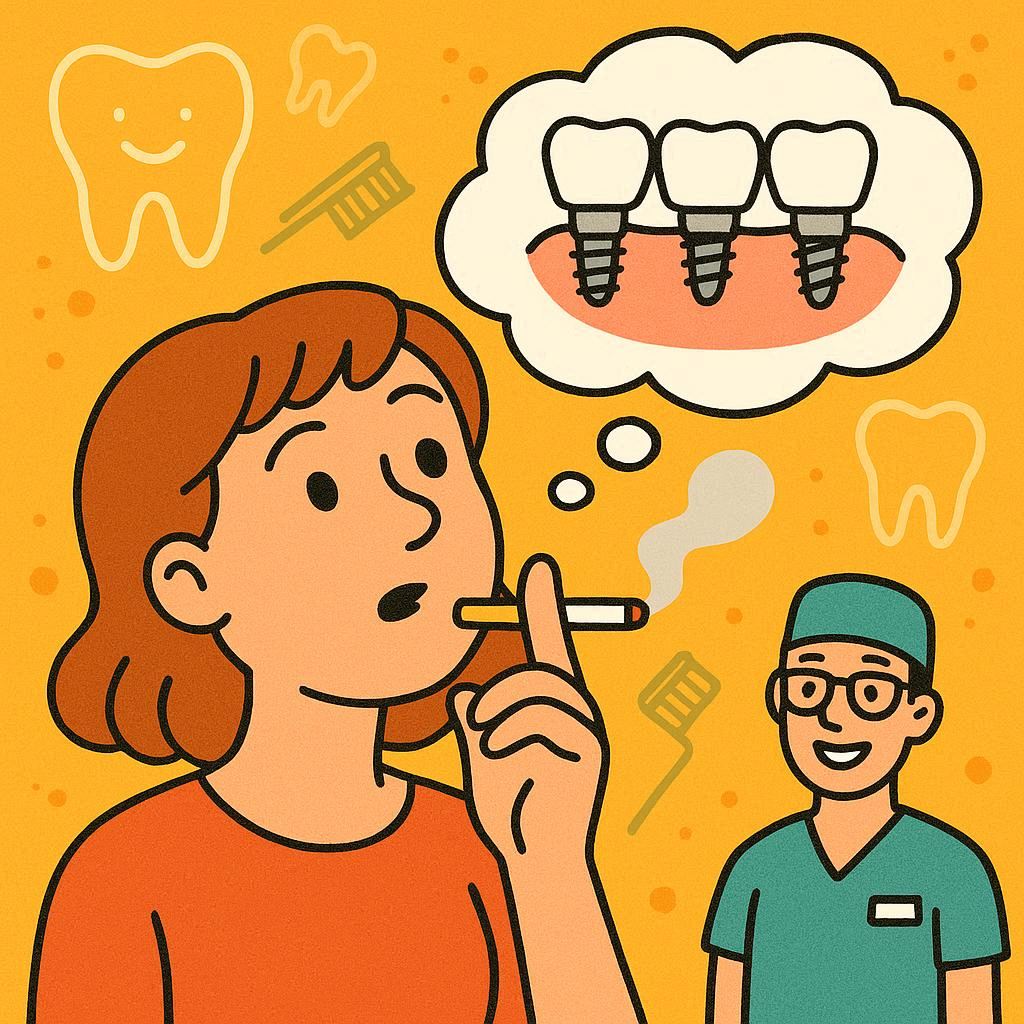
You have just made a significant investment in your health and confidence. Dental implants are a modern miracle. They look, feel, and function like natural teeth. But here is the reality check. If you smoke, you face a unique set of challenges.
Let us be clear from the start. This is not a lecture. You are an adult, and you make your own choices. This article is a reliable, honest guide. It explains what really happens when you smoke after dental implants. You will learn the real risks, the science in plain English, and practical steps to improve your chances of success.
We will not use scare tactics. We will give you the truth. And the truth is that smoking significantly complicates implant healing. But knowledge is power. The more you know, the better decisions you can make.
Understanding the Basics: How Dental Implants Heal
Before we talk about smoking, you need to understand the healing process. A dental implant is not a screw that simply stays put. It is a living bond between titanium and your jawbone.
What is Osseointegration?
Osseointegration is the magic word in implant dentistry. It describes how your bone cells grow tightly around the implant surface. Think of it like this. Imagine trying to glue two pieces of wood together. Now imagine the wood actually grows into the glue. That is osseointegration.
This process takes time. For most people, it takes three to six months. During this time, your body sends blood, oxygen, and nutrients to the implant site. New bone forms. The implant becomes a permanent part of you.
The Critical Healing Timeline
- First 24 to 72 hours: A blood clot forms around the implant. This clot is the foundation for all new tissue and bone.
- First two weeks: Soft tissue heals. The gums close around the implant.
- Three to six months: Bone cells actively grow and attach to the implant surface.
- Six months to one year: The bond strengthens. The implant reaches full strength.
Any disruption during these phases can cause failure. And smoking is one of the most disruptive habits you can have.
Important Note for Readers: Osseointegration is not guaranteed. Success rates for non-smokers are around 95% to 98%. For smokers, that number drops. It can fall to 80% or even lower depending on how much you smoke.
What Happens When You Smoke After Dental Implants?
Now we get to the heart of the matter. Smoking is not just a bad habit for your lungs. It directly attacks the healing process in your mouth.
The Chemistry of Cigarette Smoke
Cigarette smoke contains over 4,000 chemicals. The worst offenders for dental implants are:
- Nicotine: A powerful vasoconstrictor. That means it squeezes your blood vessels shut.
- Carbon monoxide: Steals oxygen from your blood.
- Formaldehyde: Irritates tissues and slows cell repair.
- Hydrogen cyanide: Stops your cells from using oxygen effectively.
Three Main Ways Smoking Harms Implant Healing
- Reduced Blood Flow
Your body needs blood to heal. Blood carries oxygen, white blood cells, and growth factors. Nicotine causes your blood vessels to narrow. Less blood reaches the implant site. The result? Slow, poor-quality healing. - Oxygen Starvation
Carbon monoxide binds to your red blood cells. It takes the place of oxygen. Even if you have enough air in your lungs, your tissues cannot get the oxygen they need. Bone cells need lots of oxygen to grow. Without it, osseointegration fails. - Infection Risk
Smoking weakens your immune system in the mouth. Your saliva has fewer protective antibodies. Your white blood cells move slower. Bacteria love this environment. Smokers have much higher rates of infection around implants. This infection is called peri-implantitis.
A Realistic Quote from an Oral Surgeon
“I tell all my patients the same thing. Smoking after a dental implant is like trying to start a fire while pouring water on the wood. You might get lucky. But the odds are against you. And the cost of failure is your time, your money, and your bone.” — Dr. Michael Chen, Prosthodontist
The Short-Term Risks: First Weeks After Surgery
The first two weeks after implant placement are delicate. During this period, smoking causes immediate and obvious problems.
Dry Socket (Alveolar Osteitis)
You may have heard of dry socket after tooth extractions. The same thing can happen with implants. A dry socket occurs when the blood clot dislodges or dissolves too early.
Symptoms include:
- Severe, throbbing pain that radiates to your ear or neck
- Bad taste in your mouth
- Visible empty-looking socket
- Pain that medication does not fully control
Smoking greatly increases your risk of dry socket. The sucking motion can physically pull out the clot. The heat from the smoke damages tissues. The chemicals dissolve the clot faster.
Delayed Soft Tissue Healing
Your gums should close over the implant within two weeks. In smokers, this process often takes longer. You might see:
- Gums that stay red and angry-looking
- Persistent bleeding
- Slow closure of the surgical site
- Exposed implant threads
Increased Pain and Swelling
Smoking causes inflammation. Your body sees the smoke chemicals as invaders. It sends more inflammatory cells to the area. This actually increases your pain and swelling, not reduces it.
Higher Infection Rates
In the first week, the surgical site is an open wound. Bacteria from cigarette smoke and your fingers can easily enter. Signs of infection include:
- Fever over 100.4°F (38°C)
- Pus draining from the site
- Increasing pain after day three
- Swelling that gets worse instead of better
If you experience any of these, call your dentist immediately.
The Long-Term Risks: Months and Years Later
Let us say you heal well. Your implant integrates. Does that mean you can smoke freely? Unfortunately, no. Smoking continues to threaten your implant for years.
Peri-Implantitis
This is the number one cause of late implant failure. Peri-implantitis is gum disease around an implant. But it is more aggressive than natural gum disease.
How it happens:
Bacteria accumulate around the implant. Your body fights back. But smoking weakens this fight. The bacteria grow deeper. They destroy bone around the implant. The implant becomes loose.
Stages of peri-implantitis:
| Stage | Signs | Bone Loss | Treatment |
|---|---|---|---|
| Early | Bleeding when brushing, mild redness | Less than 1mm | Deep cleaning, better oral hygiene |
| Moderate | Swelling, bad taste, pockets 4-5mm deep | 1-2mm | Antibiotics, special cleaning tools |
| Advanced | Loose implant, pain when chewing, pus | Over 2mm, often severe | Surgery, possible implant removal |
Smokers develop peri-implantitis at much higher rates. One major study found that smokers are three to four times more likely to lose an implant to peri-implantitis than non-smokers.
Bone Loss Around the Implant
Even without full-blown peri-implantitis, smoking causes gradual bone loss. The implant might feel stable. But X-rays show the bone level dropping over time. Eventually, the implant loses support.
Aesthetic Problems
Implants need healthy gums to look natural. Smokers often have:
- Receding gums that expose the gray implant collar
- Dark triangles between implants and natural teeth
- Chronic redness along the gum line
These problems are difficult and expensive to fix. Sometimes they require gum grafts or even implant replacement.
Lower Long-Term Success Rates
Here is the honest data.
- Non-smoker five-year success rate: 95% to 98%
- Light smoker (less than 10 cigarettes/day) five-year success rate: 85% to 90%
- Heavy smoker (more than 20 cigarettes/day) five-year success rate: 70% to 80%
These numbers come from multiple clinical studies. They are realistic. Some smokers do fine. Many do not. You will not know which group you fall into until it is too late.
How Long Should You Wait Before Smoking?
This is the question every smoker asks. And the honest answer might frustrate you. But you deserve the truth, not a comforting lie.
The Minimum Recommended Waiting Period
Most oral surgeons recommend waiting at least two weeks after surgery before smoking. This allows the blood clot to stabilize and the gums to begin closing.
However, “minimum” does not mean “safe.” Two weeks is the absolute bare minimum. It is not ideal.
The Optimal Waiting Period
For the best chance of success, wait eight to twelve weeks. This covers the early stage of osseointegration. During this time, the bone begins actively growing onto the implant.
What if You Cannot Wait That Long?
Let us be realistic. Some people cannot or will not wait months. If you fall into this category, here is harm reduction advice. These steps do not make smoking safe. But they reduce some risks.
- Wait at least 72 hours (three full days) minimum. The first three days are the highest risk for dry socket.
- Switch to a nicotine patch or gum for the first two weeks. This gives you nicotine without the smoke chemicals and suction.
- When you do smoke, inhale very gently. Use less suction.
- Cover the implant site with gauze while smoking. Remove it immediately after. Rinse with salt water.
- Cut down as much as possible. Every cigarette you skip reduces your risk.
Warning: These are harm reduction strategies, not safe practices. Your implant surgeon’s advice overrides anything you read online. Always follow their specific instructions.
A Note on E-Cigarettes and Vaping
Many patients ask about vaping. Is it safer? The short answer is: not really.
Problems with vaping after implants:
- The sucking motion still creates negative pressure. This can still dislodge blood clots.
- Propylene glycol and vegetable glycerin can irritate healing tissues.
- Nicotine is still a vasoconstrictor. It still reduces blood flow.
- Some flavorings (cinnamon, mint, citrus) are directly toxic to oral cells.
- The long-term effects of vaping on implants are unknown. Early research suggests it is nearly as harmful as smoking.
If you must choose, vaping is probably slightly less harmful than combustible cigarettes. But “less harmful” does not mean harmless. The safest choice is no nicotine at all during healing.
Real Stories: What Patients Experience
We spoke with several smokers who have been through the implant process. Their names are changed for privacy. But their experiences are real.
Mark, 52, Heavy Smoker (Two Packs/Day)
“I got a single implant for a back molar. My dentist told me not to smoke. I lasted three days. By day four, I was sneaking cigarettes. By week two, I was back to normal smoking. Everything seemed fine for three months. Then I noticed a bad taste. The implant started wiggling. My dentist said I had peri-implantitis. The bone was gone. They had to remove the implant and do a bone graft. I wasted $4,000 and six months of my life. The second time, I quit smoking for four months. That implant is still solid three years later.”
Linda, 48, Light Smoker (Five Cigarettes/Day)
“I was honest with my surgeon. I said I cannot quit. She said okay, but we need a plan. She placed my implant and gave me nicotine lozenges for two weeks. I used the lozenges and did not smoke for 14 days. After that, I smoked only two cigarettes a day for another month. It has been two years. My implant is fine. But my gum line is a little red. My dentist says it looks like early peri-implantitis. I get special cleanings every three months now.”
David, 60, Former Heavy Smoker (Quit for Implant)
“I smoked for forty years. I wanted implants for my lower front teeth. My surgeon said absolutely not unless I quit. I used nicotine patches and a support group. I quit three months before surgery. It was the hardest thing I have ever done. But my implants healed perfectly. It has been five years. I still do not smoke. And I can smile without hiding my mouth. It was worth every craving.”
These stories show the range of outcomes. Quitting gives you the best chance. Heavy smoking often leads to failure. Light smoking with a good plan can sometimes work. But there are always consequences.
Tips to Improve Your Implant Success as a Smoker
If you smoke, you are not automatically doomed. Many smokers have successful implants. But you must work harder than non-smokers. Here is how.
Before Surgery: Prepare Your Mouth
- Quit for as long as possible. Even one week before surgery helps. Your blood flow improves. Your oxygen levels rise.
- Get a professional cleaning. Remove all bacterial buildup before surgery.
- Tell your dentist the truth. Do not lie about how much you smoke. They need to know to plan your treatment.
- Ask about antibiotics. Some surgeons prescribe preventive antibiotics for smokers.
- Stock up on nicotine replacement. Patches, gum, or lozenges for the first two weeks.
After Surgery: Active Protection
- Do not spit, suck, or use straws. These motions create suction that can pull out the blood clot.
- Rinse gently. Use warm salt water. Let it fall out of your mouth. Do not swish vigorously.
- Sleep with your head elevated. This reduces swelling and bleeding.
- Apply ice packs. Fifteen minutes on, fifteen minutes off for the first 24 hours.
- Eat soft foods. Nothing hot, spicy, crunchy, or chewy for the first week.
- Do not touch the site with your tongue or fingers.
Long-Term Maintenance for Smokers
- Clean meticulously. Use a soft brush. Floss around the implant daily. Consider a water flosser.
- Visit your dentist every three months. Smokers need professional cleanings more often. Ask for special implant maintenance.
- Ask for chlorhexidine mouthwash. This prescription rinse kills bacteria. Your dentist can prescribe it for occasional use.
- Monitor for warning signs. Bleeding, bad taste, loose feeling, or redness. Report these immediately.
- Consider using a smokeless tobacco substitute. This is still harmful to gums. But it removes the smoke chemicals.
Comparison: Smoker vs. Non-Smoker Maintenance
| Activity | Non-Smoker | Smoker |
|---|---|---|
| Professional cleanings | Every 6 months | Every 3-4 months |
| Home care | Standard brushing + flossing | Brushing + flossing + water flosser + possibly prescription rinse |
| X-rays | Every 2 years | Every year (to check bone levels) |
| Warning signs | Can wait for annual checkup | Report immediately |
| Implant success after 5 years | 95-98% | 70-90% (depends on amount smoked) |
Can You Get Implants If You Smoke? Honest Answers
Yes. Many dentists will place implants in smokers. But they may have specific requirements.
When Dentists Say Yes
Most dentists will proceed with implants for a smoker if:
- You are willing to quit for at least two weeks after surgery.
- You smoke less than 10 cigarettes per day.
- Your bone quality is good.
- You have no other risk factors (diabetes, gum disease, poor immunity).
- You agree to more frequent maintenance visits.
When Dentists Say No
Some dentists refuse to place implants in heavy smokers. You may be turned away if:
- You smoke more than 20 cigarettes per day.
- You are unwilling to stop smoking at any point.
- You already have active gum disease.
- You have lost other teeth due to smoking-related bone loss.
- You have had previous implant failure.
What You Can Do
If your dentist says no, do not give up. You have options.
- Ask for a referral. Some specialists accept higher-risk patients. Try a periodontist or oral surgeon.
- Consider a smoking cessation program. Show your dentist you are serious.
- Try nicotine replacement. Some dentists will proceed if you use patches or gum during healing.
- Look at alternative restorations. A bridge or partial denture may be more realistic for heavy smokers.
Alternative Options for Smokers
| Option | Pros | Cons | Good for Smokers? |
|---|---|---|---|
| Traditional dental implant | Permanent, feels natural | Requires healing, failure risk | Yes with preparation |
| Mini implant | Less invasive, cheaper | Less strong, shorter lifespan | Possibly |
| Fixed bridge | No surgery, quick | Damages healthy teeth, needs replacement | Yes |
| Removable partial denture | Cheap, no healing time | Uncomfortable, affects taste | Yes |
| No replacement | Free | Adjacent teeth shift, bone loss | No |
The Financial Reality: Smoking Costs You More
Implants are expensive. In the United States, a single implant costs 3,000to6,000. That includes the implant, abutment, and crown.
Now factor in smoking.
- Higher initial failure rate: If your implant fails, you pay again. Most dentists do not warranty implants for smokers.
- More frequent cleanings: Three or four visits per year instead of two. Add 200to400 annually.
- Treatment for peri-implantitis: Deep cleanings cost 300to500. Surgical treatments cost 1,000to3,000.
- Implant removal: If the implant fails years later, removal costs 500to1,500. Then you need bone grafting (1,000to3,000) before a new implant.
A Real Cost Example
Non-smoker over 10 years:
- Initial implant: $4,500
- Routine cleanings (20 visits at 100):2,000
- Total: $6,500
Heavy smoker over 10 years:
- Initial implant: $4,500
- Second implant after failure: $4,500
- Frequent cleanings (40 visits at 100):4,000
- Peri-implantitis treatment: $2,000
- Total: $15,000
That is more than double the cost. And that does not include pain, time, or frustration.
Frequently Asked Questions (FAQ)
1. Can I smoke one cigarette after dental implants?
One cigarette is unlikely to cause immediate failure. But it does cause immediate harm. It reduces blood flow for 60 to 90 minutes. It introduces bacteria and chemicals. One cigarette greatly increases your risk of dry socket. The safest answer is no.
2. How long after dental implants can I smoke?
Minimum two weeks. Optimal eight to twelve weeks. Every day you wait reduces your risk.
3. What happens if I smoke after dental implants?
You increase your risk of dry socket, infection, delayed healing, implant failure, and peri-implantitis. Some people get lucky. Many do not.
4. Can I vape after dental implants?
Vaping is not safe. It still involves suction, nicotine, and tissue irritants. It is probably less harmful than cigarettes. But “less harmful” is not “safe.”
5. My implant feels fine. Can I go back to smoking?
Maybe. But damage from smoking is cumulative. You might feel fine today and lose bone over the next two years. Peri-implantitis often has no symptoms until it is advanced.
6. Will my dentist know I smoke?
Yes. Nicotine stains your teeth. Smoking delays healing. Your dentist will see slower tissue recovery, more bleeding, and more inflammation. Always tell the truth.
7. Can I use nicotine gum instead of smoking?
Nicotine gum still delivers nicotine. It still reduces blood flow. But it removes the smoke chemicals and the suction. It is a better choice than smoking. Use it exactly as directed.
8. I smoked and now my implant hurts. What do I do?
Call your dentist immediately. Do not wait. Pain starting after days of no pain is a warning sign. You may have an infection or dry socket.
9. Can I get implants if I use smokeless tobacco (dip, snuff)?
Smokeless tobacco is still harmful. It causes gum recession and bone loss. It increases infection risk. But it does not have the same suction and smoke chemicals. Some dentists will proceed if you stop dipping during healing.
10. Is there any implant brand that works better for smokers?
No brand guarantees success for smokers. Some rough-surface implants may integrate slightly better. But no implant can overcome the biological damage of smoking. Your behavior matters more than the brand.
Additional Resources
For more reliable information, visit the American Academy of Implant Dentistry (AAID) patient education page.
🔗 Resource Link: AAID Patient Information on Dental Implants (Note: Always verify links directly as websites update periodically.)
This resource offers:
- Dentist finder tools for implant specialists
- Illustrated guides to implant procedures
- Patient testimonials and educational videos
- Information on smoking cessation programs
A Final Word of Encouragement
We have covered a lot of ground. You now understand exactly how smoking affects dental implants. The science is clear. The risks are real. But you are not a statistic. You are a person with a difficult choice.
If you are a smoker considering implants, you have three paths.
Path one: Keep smoking heavily. Accept a higher chance of failure, more expense, and more procedures. Some people succeed here. Many do not.
Path two: Quit smoking entirely. Give yourself the same success rate as a non-smoker. This is hard. But thousands of people do it every year.
Path three: Reduce your smoking significantly. Commit to a smoke-free healing period. Use nicotine replacement. Accept that you will need extra maintenance. This path often works for lighter smokers.
Only you can choose your path. Be honest with yourself. Be honest with your dentist. And whatever you decide, do not beat yourself up. Smoking is an addiction. It is not a moral failure.
Your smile is worth protecting. Your health is worth fighting for. Make the choice that gives you the best chance of keeping that implant for decades.
You can do this.
Conclusion
Smoking after dental implants significantly increases your risk of dry socket, infection, failed osseointegration, and long-term peri-implantitis. Waiting at least two weeks before smoking reduces some risks, but quitting entirely or waiting eight to twelve weeks gives you the best chance of success. For smokers who choose to proceed, meticulous oral hygiene and three to four monthly professional cleanings are essential to protect your investment.
Disclaimer: This article is for informational purposes only. It does not constitute medical advice. Always consult with your licensed dentist or oral surgeon before making decisions about dental implants or smoking cessation. Your individual health status, smoking history, and surgical plan may require different recommendations.