The Cost Of A High-Quality Pair Of Dentures?
Losing your teeth is a life-changing event. It affects everything from how you eat to how you speak to how you feel about yourself. Dentures can restore your smile and your confidence. But not all dentures are created equal. There is a big difference between a cheap set of dentures and a high-quality pair.
If you are considering dentures, you have probably seen prices ranging from a few hundred dollars to several thousand. It can be confusing. Why does one dentist charge $600 for a set of dentures while another charges $5,000? What are you actually paying for? And is it worth spending more?
This guide will answer those questions. We will break down the cost of a high-quality pair of dentures. We will explain what makes them high-quality, how they compare to cheaper options, and what factors influence the price. We will also look at insurance coverage and payment options. By the end, you will have a clear understanding of what you are paying for and how to make the best choice for your budget and your health.
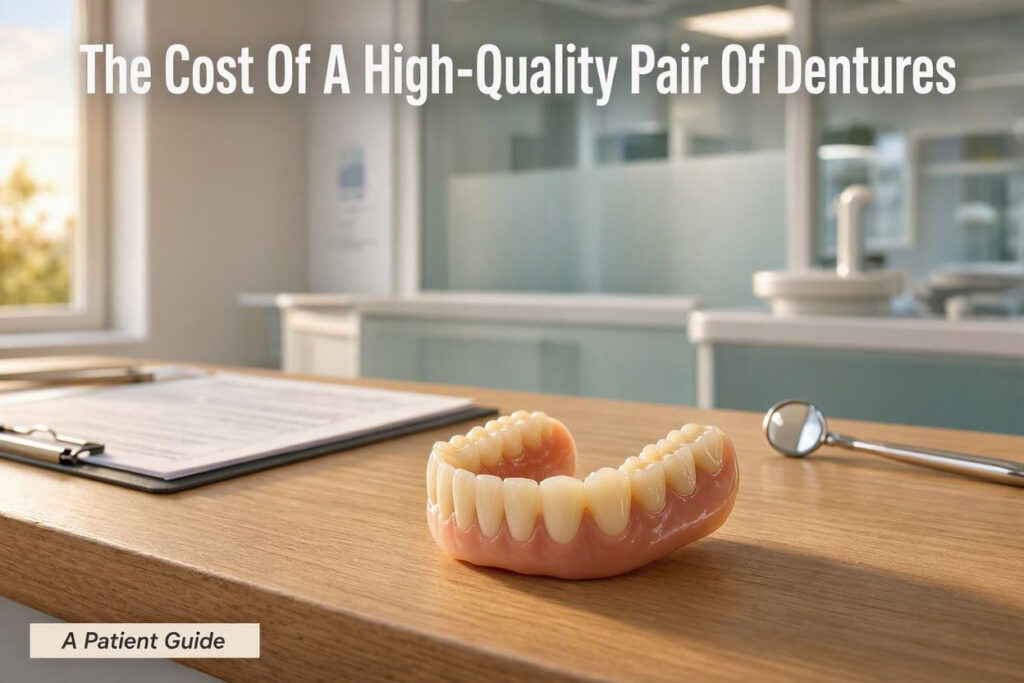
What Makes A Pair Of Dentures “High-Quality”?
Before we talk about price, let’s define what high-quality means. A high-quality denture is not just about the materials. It is about the entire process, from the impressions to the fit to the follow-up care.
1. Custom Impressions And Fittings
Cheap dentures are often made from a single impression or a “boil-and-bite” kit. High-quality dentures are made from multiple, precise impressions. The dentist takes measurements of your jaw relationship, the height of your bite, and the shape of your gums. They may use a facebow to record how your jaw moves.
2. Premium Materials
High-quality dentures use better materials.
- Teeth: High-quality denture teeth are made of multi-layered acrylic or composite resin. They are designed to look natural, resist staining, and wear evenly. Cheap denture teeth are often single-layered and look flat and fake.
- Base: High-quality denture bases are made of a strong, durable acrylic that fits snugly against your gums. Cheap bases can be bulky, uncomfortable, and prone to cracking.
- Metal Framework (for partials): High-quality partial dentures often use a cast metal framework. This is stronger, thinner, and more comfortable than acrylic or flexible partials.
3. Precise Fit
A high-quality denture fits properly. It does not rock, slip, or cause sore spots. It restores your ability to chew and speak. A cheap denture often fits poorly, leading to pain, difficulty eating, and speech problems.
4. Aesthetic Details
High-quality dentures are designed to look like natural teeth. The dentist chooses the size, shape, and color of the teeth to match your face and your remaining teeth (if any). They may also customize the gum line to look natural. Cheap dentures often look generic and obviously fake.
5. Follow-Up Care
High-quality dentures come with follow-up care. The dentist will see you for adjustments after you get the dentures. They will check the fit, relieve sore spots, and make sure you are comfortable. Cheap dentures are often a one-time transaction with no follow-up.
6. The Dentist’s Expertise
High-quality dentures are made by experienced dentists or prosthodontists. They have the training and skill to design a denture that looks good and functions well. Cheap dentures are often made by technicians with minimal supervision.
The Cost Of High-Quality Dentures
The cost of a high-quality pair of dentures varies widely. A full set (upper and lower) can cost anywhere from $2,000 to $8,000 or more. A partial denture can cost $1,000 to $5,000.
Here is a breakdown of the average costs for different types of high-quality dentures.
Table: Average Cost Of High-Quality Dentures
| Type Of Denture | Average Cost Range (USD) | Notes |
|---|---|---|
| Full Upper Denture (High-Quality) | $1,000 – $4,000 | Premium materials and custom fit |
| Full Lower Denture (High-Quality) | $1,000 – $4,000 | Premium materials and custom fit |
| Full Set (Upper And Lower) | $2,000 – $8,000 | Best value when purchased as a set |
| Partial Denture (High-Quality) | $1,000 – $5,000 | Cast metal framework, precision attachments |
| Implant-Supported Denture | $5,000 – $30,000+ | Requires implants for support |
| Immediate Denture | $500 – $2,000 | Temporary, placed after extractions |
Important Note: These prices are for the dentures themselves. They do not include extractions, bone grafts, or other procedures that may be needed before the dentures are made.
Cheap Dentures Vs. High-Quality Dentures
Why would someone pay $5,000 for dentures when they could pay $600? Let’s compare the two.
Table: Cheap Dentures Vs. High-Quality Dentures
| Feature | Cheap Dentures | High-Quality Dentures |
|---|---|---|
| Cost | $300 – $1,500 | $2,000 – $8,000+ |
| Materials | Basic acrylic, single-layer teeth | Premium acrylic, multi-layer teeth |
| Fit | Often loose, may rock | Snug, comfortable |
| Aesthetics | Fake-looking | Natural-looking |
| Comfort | Often painful, sore spots | Comfortable after adjustment |
| Function | Difficulty chewing | Can eat most foods |
| Durability | 3 – 5 years | 7 – 15 years |
| Follow-Up | Minimal | Extensive |
| Adjustments | Extra cost | Often included |
| Satisfaction | Low | High |
The Takeaway: Cheap dentures are cheap for a reason. They often fit poorly, look fake, and cause pain. High-quality dentures cost more, but they offer a better experience and a better quality of life.
What Determines The Cost Of High-Quality Dentures?
Several factors influence the price of high-quality dentures.
1. Geographical Location
Dental fees are higher in cities with a high cost of living. A high-quality set of dentures in rural Texas might cost $2,500. The same set in New York City could cost $8,000.
2. The Dentist’s Experience And Specialty
A general dentist may charge less than a prosthodontist. A prosthodontist is a specialist in tooth replacement. They have advanced training and often handle complex cases. Their fees reflect their expertise.
- General Dentist: $2,000 – $5,000
- Prosthodontist: $3,000 – $8,000+
3. The Type Of Denture
Full dentures, partial dentures, and implant-supported dentures have different price points. Implant-supported dentures are the most expensive because they require surgery to place the implants.
- Full Dentures: $2,000 – $8,000
- Partial Dentures: $1,000 – $5,000
- Implant-Supported Dentures: $5,000 – $30,000+
4. The Materials Used
The materials used for the teeth and the base affect the price.
- Standard Acrylic Teeth: Cheaper, less natural
- Premium Acrylic Teeth: More expensive, more natural
- Composite Resin Teeth: Most expensive, most durable
- Cast Metal Framework (for partials): More expensive, stronger, thinner
- Flexible Framework (for partials): Less expensive, less durable
5. The Number Of Teeth Replaced
A partial denture that replaces one or two teeth costs less than a full denture that replaces all teeth. The more teeth you need, the higher the cost.
6. The Complexity Of The Case
If you have bone loss, gum disease, or other oral health issues, you may need additional procedures before getting dentures. These add to the cost.
- Extractions: $150 – $500 per tooth
- Bone Graft: $500 – $3,000
- Gum Treatment: $200 – $1,000
7. The Type Of Practice
A boutique dental spa with luxury amenities will charge more than a basic family practice. You are paying for the experience and the environment.
Does Insurance Cover High-Quality Dentures?
Dental insurance usually covers dentures, but not always at 100%. Most plans classify dentures as “major restorative care.”
Typical Coverage
- Coverage Percentage: 50% of the cost.
- Deductible: You must meet your annual deductible first (usually $50 to $100).
- Annual Maximum: Your plan has an annual maximum benefit (usually $1,000 to $1,500).
How The Math Works
Let’s say your high-quality dentures cost $4,000. Your insurance covers 50% after a $50 deductible.
- Total Cost: $4,000
- Deductible: $50
- Amount Subject To Coverage: $3,950
- Insurance Pays (50%): $1,975
- You Pay (Deductible + 50%): $2,025
Table: Example Of Insurance Coverage For High-Quality Dentures
| Amount | |
|---|---|
| Dentist’s Fee | $4,000 |
| Annual Deductible (Unmet) | $50 |
| Amount Subject To Coverage | $3,950 |
| Insurance Pays (50%) | $1,975 |
| Your Out-of-Pocket | $2,025 |
Important Note: Some insurance plans have a waiting period for major procedures. You may need to be enrolled for 6 to 12 months before you can use benefits for dentures. Also, some plans will only pay for the cheapest denture option. If you choose a high-quality denture, you may have to pay the difference.
What If You Don’t Have Insurance?
If you are paying out of pocket, high-quality dentures can feel expensive. Here are several ways to reduce the cost.
1. Dental Schools
Dental schools offer dentures at reduced rates. A high-quality set at a dental school might cost $1,000 to $3,000. The work is done by students under the supervision of experienced dentists. It takes longer, but the savings are significant.
2. Dental Membership Plans
Many private practices offer in-house membership plans. You pay an annual fee (e.g., $300 to $400). In exchange, you get cleanings, exams, X-rays, and a discount on other treatments like dentures. The discount is usually 10% to 20%.
3. Payment Plans
Most dentists offer in-house payment plans. You pay a down payment and then monthly installments. Some offer interest-free plans for 6 to 12 months.
4. Third-Party Financing
Companies like CareCredit offer loans for dental procedures. You can apply online and get a decision quickly. Be aware of interest rates.
5. Negotiate
Do not be afraid to ask for a discount. Some offices offer a 5% to 10% discount for cash payment. It never hurts to ask.
6. Community Health Centers
Federally Qualified Health Centers (FQHCs) provide dental care on a sliding scale based on income. If you qualify, dentures could cost significantly less.
The Cost Of Cheap Dentures: A False Economy
It is tempting to save money by choosing cheap dentures. But cheap dentures often cost more in the long run.
The Problems With Cheap Dentures
- Poor Fit: They can cause sore spots, pain, and difficulty eating.
- Frequent Repairs: They break easily and need to be repaired or replaced often.
- Aesthetic Issues: They look fake, which can affect your confidence.
- Bone Loss: Ill-fitting dentures can accelerate bone loss in your jaw.
- Nutritional Problems: If you cannot chew properly, you may not eat a balanced diet.
The Math
- Cheap Dentures: $600 upfront, plus $200 in repairs every year, plus replacement every 5 years. Over 15 years, that is $600 + $3,000 + $1,200 = $4,800.
- High-Quality Dentures: $4,000 upfront, plus minimal repairs, plus replacement every 10-15 years. Over 15 years, that is $4,000 + $500 = $4,500.
The Lesson: High-quality dentures are often more cost-effective in the long run. They last longer, fit better, and require fewer repairs.
What Do Patients Say?
We spoke to three patients about their experiences with high-quality dentures.
Robert, 68, bought high-quality dentures.
“I paid $5,500 for my dentures. It was a lot of money, but they fit perfectly. I can eat steak and apples. They look natural. My friends say I look 10 years younger. It was worth every penny.”
Linda, 55, bought cheap dentures first.
“I tried to save money and bought a $700 set. They were terrible. They hurt my gums. I could not eat properly. I had to go back to the dentist every month for adjustments. Finally, I saved up and bought a high-quality set for $4,000. I wish I had done it from the start.”
Maria, 62, went to a dental school.
“I could not afford private practice prices. I went to a dental school and got a high-quality set for $1,800. It took longer, but the students were very careful. The instructor checked everything. I am very happy with the result.”
Frequently Asked Questions
Q: How long do high-quality dentures last?
A: With good care and regular dental visits, high-quality dentures can last 7 to 15 years. The better the fit and the materials, the longer they last.
Q: Are high-quality dentures worth the extra cost?
A: For most people, yes. They fit better, look better, and last longer. They improve your quality of life and your ability to eat and speak. They are an investment in your health and confidence.
Q: How often should I replace my dentures?
A: You should replace your dentures every 7 to 15 years. However, you may need to have them relined or adjusted more often as your gums and jaw change.
Q: Can I sleep in my dentures?
A: It is best to remove them at night. This gives your gums a chance to rest. It also reduces the risk of fungal infections. Soak them in a denture cleaning solution overnight.
Q: Do high-quality dentures look real?
A: Yes. High-quality dentures are designed to look like natural teeth. The teeth are multi-layered to mimic the translucency of natural enamel. The gum line is customized to match your natural gums.
Q: Can I eat anything with high-quality dentures?
A: You can eat most foods. However, you should avoid very hard or sticky foods. Cut your food into small pieces and chew on both sides of your mouth.
Q: Are implant-supported dentures better than regular dentures?
A: Implant-supported dentures are more stable and comfortable. They do not slip or rock. They also help prevent bone loss. However, they are much more expensive and require surgery.
Conclusion
The cost of a high-quality pair of dentures ranges from $2,000 to $8,000 or more. The price depends on your location, the dentist you choose, and the materials used. Insurance may cover 50% of the cost, but you will likely pay a significant portion out of pocket. If you are paying cash, dental schools, payment plans, and membership plans can help. While cheap dentures are tempting, they often cost more in the long run due to poor fit, frequent repairs, and replacement. High-quality dentures are an investment in your comfort, your health, and your confidence. They allow you to eat, speak, and smile with confidence. Your smile is worth the investment.
Additional Resources
For more information on dentures and tooth replacement options, visit the American College of Prosthodontists (ACP) at prosthodontics.org. They provide patient resources and a directory of specialists.